Chapter one
Salt deposits on soffits, fascias and gutters
Salt settles on every surface the sea air reaches, and the parts of a roof that stay dry collect it fastest.
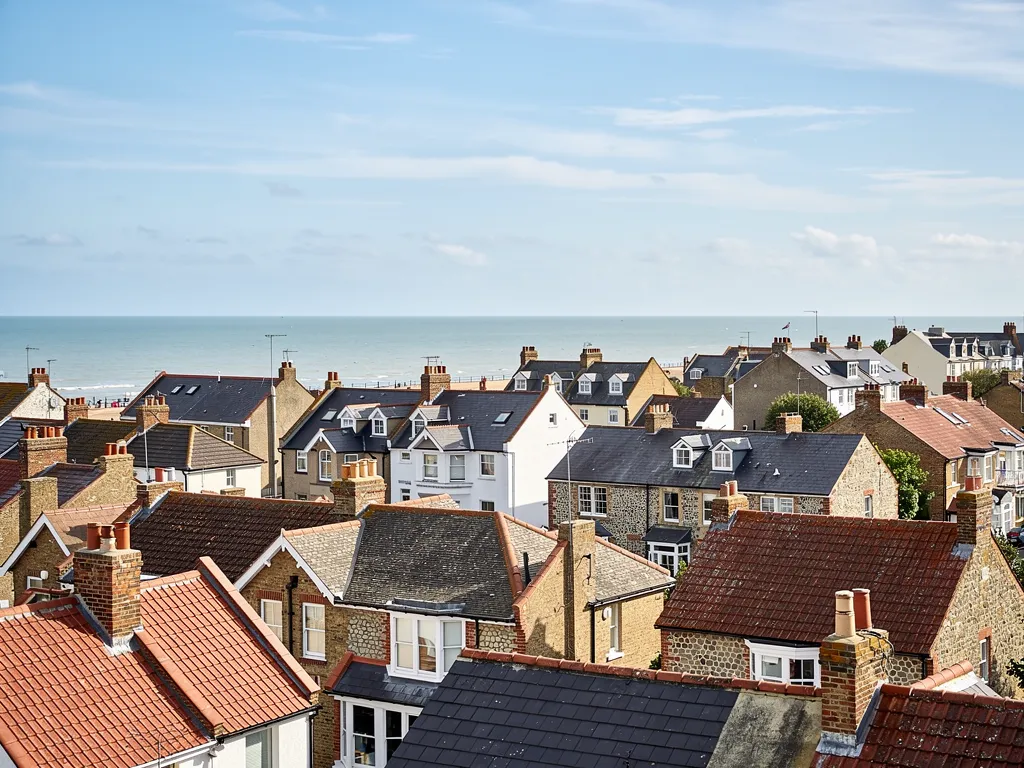
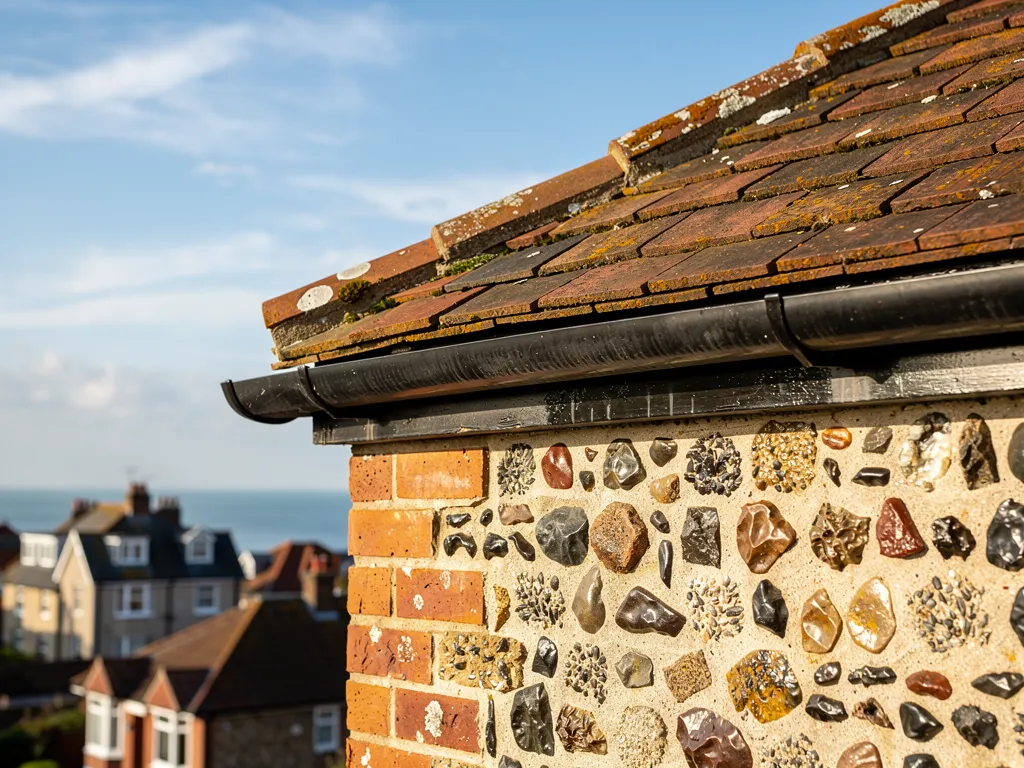
Kingston sits on the coast, so its roofs meet the sea at close range. HomeBuilding observes that air in marine settings carries enough salt to stain and corrode some metals, and that soffits and fascias pick up salty deposits because rain cannot wash them. That matches what a shoreline roofline looks like. A tiled slope is rinsed by every shower, while the boards tucked beneath the eaves stay dry, grimy and crusted.
At a glance
- Salt builds up where rain cannot wash it
- Zinc is rated by distance from the shoreline
- Single-lap tiles take at least one mechanical fixing
1.1 The roofline first
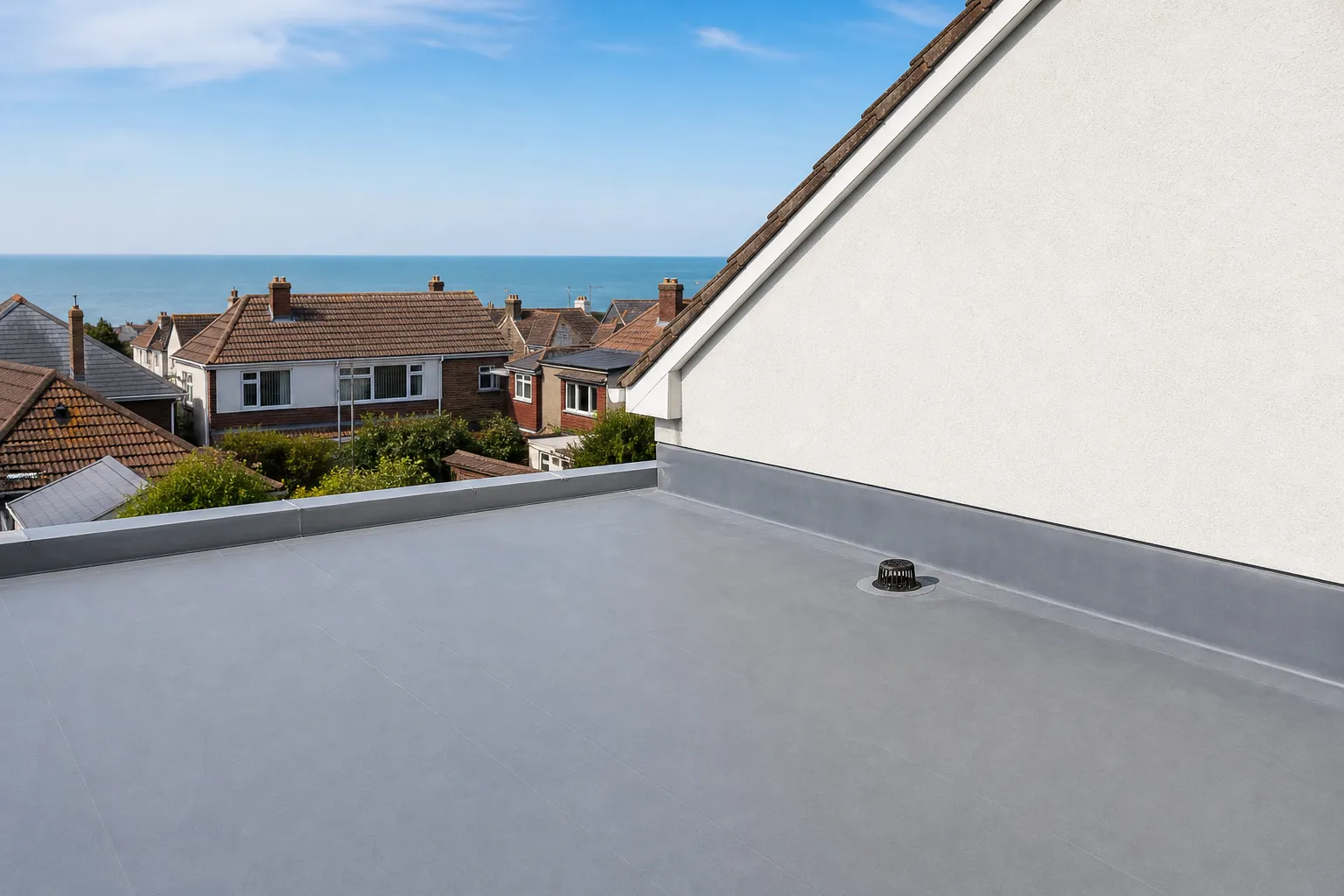
On survey we run along the fascia boards looking for soft timber, flaking paint or dulled plastic, then check the soffits above the walls and the gutters below. Each bracket, joint and outlet gets a look, and we sight along the run to confirm that water still falls gently toward the downpipe. The usual manufacturer recommendation is a fall of roughly 1:600 to 1:350, depending on the system. Downpipes get the same scrutiny: an outlet blocked with leaves or moss sends water over the gutter lip and down the wall. MyBuilder gives 10 to 20 years as the usual life before fascias and soffits are replaced, and salt can pull a board toward the early end. A rinse with fresh water now and then costs little and helps. Our gutters, soffits and fascias page covers repair and replacement.
1.2 Metals within reach of the sea
VM Zinc says zinc performs very well on the coast, though it can react with air that carries a lot of salt, and it sorts exposure into bands by distance from the shoreline. The sea front, up to 1 km from the water, is its most severe band. A fresh-water rinse a couple of times each year helps keep white salt crusts down. For lead, nails and clips, the right specification depends on the roof, and we confirm it on survey.
1.3 Fixing tiles in the open
Under Wienerberger's guidance, a single-lap tile, the interlocking kind, is never left to gravity alone: at least one mechanical fixing holds each one, laid out in a site-specific specification that weighs location and local wind exposure. Marley notes that a roof under 30 degrees faces heavy uplift on whichever slope meets the wind. On an open site we therefore fix to the specification, not to habit, and a disturbed ridge always gets a mechanical fixing too. Our pitched roofing page explains the choices.
Zinc and the shoreline: exposure bands
- Sea front
- Up to 1 km from the coast, the most severe band
- Sea area
- Between 1 and 3 km from the coast
- Low maritime influence
- Between 3 and 20 km from the coast
- Rinsing
- A fresh-water rinse, a couple of times a year, limits deposits
Source: VM Zinc FAQ, fetched October 2026