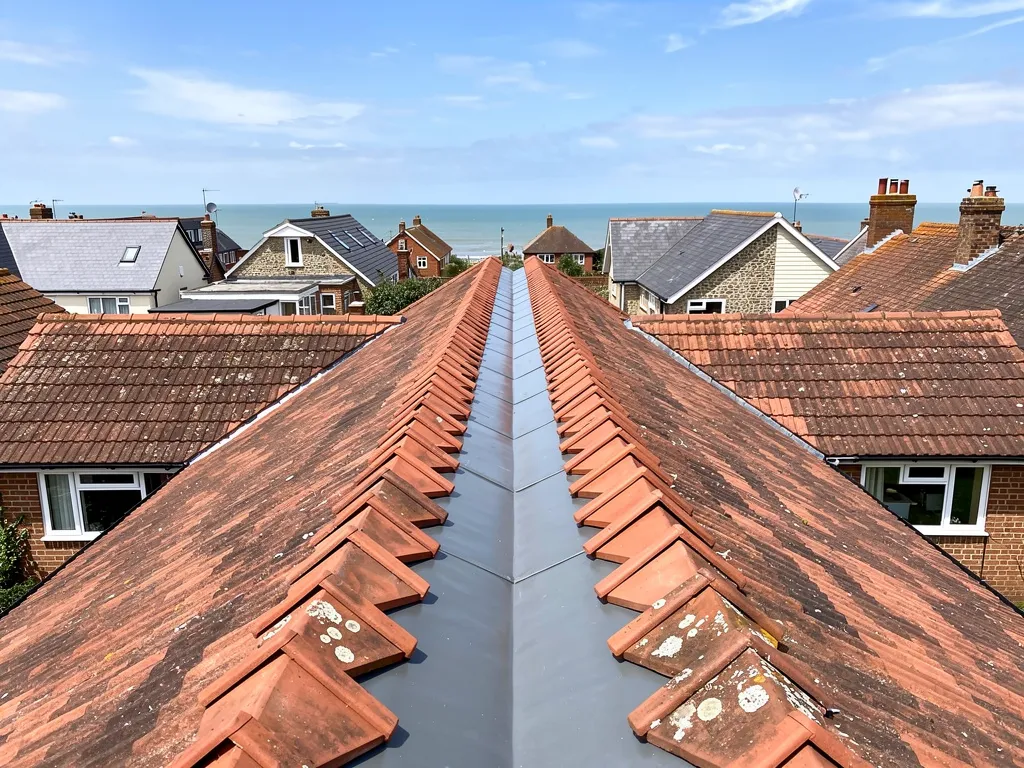
Roofers in West Durrington

Durrington's market gardens gave way to houses, and the Castle Park estate at West Durrington launched in 2016. We survey its young roofs, the older estates beside them and the village roofs nearby.

West Durrington's roofs, from new estate to old village

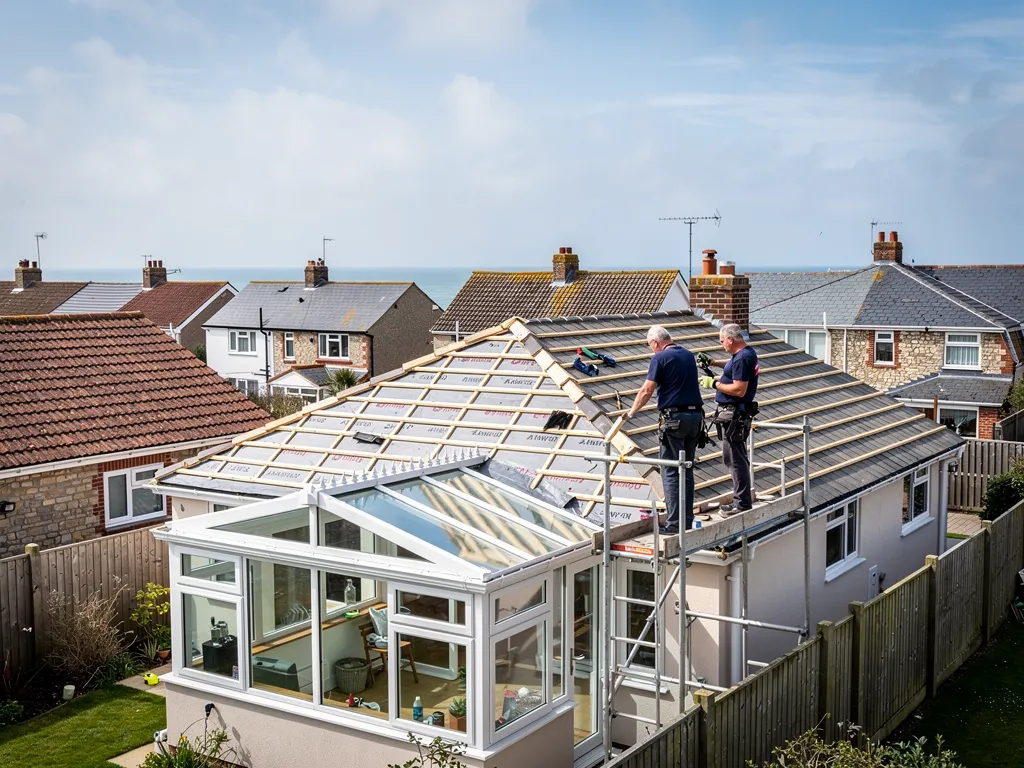
  • A modern tiled estate roof

    Castle Park homes

    Persimmon's Castle Park at West Durrington launched in 2016 with two- and three-bedroom homes, and its final release came in 2022.

    Read more about Castle Park homes

    Roofs that young seldom wear out, so faults usually start at junctions, fixings and the ridge.

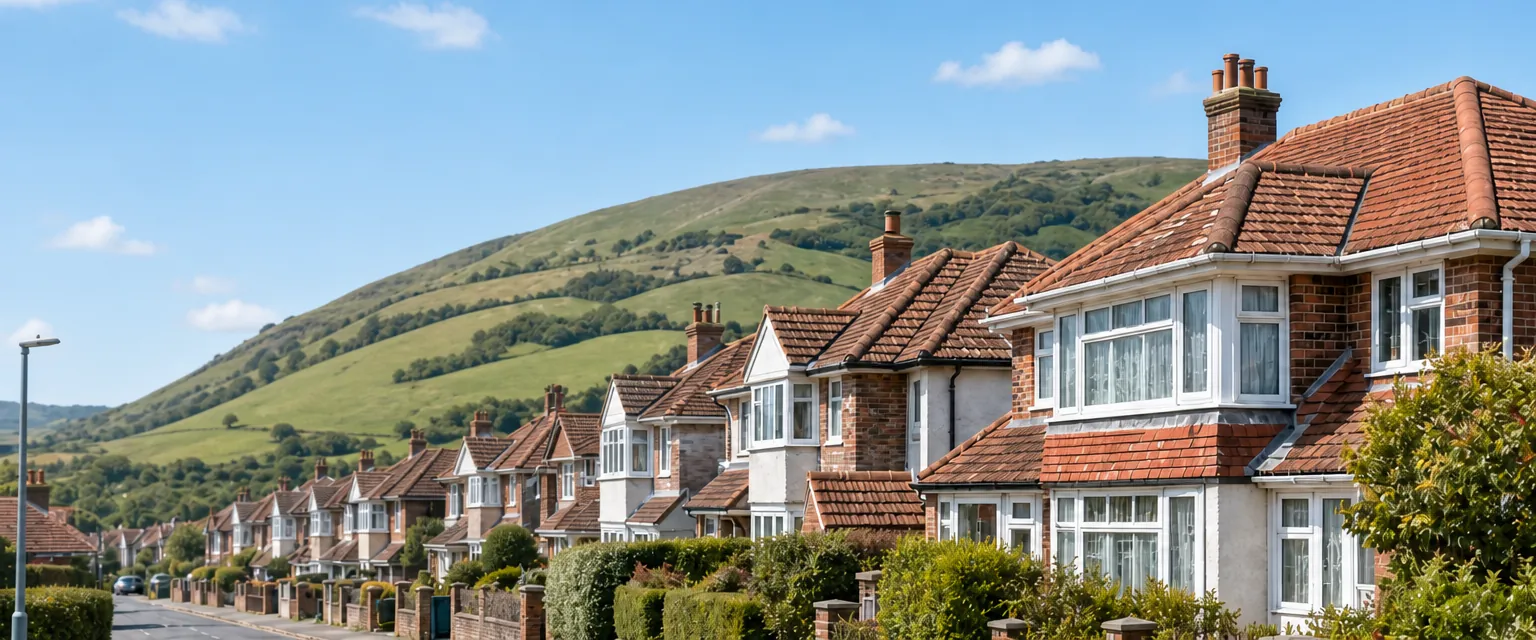
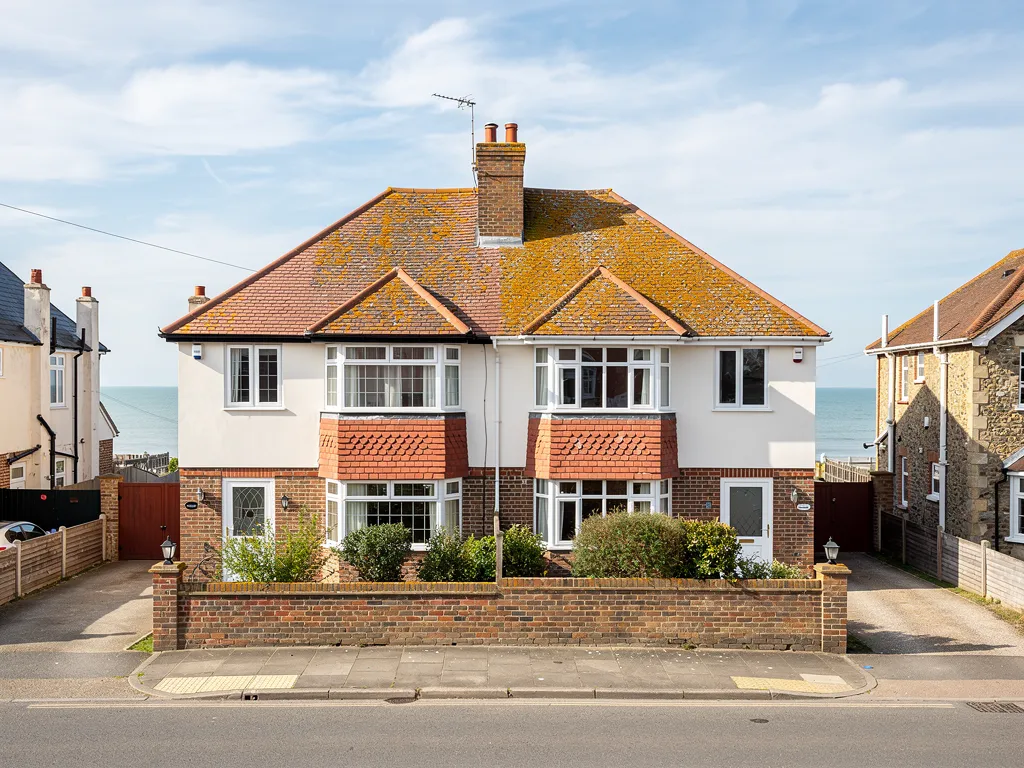
  • A row of semi-detached tiled roofs

    Estates near Durrington station

    Market-garden land around Durrington station, which opened in 1937, was developed between the 1950s and 1970s, with a large number of council houses.

    Read more about Estates near Durrington station

    Roofs from those decades have reached the age where a survey earns its place.

  • A flint church beside tiled roofs

    Flint and clay tile in the old village

    The Durrington appraisal lists flint walling, red brick dressings and red clay tile, slate and stone roofs for the old village, where St Symphorian's church of 1915 to 1916 is built of flint and stone.

    Read more about Flint and clay tile in the old village

    That conservation area covers the old village.

Street map of West Durrington, north-west of central Worthing, with a pin on the town.

Records around West Durrington

Planning authority
Worthing Borough Council
Councils
Worthing Borough Council and West Sussex County Council
Conservation area
Durrington Conservation Area (original 1977, current form 29 April 1997) covers the old village
Article 4
No direction recorded for Durrington on the councils' Worthing list
Church
St Symphorian, Durrington: flint and stone, built 1915 to 1916
From central Worthing
4 road miles, north-west, about 9 minutes by car

Durrington roofs

From glasshouses to Castle Park

Durrington's land went from nurseries to council estates to a new estate, and its roofs follow that order.

Chapter one

Young roofs on the Castle Park estate

On a roof under ten years old, faults appear at details and fixings, not in the covering itself.

Persimmon's Castle Park at West Durrington launched in 2016, with two- and three-bedroom homes on the north-western edge of Worthing, and its final release of 120 properties came in 2022. A roof of that age has not weathered out. When water gets into one, the covering is rarely the cause. The cause is a detail: a ridge tile that was never properly fixed, a verge that has lifted, a valley that was dressed too tight, or lead at a wall junction that has pulled out. Our survey therefore reads the roof like a joint-by-joint inspection, from the ridge down.

At a glance

  • Castle Park launched in 2016 and finished in 2022
  • Ridge, verge and valley details come first
  • Dry-fix ridges are tested to BS 8612:2018

1.1 What goes wrong first

Where a ridge was bedded in mortar alone, hairline cracks let rain behind the tiles. Since the 2014 revision of BS 5534, ridge and hip tiles should be fixed mechanically as well, and a dry-fix ridge, tested to BS 8612:2018, swaps the mortar bed for clips over a ventilated roll. Underlay laps can tear at the eaves, where it dips into the gutter, and a torn lap lets water reach the battens. Vents, flues and satellite fixings are other places a tiler may have cut a tile short. Our ridge tile repairs work covers the ridge itself, and every fault goes into the photographs that accompany your quote.

1.2 Loft condensation on a newer roof

Damp in a modern loft is not always a leak. A newer house is built tighter, and warm moist air from rooms below can condense on the underside of the roof. Where the underlay is high-resistance, Marley asks for an unbroken 10mm opening at the eaves as soon as the pitch goes beyond 15 degrees, plus extra venting at the top of steep or long roofs. If the eaves are blocked by insulation, or vents are missing, the ceiling shows the damp even though the tiles are sound. We check the loft for that first, because a repair on the roof would not cure it.

1.3 New home, who to call

Before paying for a repair on a house this young, ask the developer or the provider of the home's warranty whether the fault falls to them. If it does not, or you would rather have the work done now, the cause comes first, and the quote that follows is for the smallest job that actually cures it. We leave the site tidy.
Chapter two

Council-era houses by Durrington station

Houses built between the 1950s and 1970s on old nursery land are reaching the age where roofs need a decision.

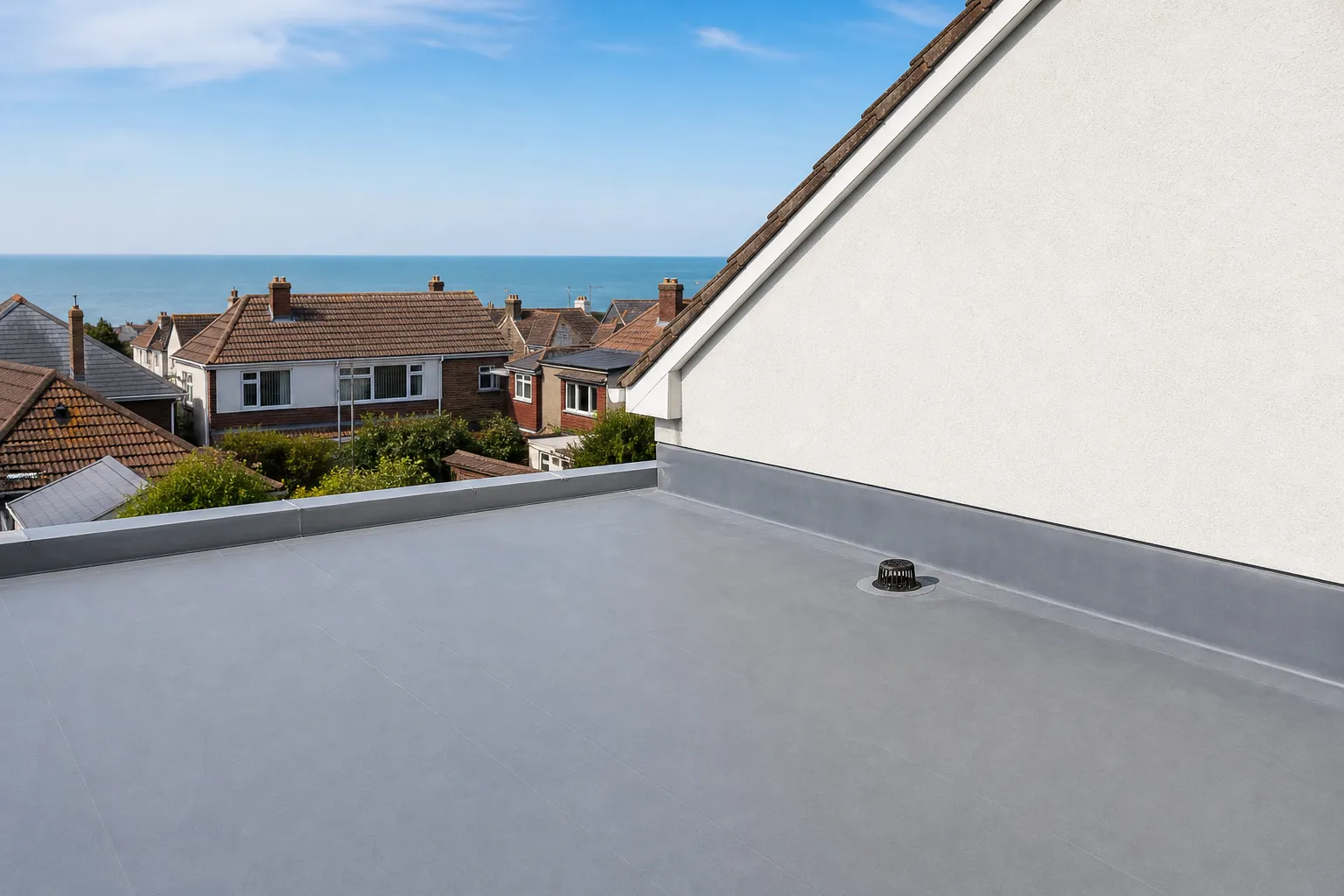
New single-ply membrane flat roof with a welded upstand and edge trim near the sea

By the 1850s market gardening and the glasshouse industry had become important in Durrington, and they were displaced only gradually as the 20th century went on. Between the 1950s and 1970s the old nursery land around the station, which opened in 1937, was developed rapidly, with a large number of council houses. A house from those decades has had fifty years or more of weather. Its roof may be sound, or it may be at the stage where every winter brings one more repair.

At a glance

  • Durrington station opened in 1937
  • Nursery land was developed from the 1950s to the 1970s
  • Concrete tiles often last 30 to 60 years
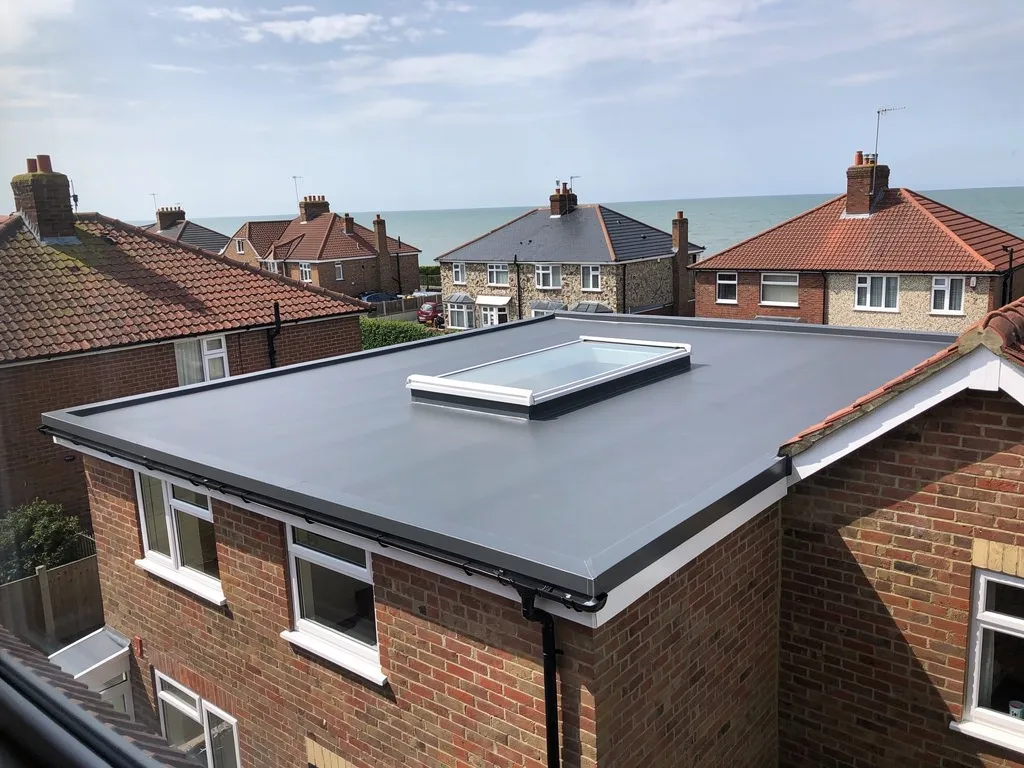
New grey GRP fibreglass flat roof on a rear kitchen extension

2.1 How old is old for a tile

Typical lifespans vary with exposure and workmanship, and none is a promise. Marley expects concrete tiles to last around 60 years, while MyBuilder says they typically need replacing after 30 to 50, so a range of 30 to 60 years is fair. A roof from these decades predates the 2014 revision of BS 5534, so its ridge and hip tiles were probably bedded in mortar with no clips or screws beneath. The tiles themselves often outlast what is beneath them: the nails, the battens and the underlay, which can fail first. A roof like that does not always need replacing, but it needs honest inspection. We lift tiles at several places, check the timber and tell you whether a repair or a new roof is the sensible choice. Our roof replacement page explains the second route, and the survey tells you whether you need it.

New grey GRP fibreglass flat roof on a rear kitchen extension

2.2 Porches, garages and flat roofs

A house from these decades can gain flat-roofed additions over the years, such as a porch, a garage or a rear extension. Flat roofs wear out sooner than pitched ones: EPDM often runs 20 to 30 years or more, GRP 25 to 40 and torch-on felt 10 to 20, according to GreenSpec and Less. To define the three: EPDM is one rubber sheet, GRP is a skin of glass-reinforced plastic set in resin, and torch-on felt means bitumen felt fused to the deck by a gas flame. Pooling water, blisters and lifting edges are the signs to look for. Our flat roofing page covers the options, and we check the flat roof at the same visit as the main one, so one quote covers both. A full re-roof can also bring a thermal upgrade, because Part L can ask for better insulation when a roof is largely renewed, and the survey covers whether that applies.

National cost guides for a semi in Durrington's era

  • Repair, moderate fault£500 to £1,000
  • Lean-to re-roof, semi£3,000 to £5,500
  • Flat roof renewal, semi£2,500 to £6,000
  • Gable re-roof, semi£5,000 to £8,000

Expect a written total once the roof has been surveyed; when you compare offers, ask each firm if VAT and the scaffold are inside its figure. Source: MyBuilder new roof price guide, updated 21/08/2026.

Chapter three

The old village around St Symphorian's

Durrington's conservation area covers the old village, so a roof near the church may follow different rules from one on the estates.

Away from the estates, Durrington was a rural parish that stayed so until the end of the 19th century, lying partly on the Downs' southern slope and partly on the coastal plain. Its old village keeps older buildings. The conservation area appraisal lists flint walling, red brick dressings and red clay tile, slate and stone roofs there. St Symphorian's church was built in 1915 and 1916 of flint and stone, taking in the walls of a 13th-century chapel. West Durrington's estates are a different place, but they sit close enough that owners ask whether the village rules reach them. The answer depends on what the building is and where its street falls, not on the postcode.

At a glance

  • St Symphorian's was built in 1915 and 1916
  • The old village lists flint, red clay tile and slate
  • The conservation area covers the old village
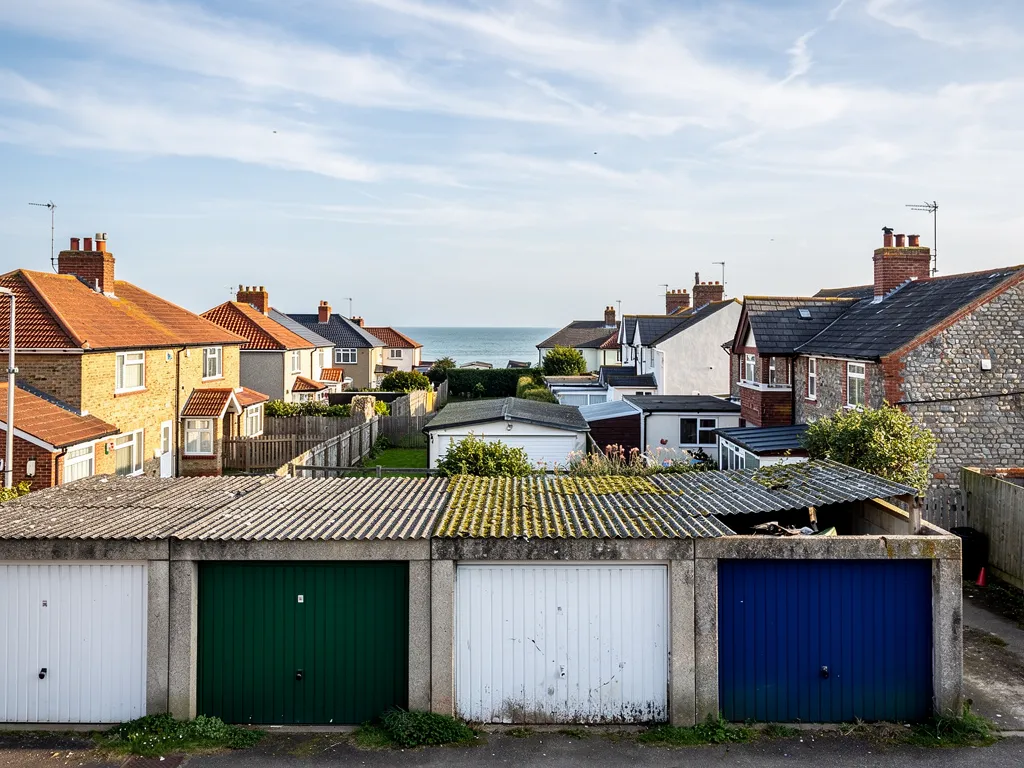
Row of concrete sectional garages with weathered grey corrugated roofs

3.1 Does the conservation area reach your house

Durrington Conservation Area was first designated in 1977 and reached its current form on 29 April 1997, and it covers the old village, not the new estates. The Worthing list of Article 4 directions records none for Durrington. Even so, ask the council's planning officers which side of the boundary your address falls before you plan any change of material. Matching the old covering rarely calls for an application; a new material, or a listed building, alters that. Our guide to re-roofing a listed or conservation-area house explains the steps.

Row of concrete sectional garages with weathered grey corrugated roofs

3.2 Church roofs and wildlife

Works to the roof of St Symphorian's, which the Church of England still uses for worship, go through the Church's faculty system, not the council's listed building process. Bats roost and birds nest in older roof spaces beside flint walls and churches, and both are protected, so we watch for them before stripping. At a junction with a flint wall, the lead flashing and its joint get our closest attention. Slate and clay need different care, and the survey tells us which is on the roof and how far it has aged. For slate, Cupa Pizarras reads BS 5534 as indicating a 20 degree minimum pitch, and advises against hook fixings on shallower than 25 degrees, so the pitch decides how the slates are held. Red clay tiles can often be mended one tile at a time, provided the nails and battens under them are sound.

Checking your address

  1. Find the area Look up Durrington Conservation Area on the council's map for your street.
  2. Ask planning Send the Adur & Worthing planning team your address and the covering you plan to use.
  3. Photograph We photograph the existing covering, ridge and flashings for your file.
  4. Match Any repair then copies the size, colour and fixing of what is already there.

West Durrington roof questions, from Castle Park to the old village

What goes wrong first on a Castle Park roof that is only a few years old?

Details, not the covering. A ridge tile never mechanically fixed, a lifted verge, a valley dressed too tight, or lead at a wall junction that has pulled out. Damp in a newer loft can also be condensation from tight construction, not a leak. The inspection covers the loft and the roof surface, with photographs of what turns up and, for a young house, a suggestion to ask the developer or warranty provider first.

Is West Durrington inside the Durrington Conservation Area?

Not as the council describes it: the conservation area covers the old village, designated in 1977 and in its current form from 29 April 1997. West Durrington's newer estates are a separate matter. Boundaries follow streets and plots, so ask the planning officers at Worthing Town Hall which applies to yours before you change a roof covering.

How long should a concrete tile roof from the council-house years last?

Marley expects concrete tiles to last around 60 years and MyBuilder puts replacement at 30 to 50, so 30 to 60 is a fair range, and neither figure is a promise. A house from the 1950s to 1970s may therefore be near the end. Often the underlay, battens and nails fail before the tiles do, which is why we lift tiles in several places and photograph the timber beneath, so you can see its condition for yourself.

Does the old village church roof follow the same rules as my house?

No. St Symphorian's is still in use as a Church of England church, so approval for its roof works comes through the Church's faculty process, not the council's. A house nearby follows planning and Building Regulations. Like-for-like re-covering seldom needs permission, and the Planning Portal limits of 25 per cent of the building envelope and 50 per cent of the roof decide whether building control applies.

Tell us about your roof

Describe what is happening and we will call you back to arrange a visit.

  • Photographs of what we find
  • A written quote with one total price
  • Or call 01903 299063

10-year workmanship guarantee, in writing.

Call Get a quote