


Spray foam insulation removal in Worthing

Spray foam on the underside of a roof hides the timbers, the underlay and the fixings. We assess it, take it off where it should come off, check what it covered and put the roof right.

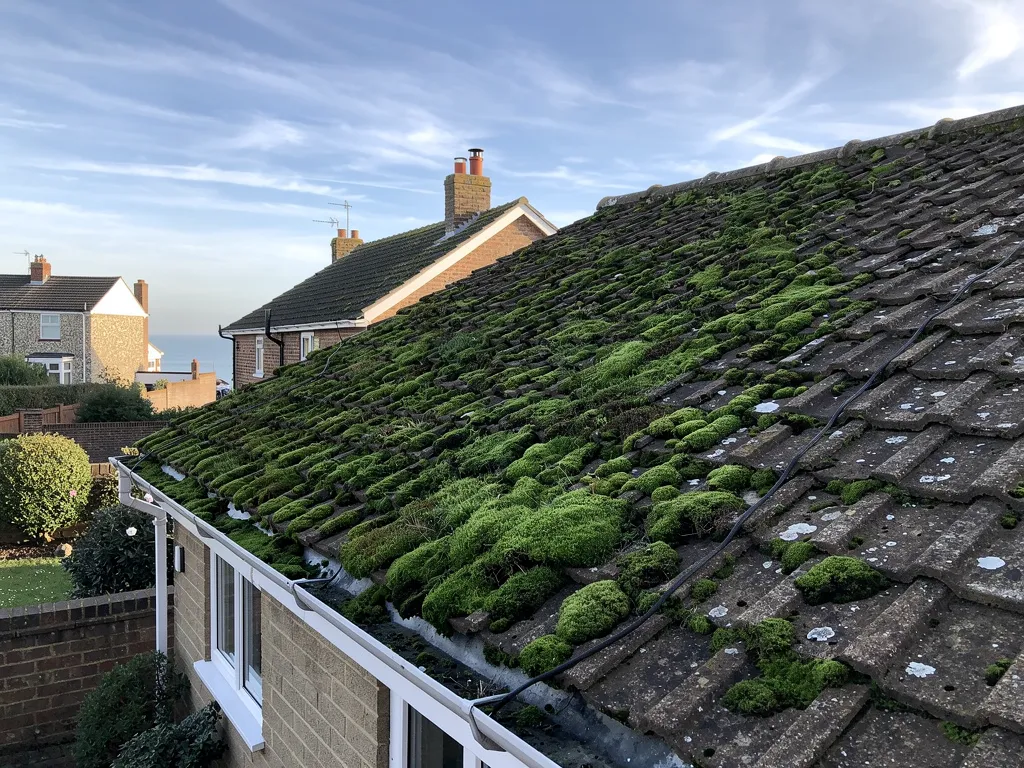
Bungalow roof heavily covered in green moss on its north-facing slope
  • Leaks traced
    to the source
  • Photos of
    your own roof
  • Written quote,
    one total price
  • 10-year workmanship
    guarantee, in writing

What we do about spray foam on Worthing roofs

  • Assessing the foam

    A look at what was sprayed, where it runs and how thick it is, with photographs and moisture readings from the timber, so any decision to remove rests on evidence.

  • Removing it from rafters and deck

    Foam taken off the rafters, battens and the underside of the covering in stages, without gouging the timber, then bagged and carried away from site.

  • Checking the timbers

    Rafters, battens and the roof deck inspected for rot, staining and damaged fixings once the foam is off, with every finding photographed for you.

  • Repairing the covering beneath

    Torn underlay, rusted slate nails and cracked tiles that the foam was hiding put right, so the roof keeps the weather out as it should.

  • Ventilation and new insulation

    Insulation put back at the loft floor or elsewhere in a way that lets the roof breathe, with eaves ventilation restored where the roof needs it.

  • Evidence for buyers and lenders

    A written account with before and after photographs that a surveyor, a buyer or a mortgage provider can read when they ask what was done.

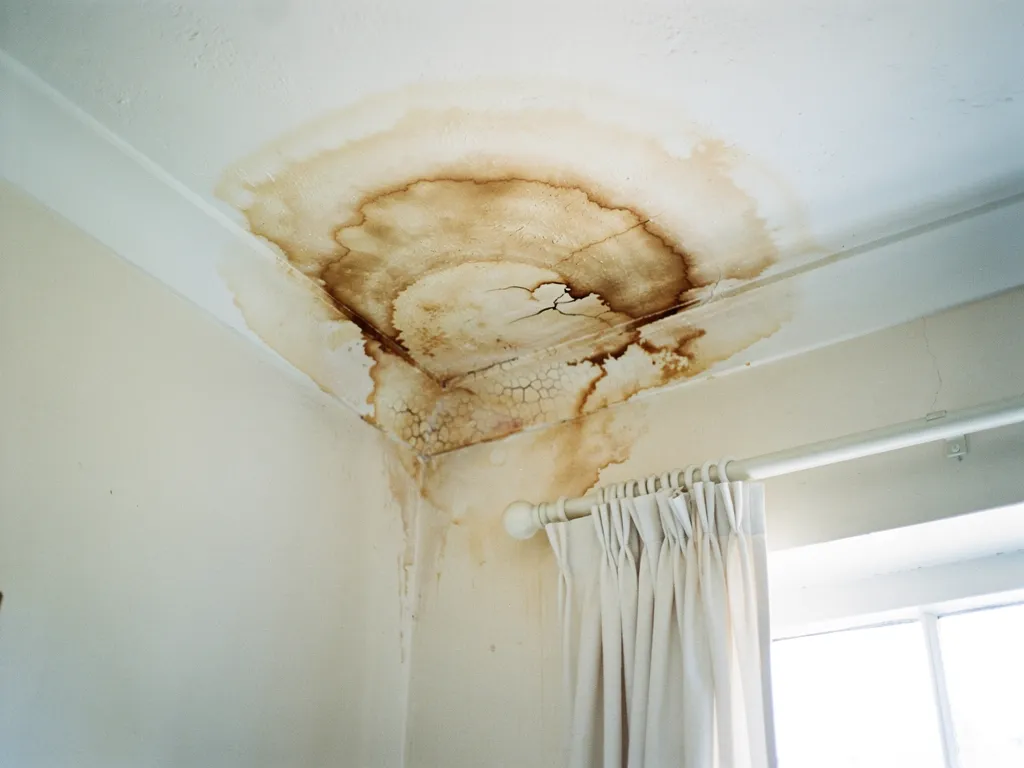
Brown water stain spreading across a white bedroom ceiling near the window

Signs spray foam needs a closer look

  • Foam visible between the rafters
  • A surveyor or lender queried it
  • A musty smell in the loft
  • Dark staining on rafters or boards
  • A leak that stays hidden

Typical UK costs for spray foam removal

Typical UK price ranges
JobUK range
Removal, per square metre£20 to £50 per m²
Assessment before any work£100 to £200
Disposal of the foam£150 to £400

Figures like these come from a national guide. What you pay comes from a written quote, prepared once we have surveyed your own roof. Source: MyBuilder spray foam insulation removal cost guide, updated 21/08/2026.

From the first message to a finished loft

  1. Send what you haveCall 01903 299063 or WhatsApp photos of the foam in the loft, any survey report that mentions it and any paperwork from the installer.
  2. Survey and photographsWe inspect the foam, the timbers and the covering from the loft and from outside, and photograph each finding so the evidence is yours to keep.
  3. A written quoteThe quote is a single total in writing and says plainly whether we advise taking off all of the foam, part of it or none.
  4. Removal and make goodWe take the foam off, check and repair what it covered, restore ventilation and insulation, leave the site tidy and carry the waste off.

The spray foam guide

Deciding what stays, what comes off and what the roof needs after

Why owners across West Sussex are having foam taken off, what sits underneath it, what lenders and surveyors say, and what the work tends to cost.

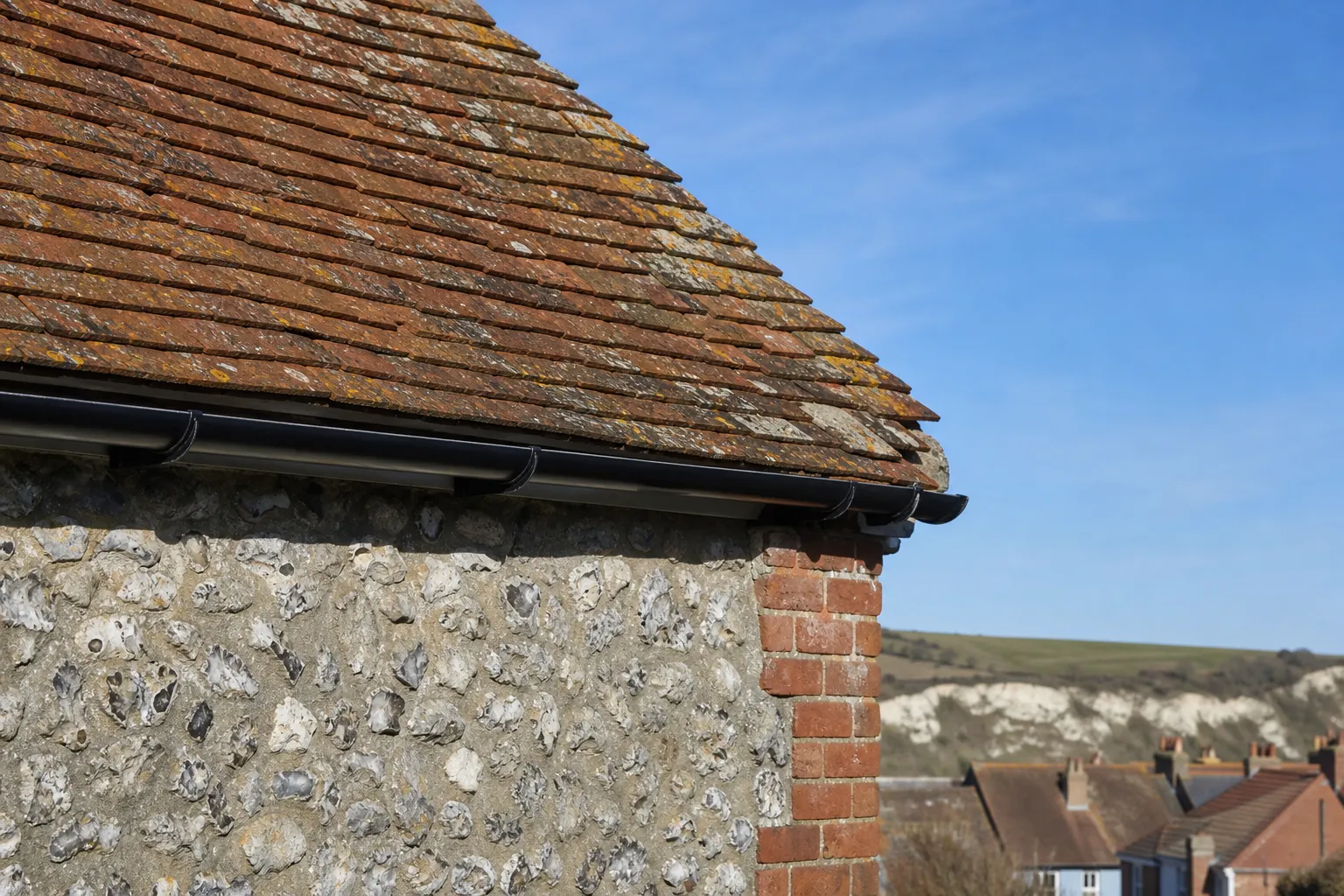
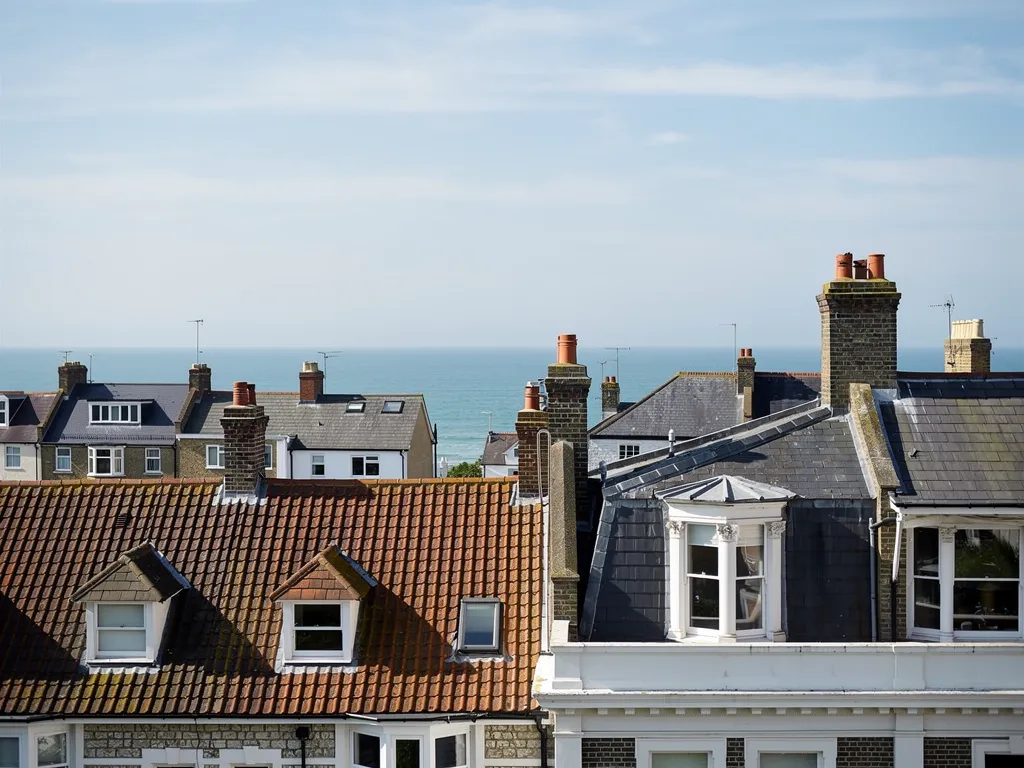
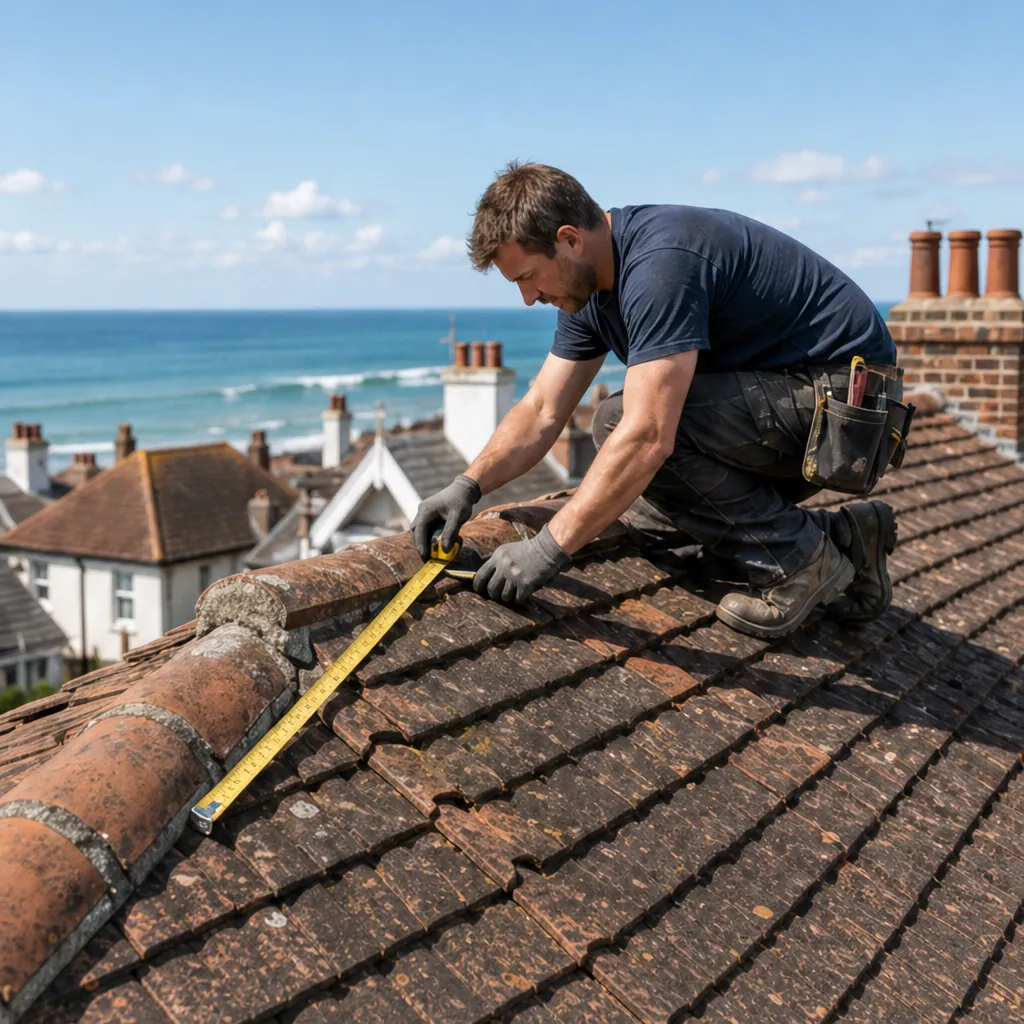
Roofer measuring along a weathered clay ridge, the sea beyond the rooftops

Chapter one

Does the foam have to come off your roof?

Foam is not automatically a fault, but on a pitched roof it can hide problems that surveyors, lenders and owners cannot see.

Spray foam insulation is a liquid that goes onto the underside of a roof, expands and sets into a rigid layer. It was offered to many homeowners as a fast way to insulate a loft and cut draughts, and in some cases as a way to quieten a roof that leaked. Some years on, plenty of owners are asking us whether it should come out. The answer depends on the roof, the foam and what you plan to do next, and we do not tell everyone to take it off.

At a glance

  • RICS says foam can affect a surveyor's opinion of value
  • Some lenders refused foamed homes in November 2024
  • The Energy Saving Trust sees less risk with open-cell foam

Note The Energy Saving Trust's roof and loft insulation advice, including its warning on foam over leaks, was last updated on 8 May 2026.

Three reasons come up again and again. The first is the lender. Mortgage providers set their own policies on foam, and as of November 2024 some lenders said they would not lend on homes with spray foam, while others looked at each case on its own facts. RICS, the surveyors' professional body, tells owners to check with their mortgage provider whether its policy allows the product at all. The second reason is the surveyor. RICS says the presence of spray foam is a factor that could affect a surveyor's professional opinion of value, which is how foam ends up bearing on your property value on paper. The third is the roof itself. Foam sprayed hard against the timbers covers them, and RICS warns that incorrectly installed insulation can lead to dampness, such as uncontrolled condensation.

1.1 When we recommend leaving it alone

Some foam stays. If the roof is dry, the timbers we can reach look sound and no buyer or lender is asking questions, there may be no work to do. We put that conclusion in writing, because the right recommendation is whichever job is smallest and still solves the problem. Our answer on whether all of the foam has to go shows how we reach that decision, and we never treat removal as a rule that applies to every roof.

1.2 Why people are choosing removal

Where a sale or a remortgage is coming, taking the foam off and showing what lay beneath can end a conversation that would otherwise drag on. Where the foam sits on a roof with a history of leaks, removal lets us see the real condition of the covering. Some owners simply want to repair or replace a roof and cannot do it properly with foam in the way. Others have noticed damp or a musty smell and want to know what is behind it.

What people saySpray foam has to be stripped from every roof it is on.

What is trueRemoval is a decision made roof by roof, after an assessment of the timbers, the covering, the lender's position and your own plans.

Foam is not automatically a fault; removal is a decision, made roof by roof.

1.3 Spray foam jobs from Worthing across West Sussex

We take on foam work in Worthing and in every place within 30 road miles: Lancing, Sompting and Shoreham, Hove and Brighton, Ferring, Littlehampton and Arundel, villages on the Downs, and towns as far as Horsham and Chichester. A roof near the seafront takes driving rain and salt air, which is one reason we want to see the timbers for ourselves rather than assume they are fine.
Chapter two

What the foam hides on a pitched roof

Foam sprayed against the underside of a roof stops anyone seeing the battens, the underlay and the fixings that hold the covering on.

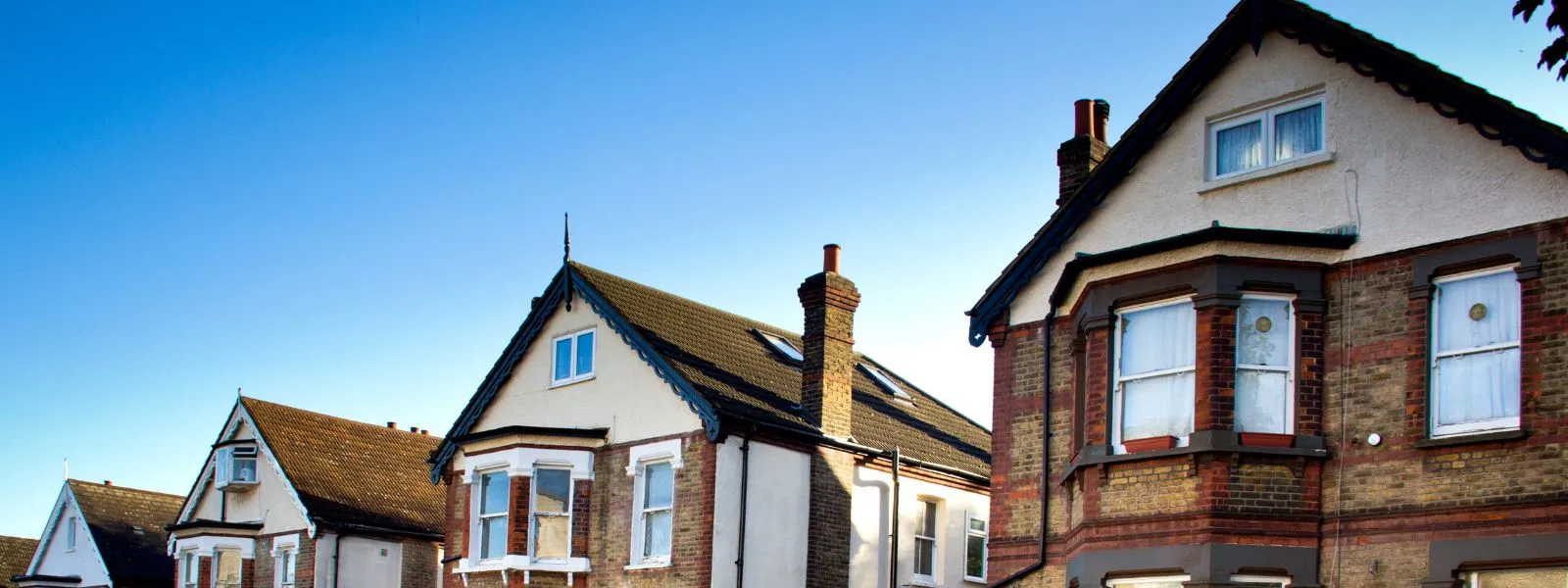
Edwardian semis with concrete tile roofs, brick chimneys, rooflights

Under a tiled or slated roof, the covering hooks or nails onto battens, thin timber strips running across the rafters, the angled beams that run from the ridge down to the eaves. Beneath the battens lies the underlay, a membrane that catches water getting past the tiles and sends it down to the gutter. All of this is normally visible from the loft. Once foam has been sprayed on, it is not. The foam coats the rafters, bridges the gaps between them and often grips the underlay and battens, so a slipped tile, a rusting nail or a damp batten can go unseen for years.

At a glance

  • Foam hides timbers, nails and underlay from view
  • Foam sprayed over a leak does not cure the leak
  • Buildings from before 2000 may contain asbestos

Note On a cold roof of 15° or less with HR underlay, Marley's BS 5250 guidance asks for a 25mm ventilation gap at the eaves.

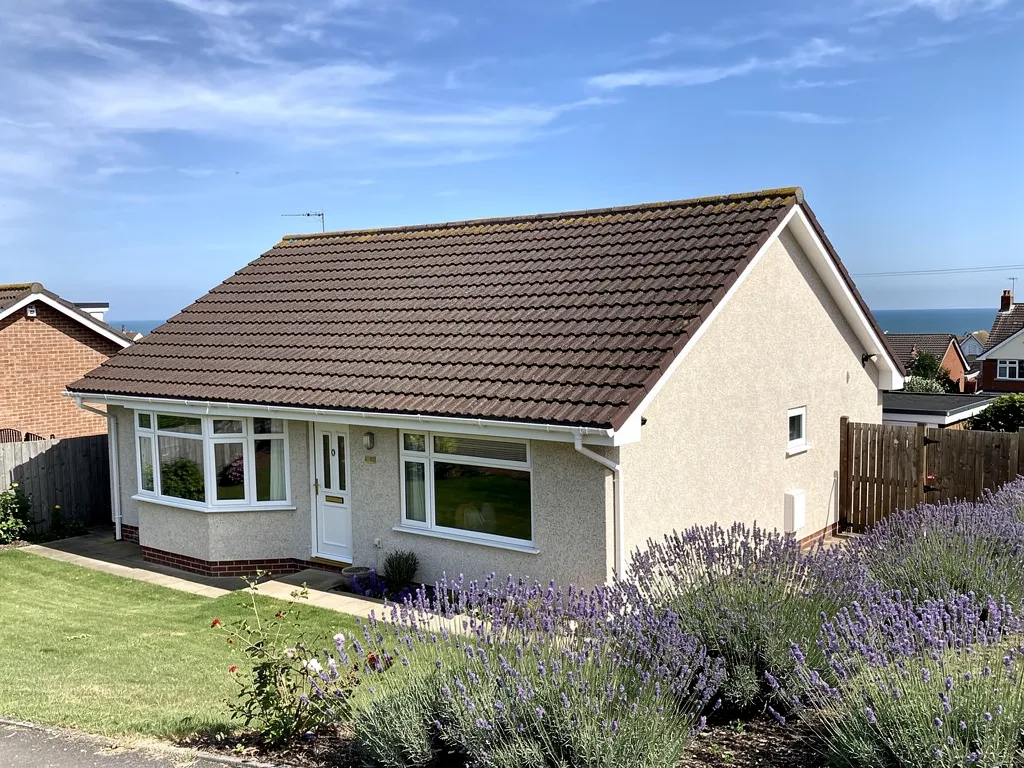
Post-war hipped bungalow with a new tiled roof

On a slate roof that matters a great deal. Slates hang on nails, and the nails rust and fail with age, which is why a slate slides down a course when its fixing gives way. With foam over the back of the roof, nobody can see which nails are going. On a tiled roof we look for cracked tiles, broken nibs and gaps along the ridge and the roof edges. Access is part of that picture too: the size of the hatch, whether the loft is boarded, and how far we must carry sheets and bags all shape the method. Our answer on foam sprayed over a leak explains what we look for when the foam went on for that reason.

2.1 Leaks sealed in rather than cured

Some foam went on to stop a leak. The Energy Saving Trust does not recommend spraying foam onto the underside of a damaged or leaking roof without fixing the problem first, and we agree. The water still gets in at the flashing, the valley or the cracked tile. The foam has simply covered the evidence, and it can hold water against the timber it was meant to protect. A true repair finds the way in and closes it, which is the work we do on every roof.

Post-war hipped bungalow with a new tiled roof

2.2 Condensation, salt air and flat roofs

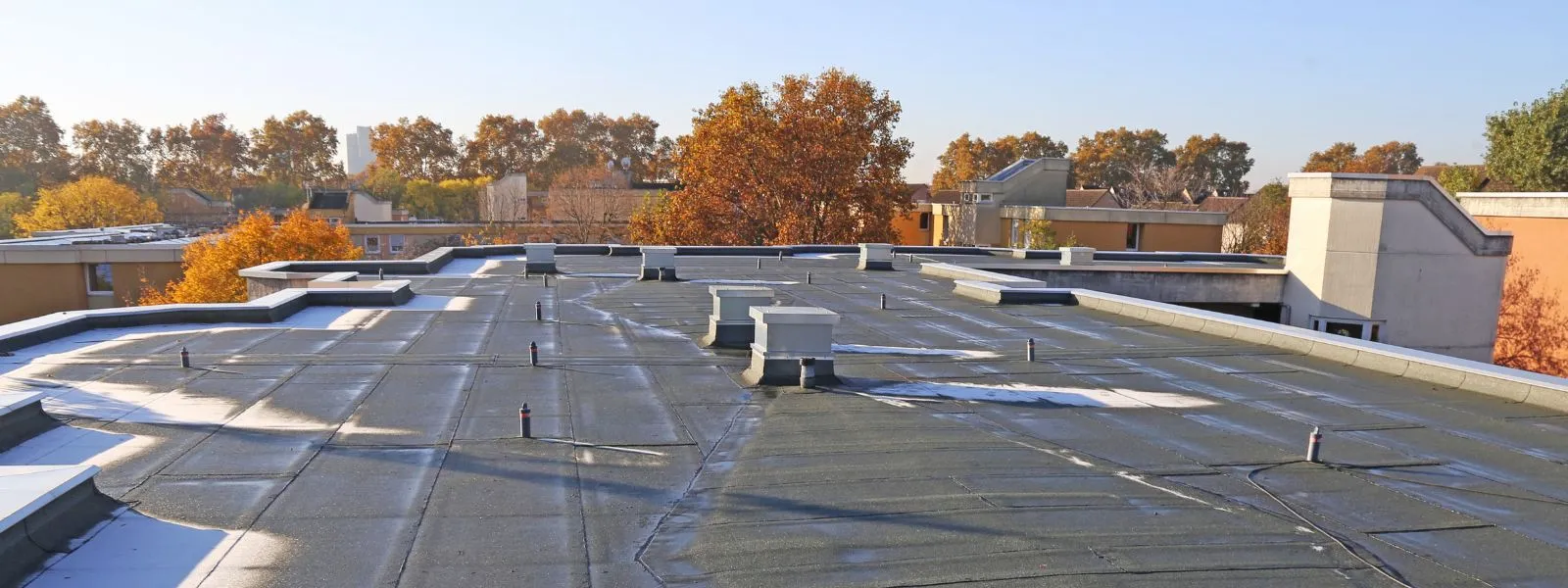
On this coast, damp in a loft can come from a leak, from condensation or from both together. Warm air from the house meets cold roof timber and turns to water, and foam whose installation took no account of ventilation can trap it. The same worry applies to the deck of a flat roof under foam, where the boards sit directly under the covering. We read the moisture in the timber first, because the pattern tells us which of the causes we are dealing with.

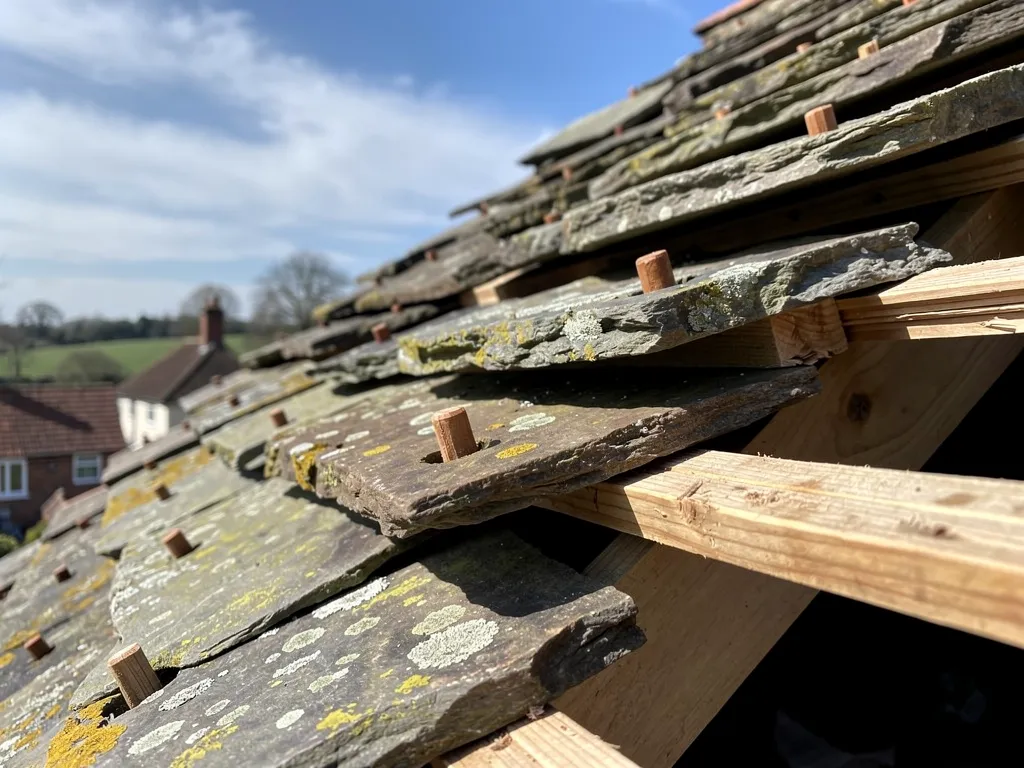
Close-up of Horsham stone slab edges with the oak pegs that hang them on the battens

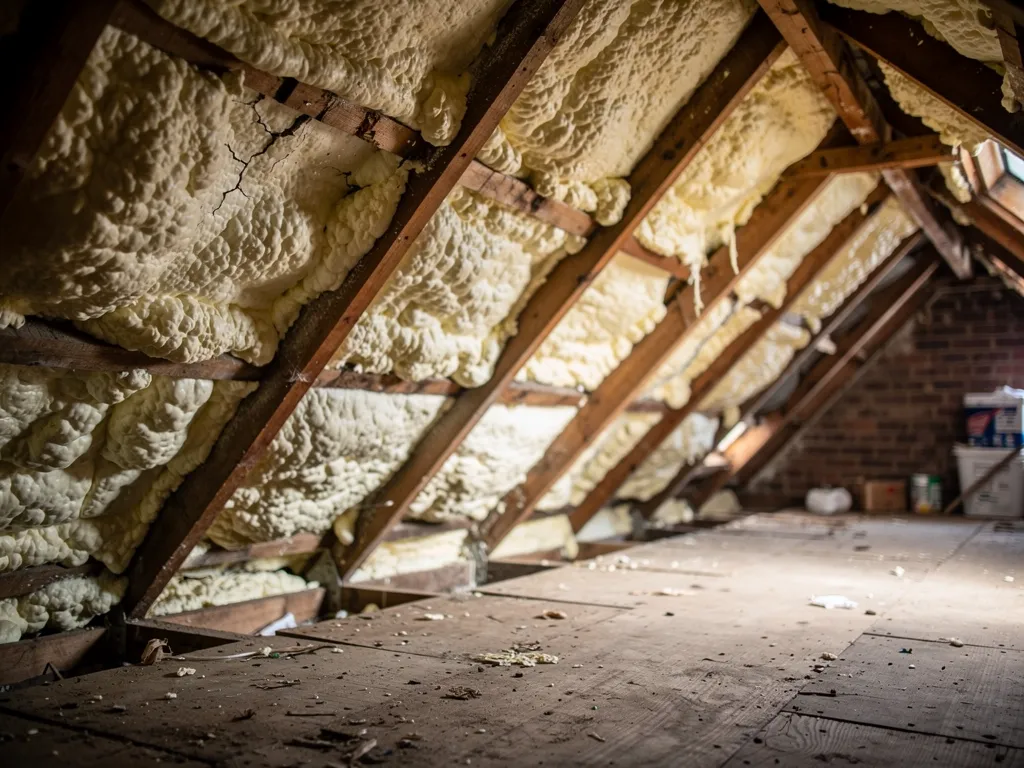
Fig. 2 On the survey Foam coating the rafters and hiding the battens behind.

Surveyor flying a drone to inspect a roof from the ground

Chapter three

How we survey a foamed loft

A foam job starts with finding out what was sprayed, how far it runs and what condition the roof is in beneath it.

Before we put a price on anything, we go into the loft with a torch and a moisture meter. The first job is to identify what is there. Open-cell and closed-cell foam behave differently, and the Energy Saving Trust notes that the risk of a damaged roof being hidden is much lower with open-cell foam. We also note how thick the layer is, how much of the roof it covers and whether it was applied to the rafters, to the loft floor or to both. Installer paperwork, if you have it, helps us: the date, the product name and any data sheet tell us what we are dealing with and how old it is. We also look at the loft as a working space, noting the hatch size, the lighting, the route for bags of waste and what must be protected below. If you want to look first, our guide to identifying spray foam shows what to check from the hatch.

At a glance

  • We identify the foam, its extent and its thickness
  • Moisture readings come from the timber we can reach
  • Photographs and a written account come with the quote

Note Firms carrying construction or demolition waste register as upper-tier carriers and renew that registration every 3 years.

3.1 Moisture, timber and covering

Next comes moisture. We take readings from timber we can reach, including exposed rafter ends and any edge where the foam has lifted. Dark staining, a musty smell and soft battens all count as evidence. Then we go outside and inspect the covering, the flashings and the gutters, because a fault there matters whatever the foam is doing. If the roof is large or awkward, our roof inspections and surveys service can look at it more fully before any foam work is agreed.

3.2 What you receive

The written quote comes with photographs of your own roof, so you can see what we saw. It says what we recommend: removal of all the foam, removal from one slope or one area, or leaving it in place. It gives the reason. A lender or a buyer's surveyor may ask for the same evidence later, which is why we describe the roof's condition in plain terms. Our guide to a spray foam inspection report covers what such a document should contain.

Some things cannot be known until the foam is off. If we find damaged timber or a failed fixing as the layer comes away, we stop, photograph it, show you and agree the repair with you before going on.

What the foam survey covers

  1. Identify We establish the type of foam, how thick it is and how far it runs.
  2. Measure Moisture readings from reachable timber show whether damp has built up.
  3. Inspect We check the tiles or slates, flashings and gutters from outside.
  4. Report Photographs and a written account come with the quote.

We stop and show you what we find before we repair anything that was hidden.

Two cautions apply before anyone starts work. Anything built or refurbished before 2000 should be treated as possibly containing asbestos, as HSE advises, and HSE names external soffits among the places it turns up, so we find out what a soffit or an old garage roof is made of first. Bats and nesting birds are protected as well, and a loft can shelter either, so we look before we disturb anything.

Chapter four

Ventilation and loft insulation after removal

Once the foam is off, the roof needs to breathe again, and the loft needs insulation that suits how the roof is built.

Taking foam off is half the job. A roof with no insulation is a cold, expensive one to live under, and an owner who has paid for removal usually wants the loft insulated again. The question is how. In a conventional cold roof, the insulation sits at ceiling level between and over the joists, and the roof space above stays cold and ventilated. Moisture that gets into that space is carried away by air passing through, usually entering at the eaves, the lower edge of the roof, and leaving at the ridge or through the covering.

At a glance

  • BS 5250 sets out how cold roofs are ventilated
  • Eaves ventilation depends on the underlay and the roof pitch
  • RICS says condensation checks need a qualified professional

4.1 Why the underlay and the eaves matter

How much ventilation the roof needs depends on the underlay and the pitch. Marley's guidance on BS 5250 gives specific figures, which we set out in the table of facts below. We follow the underlay maker's requirements as well, because that is where the tested figures come from. If an old underlay is torn or sagging, we replace it before the new insulation goes in, since insulating over a failed membrane only hides the next problem. Insulation pushed hard into the eaves can block the air path that the roof relies on, so we leave the gap that the figures call for.

4.2 Insulating the loft again

Putting insulation back at the loft floor is often the simplest route, and it leaves the rafters open to view, which suits a buyer's surveyor. Some owners want the insulation at rafter level to keep the loft usable. That is a more complex design, and RICS says thermal calculations and condensation risk checks need to be undertaken by a qualified professional, so we would not guess at it. Our guide to insulating a loft after foam removal compares the routes.

The best insulation material is the one that suits the roof, the moisture risk and the ventilation you can provide. We talk through the options on site once we have seen the roof, and the written quote names the one we recommend. Where a roof is close to wearing out, it may make sense to look at the covering as a whole, and our roof replacement page explains when a new covering is the better route.

Cold roof ventilation under BS 5250 (via Marley)

Eaves, pitch 15 degrees or less
25 mm continuous, with high resistance underlay
Eaves, pitch over 15 degrees
10 mm continuous, with high resistance underlay
High level
An extra 5 mm for pitches over 35 degrees, spans over 10 m and mono-pitch roofs
Low resistance underlay
3 mm at the eaves with a well-sealed ceiling, if third party certification is met

Source: Marley, How do I ventilate a cold roof?, fetched October 2026

Chapter five

Lenders, surveyors and selling a foamed house

Mortgage providers and buyers' surveyors treat foam on their own terms, so evidence of the roof's condition counts for a lot.

New lead valley between two slate roof slopes

If you are selling, the foam is likely to come up when the buyer's surveyor goes into the loft. A surveyor who sees foam will usually note it, and the note travels to the buyer's lender. As of November 2024, some lenders said they would not lend on homes with spray foam and others assessed each case. That is a position that can change, so the lender's current policy is what counts, and the buyer's mortgage adviser is the person to ask. We do not speak for lenders. Our guide to spray foam and mortgages sets out the wording to expect.

At a glance

  • RICS published its consumer guide in March 2023
  • Lender policies differ and change, so ask yours
  • Before and after photographs are what buyers ask for

5.1 Evidence that helps

What we can do is give you evidence. Photographs of the timbers before the foam came off, photographs after, a written account of the condition we found and the repairs we made, and details of the ventilation and insulation now in place all help a surveyor and a lender to form a view. If your installer gave you a guarantee, check what it covers and whether the firm is still trading, because a guarantee is only as useful as the business behind it. Keep every document together in one folder, since a buyer's solicitor may ask for it. A bare loft with clean timbers, new ventilation and fresh insulation gives a surveyor something concrete to read, which is a stronger position than a seller who only says the foam was fine. Equity release providers and remortgage lenders hold positions of their own too, so put the same question to whoever is lending.

5.2 If the foam was mis-sold

Some owners were told that foam would do things it has not done. Under the Consumer Rights Act 2015, a service must be performed with reasonable care and skill, and the remedies include the right to require repeat performance. If an installer has closed, that may be difficult to pursue. We do not give legal advice, and the first step is usually a complaint in writing to the firm that sold the work.

What the RICS spray foam consumer guide says, and what it means for you

RICS pointWhat it means for you
MoistureIncorrectly installed foam can lead to dampness, so the timbers beneath are worth checking.
ChecksThermal and condensation risk checks need a qualified professional.
Lender policyAsk your mortgage provider whether its policy allows foam.
ValuationFoam can bear on a surveyor's opinion of value.
Listed buildingsFoam must not go into a listed or protected building without prior consent.
RemovalTaking it off could damage the existing structure, so it needs care.
Source: RICS, Spray foam insulation consumer guide, March 2023

A buyer's surveyor wants evidence of the timbers, not an assurance.

Photographs taken at each stage tell a story that a lender can follow without visiting your loft. Ask us for copies as the work goes on, so the file is complete by the time a buyer's surveyor asks for it, and so the sale or remortgage is not held up while someone waits for evidence. If anything surprising turns up behind the foam, you see it in the photographs as we do, and you decide how to proceed with the facts in front of you.

Chapter six

Reading a spray foam removal quote

National guides give a range per square metre; the area sprayed, the access and what lies beneath decide where your roof falls within it.

MyBuilder's cost guide puts spray foam removal at £20 to £50 per square metre, with an average job at around £1,500, and it adds an assessment at £100 to £200 and disposal of the waste foam at £150 to £400. Those are national numbers from one guide, not our prices, and they only show the shape of the market.

At a glance

  • MyBuilder puts removal at £20 to £50 per m²
  • The guide also gives figures for assessment and disposal
  • Confirm that VAT and scaffolding are covered in any price

6.1 What moves the total

The area sprayed is the largest factor, and the thickness of the layer comes next, since a deep layer takes longer to clear. Access matters. Foam in a roomy loft with a boarded floor is quicker to reach than foam in a cramped bungalow roof space. What lies underneath matters most of all. If the battens are sound and the underlay is intact, the job ends when the foam does. If they are not, repairs follow, and we explain that before work begins. Scaffolding set up over a pavement or carriageway needs a licence that the scaffold firm obtains, and West Sussex County Council wants 10 working days of notice for it. Brighton and Hove run a separate licence of their own.

6.2 Checking a quote before you accept it

Ask each firm a few plain things. Is VAT included, at the standard 20% rate? Is scaffolding included, if the job needs it? Does the price cover carrying the waste away? Has someone actually been up in the loft, or was the number guessed from a photograph? A figure written after a real inspection means more than a lower one given over the phone. A sound quote also says what the job includes: the area of foam to be taken off, whether timber and underlay repairs are covered, and whether insulation and ventilation are put back. We price fairly, and our written quote is a single total for the job. The spray foam removal cost guide looks at the national numbers in more depth.

Typical UK spray foam removal costs

  • Removal per square metre£20 to £50 per m²
  • Assessment before work£100 to £200
  • Disposal of the foam£150 to £400

National figures from one published guide, not our prices; the area sprayed and the access to it move the total. Source: MyBuilder spray foam insulation removal cost guide, updated 21/08/2026.

6.3 VAT, permission and building control

VAT on insulation follows its own rule. HMRC's Notice 708/6 gives a zero rate for installing specified energy-saving materials, including insulation for roofs and lofts in homes, from 1 May 2023 to 31 March 2027, reverting to 5% after that. Whether the new insulation in your job qualifies turns on how the work is supplied, and the written quote will set out our reading. If the foam is in a listed building, check with the planning team before acting, since the RICS guide says foam must not be installed there without consent. Where removal leads to a new covering, the Planning Portal thresholds for building control apply, and we manage the notification to building control when the work is notifiable.

Spray foam removal questions from Worthing and West Sussex owners

How difficult is it to remove spray foam insulation from a roof?

It is slow, careful work rather than a quick strip. Foam grips timber and can bond to underlay, and RICS notes that taking it off could damage the existing structure. That is why the job starts with an assessment and why we check the timbers as the foam comes away. A small bungalow roof space is very different from a deep layer across a large pitched roof, and the written quote reflects that.

Is spray foam a problem if I am selling my Worthing home?

It can be. A buyer's surveyor may note it, and as of November 2024 some lenders said they would not lend on homes with spray foam while others looked at each case. RICS also says foam can affect a surveyor's opinion of value. Ask your estate agent and solicitor how it may affect your sale, and keep any evidence of the roof's condition to hand.

Why are owners having spray foam taken out of their lofts?

Usually for one of three reasons: a lender or buyer's surveyor raised it, damp or condensation has appeared, or the owner wants to see the state of the roof timbers beneath. Foam also makes ordinary roof repairs harder, since nobody can see the underlay or the fixings from inside. Some owners keep their foam after an assessment finds the roof sound.

How much does it cost to get spray foam removed?

MyBuilder's national guide gives £20 to £50 per square metre for removal, an average job at around £1,500, an assessment at £100 to £200 and disposal at £150 to £400. Those are typical UK figures from one guide, dated 21/08/2026. The price for your roof depends on the area sprayed, the layer's thickness, the access and what the survey finds, and we put it in writing as one total.

Why do seafront homes in Worthing get damp lofts?

Driving rain off the Channel finds weak points in tiles, slates, flashings and ridges, and salt air is hard on exposed metal. Warm, damp air from the house can also condense on cold roof timber. A damp loft may therefore be a leak, condensation or both. Foam can hide which one, so we trace the cause before recommending any work.

Is it worth insulating a bungalow loft once the foam is off?

Usually, yes. A bungalow has a large roof area compared with its walls, so a bare loft is a place where heat leaves. The aim is insulation with the ventilation the roof needs, worked out for the roof as it is built. Ask about it during the survey and we will recommend an approach in the written quote, with the reasons for choosing it.

Guides to spray foam, lenders and removal costs

Plain answers on identifying foam, mortgage and RICS questions, removal costs and what to do next, written for homes in Worthing and across West Sussex.

Guides

Quick answers

Tell us about your roof

Describe what is happening and we will call you back to arrange a visit.

  • Photographs of what we find
  • A written quote with one total price
  • Or call 01903 299063
Call Get a quote