
Question answered
Do you need a new roof membrane after spray foam removal?
The short answer
Not always. If the underlay under the foam is intact, dry and still firmly lapped, it can sometimes stay. It needs replacing when removal has torn or perforated it, when foam residue cannot be cleared from it, or when the roof was already failing underneath. Replacement usually means lifting the covering, so the decision is made on inspection, and it also settles what ventilation the roof needs.
Spray foam sticks to whatever it touches. Once it has been taken off, the underlay beneath may be fine, patched or beyond saving, and only an inspection tells you which.
When the existing underlay can stay
Beneath the tiles or slates, the underlay acts as a back-up barrier. It catches wind-blown rain and condensation that slips past the covering and guides it to the gutter. Where foam was sprayed onto its underside rather than stuck across it, and where careful removal has left it whole, there may be nothing wrong with it.
What we look for is plain. The sheet should be continuous, with laps still overlapping in the right direction. There should be no tears, no sagging pockets that hold water and no brittle, cracked areas. The battens fixed over it should not have worked loose. The timbers around it should read dry, and the surface should be free of foam that would stop it behaving as a membrane.
If all of that holds, repairing a few local defects may be enough. We recommend the smallest job that fixes the fault, so a new membrane is never a given. It follows from what the loft shows.
When it has to be replaced
Several things push the answer towards replacement. The first is damage from removal itself. Scraping or cutting foam from a surface it has gripped can tear or thin the underlay, and fine perforations are easy to miss from below. Our page on roof damage from foam removal shows what that damage looks like.
The second is residue that will not clear. A film of foam left across the underlay can leave it unable to shed or pass moisture as intended. The third is the age and state of the sheet. If it was already old, brittle or poorly lapped before the foam went on, taking the foam off does not make it good.
The fourth is water. If foam was sprayed over a roof that was leaking, the underlay and battens may have been wet for a long time. Then we are not only renewing a membrane. We are checking the timbers around it and following the leak back to its source, which is what we do before any quote, because a membrane laid over hidden rot only buries the problem.
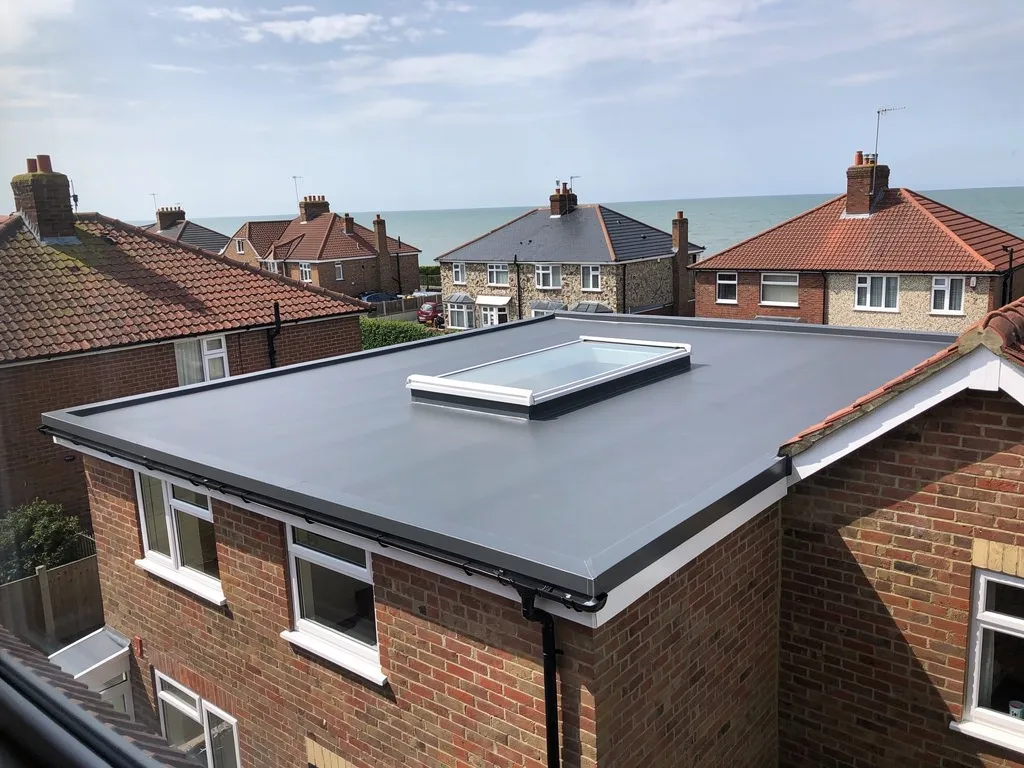
High resistance or breathable: the choice matters
Underlays come in two broad families. A high resistance (HR) underlay resists the passage of water vapour, so it depends on a ventilated gap above the insulation to let moisture escape. A low resistance (LR) underlay is vapour open and air permeable, so moisture can pass through the sheet itself. Pick the wrong one for the roof's build-up and condensation follows, the very danger the RICS consumer guide links with badly installed insulation.
The choice depends on what is going back under the covering. A cold loft with insulation on the floor is treated differently from a roof insulated between the rafters. The airtightness of the ceiling, the span and the pitch all feed into it.
This is why the question in the heading cannot be answered from the street. It also explains why we settle the insulation plan before choosing the membrane, as our guide to why spray foam gets removed hints at.
Ventilation figures that shape the specification
Marley's guidance on cold roof ventilation, based on BS 5250, gives figures worth knowing. With an HR underlay, a roof at 15 degrees or below needs a 25 mm eaves opening, and anything steeper needs 10 mm. Roofs above 35 degrees, spans beyond 10 m, and single-slope or lean-to designs also want a continuous 5 mm opening near the top.
For an LR underlay under an air-permeable covering with a well-sealed ceiling, Marley says the 3 mm that normal eaves construction leaves open is enough, so long as the certification conditions attached to the product are satisfied in full.
These are manufacturer-quoted figures for typical cold roofs, not a substitute for a site check. Eaves on older houses are often blocked by insulation, birds' nests or paint, and foam that ran into the eaves can shut them off altogether. Reopening that path is part of the job, and so is checking that nothing stuffed into the eaves later has closed it again.
Deciding, pricing and recording the outcome
Renewing an underlay normally means lifting the tiles or slates over the area, so it is a bigger job than patching. That is why the survey comes first. The survey photographs show the roof as it stands, and one written total price follows. Access, the size of the area and the type of covering all move the figure, and the covering often needs careful handling if it is to be reused.
Whatever is decided, record it. A note of what was found under the foam, whether the membrane stayed or went, and what replaced it will help any later buyer or lender. Our page on evidence lenders want covers that kind of file.
Our spray foam insulation removal hub sets the whole sequence in order, from the first loft inspection to the roof being made ready for whatever insulation comes next, with each step recorded for the next owner.
Membranes after foam: two more questions
Can a fresh underlay simply go on top of the old sheet?
Rarely, and not under tiles or slates already fixed. A second sheet traps whatever state the first is in and adds bulk at the laps and battens. If the old underlay is failing, the sound approach is to strip back, renew it and refix the covering, which is what the survey will tell you is needed.
Will a breathable membrane stop condensation on its own?
No. It helps moisture move out, but ventilation, an airtight ceiling and the right insulation still matter. RICS says condensation risk checks should be made by a qualified professional. The membrane is one part of the roof build-up, and it works as intended only when the rest is in place.
Tell us about your roof
Describe what is happening and we will call you back to arrange a visit.
- Photographs of what we find
- A written quote with one total price
- Or call 01903 299063
10-year workmanship guarantee, in writing.