
Question answered
Can spray foam fix a leaking roof?
The short answer
No, spray foam does not fix a leaking roof. It can plug a gap for a time, but it leaves the broken tile, split flashing or failed valley exactly as it was, and it covers the damage so nobody can see it. The Energy Saving Trust says some companies offer to spray a leaking roof without tackling the problem first, and that it does not recommend this.
Foam sprayed under a roof can stop daylight and drips for a while, but it does not mend the fault that let the water in. The leak simply goes out of sight.
Why a leak sprayed over is still a leak
A roof leaks because water finds a way past the covering: a cracked tile, a lifted flashing, a valley full of moss, a failed ridge bed. Foam does nothing about any of those. It goes onto the underside, where it can bridge a hole so that no drip falls into the room, but the water still enters the roof build-up above it.
The advice from the Energy Saving Trust (page updated 8 May 2026) describes firms that offer to cure a leaking or damaged roof with a coat of foam underneath, with the underlying fault left untouched, and its advice is not to go down that route. We agree with that advice. A leak should be traced to its cause on the outside and mended there. Insulation belongs afterwards, once the roof is sound and dry. It is never a stand-in for the repair, and treating it as one simply delays the day the real fault is found, usually at a higher price.
Where the water goes when the foam stops it
Water that cannot drip through will run along the face of the foam, soak into the timbers, or gather on the upper surface of the layer and sit there. Rafters and battens that stay wet can decay, and the first hint may be a soft patch or a smell, long after the foam went up. By then the damage is well established and the repair bill has grown. The ceiling stays clean, which is exactly the trouble. The homeowner assumes the leak has gone.
The Trust adds that an open-cell product brings far less risk of this kind, so the type matters, but that does not turn foam into a repair. Open-cell and closed-cell products behave differently, and our page on open-cell and closed-cell foam explains how. In either case, a wet roof hidden under insulation is harder to deal with than a wet roof you can see and test.
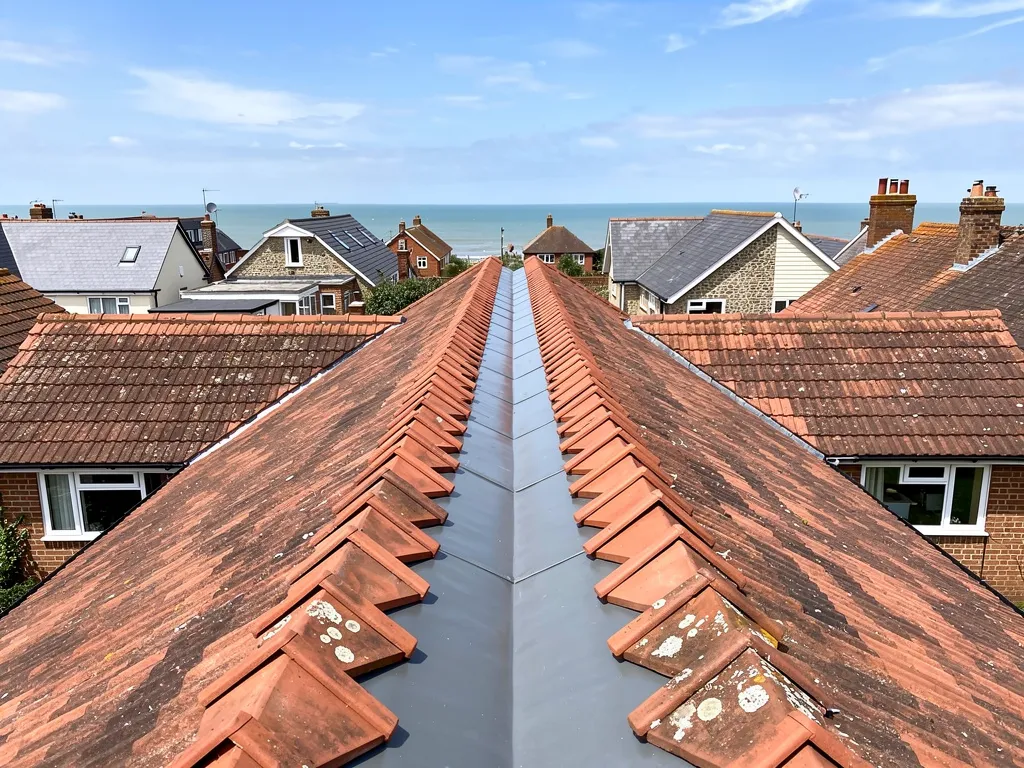
What a proper repair looks like instead
A stain is seldom directly under the hole, so the first job is tracing it. We start inside the loft, following the tide marks and damp timber up the slope, then compare that with the outside of the roof: a slipped tile, a perished lead flashing, a cracked verge, an overflowing gutter. The repair goes where the water goes in. That might be new tiles, a replaced soaker (a shaped piece of lead that seals the junction of tiles and a wall), a re-dressed flashing or a rebuilt valley.
Once the covering is sound and the timbers are dry, insulation can follow, with the ventilation the roof type needs. The result is a roof you can inspect, and a repair you can see in pictures. If the weather turns before the work is finished, we make the roof safe first and finish properly once it is dry. Everyday repairs are covered on our roof repairs page, and the foam work itself on the spray foam removal hub.
If foam has already gone over a leak
Plenty of owners find this out after the event: the foam is up, and a stain appears months later, or a surveyor asks what is behind it. The sensible move is to check before it gets worse. A moisture meter on the rafters, a look at the underlay wherever it can be reached and an inspection of the tiles from outside tell us whether water is still getting in.
Sometimes the foam can stay and the leak is repaired from above. Sometimes the section over the fault must be cut back so the timbers can be dried and examined. Foam stuck to the back of tiles also complicates any later overhaul, which is covered in re-roofing with spray foam. We aim for the smallest repair that really stops the water, and we say why, so nothing is done for show. Every step can be checked against the pictures taken beforehand.
Questions to put to anyone offering it
If a company proposes foam as the answer to a leak, ask what has been found on the outside of the roof, and ask to see it in pictures. Ask what will be done about the fault itself, and whether the roof will be dry before any spraying. Ask which type of foam is proposed, and who carries out the condensation risk check, since RICS says these need a qualified professional.
Also ask about your mortgage and your buildings insurer before agreeing. The reasons people remove foam often begin with a lender's question, and our page on condensation under foam shows why moisture is the part to watch. A firm that answers all of this in writing is easier to rely on than one that talks up the product, and you lose nothing by asking before you sign.
Foam and leaks: two further questions
Can I seal a small gap from inside the loft with foam from a can?
It might quieten a draught for a while, yet it leaves the cause untouched and covers the evidence. A small hole in the covering still lets water into the felt and battens. Mark where the stain is, photograph it and have the outside of the roof checked.
Is foam ever a sensible part of fixing a roof?
Insulation has its place once a roof is sound and dry. The order matters: repair first, confirm the timbers are dry, then decide on insulation with a qualified person doing the condensation check.
Tell us about your roof
Describe what is happening and we will call you back to arrange a visit.
- Photographs of what we find
- A written quote with one total price
- Or call 01903 299063
10-year workmanship guarantee, in writing.