
Question answered
Homebuyer survey found spray foam: what now?
The short answer
Do not panic and do not exchange yet. Ask your surveyor exactly what they saw, tell your mortgage lender at once, and get the roof looked at by a roofer who can assess the foam and the timber under it. Depending on what is found you can negotiate the price, ask the seller to deal with it, or step away. Decide with evidence, not the survey line alone.
A survey that mentions spray foam is a prompt to ask questions, not necessarily to walk away. The next steps are to understand the foam, the roof under it and your lender's position.
Read what the survey actually says
Survey wording varies. One report may simply note that foam is present in the loft. Another may recommend a specialist inspection, flag condensation risk or suggest the lender be told. Read the sentence carefully and ask the surveyor to clarify anything unclear, including which slopes are covered and whether any timber was visible.
RICS's March 2023 consumer guide says valuers may take foam into account when forming a view on value, and warns that taking it out might harm the structure. So a valuation may have been adjusted or conditions attached, and you should find out which.
Ask the seller for any paperwork: installer details, date, product, any guarantee and any earlier survey. Our page on how to tell if you have spray foam helps when records are thin.
Speak to your mortgage lender early
Lenders do not all treat spray foam the same way. A news report from November 2024 listed lenders that decline homes with foam and others that decide case by case. Policies can change, so ask your own lender or broker for the current position in writing rather than relying on that snapshot.
Tell them what the survey says before the valuation stage goes further. Some will want a specialist report, some will want the foam removed before completion and some may be content with evidence that the roof is dry and sound. The RICS guide advises checking with your mortgage provider whether their policy allows the installation of such products.
If you are a cash buyer, you are not bound by a lender, but a later buyer may be, so resale matters. See spray foam that was mis-sold if the paperwork suggests the original sale was poor.
Ask the broker to confirm any lender condition in writing, because verbal comfort at the start of a purchase does not always survive the formal valuation.
Get the roof itself assessed
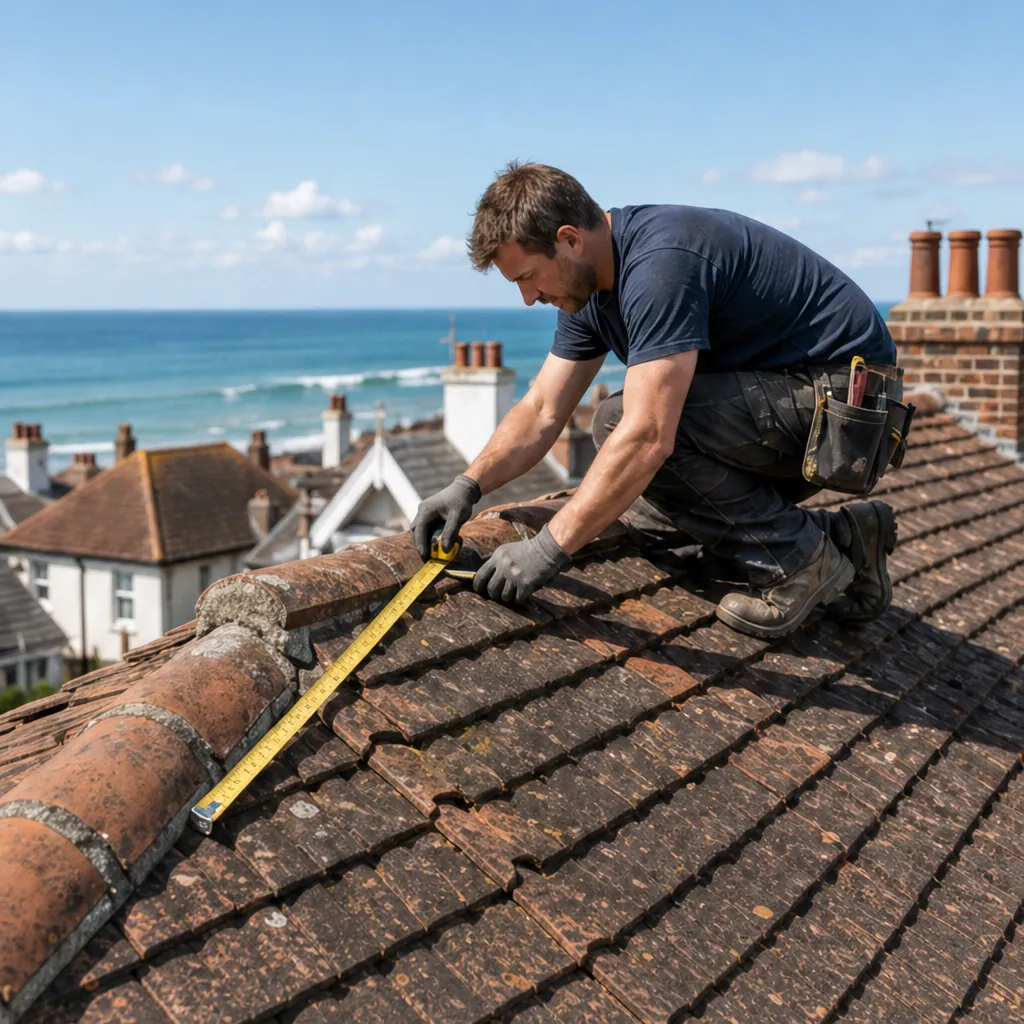
A general surveyor sees the loft; a roofer sees the covering, the flashings and what the foam is hiding. Before you commit, ask for a roof assessment with photographs and moisture readings on any exposed timber. Seller access is needed, so your solicitor or agent should arrange it.
We look at the type of foam, how it sits against the tiles or slates, and any stains, soft timber or mould around the edges. Findings are limited where foam covers the timber, and we tell you what we could not see. If removal or repair looks necessary, a written quote follows with a single total.
Roof type changes the picture. A slate roof can hide fixing problems, which we cover in spray foam on a slate roof. A flat roof carries deck risk, covered under spray foam under a flat roof.
Our spray foam insulation removal hub explains the wider routes if the assessment points towards work.
Your negotiating options
With evidence in hand, the usual routes are these. You can ask the seller to remove the foam before completion with the work done to a written specification. You can ask for a price reduction that reflects the quoted cost of dealing with it, and then manage the work yourself after purchase. Or you can ask for a retention held by your solicitor until the work is complete.
Which route suits depends on your lender. If a lender will only proceed once the foam is gone, removal before completion is likely to be the only workable route. If the lender is relaxed, a reduction may be simpler.
Be realistic about timing. Removal and reinstating a covering or insulation takes planning and sometimes scaffolding, so build that into the sale timetable. Your solicitor handles the legal side. We can supply the roof findings and costs they need.
When walking away is reasonable
Most foam problems can be priced and managed, but some are more serious. Widespread rot, structural movement, foam over a roof that is already leaking, and a lender that will not lend on the property whatever you do are all legitimate reasons to rethink. Mould is another warning sign, and our page on mould behind spray foam explains what to look for.
A fair test is whether you can put a reliable total on the problem. If the assessment leaves large unknowns, such as an entire roof covered in foam with no visible timber, you are buying uncertainty, and the price should reflect that.
Keep every document: survey, assessment, quotes and lender correspondence. If you proceed, they protect you when you eventually sell.
Whatever you decide, record the date, who said what and the evidence behind it. A tidy file keeps a stressful purchase from turning into an argument later.
Buying with foam: two more questions
Can I ask a roofer to inspect before I exchange?
Yes, if the seller agrees to access. Ask through your solicitor or the estate agent. We would look at the covering, the foam and any exposed timber, photograph it and explain what could not be seen, so you have something concrete to negotiate with.
Does the seller have to pay for removal?
Not automatically. It is a matter of negotiation, shaped by your lender's requirements and the sale terms, and we do not give legal advice. Your solicitor can advise on the legal position. What we provide is the roof evidence and a written cost to support the conversation.
Tell us about your roof
Describe what is happening and we will call you back to arrange a visit.
- Photographs of what we find
- A written quote with one total price
- Or call 01903 299063
10-year workmanship guarantee, in writing.