
Question answered
Spray foam under a flat roof
The short answer
Spray foam under a flat roof carries a higher risk of trapped moisture and deck rot than foam in a pitched loft, because there is no loft void to ventilate and the timber deck sits directly against the foam. Warm, damp air condenses at the cold deck, or a small membrane leak soaks the wood, and the foam hides the damage. A survey with moisture checks is the way to know.
A flat roof deck has less room to dry out than a pitched loft. Spray foam stuck to its underside can seal in moisture, which is why flat roofs deserve closer attention.
Why a flat roof is less forgiving
A pitched roof has a loft, rafters at a slope and air moving through at the eaves. A flat roof is a sandwich: a ceiling, the joists, a deck, and the waterproof layer on top. Some flat roofs are ventilated, with a gap between insulation and deck. Many are not, and an unvented design relies on the insulation and vapour control being right.
Spraying foam against the underside of the deck changes the design. The deck now sits tight against foam, with no gap, and any moisture that reaches it has to dry upward through a waterproof layer that is built to stop water getting in. RICS's March 2023 consumer guide warns that badly fitted foam can bring damp, with condensation nobody planned for, and that the thermal and condensation sums belong with a qualified professional.
Wooden joists and deck boards are the parts at risk, since they stay wet when the foam stops them breathing.
The wider approach to foam on any roof type is set out in spray foam insulation removal.
How the deck gets damaged
There are two routes. The first is condensation: warm, humid air from the room below finds gaps in the ceiling, meets the chilled deck and turns to water. Foam is meant to prevent that, but gaps at edges, around lights or at service penetrations let air through, and the water then sits against the wood.
The second is a leak from above. Flat roof coverings such as EPDM, GRP and felt can fail at edges, upstands, outlets and around rooflights. A small leak that would normally mark the ceiling can instead soak into the deck and foam, which acts like a sponge and holds moisture against timber out of sight.
Over time the deck weakens. Plywood or boards can delaminate, soften and sag, and joist ends can rot where they bear on walls. By the time a ceiling shows damage, a good deal may already have happened.
Signs to look for
From below, look for ceiling stains, bubbling paint, sagging or a ceiling that feels damp. Dark patches at the edges, cracked plaster lines and a musty smell are other clues. Pay attention if the room is a bathroom or kitchen, where moisture levels are higher.
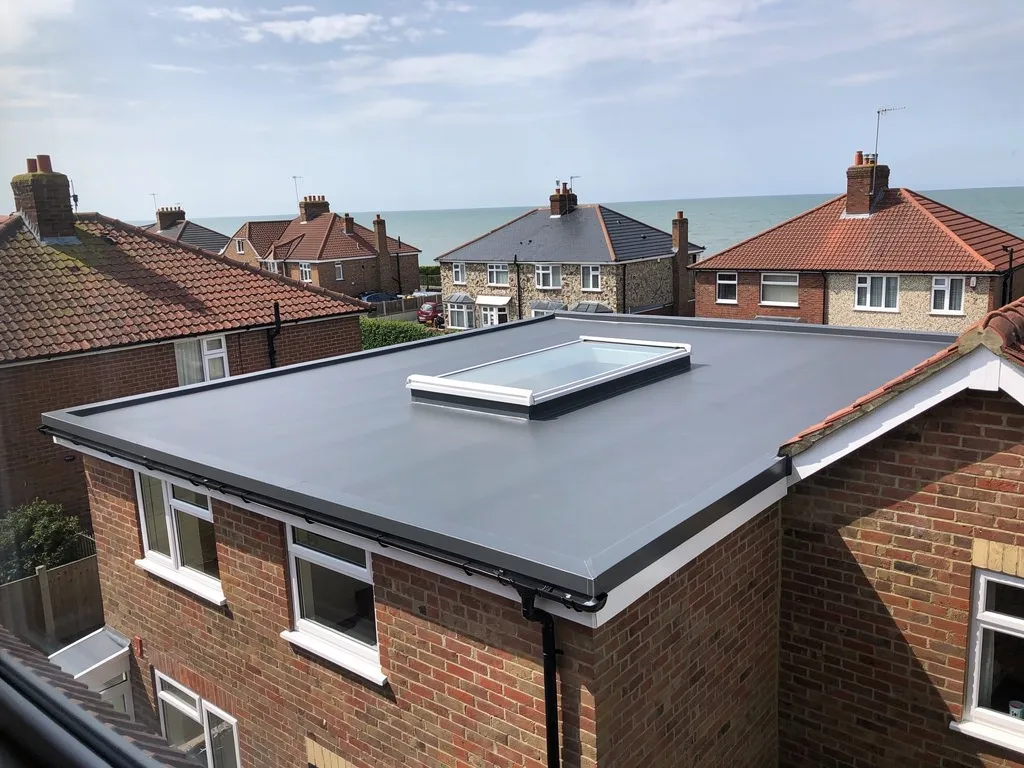
From above, check the surface for ponding, blisters, splits at laps, loose edge trims and cracked sealant at upstands. A soft or spongy feel underfoot where the covering is accessible is a warning, but do not walk on a roof you are unsure about.
In a lean-to, extension or dormer, look at the junction with the main house, since many flat roof leaks start at the abutment. A slate roof has different failure points, so the clues change with roof type.
Photograph anything unusual with the date, because a record helps whoever investigates.
Do not rely on a ceiling alone. Some decks are wet for a long time before the plaster shows it, so a dry-looking room is not proof of a dry roof.
Assessment and removal
We start with the outside: covering, drainage, upstands and trims. Then we look at what is visible from below and use a moisture meter where the deck or joists can be reached. Where foam hides everything, a small inspection opening may be proposed so the deck can be checked directly. You receive photographs and a written quote that gives a single total.
If the deck is sound and dry, retention may be possible with repairs to the covering. If it is damp, removal is often the practical route: foam is cut or scraped from the underside, the deck is dried or replaced, and a proper insulation and vapour control scheme is designed. Because foam sticks hard, the work can be slow and messy, which we explain in how messy spray foam removal is.
Cost depends on area, access and deck condition. See spray foam removal cost for typical UK ranges.
Where a deck is replaced, falls, drainage and the position of the vapour layer are settled before the new covering goes on.
Selling or buying with foam on a flat roof
Surveyors tend to flag flat roofs with foam because the risk is harder to judge. RICS says valuers can weigh foam in their opinion of value. If you are buying, our page on a homebuyer survey that found spray foam covers the sequence of steps.
If you are selling, a recent moisture survey and a repair record for the covering give a buyer something to rely on. If the roof has already been re-covered, keep the paperwork, including the specification.
Do not cover foam with new membrane without understanding what is underneath. Re-covering over a damp deck seals the problem in again, and the new layer may fail early.
Flat roof and foam: two more questions
Is it safe to re-cover a flat roof with foam beneath?
Only after the deck has been checked. A new membrane laid over damp timber traps the moisture again. If the deck reads dry and the foam is sound, re-covering may be possible, but we would want the readings and the design confirmed first.
Does an open-cell foam make flat roofs safer?
The Energy Saving Trust describes the risk as lower with open-cell foam, though lower is not the same as none. A flat deck still needs its condensation risk checked. Our open-cell and closed-cell page explains the difference between the two types.
Tell us about your roof
Describe what is happening and we will call you back to arrange a visit.
- Photographs of what we find
- A written quote with one total price
- Or call 01903 299063
10-year workmanship guarantee, in writing.