Spray foam was sold to many homeowners as a quick, one-visit way to insulate a roof. Taking it out again is a different kind of job. The foam has stuck fast to the underside of the tiles or slates, to the rafters and often to the battens, and it has to be cut, scraped or broken away without wrecking what it is stuck to. That is slow, dusty work, and it explains why the price is quoted per square metre and not as a flat fee.
Searches for what it costs usually turn up a single average, and an average hides the things that decide your bill: how thick the foam is, whether it is open-cell or closed-cell, how much of the roof is covered, how awkward the access is and what condition the timbers are in underneath. A roof the size of a bungalow can cost far less than a three-storey terrace even at the same rate per metre.
This guide gives the published national figures with their source and date, explains what lifts or lowers a price, sets out the extras that sit outside the per-metre rate, and finishes with the questions worth putting to any contractor before you accept a quote.
The typical figure and where it comes from
The most useful published guide is MyBuilder's spray foam removal price page (updated 21/08/2026). It gives a typical UK range of £20 to £50 per m², with an average job at around £1,500. It lists the assessment at £100 to £200 and disposal at £150 to £400. Those come from a national guide and span a very mixed set of roofs; they are a yardstick, not a quotation.
To see how the per-metre rate behaves, take an imaginary roof with 50 m² of foam on its underside. At £20 to £50 per m², the removal itself would run from £1,000 to £2,500. A roof with 80 m² of foam would run from £1,600 to £4,000. The arithmetic is simple, but the real question is where in the range your roof sits, and only the survey can say, because area alone settles little.
What the headline leaves out
An average of £1,500 describes a typical-sized job, but spray foam is often laid across a whole roof, front and back, and the area to clear can be much larger than people expect. The per-metre rate also says nothing about what happens afterwards. A roof stripped of foam needs a decision about new insulation, ventilation and sometimes a membrane, and those costs follow the removal.
Treat any number you read online, ours included, as a starting range. The written quote follows the survey, because only a look at the roof shows how the foam was applied. A price given before that look, without photographs, is a guess.
Why two roofs of the same size can price very differently
Several factors work together, and any one of them can shift a quote noticeably.
Open-cell or closed-cell
The two types of foam behave differently. Closed-cell foam is dense and rigid and tends to grip firmly, so taking it off is slower. Open-cell foam is softer and lighter and generally comes away more readily. Our guide to open-cell and closed-cell spray foam explains how to tell which you have, and the survey confirms it.
Thickness and coverage
Thick foam takes longer to cut back and produces more waste. Foam that has been sprayed onto the rafters as well as between them has more surface to clear. A roof where foam has crept over the wall plate or into the eaves is harder than one with a clean, even layer.
What the foam is stuck to
Foam stuck straight to the back of tiles or slates is slower to remove than foam applied over a membrane or onto boards. On a slate roof especially, care is needed so slates are not cracked or lifted; see the guide to spray foam on a slate roof. Where the wood beneath has gone damp, repair work can appear that nobody could see before the foam came off.
Access and layout
A roof with a big, open loft space is quicker to work in than a cut-up roof with hips, valleys, dormers and low eaves, where the work is done on hands and knees. Height matters, because it decides whether scaffold or a tower is needed, and a long carry for waste adds time.
How much comes out
Some owners want every scrap removed; others only need enough to satisfy a lender or a surveyor. The two jobs are priced differently. The decision belongs to you after the facts are in front of you, and it is covered further down.
The assessment: why it comes first and what it costs
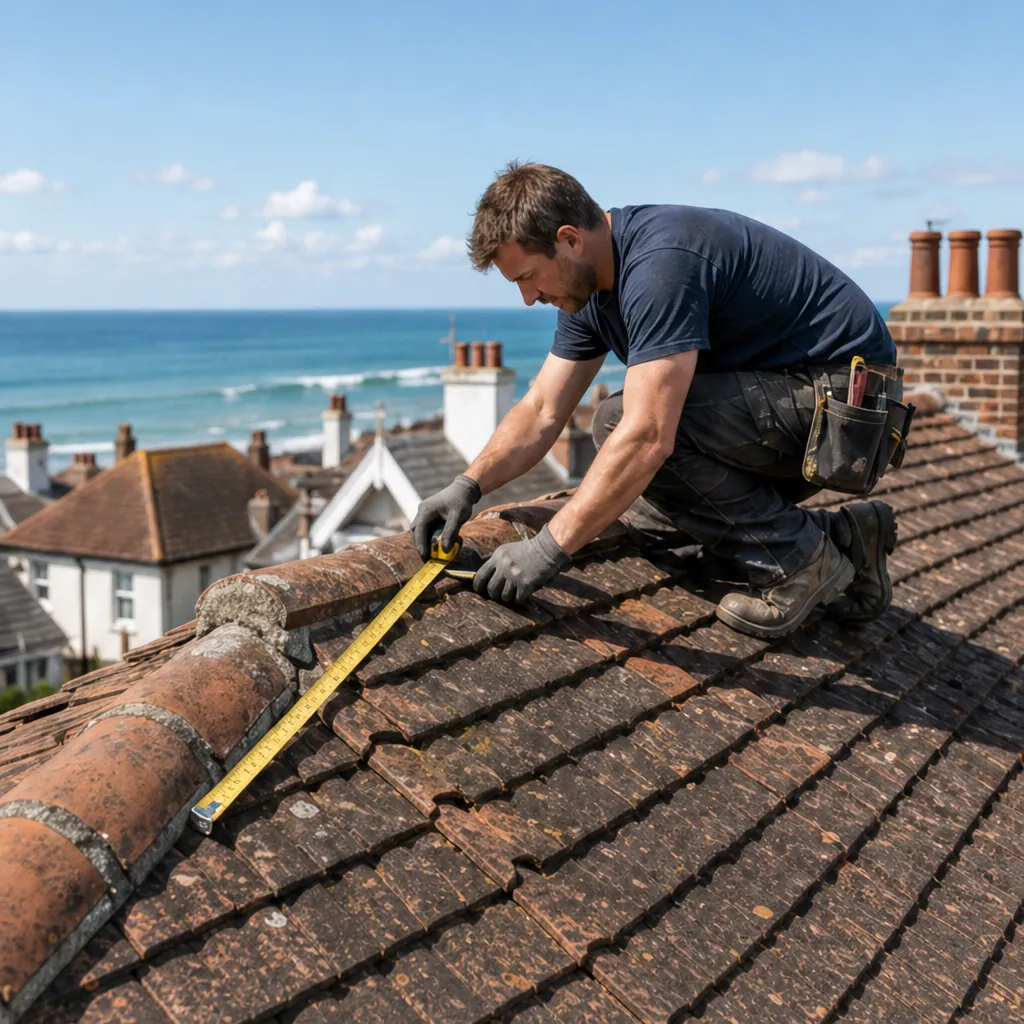
Before removal is priced, someone has to look at what is on the roof. MyBuilder gives £100 to £200 for the assessment. It is worth doing properly, because the whole price rests on it and because the foam is not always what the owner believes it is.
A sensible assessment covers the type of foam and its thickness, how it was applied, how sound the timbers and battens beneath are, any signs of damp or mould, whether a membrane sits behind the foam, and how the roof is ventilated. The RICS consumer guide on spray foam warns that incorrectly installed insulation can cause dampness, including uncontrolled condensation, and that taking the foam out may harm the building fabric beneath it. It adds that checking condensation risk is a job for someone qualified. The assessment is where those issues surface, and it tells you whether the roof is behaving or in need of repair.
The assessment and a mortgage
If a lender or valuer has raised the foam, a written assessment is a sensible first piece of evidence to offer. Reporting in November 2024 on a broadcaster's investigation found some lenders refusing to lend against homes with spray foam, and others deciding case by case. RICS says the presence of spray foam may affect a surveyor's opinion of value. Our guides to spray foam and mortgages and to what RICS says about spray foam go into the detail.
Because of that, keep the assessment, the photographs and any later sign-off together. They are the paper trail you will need whether you sell, remortgage or make a claim.
Disposal, scaffold and the other costs on the edge
The per-metre rate is not the whole bill. Four other items turn up regularly, and each should be accounted for in any quote you compare.
Disposal
Cut foam is bulky and light, and it has to go somewhere. MyBuilder gives £150 to £400 for disposal. A contractor carrying construction waste should be a registered waste carrier. Ask to see the registration, and confirm that the foam is leaving your property and being taken to a proper site and not left in a skip behind the house.
Scaffold
Work at height needs safe access. MyBuilder puts scaffolding at around £850 to £1,200 for an ordinary two-storey house, and a chimney scaffold at £400 to £900. If the poles and boards occupy the pavement, the scaffold company has to apply for a Highways Act licence from West Sussex County Council, which wants at least 10 working days' notice and publishes a one-month fee of £266. In the city of Brighton and Hove a separate licence applies.
Making good
Removal can leave the roof with cracked or displaced tiles, damaged battens or a damaged membrane. Repair work of that kind belongs in the quote, or the survey should warn you that it may follow. Our guide on roof damage after foam removal sets out what can happen and how it is handled.
Replacing the insulation
A roof without foam still needs insulation. HMRC's Notice 708/6 says a zero rate of VAT applies to the installation of certain energy-saving materials, roof and loft insulation included, from 1 May 2023 to 31 March 2027, reverting to 5% after that. Whether it covers your job hinges on how the work is supplied, so look at how each quote treats VAT.

Partial or full removal: when less can be enough
Not every roof with spray foam needs every scrap of it taken out. The RICS consumer guide treats the issue as one of risk, condensation, structure and value, not an automatic order to strip. Writing that foam must always be removed is wrong, and the decision should follow the facts of the roof.
Cases differ widely. Foam that is dry, firmly adhered and sitting on a ventilated roof with sound timbers is a lower concern than foam that is trapping damp against the rafters or hiding a leak. The Energy Saving Trust advises against putting foam under a damaged or leaking roof before the fault is cured, adding that open-cell foam carries far less risk. A leaking roof under foam may need uncovering simply to find where the water gets in.
Partial removal
Sometimes the sensible job is local: cutting back around a chimney, a valley or a damp patch, clearing the eaves to restore airflow, or taking foam off the one slope that is failing. That costs less than a full strip and may solve the problem in hand. It will not satisfy a lender who wants all of the foam gone, and it leaves the rest of the foam where it was.
Full removal
Full removal is the right answer when the foam is the cause of damp, when a lender or buyer refuses to go ahead while the foam stays, or when the roof is being recovered and the foam would block the work. The sequence is usually removal, a check of the timbers and ventilation, repairs, then new insulation and, if needed, a membrane. A lender may ask for proof that the work is complete, and the hub page on spray foam insulation removal shows how the jobs fit together.
Our job at the survey is to tell you which of these applies, with photographs, and to name the least work that cures the problem for good.
Who pays, and what to ask before you accept a quote
Many owners ask whether the installer should foot the bill. The answer depends on what was sold, what was said and whether the installer is still trading. If the foam was installed without proper checks, or the claims made for it were wrong, you may have a complaint. Under the Consumer Rights Act 2015, the work you pay for has to show reasonable care and skill, and one remedy it gives you is a repeat of the work. Our guide to spray foam mis-sold: your rights covers the steps, and the installer's own complaints procedure comes first. Keep the original paperwork, photographs and any guarantee.
None of that changes the need to price removal correctly. Whoever ends up paying, the work is the same.
Questions for any contractor
- Have they seen the foam in person, and can they show photographs of it in your roof?
- Which type of foam do they think it is, and how did they confirm that?
- Is the price for full or partial removal, and how many square metres does it cover?
- Does it include disposal, scaffold, repairs to tiles or battens, and VAT?
- What happens if the timbers under the foam turn out to be damp or damaged?
- What will they leave you with afterwards: a written note, photographs, a record for your lender?
A contractor who answers these questions clearly is giving you something to compare. One who quotes a figure over the phone is not.
We survey first, photograph your own roof and send one written total price. If you have a report from a homebuyer survey or a lender, send it with your enquiry, because it tells us what evidence the work needs to produce.