Homeowners often meet spray foam through a leaflet, a doorstep offer or a surveyor's note, and the questions come afterwards. Is it allowed? Does it harm the roof? Will it affect a sale? The Royal Institution of Chartered Surveyors, known as RICS, wrote a consumer guide to answer questions like these from the owner's side of the fence, and a surveyor looking at your home may raise the same points.
The web page for the guide carries no date. The date of March 2023 comes from the name of the downloadable file and from trade press coverage at the time, so it is fair to describe it as a March 2023 guide. It is advice for consumers, not a statute, and it does not tell anyone that foam must come out of a house. It sets out risks, questions to ask and checks to expect.
This page walks through the points that matter to a roof, in the order a homeowner usually needs them. We are roofers, so we read the guide from the roof timbers outwards: what can go wrong behind the foam, what a professional should check, and where our work begins. You can read the guide in full at the RICS consumer guide page.
Moisture and condensation behind the foam
The guide's central worry is damp. It states that insulation which has been installed incorrectly can lead to dampness, and gives uncontrolled condensation as the example. For a roof, that translates into a particular chain of events. Warm, moist air from the house finds its way to a cold surface, turns to water and soaks into whatever is there. In an ordinary loft the water collects on the underlay or the timbers, where it can be seen and ventilated away. Foam sprayed onto the underside of the slope seals the timbers inside it, so any water that does gather has nowhere to go and cannot be seen.
That is why a roofer's inspection of a foamed roof begins at the edges. We look at the ends of rafters, the eaves and the gable walls, the places where timber is still visible beside the foam. Staining, softness, dark patches or a musty smell there are all reasons to look further. We also check the covering from outside, because cracked or slipped tiles let rain in at a point the foam then hides.
Why a tidy-looking ceiling proves little
A bedroom ceiling below a foamed roof can look perfect for years while the timbers above it are wet. Foam holds moisture at the surface of the wood and slows its escape, so the first visible symptom can be a long way from the first symptom of trouble. For a closer look at the damp side, see our page on spray foam and a leaking roof.
Calculations and checks from a qualified professional
RICS expects a qualified professional to carry out the thermal calculations and the condensation risk checks. That sentence carries more weight than it first appears to. It means the decision to put foam into a particular roof should rest on figures worked out for that building: how much heat the construction loses, where moisture is likely to collect and whether the roof can dry out. A generic assumption that foam suits every loft does not meet the standard the guide describes.
For a homeowner who already has foam, the useful question is whether anyone did that work. Ask the seller, the previous owner or the installer for any calculations, any survey made beforehand and any record of the product used, the date it went in and the name of the firm that fitted it. If they exist, they tell a surveyor and a lender something about how carefully the job was planned. If they do not, the roof's actual condition becomes the main evidence, and an assessment of the timbers becomes more important.
What an assessment looks for
On a foamed roof, we work through a short list. We look at visible timber at the edges of the foam, and we check for movement, gaps or lifting where foam meets masonry. We assess tiles, slates and flashings from outside, and we note any ventilation openings that have been blocked. Where a hatch or a cut-out gives access, we look at how the foam has stuck to the underlay and the battens. Photographs of each point go into the written report. Our guide to how spray foam insulation is removed explains what follows if the findings call for the foam to come out.
What the guide says about lenders and mortgage providers
The guide tells consumers to confirm with their mortgage provider that the lender policy permits installing such products. The advice is written for someone considering foam, and it exists because a lender's policy can decide whether a house stays easy to sell and refinance. Read that sentence from the other side and it applies to a buyer too: a house that already has foam is a house where the lender's view still matters.
The dated picture of that policy is covered separately. As of November 2024, some lenders were reported to refuse these properties and others were said to assess case by case, and our guide to spray foam insulation and mortgages sets out the questions to put to a lender. The RICS guide does not name lenders or give a list, and no single lender policy applies everywhere. It simply sets an expectation that the question is asked before anything is installed or bought.
The valuation point
The guide adds that the presence of foam is something that may influence the value a surveyor puts on the home. That is a statement about how valuers think, not a figure. It does not say by how much, and it does not say every valuer will mark a house down. What it does is explain why a foam note in a survey report is worth following up quickly instead of leaving for later. A valuer who is unsure what is behind the foam has to allow for that uncertainty, and the allowance often lands on the price.
If you are the seller, an assessment with photographs can turn an open question into a documented one. If you are the buyer, the same assessment can tell you what you are really taking on before the contract is signed.
Listed and protected buildings
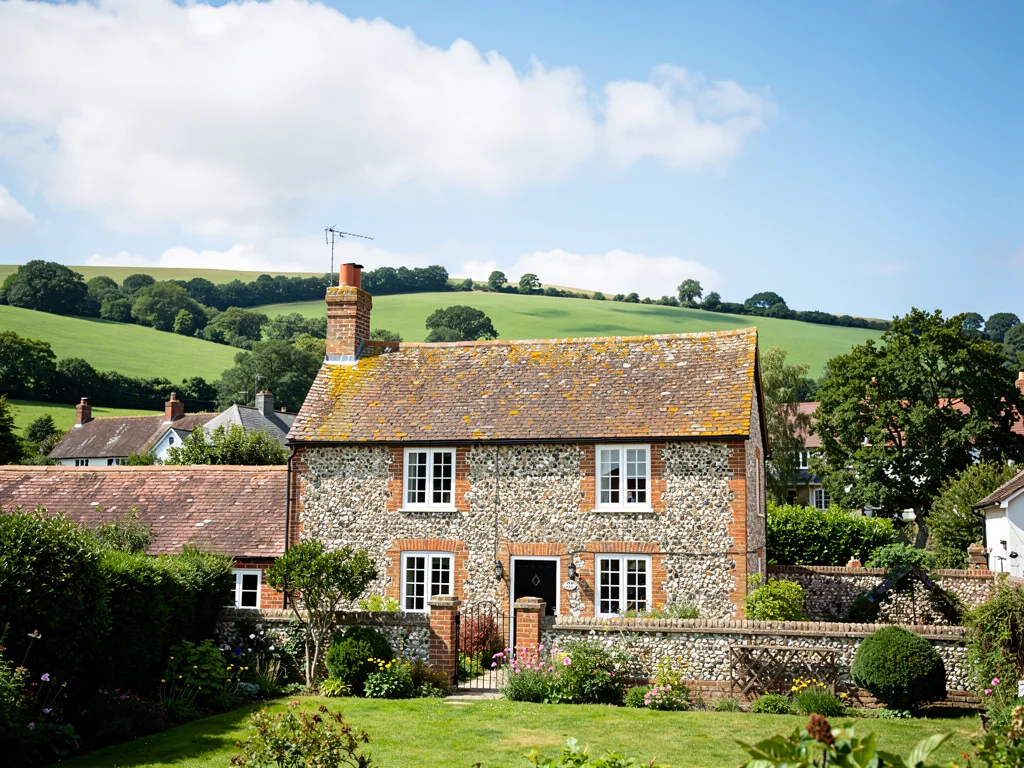
One of the guide's firmest lines concerns older and protected buildings. It says no foam should go into a listed building, or any other protected building or structure, until consent has been given. The wording matters: the rule is about consent beforehand, not about foam being impossible in such a building. For anyone who owns or is buying an older house in a conservation area or a listed cottage, the first step is to find out the building's status and to ask the local planning authority what consent is needed. Our spray foam insulation removal service starts with that same question about the building before any survey. In this part of Sussex that usually means the Adur & Worthing planning team or, inside the South Downs National Park, the national park authority.
Why would a listing change the picture? Historic roofs are often built from materials that need to breathe and dry out, such as stone slate, hand-made clay tile or old oak, and they rely on movement and ventilation in a way modern membranes do not. A coating that seals the timbers can change how such a roof behaves, and a conservation officer is entitled to ask why it was thought suitable. Consent questions belong with the planning authority, but we can describe the roof's construction and what we find, which helps the application.
If foam is already in a protected building
If you have bought a listed house and find foam in the roof that nobody had consent for, speak to your solicitor and the council before doing anything to the roof. Removal in such a building is a consent question as well as a building question, and the way the work is done matters more than the speed. Our page on open-cell and closed-cell spray foam helps you work out what type is up there, which is the first thing a conservation officer will ask.
Removal, risk and the order of decisions
The guide is candid about one more thing: taking foam out could damage the existing structure. A reader might think that settles it in favour of leaving foam alone, but the more sensible reading is that removal needs care. The foam grips the timber, the underlay and the back of the tiles, and rough methods can strip fibre from rafters or crack the covering. A competent removal is slow, deliberate and checked at each stage, and the timbers are inspected as they are exposed. Where the covering is sound and the rafters are dry, the work may be possible from inside, section by section. Where the timbers have gone soft, the repair belongs in the same visit, which is why the order of decisions below is worth following.
So the order of decisions matters. First establish what is there and in what condition, through a survey of the roof and the visible timbers. Second, find out what your lender and any planning authority require. Third, decide whether the foam can stay, with the evidence documented, or has to come out. Only then price the work. Skipping to the price first is how owners end up paying to remove foam that was sound, or leaving foam that was hiding rot. A short survey costs little set against either mistake. The Energy Saving Trust, which is separate from RICS, takes a related line on roofs that leak: it does not recommend spraying foam over a damaged roof without fixing the underlying problem first. For open-cell foam it puts the risk much lower, and we say more about that in the next guide in this series.
Before any work, gather what exists: installer paperwork, any survey, photographs of the loft before and after, and the date of installation.
With those in hand, a roofer can give a clear view on whether the roof is sound, and once the survey is done our written quote is a single total price. No part of the RICS guide says foam must always be removed, and we do not say so either.