
Foam applied beneath the roof slopes hides the very things a surveyor normally looks at. The battens, the underlay, the back of every slate and the ends of the rafters all sit under a skin of hardened insulation, so a visitor to the loft sees a pale or yellow surface and very little else. That is why a sale can stall when the foam comes to light, and why an inspection report has become a document people ask for by name.
A good report is not a verdict on whether the foam is wrong in itself. It is a record of what is there and what condition it is in: which type of foam, how it was applied, whether the roof beneath is dry, and whether anything points to trapped moisture. A buyer uses it to decide what to offer. A seller uses it to answer questions before they are asked. A lender reads it, or decides not to, on its own terms.
This page sets out what the inspection involves, how to read the findings, and who should be told what. It is general guidance, and the decisions belong to your lender, your surveyor and your conveyancer.
Why a report is asked for at all
Two things make spray foam different from loose-fill or quilt insulation. It bonds to the roof structure, and once it has set it hides that structure from view. In its March 2023 consumer guide, RICS links badly fitted insulation to dampness and flags that foam can colour a valuer's judgement of a home. Those two points explain most of what follows.
For a buyer, the worry is simple. If a leak or a damp patch has been developing behind the foam, nobody will see it until the foam comes off. For a seller, the worry runs the other way: a vague answer such as "it was done a few years ago" invites the buyer to assume the worst. A dated inspection with pictures turns a guess into something both sides can read.
The guide also points owners to their mortgage provider, because lender policy decides whether foam is acceptable. Positions differ between banks and building societies, and Today's Conveyancer reported in November 2024 that some refused such homes while others weighed each case. That picture can change, so we never tell anyone what a given bank will accept; the lender or your conveyancer will answer that.
Who usually asks
The request tends to come from one of four places: a mortgage valuer who notices foam in the loft, a buyer's surveyor, a conveyancer working through the seller's answers, or an owner who has read about the problem and wants to know where they stand. Each wants the same underlying facts, so one well-made report can serve all of them.
If you are selling, our page on selling a house with spray foam covers the conversation with buyers.
What the roofer actually inspects
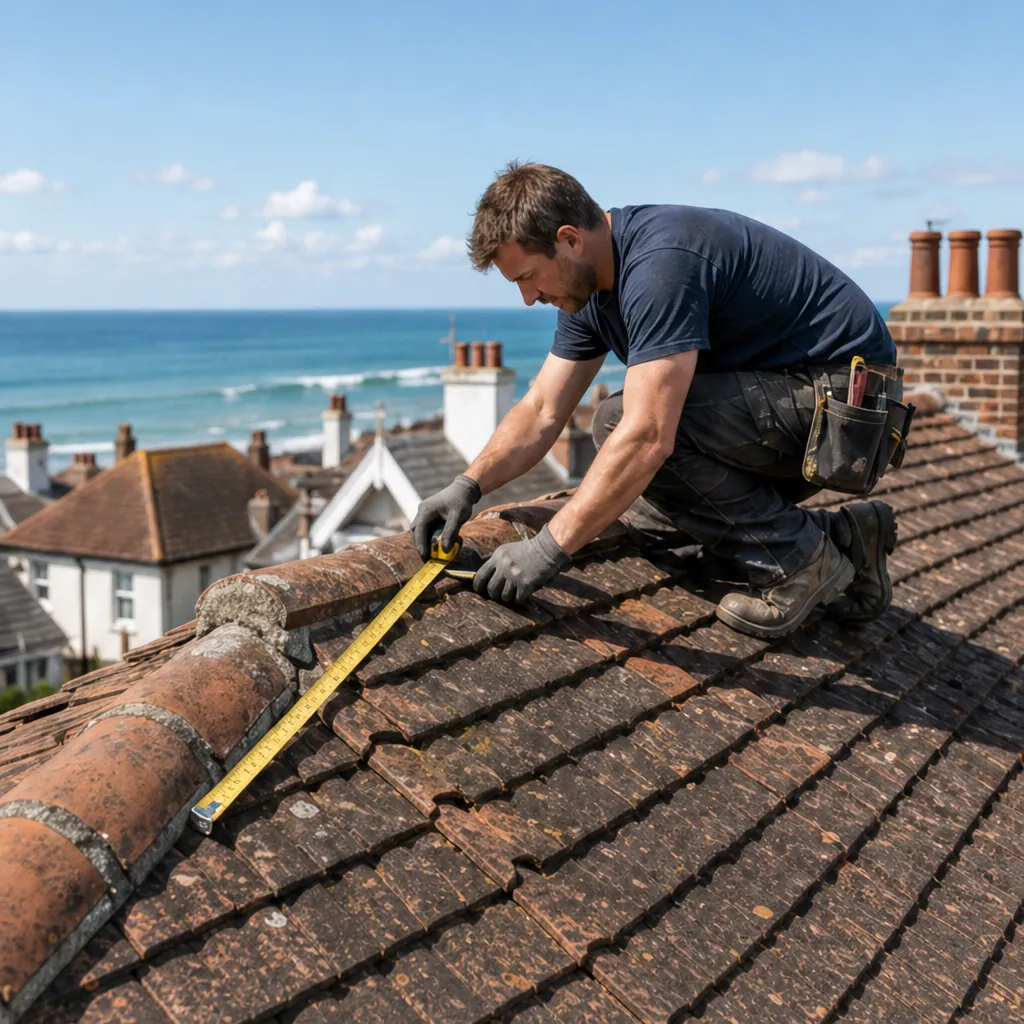
An inspection starts outside, because the roof covering tells us how much to worry about what is under it. We look at the tiles or slates for slipped, cracked or missing pieces, at the ridge and hips, at the lead around chimneys and abutments, at the valleys, and at the gutters. A foamed roof that has a failing flashing above it is a different case from one with a sound covering throughout.
Inside, we map the foam. That means noting where it starts and stops, how thick it looks, whether it covers the rafters entirely or only the gaps between them, and whether it has been sprayed over wiring, pipes, the chimney breast or the wall plate, the timber that sits on top of the wall and carries the rafters. We photograph each area so the report shows what we saw, not only what we concluded.
Then comes the part that takes judgement: finding out what is happening behind the surface. Where the foam is accessible from below we check for visible tide marks, staining, soft or discoloured timber, and damp at the junctions between foam and masonry. Where it is practical we use a moisture meter on exposed timber. A reading on its own proves little, but a pattern of high readings along one slope, matched to a stain, tells you something real.
What an inspection cannot show
We cannot see through hardened foam. If the foam hides the underlay and battens, a report can describe what is visible and the signs around it, but it cannot certify what lies behind. Where the evidence is unclear, the report says that in plain words and explains what opening a small section would involve. A buyer gets more from that than from false reassurance, and the report stays accurate.
Open-cell or closed-cell: why the report names it
Spray foam comes in two broad types, and the report should say which one you have. Open-cell foam is soft and spongy, and it lets some vapour pass through. Closed-cell foam is denser, harder and far less permeable. Both are applied wet and expand as they cure, so from the loft they can look alike at a glance. The differences show when you press a thumbnail into the surface or look at how the foam sits between rafters.
The type matters because the risks differ. The Energy Saving Trust (guidance updated 8 May 2026) advises against foaming a roof that was already faulty before the roof itself was mended, and adds that the danger should be much lower with an open-cell product. Put simply, a leak behind dense foam is harder to notice and harder to cure than one behind a softer product. A longer comparison of the two types sits in the wider spray foam material on this site.
Where the type is unclear
Sometimes the owner has no paperwork and the installer has gone. We then identify the foam by its look and feel, note the evidence for our conclusion, and mark the finding as our assessment, not a fact from the installer. If a certificate or data sheet later turns up, it can be added to the file.
Do not worry if the foam type is a surprise. Plenty of owners discover it only at the point of sale. What counts is that the report states it plainly, so that the next person to read it does not have to guess.
Moisture, ventilation and the condensation question
RICS expects the thermal and condensation-risk calculations for a foamed roof to come from a suitably qualified specialist. A roofer's inspection report is not that calculation, and a sensible one does not pretend to be. What the report can do is record the physical evidence that bears on the question: whether the roof space is vented, whether the eaves are blocked with foam, whether any ridge or soffit vents have been sealed over, and whether there are signs of moisture on the timbers or on the cold surfaces nearby.
Foam pushed hard into the eaves can leave no route for air to circulate. If that happens, moist air from the house may find a cold surface and condense on it. The signs include darkened or damp rafter ends, a musty smell, mould on the exposed parts of the structure, and staining on the ceilings below. We note each one with a photograph and a location, and where the pattern suggests a roof leak, not condensation, we say that too. Our page on spray foam and condensation goes through the mechanism.
What goes in the report, and what stays out
The report states findings and describes the condition. It does not predict how long the roof will last or promise that damp will never develop. It lists the observations, marks which are certain and which are judgement, and recommends next steps. Those might be monitoring, a specialist condensation assessment, a limited opening-up, or removal.
Where the evidence is thin, the sound recommendation is often to do nothing yet and to recheck after a season. A report that cannot say that is not worth having.

What lenders and buyers do with the findings
Once the report exists, three readers will look at it in different ways. Your lender will compare it with its own policy on spray foam. Your buyer's surveyor will weigh it against the property's value and condition. Your conveyancer will check it against what the seller has said on the forms. None of them is bound to accept a roofer's report, and none can be forced to. The report is evidence, nothing more.
A clean report with good photographs often answers the immediate question and keeps the sale moving. A report that finds damp or poor ventilation gives everyone a defined problem, with a defined next step, in place of an open-ended worry. Buyers and lenders are usually more comfortable with a known fault and a priced fix than with a doubt nobody has examined. It also helps to keep the original photographs, because a later reader can compare them with any new inspection and see at once whether anything has changed.
Do not send a report to a lender without asking what they want first. Some will ask for a particular type of assessment; others will want to see the foam removed and the roof re-inspected. Our page on spray foam in a listed building covers the separate consent question that applies to protected properties.
If the report recommends removal
Removal is a decision for the owner, with advice from the lender and a surveyor. RICS cautions that stripping foam could weaken or mark the roof timbers, so removal is a planned job, not a quick scrape. Where the foam is part of a mis-selling problem, your rights if spray foam was mis-sold may also be relevant before you pay for anything.

Booking an inspection and what happens next
An inspection needs safe access to the loft and, ideally, a clear route to each slope of the roof. Move boxes away from the hatch and the main foam areas beforehand. If you have any paperwork, find it: the installer's invoice, a data sheet, a guarantee, correspondence with a lender or surveyor. Photographs from the time of installation are especially useful, because they can show what the roof looked like before it was covered.
We survey the roof from the outside and the inside, take photographs of what we find, and write the report. If the findings lead to repairs or removal, the quote for that work arrives on paper after the inspection, with one total price. How long we spend on site turns on the number of slopes and how much of the foam we can reach.
Costs for an inspection are not fixed in advance, because access, roof size and the amount of foam all change the work. We confirm the price before we begin, so you know it before anything is done.
After the report
You then have three routes. If nothing needs doing, keep the report with your property papers and show it to any future buyer. If there are signs of damp, we recommend what to do about them, from fixing a leak to improving ventilation. If the foam needs to come off, we explain what that involves; the guide to insulating after spray foam covers what replaces it, and whether all of the foam has to come out answers the question owners ask first.
The overall service is described on our spray foam assessment and removal page.