
Spray foam was sold to many householders as a one-off fix: sprayed in a day, warmer house, lower bills. Years later, some of those same owners put the house on the market and discover that the foam has become a talking point. A buyer's surveyor lifts the loft hatch, sees a yellow or off-white skin where there used to be timber, and writes a line in the report. A mortgage lender reads that line, and the sale pauses.
Not every sale with foam falls through. Some go ahead as normal, particularly where the roof is sound, the paperwork is tidy and the buyer is not borrowing. But the risk is real enough that it pays to prepare rather than wait for the buyer's survey to raise it. Estate agents tend to hear about it late, and by then price and goodwill are both under pressure.
Below we explain how surveyors approach foam, how buyers' lenders have behaved, what documents to pull together, when evidence from a roofer can steady a sale, and what removal can and cannot do for your position. We cover the roof side only, and your solicitor should advise on what you must tell a buyer.
How a buyer's surveyor treats foam in the loft
A surveyor who finds foam usually does three things. First, they note the type and extent: whether it covers the whole roof or only part, and whether it looks like a thin open-cell layer or a hard closed-cell one. Second, they look for any sign of the problems the RICS associates with it, mainly dampness and condensation. Third, they say what they cannot see. That last point carries the most weight, because the surveyor cannot inspect the rafters behind the foam without damaging it.
The RICS published a consumer guide in March 2023 which says that foam is a factor that may influence a surveyor's judgement of value. In practice, the report may recommend a specialist inspection of the roof structure, mention the foam as a risk to the buyer's lender, or advise the buyer to renegotiate. Some reports do none of these and simply record what was seen.
The wording of the report matters more than the foam itself. A line such as "insulation of unknown type fitted to the roof slope, timbers not visible" is a flag. A line backed by an installer's paperwork and a recent roofer's inspection is far less alarming.
What helps the surveyor
Surveyors like facts. If they can see who installed the foam and when, whether the roof was sound beforehand, and what a roofer found when the timber was last examined, they can say so in the report. If the loft is cleared, the hatch is easy to reach and a torch hangs nearby, the visit goes more smoothly. None of this hides anything, it just lets the surveyor do the job properly.
Buyers' lenders and what was reported in 2024
Many buyers need a mortgage, and the lender decides whether the house is acceptable security. The RICS guide tells people thinking of installing foam to check their mortgage lender permits it. The mirror image is a buyer asking the same question of a house that already has it.
The best dated evidence is the Today's Conveyancer report of 20 November 2024, drawing on a national broadcaster's investigation. At that point, several named lenders were declining mortgages on foamed homes, and others were weighing applications one at a time. We cannot tell you what any lender does today. What the report shows is that a buyer using a lender with a strict policy can be refused after the valuation, which can happen weeks into a sale.
Cash buyers and the others
A cash buyer has no lender to satisfy, but their surveyor may still raise the foam and they may still ask for a lower price. A buyer with a lender that decides case by case may be asked for a specialist report on the roof structure. A buyer whose lender declines outright has to find a different lender or withdraw.
That last outcome is the one sellers fear. It is also the reason a chain can collapse late, after searches, surveys and legal fees have all been spent. If you know the foam is there, tell your agent at the start, so viewers who need a standard mortgage hear about it early and can ask their broker before they fall in love with the house.
Do not guess at a buyer's lender policy, and do not tell buyers their lender will be fine. You cannot know, and the statement could come back to haunt you. Say what you have, show your evidence and let them check.
Paperwork to gather before you list
The most useful low-cost step in a foam sale is a folder. Start with whatever you can find from the installation: the contract, invoice, product name and data, and any certificate or guarantee that came with it. A dated invoice proves when it went in. A guarantee, even a worthless one from a firm that has since closed, shows the work was a commercial installation and not a home experiment.
Add anything about the roof itself. Earlier survey reports, a roofer's inspection, repair invoices for tiles or flashings, and any mortgage valuation that mentioned the loft all help. If a leak was repaired before or after the foam went in, include the paperwork and the date. A lender or surveyor who sees a leak that was fixed reads it very differently from one they find out about later.
Photographs are worth taking while the loft is clear. Take wide shots and close ones of the eaves, the wall plate and any places where foam meets pipes or the hatch frame. If you have older pictures from before the foam, keep them.
Telling the buyer
Your solicitor will advise on what must be disclosed on the sale forms, and we do not give legal advice. As a matter of practice, however, we would say to be open about foam. A buyer who hears it from you, with documents in hand, is much more likely to proceed than one who finds it in a survey and wonders what else is missing. Your solicitor can tell you where the line sits.
If the installer has closed down or cannot be traced, say that plainly. It is a common situation and buyers can understand it. What worries them is vagueness.
Using a roofer's survey as evidence
One of the most useful things you can bring to a sale is a recent inspection of the roof by a roofer who understands foam. The aim is to answer the question every surveyor and lender asks: what condition is the timber in behind the foam?
We cannot answer that from the loft hatch alone. A full survey covers the outside of the roof, the loft, moisture readings and, where the readings or the history justify it, a small trial opening through the foam to expose the rafter feet, the wall plate and the underlay. We photograph the fault and the sound timber on your roof alike and write the findings up, so the evidence is specific to your house and not a general reassurance. You can read more about that process in our guide to the spray foam survey.
MyBuilder (updated 21/08/2026) puts a typical UK assessment of spray foam at £100 to £200. A trial opening and report cost more than a bare assessment, since they take more time and involve making good the cut area, so the quote reflects what your roof needs.
What a survey cannot do
A survey is a snapshot. It cannot oblige a lender to accept the foam, and it cannot tell a buyer how they should feel about it. A buyer's own surveyor may still want to see the roof themselves. But a sound, photographed, recently inspected roof is a strong answer to the question that would otherwise sit in the report unanswered.
If the survey finds damp timber or decay, you will then know what you are selling. That is uncomfortable, but better learned before a buyer's surveyor finds it. You can fix it, price it into the sale or choose a different route, rather than watch an offer fall apart.
Removing the foam before the sale
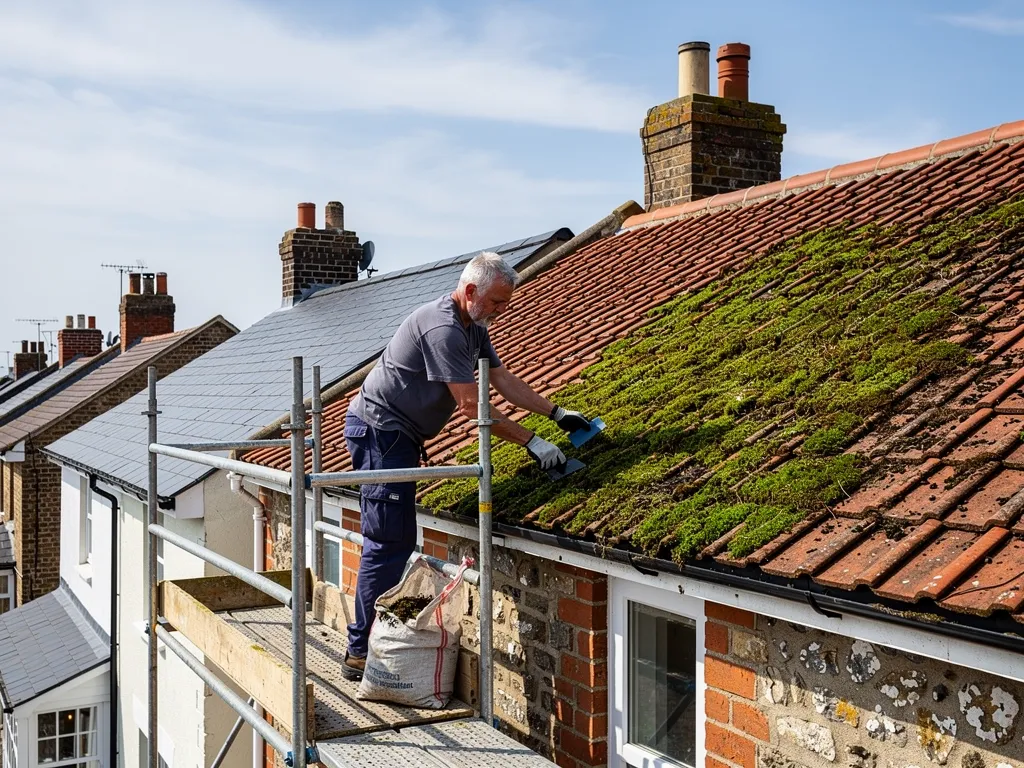
Some sellers decide the cleanest solution is to remove the foam and sell a plain loft. That can work, and it removes the biggest unknown from the buyer's point of view. There are costs and trade-offs, so it is worth weighing them calmly.
MyBuilder (updated 21/08/2026) gives typical UK figures of £20 to £50 a square metre to strip foam, with the average job at about £1,500, and £150 to £400 for disposal. Your own figure depends on the roof's size, access, the type of foam and how firmly it grips, so the survey comes first and a single written total follows. Timing matters too, because removal must be followed by re-insulation, which we cover in insulating the loft after spray foam removal.
The advantage for a seller is evidence. When foam comes off, the timbers are open to view, and a photographic record shows their condition. A buyer's surveyor looking into a clean, insulated loft with a folder of before-and-after pictures on the table has little to be nervous about.
Reasons not to rush
The RICS notes that taking foam out could potentially harm the roof structure, so the job suits people who are careful with the wood. If the sale is urgent, a stripped roof with no insulation is a poor thing to market, so plan the timing. And if the roof is sound and the buyer is a cash purchaser, removal may not be worth the cost.
Equally, if your buyer is older and planning to release equity, their provider may form its own view; see spray foam and equity release for what has been reported. Whatever your route, keep every document from the work, because the next buyer will ask for them.
Pricing, timing and what to say at viewings
Foam can affect price, but the effect varies. A sound, documented installation in a house that is otherwise attractive may cost you little. A foamed roof with an unknown installer, no paperwork and a leaking history will worry buyers and invite a lower offer. The difference is mostly about uncertainty, and each piece of evidence you add shrinks it.
Ask your agent for a view on how local buyers are reacting. Agents hear from mortgage brokers and can often say whether foam has stalled recent sales in your area. They cannot promise an outcome, and neither can we. Their local knowledge is useful only if they know about the foam, so tell them before photographs are taken for the listing.
When buyers visit, answer the loft question directly. Say what was installed, when, by whom, what you have in writing and what a roofer found when they last looked. Point to the folder. Do not downplay it or claim it is fine without proof. A calm, factual account does more for confidence than reassurance.
Do the sums early
Compare three routes: sell as it stands with a folder of evidence, commission a survey and sell with its findings, or remove and re-insulate before listing. Each has a cost and a time, and the right one depends on your roof's condition, your buyers' likely finance and how quickly you need to move. We can survey, report and quote for any of the three from the spray foam removal service.
One further point on airflow. If the survey found that foam had sealed the eaves, say so and say what has been done about it. Buyers who understand the cause of a problem and see it remedied are usually more at ease than those who sense something is wrong but have no detail.