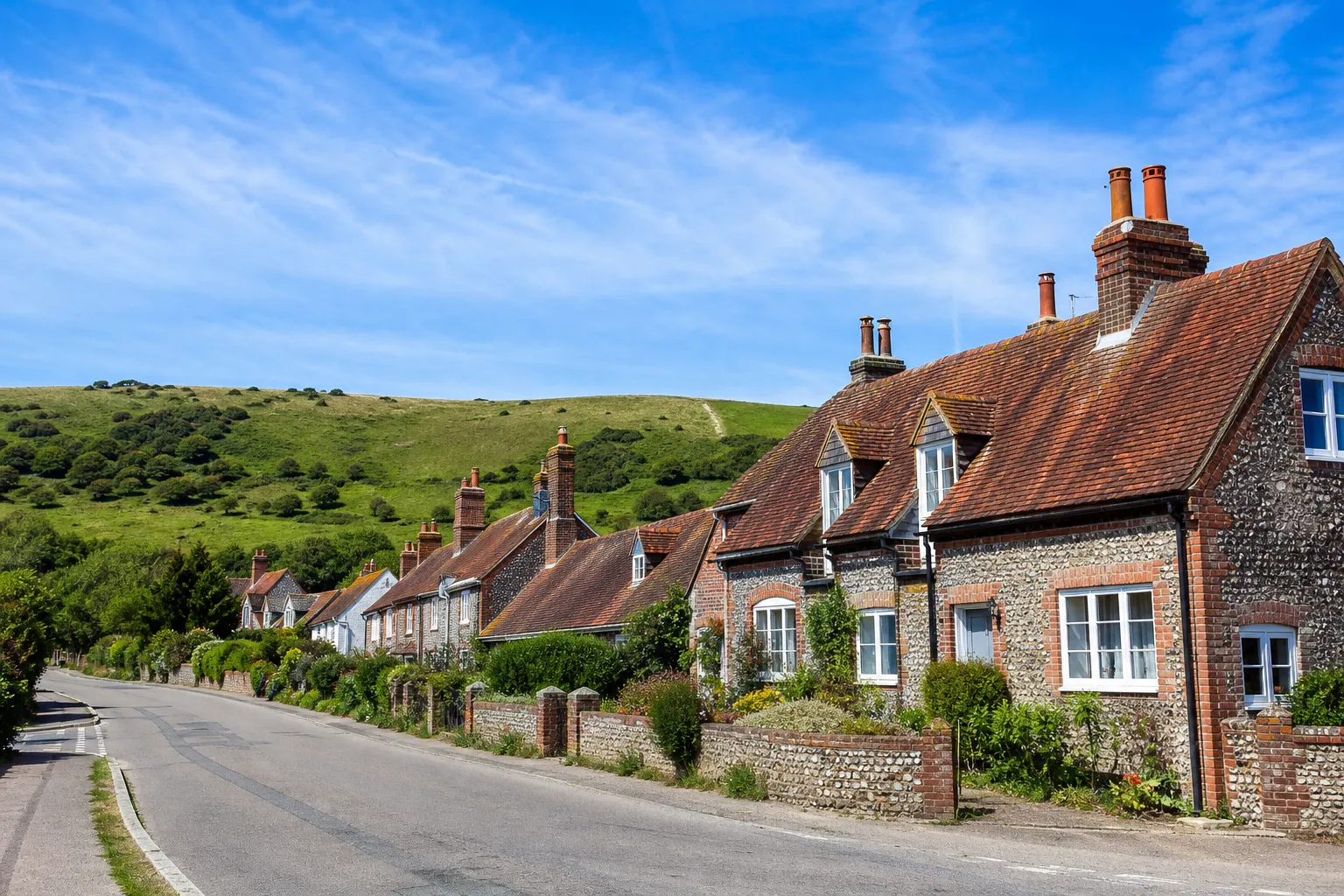
Roof work on an old house raises a question that a 1960s semi never does: who has to agree? The answer depends on which of four labels your building carries. It may be listed, sit in a conservation area, fall under an Article 4 direction that withdraws particular rights, or stand inside the South Downs National Park, where a different authority handles planning. Each label asks for something different, and several can apply to one roof.
Most of the confusion comes from treating them as a single thing. A conservation area, for instance, does not stop you renewing a roof as it was. A listing is stricter, because the law turns on whether the work touches the building's character. And a church still used for worship can sit outside the listed building system altogether, under its own denomination's process.
The sections below take each label in turn, drawing on council and government sources, and finish with what happens at our survey so that the right permission is in hand before a tile is lifted. Treat it as a general briefing: advice on your own address comes from the council's conservation team or a solicitor.
Listed building consent and matching materials
Under section 7 of the Planning (Listed Buildings and Conservation Areas) Act 1990, nobody may alter a listed building without authority where the alteration would change what makes it special. Section 9 turns a breach into a criminal offence, so this is not a technicality.
For a roof, the dividing line is like for like. The Adur & Worthing Councils guide to listed building consent counts repairs done in non-matching materials as consent work, whereas sensible upkeep and ordinary repairs need no special step unless the owner wants to change something. The South Downs National Park Authority puts the line in much the same place. Regular upkeep, and modest like-for-like fixes carried out where the material already sits, can proceed without consent. Work that swaps out original fabric on a large scale, so that the building's character shifts, cannot.
What that means for a roof
Re-fixing slipped tiles with the same tiles is maintenance. Stripping a clay peg-tile roof and recovering it in machine-made tiles that look different is an alteration, and so is replacing stone slates with another material. The words that decide it are "matching" and "character", and the local authority makes that call, not the roofer.
Why we ask before pricing
An unauthorised alteration is not a problem that fades with time. The Park Authority points out that unauthorised works to a listed building carry no four-year cut-off for enforcement. At the survey we therefore record the materials, take pictures and tell you plainly whether we think the job is maintenance or alteration. You then confirm with the conservation officer before anything is ordered, which keeps the cost of a refused scheme off your quote.
Conservation areas and the Article 4 question
Each conservation area is a patch of town or village that the council has designated because its character is worth keeping. Worthing has 27 of them. Adur has seven: Sompting, Southlands, Southwick, Old Shoreham, Shoreham-by-Sea, Kingston Buci and North Lancing. Living in one does not mean consent is needed for every roof job. Work that leaves the outside of a building materially unchanged is not development in law, and that holds inside a conservation area unless a specific direction takes it away.
What the designation does change is the wider bundle of permitted development rights. A conservation area counts as what the legislation calls article 2(3) land, and a dormer added to a house there is never permitted development, so it needs a planning application of its own.
What an Article 4 direction does
Through an Article 4 direction, a planning authority can take specified permitted development rights away within a mapped boundary. Adur & Worthing describe it as short of a ban: planning permission simply becomes necessary for the matters the direction lists. In some conservation areas the two councils have used directions to remove the usual freedom to replace roof tiles or windows without asking.
The councils publish nine directions for Adur and eight for Worthing. Whether yours reaches the roof depends on its schedule, which is why we ask for your address at the first enquiry. The next section sets out the ones we have read.
Frontages matter
A direction often bites on some elevations and not on others. Several apply only to the parts of a house that face a road or open space, so a back slope can be treated differently from the front. Read the wording for your own elevation, and ask the planning team about any slope you cannot place.
The local directions that reach the roof
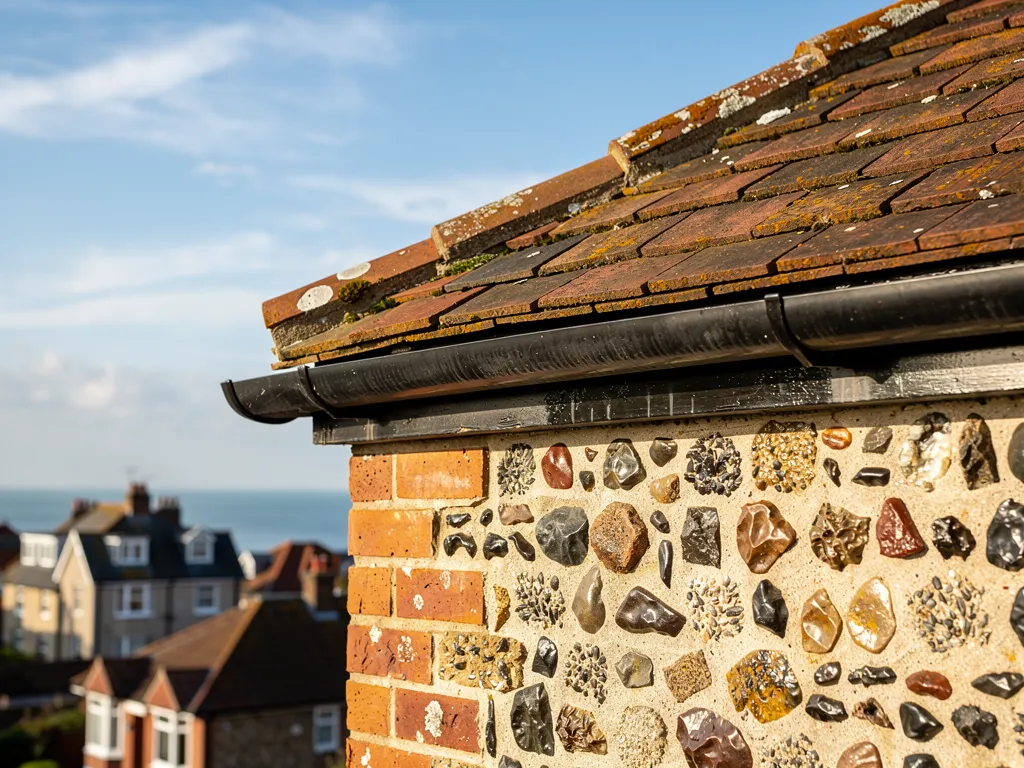
Five directions in Adur and Worthing remove rights that touch roofs. Others on the councils' lists do not, and we have not read every older one, so treat this section as a guide to what is on record, never as clearance for a particular address.
Old Shoreham and Kingston Buci
The Old Shoreham direction took effect on 20 January 2023 and the Kingston Buci direction on 10 February 2023, and they share a pattern. For a house facing a road or a public right of way, they withdraw Class A alterations, Class D porches and Class C, the catch-all for roof alterations, which names roof coverings, rooflights and solar panels. Anywhere on the plot they also withdraw Class G, which deals with flues, chimneys and soil pipes with their vents. In practice, changing a roof covering on the street side of a house in either area needs planning permission.
Warwick Gardens and Warwick Place
The Warwick Gardens direction, Worthing's, takes away rights over erecting, altering or removing a chimney. For houses fronting a road or open space it reaches further, to any change in how a roof slope is formed or what it is made of, and to painting a wall or roof. Warwick Place has its own direction for houses facing that street: it takes away Class A and the roof alterations that Class C would otherwise permit.
Western Row
The Western Row direction dates from 1978 and is annotated as taking in every dwellinghouse right, with a schedule that lists enlargement, improvement and other alteration of a house. Treat any roof change there as needing the planning team's view first.
If your street is not named here, that does not prove it is free of a direction. Put your postcode to the Adur and Worthing planning team before the work is planned, and keep their reply with your house papers.
Churches, chapels and the ecclesiastical exemption
The 1990 Act switches off its listed-building controls for an ecclesiastical building that is in current use for worship. The Ecclesiastical Exemption Order 2010 then confines that relief to named denominations and shuts out everything else. Who uses the building therefore decides the route for roof works.
- Anglican parish churches in use are exempt, with works approved through the Church's own faculty jurisdiction.
- The relief also reaches Methodist and Roman Catholic buildings in use, each following that denomination's documented procedure. Baptist Union and United Reformed Church buildings qualify only when held by the trusts the Order specifies.
- A Quaker or Unitarian meeting house, or any other faith's building, gets no exemption, and its roof plans go to the local authority for listed building consent.
Where the exemption stops
Government guidance on the exemption sets three limits. Once a church has closed for regular worship, the ordinary listed building and conservation area controls apply in full. Planning permission may still be required where a scheme alters how a listed chapel or church looks from outside. Consent for work to a scheduled monument, which only the Secretary of State can give, is never waived, even for a monument in a churchyard.
We refer to the denomination's own approval process and leave it there, rather than guess at committees. Before quoting for a church roof we ask the churchwardens or trustees what has been agreed. Lychgates and churchyard buildings may fall under rules different from the church itself, so check each separately with whoever manages the site. Parish councils and charities that own such buildings usually hold the paperwork, so ask them before we visit and the survey can take their drawings and past approvals into account.
The South Downs National Park and who decides
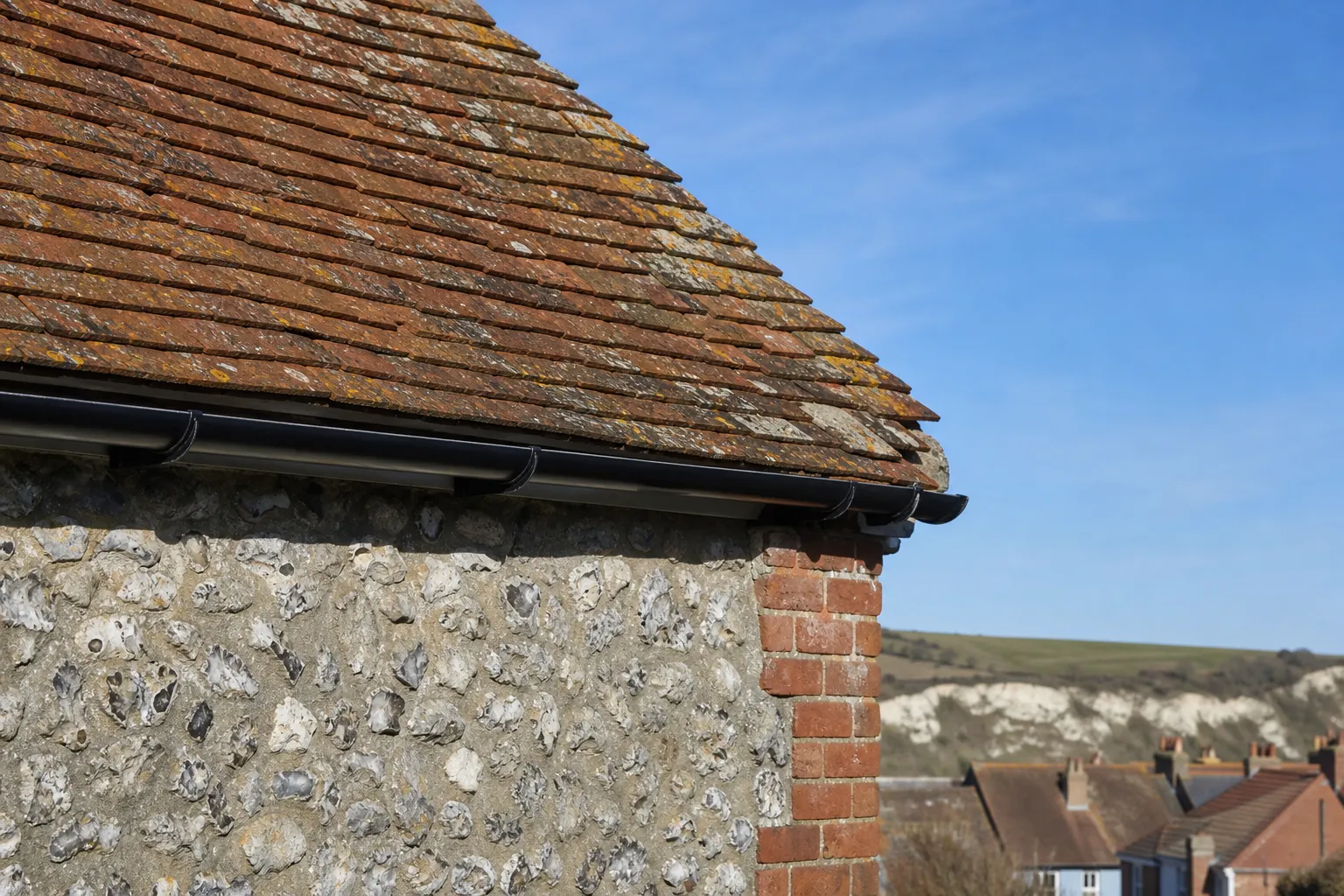
Inside the Park, the planning decision-maker is the Authority named after it. Where the Authority has recovered the function, which covers the Park parts of Horsham, Lewes, Mid Sussex, Wealden, Arun, Brighton and Hove, and Adur and Worthing, it deals with planning and enforcement itself. In Chichester, East Hampshire and Winchester the work is delegated back to the councils, so you contact them. We quote no count of authorities, because the Authority's own pages disagree on one.
In Worthing, the Castle Goring and Highdown conservation areas fall within the National Park Authority's remit for planning. Homes on the Downs fringe, in places like Findon, Steyning and the villages around them, are the usual cases where the answer to "who do I ask?" is the Authority rather than the district council.
What the Park changes for a roof
The Park is article 2(3) land, as a conservation area is, so a dormer is not permitted development there. Park status alone does not remove the Class C roof-window rights, and it leaves like-for-like re-covering untouched. The Building Regulations apply here exactly as everywhere else.
Building control is a separate question
Planning and building control run on separate tracks. The Park Authority handles planning, not building control, so for an address inside the Park we ask the district council or a registered approver. Our guide to Building Regulations approval to re-roof sets out the tests that apply whether or not your home sits in a protected area.
When in doubt, ask the planning team responsible for your postcode before you sign for any work. A short email with a few pictures of the roof usually brings a clear reply within a reasonable time.

Horsham stone, clay tiles and getting the materials right
Many roofs in these protected places are covered in materials with rules of their own. Horsham stone slates are the best known in this part of Sussex. The Stone Roofing Association's order of preference is plain: reuse as many of a roof's own slates as you can; steer clear of slates lifted from other buildings wherever possible, since demand for them puts older roofs elsewhere at risk; and when new Horsham slates are obtainable, use those to make up any shortfall. A 2019 report called supply a problem, so ask us how it stands today.
It adds that a stone roof laid in single lap and converted to double lap needs its loading reviewed first, and that for a listed building the conversion also needs listed building consent from the local authority. Where a new covering is also heavier, read switching to a heavier roof covering.
How we approach a protected roof
The survey records what is there: the covering, the way it is laid, any shadow slates, the pitch and the state of the timbers. We photograph it and write the quote as one total price. You then take the pictures and the scope to the conservation team. Whether the answer is a repair needing no consent or a full application, our job is to see that the work matches what was approved.
Terraced and semi-detached houses bring a neighbour into the picture, which we cover in re-roofing a terraced or semi-detached house. On any protected roof the price turns on the covering, on how the scaffold can be set up and on whatever lies under the old material. Our roof replacement page gives the wider picture, and the written quote sets out which materials are proposed for each slope.