A new roof is one of the larger repair bills a house will face, and the first question is always the number. Published cost guides give a range, not a price, and the range is wide for good reason: two houses on the same street can need very different amounts of work. Shape, size, covering, access and the state of the frame hidden below the tiles each move the number.
The figures here come from national cost guides, quoted as typical UK ranges with their source. MyBuilder, whose pages were updated on 21 August 2026, gives re-roof costs that typically run from £5,000 to £12,000. Checkatrade, in its October 2026 guide, gives an average of around £8,000 and says most jobs fall between £4,000 and £19,000. Those are national figures, so they show the scale and not your own price.
Below we walk through each part of the cost, from the roof shape to the scaffold, and explain why the only reliable number is a written quote that follows a survey of your own roof.
What the published ranges say, and what they hide
Two national guides frame the question. MyBuilder says new roof costs typically range from £5,000 to £12,000. Checkatrade puts the UK average at around £8,000 and says most re-roofs fall between £4,000 and £19,000, and its hip and gable rows exclude VAT. The gap between the top and bottom of each range shows how many variables sit behind a single "new roof cost".
A range like that hides several things. It blends small and large houses, simple and complicated shapes, cheap and expensive coverings, easy and awkward access. It rarely says whether scaffolding, waste removal, new battens or an insulation upgrade are included, and it cannot know what the survey will find: rotten timber, a failed lead valley, missing underlay or a chimney that needs attention before the new covering goes on.
Treat the ranges as a map
These numbers help you judge whether a quote sits in the right territory, and they help you prepare. A quote far below the range deserves a question about what is left out, and one far above it a question about what is added.
If you are still unsure that the roof needs replacing, the page on repair or replace explains how we weigh the two, and signs you need a new roof lists what to look for. Both are worth reading before you ask anyone to price a full replacement, because a repair that properly solves the problem costs a fraction of a re-roof.
If you have not yet pinned down why the roof is failing, the cost conversation is premature, since the answer changes with the cause: a worn covering, a rotten frame and a single leaking valley lead to three very different bills. The rest of this guide takes the cost apart piece by piece, so you can see where the money goes and which questions to put to anyone who gives you a number.
House type and roof shape
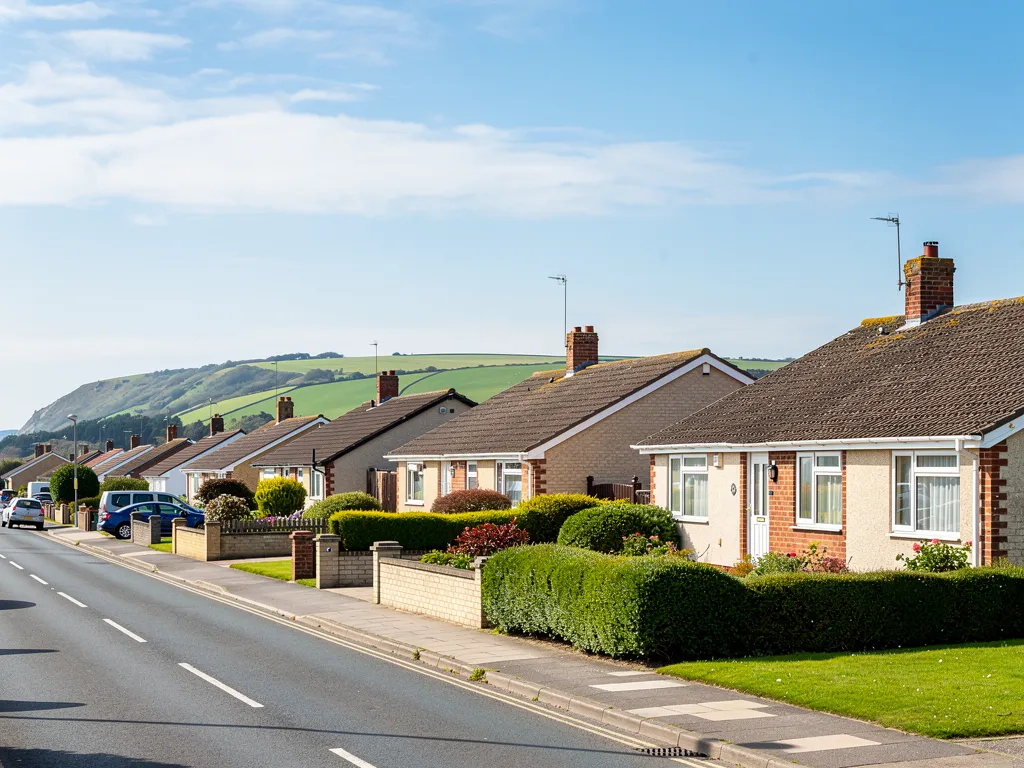
Roof shape is the biggest single driver. A simple gable roof, with two slopes meeting at a ridge and a vertical wall at each end, has the least edge detail and the fewest awkward cuts. A hipped roof falls away on every side, which gives it hips, the outer sloping corners, and means more cutting, more ridge and more flashing for the same floor area. That extra detail is why hipped roofs cost more to cover.
MyBuilder breaks the figures down for a semi-detached house, and the pattern is clear. Checkatrade shows the same direction, though with higher top figures and VAT excluded.
| Semi-detached roof | MyBuilder typical range |
|---|---|
| Gable | £5,000 to £8,000 |
| Hipped | £8,000 to £12,000 |
| Flat | £2,500 to £6,000 |
| Lean-to | £3,000 to £5,500 |
Checkatrade gives £9,250 to £18,000 for a hipped roof and £7,000 to £16,250 for a gable, before VAT. Its numbers sit higher than MyBuilder's, and the two guides use different house sizes and assumptions, so compare them as a pair of estimates rather than as a contradiction.
Size, pitch and complications
A bigger roof costs more, but so does a steeper one, because steep slopes need more safety measures and slower work. Dormers, chimneys, roof windows and valleys each add flashings and labour, and every flashing is a joint that must be dressed by hand and checked. Older houses add their own surprises, such as a roof built without underlay or timber that has taken water for years. A bungalow with a large hipped roof may cost more to cover than a small two-storey semi with a plain gable. Our page on flat roofing covers flat roof replacements, which follow a different cost logic.
The covering you choose
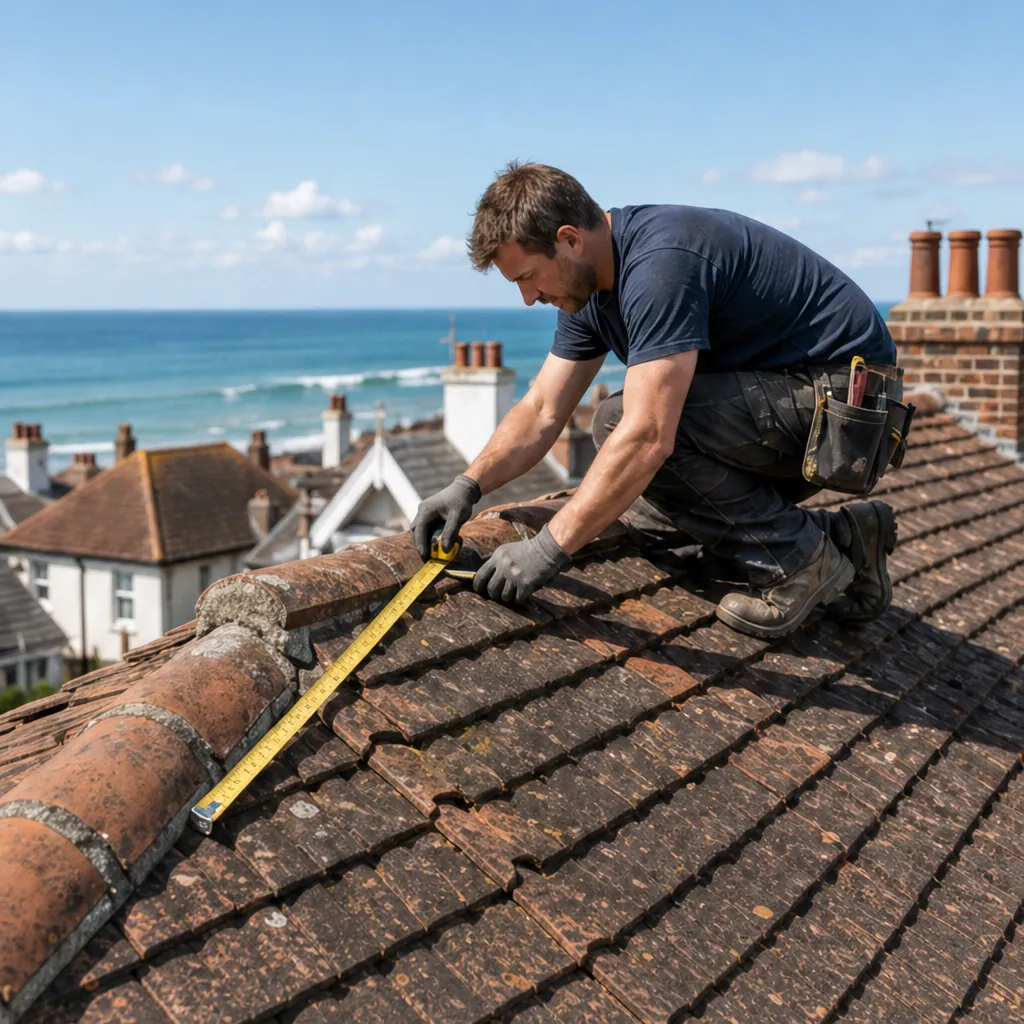
The material is the next big variable. Concrete tiles, clay tiles, natural slate, artificial slate and stone slate all carry different prices per square metre, and they last for different lengths of time. MyBuilder puts a slate re-roof at £100 to £180 per m², and reports that a slate roof laid well can last 80 to 100 years or more. Checkatrade quotes an average stone slate roof at around £160 to £210 per m², and that is a general figure and not a local one.
On lifespans, Marley cites a minimum life expectancy of 60 years for clay tiles, set by the Building Research Establishment, and adds that this is not a guarantee. MyBuilder says concrete tiles typically need replacing after 30 to 50 years and clay after 40 to 60. These are typical ranges that depend on exposure, workmanship and upkeep, so use them to compare materials and not to expect a fixed life.
Flat roof coverings
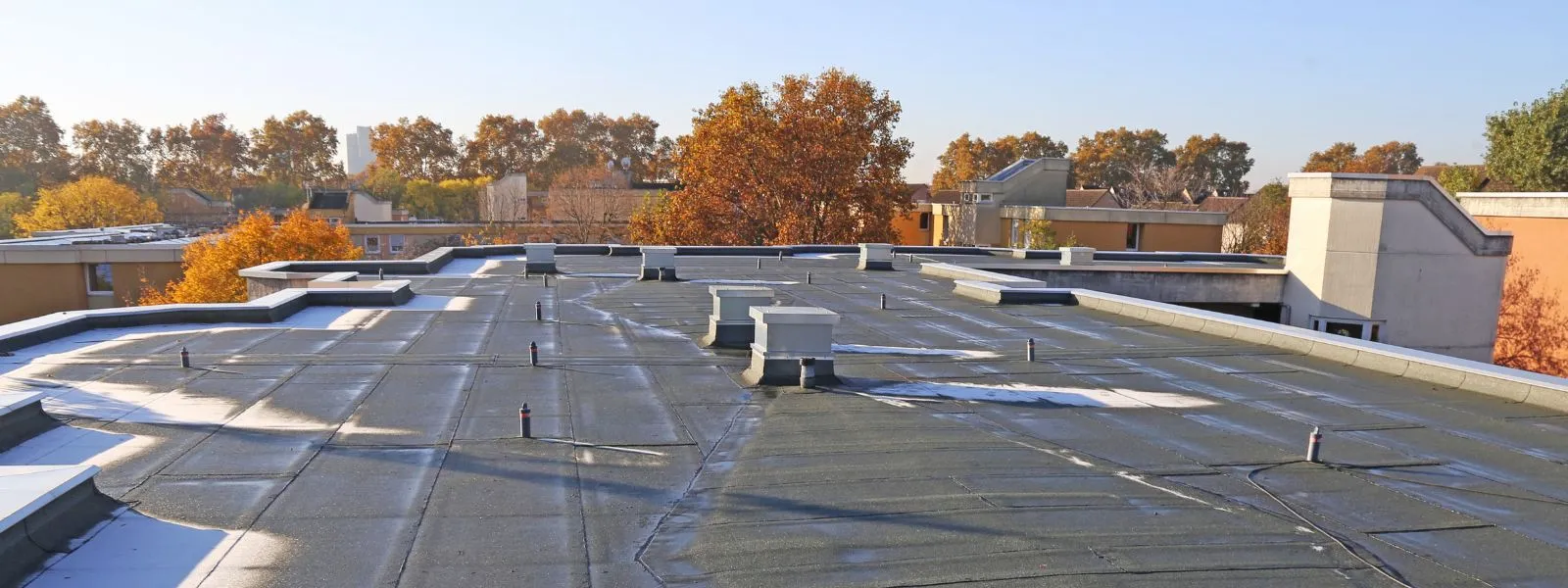
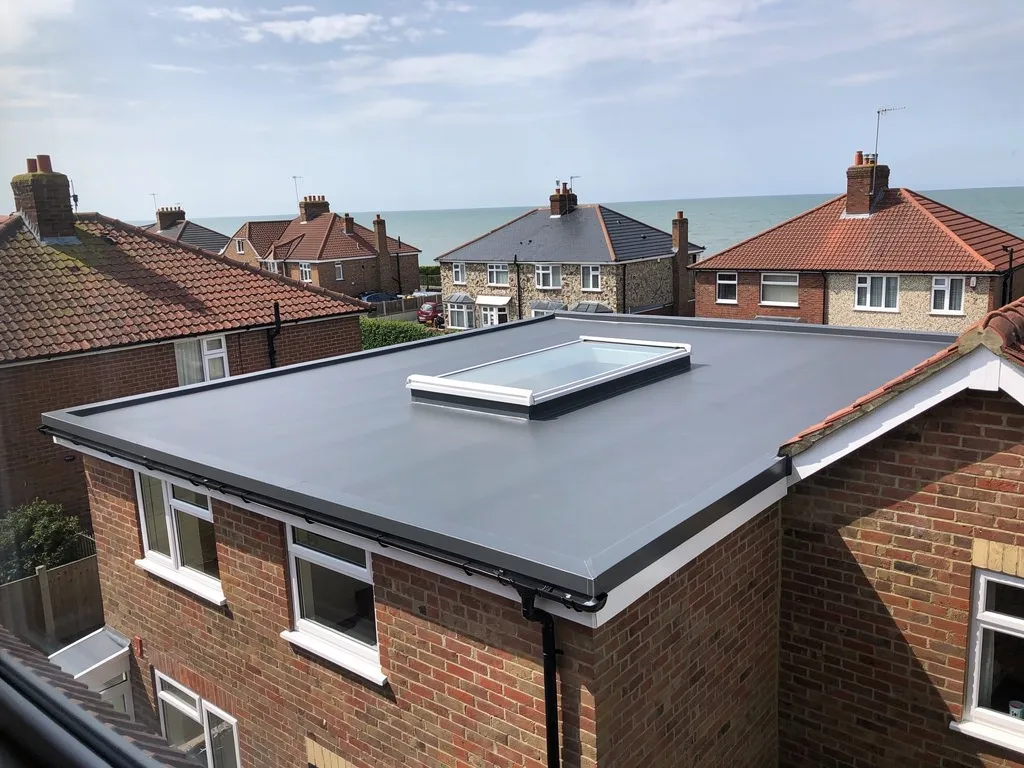
For a flat roof, MyBuilder gives typical per-square-metre ranges: felt at £70 to £100, EPDM at £90 to £130, GRP at £95 to £150, PVC at £95 to £140 and lead at £150 to £200 or more. EPDM is a rubber membrane, GRP is fibreglass set in resin, and PVC is a single-ply sheet. A cheaper surface at the start can mean an earlier replacement, so the cost over the life of the roof is often a better test than the first price.
A heavier covering than the old one can also change the structure beneath it. If a new covering adds weight of 15 per cent or more, the Planning Portal says approval is needed, and a timber check may be required. If the existing roof has begun to dip, our page on sagging roof repair explains why the frame matters. Ask which covering a quote is based on, and what the manufacturer's fixing instructions require.
Scaffold, labour and access
Scaffolding is a sizeable part of any re-roof, and it is easy to overlook when you compare headline figures. MyBuilder's new roof guide puts scaffolding at approximately £1,125. Checkatrade gives £700 to £1,300. A separate MyBuilder scaffolding guide quotes around £850 to £1,200 for the usual set-up on a two-storey home. The variation reflects frontage, height, the number of lifts and how long the scaffold stays up.
Scaffolding set up across the footway or carriageway needs a highway licence in writing, which the scaffold contractor obtains. West Sussex County Council, which covers Worthing and Adur, asks for a minimum of 10 working days from application to erection. That is worth knowing when you plan a start date, because a roof job cannot begin until the scaffold is up.
Labour
For labour, MyBuilder suggests £50 to £130 per m² and a day rate of £250 to £300. The time depends on the roof's size and complexity, the weather, and how much needs doing before the new covering goes on, such as repairing rafters, fitting new battens or replacing fascia boards. Stripping an old roof also produces waste, and getting rid of it forms part of the job.
Access shapes the work in other ways too. A roof reached through a narrow passage, with no space to store tiles, takes longer than one on an open plot. A terrace may need discussion with neighbours, as our guide to terraced house roof repairs explains. Seafront and exposed sites can need more careful planning for materials, because wind affects what can be lifted safely.
When you read a quote, check whether scaffolding is included, because it is one of the larger single items and some quotes leave it out until later. The same goes for skip hire and the cost of taking away the old covering, which on a full strip is a bulky load.

Building Regulations, VAT and other costs that arrive late
Several costs sit outside the roof itself, and it helps to know about them before you sign.
Building Regulations and insulation
Under the Planning Portal's test, a building control application is not normally needed where less than 25 per cent of the total building envelope is touched and less than 50 per cent of the roof is involved. Stripping and recovering the entire roof passes the 50 per cent limit, so approval applies, and the work may be tied to a thermal upgrade. Table 4.2 of Approved Document L lists a limiting U-value of 0.15 W/(m²·K) for roofs, new or replacement, on existing dwellings. In practice this can mean adding insulation, which adds to the cost of the job. Who files the Building Regulations notification is something to settle with your roofer before work starts.
VAT
The standard VAT rate is 20%, and a re-roof is normally standard-rated. For specified energy-saving materials, including roof insulation, GOV.UK shows a zero rate from 1 May 2023 to 31 March 2027, reverting to 5% afterwards. Whether insulation inside a re-roof can be zero-rated depends on whether HMRC would treat the work as a single supply or multiple supplies. Ask for that to be explained on the quote and do not assume it. The sums involved on a large job are big enough that the answer is worth having in writing before you commit.
Things found on the day
Once the old covering is off, the roof can show problems the survey could not see: rotten battens, damaged rafters, failed lead or a chimney that needs repointing. A thorough survey, with photographs of the loft and the underside, cuts these down, but some surprises cannot be avoided. Ask how any extra timber or lead will be handled and agreed before work begins. Our page on checking a re-roof quote lists the questions to ask, and it is a useful read before any contract is signed.
Getting a number you can rely on
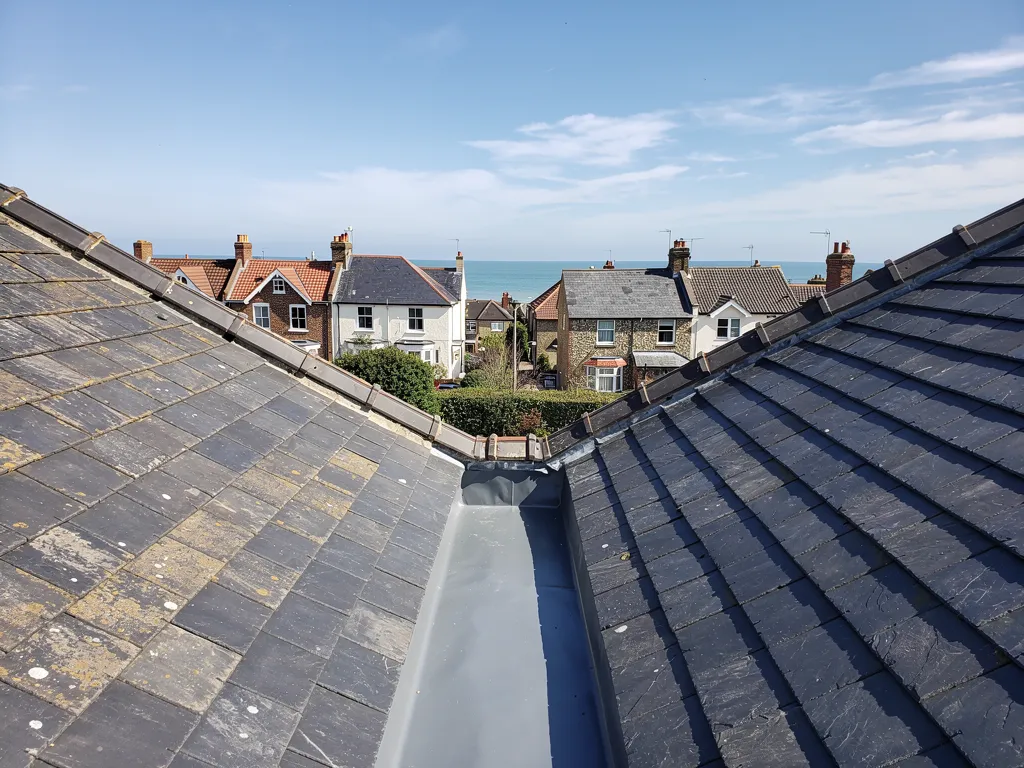
A guide can give you a range. Only a survey can give you a price. On a survey we go up onto the roof and into the loft, trace the cause of any trouble, check the timbers, measure the slopes and note the access. The pictures we take of your own roof arrive alongside the written quote.
You get a single figure for the whole job in the written quote. From the survey we work out what is needed and recommend work that suits your roof, which means telling you when a repair would do in place of a replacement. Pricing from us is good and fair, and the quote names the covering and states whether scaffolding and VAT are in it, so you know exactly what the number buys.
Questions to settle before you accept
Ask which covering, underlay and battens are proposed, whether the figure takes in scaffolding and VAT, how the old roof will be disposed of and what happens if rotten timber is found. Ask who handles the Building Regulations notification and how long the job should take. Clear answers to those are a better sign of a good job than the lowest figure, and a roofer who welcomes the questions is worth listening to. If any answer is vague, ask for it in writing on the quote.
A manufacturer's warranty on the materials is separate from the quality of the fitting, so ask for both to be described, and the site is cleared when we finish. The main roof replacement page covers the whole service, and a photograph of the roof and a few lines about the house are enough to start a conversation about a survey.