Nobody expects to hire a rogue trader. They are usually hired in a moment of worry, after a storm, or on a day when the quote seemed reasonable and the person at the door seemed friendly. Spotting the pattern early is easier than undoing the damage afterwards, and it does not need any knowledge of roofing.
The signs below are habits of behaviour, not a judgement on any one firm. Any single one can have an innocent explanation. A roofer who is busy may be slow to write a quote, and a new business may have few reviews. What matters is the combination, and especially whether the answer to a polite question is calm and specific or evasive.
This page is only the warning list. The positive route, from shortlist to signed contract, is in how to find a good roofer, and the matching list of things to ask is in questions to ask a roofer. We are Watertight Worthing Roofing, and we would rather you checked us this way too.
The unexpected knock and the cold call
A stranger at the door says they were working nearby and noticed a loose ridge tile, or that your gutter is about to fall. A leaflet or a phone call makes a similar claim. The approach is designed to create a feeling that a problem is urgent and that this person is the only one who can solve it, before you have had a chance to ask a neighbour or look for yourself.
The roof is a poor thing to judge from a pavement, and a person with no prior relationship has no reason to know the state of yours. That does not mean every visitor is a rogue. It means the claim has not been tested, and you are the one who decides how far to test it.
A calm reply
Thank them, take a business name and a phone number, and say you will arrange your own survey. A genuine firm accepts that without argument. A rogue one tends to push: it can start today, the price is only available now, the scaffold is already on the van.
If you do want to check the claim, ask them to email photographs of the supposed fault and the address they were taken at, then compare with what you can see from the ground and the loft. A sharp-eyed neighbour or a second opinion from a firm you have chosen yourself costs little and settles the matter.
After bad weather
A gale or a heavy storm is a reasonable time to check your roof. It is also when unsolicited visits are easiest to believe. Look first from the garden, and if you find real damage, ring a firm you have picked, not the first one to arrive.
Pressure to decide today
A discount that disappears if you do not sign on the spot, a start date that is only available this week, a warning that the leak will cause a ceiling collapse by Friday. These are pressure tactics, and they have a common aim: to stop you comparing, asking or sleeping on it.
A genuine roofer knows that a roof is a large purchase. A fair firm lets the quote stand for a reasonable period, answers questions without irritation and does not treat a request for time as an insult. If water is truly coming in, the correct response is a make-safe visit, which is a small, quick job, not a signature on a full replacement. Our guide to roofing jobs explained shows how big the gap is between the two.
Your cooling-off time
Under the Consumer Contracts Regulations 2013, a contract made at your home after a survey can be cancelled without giving a reason until the end of 14 days after the day it was entered into. The trader must tell you so. Where that information never reaches you, the period is extended, up to 12 months after the day it would have ended. A roofer who skips the notice, or who brushes the right aside, is breaking a basic requirement.
There is one exception worth knowing. If you specifically invited a trader to attend for an urgent repair, the cancellation right does not cover that repair, though anything extra sold on the same visit still does. That is a reason to be careful about what you agree to when you are anxious.
The remedy for pressure is time. Take the written quote away, read it, and ring the firm back when you are ready.
Damage you cannot see, and photographs you cannot place
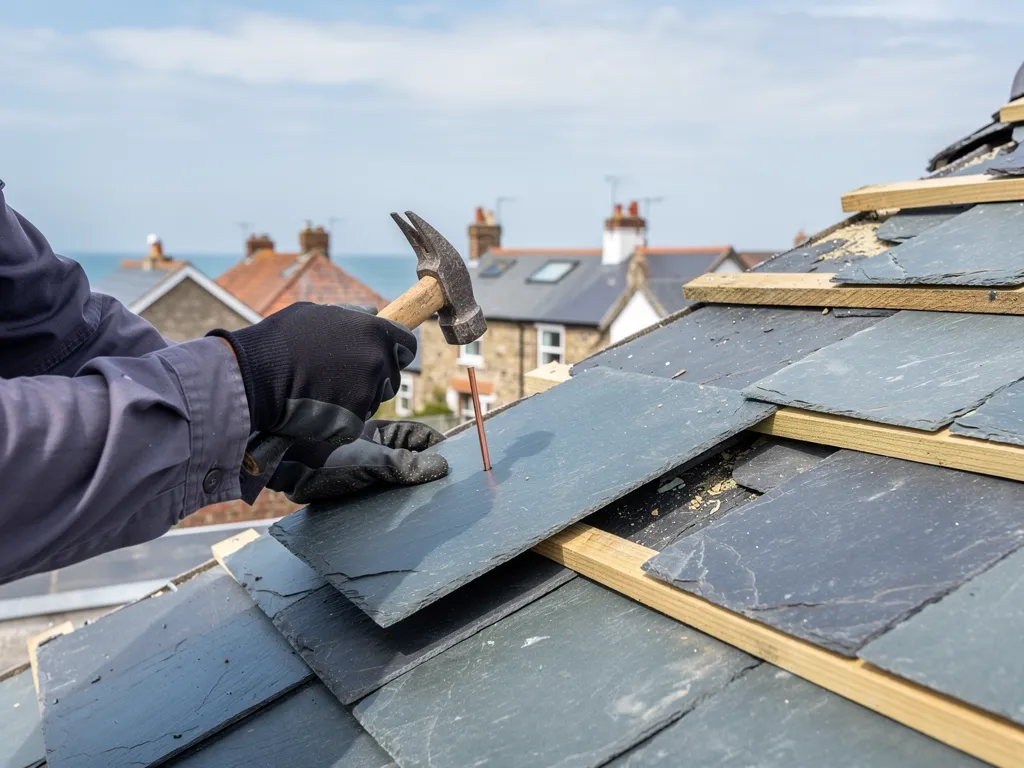
One of the oldest problems is the invented fault. A roofer climbs up, comes down with a phone, and shows you a broken tile, a gap in the flashing or a patch of rot. You have no way to tell whether the picture is of your roof, another roof, or the same tile photographed twice.
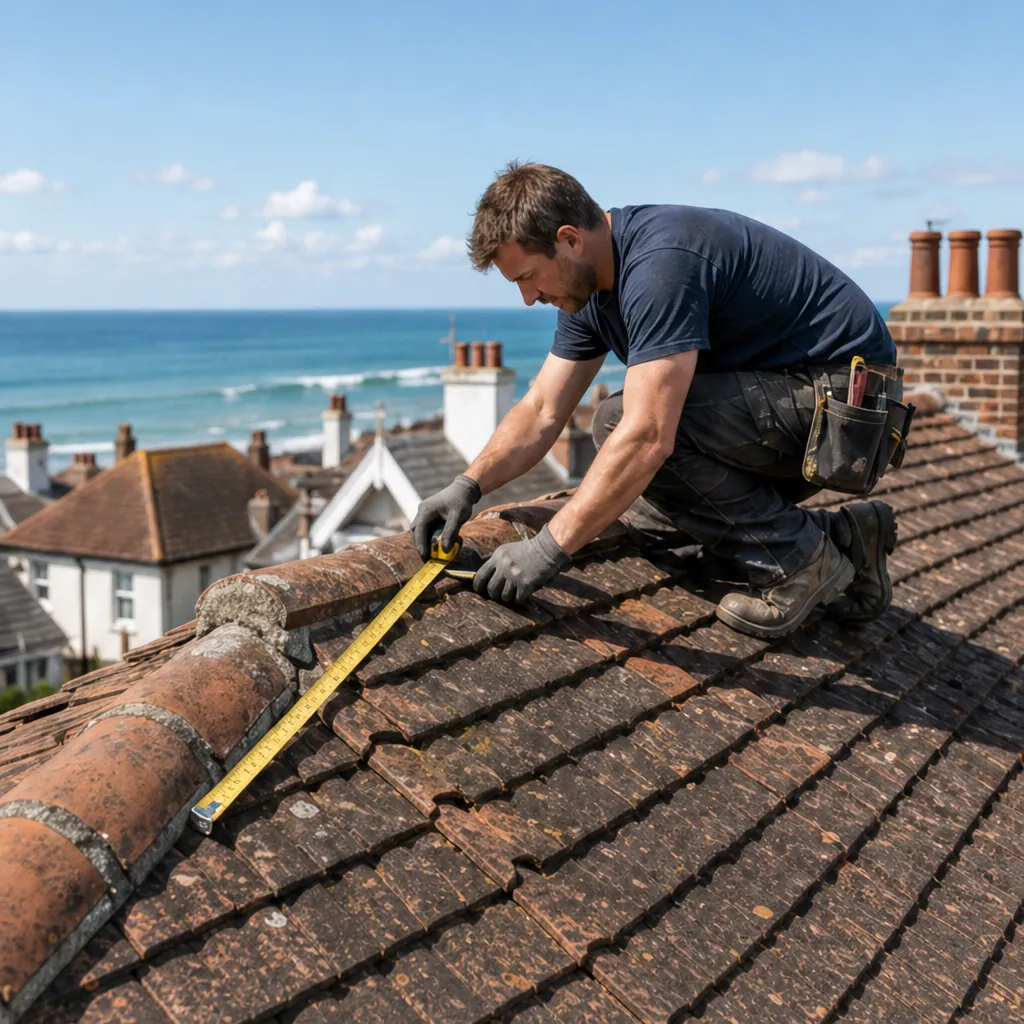
Moss is a frequent target for exaggeration. It looks alarming, and a rogue may call it structural damage. In fact moss holds moisture against the covering and can block gutters, and it is worth removing, but it is rarely a reason to replace a roof on its own. Similarly, a faded or mossy ridge is not proof that the ridge has failed.
Making the evidence checkable
Ask for photographs of your own roof, taken during the visit, sent with the quote. Ask where on the roof each one was taken. Look in the loft yourself, standing on boards or joists, for tide marks and wet insulation under the place the roofer pointed to. Real faults leave real traces inside.
Be wary, too, of work that is bigger than the fault. A single slipped tile does not need a new roof, and a hairline crack in a chimney flaunching does not need the stack rebuilt. Our own aim is to match the job to the fault, and any good roofer should be able to explain why a larger job is needed when it is.
A price attached to a vague description is the third part of the pattern. "Roof repairs, £1,800" tells you nothing. A sound quote names the fault, the place and the repair.
Cash only, no quote and no paperwork
A written quote on headed paper, a named business, an address, a phone number that rings and a document you can keep: this is what a legitimate roofer provides. Its absence is the sign that most deserves attention. When a firm will only give a figure by voice, asks for payment in cash and avoids anything on paper, there is nothing to hold it to if the roof leaks the following week.
Cash itself is not unlawful, and plenty of small jobs are paid that way. The warning is a combination: cash, up front, for the full amount, with no record. If the whole price is demanded before any work has started, you have lost the only leverage you have.
What the paperwork should show
- A business name and a trading address you can verify.
- A description of the work, the covering and the area it applies to.
- One total price, with VAT and scaffolding stated as in or out.
- A start period and the way payment is staged.
- The cancellation notice for a contract signed at home.
- The guarantee wording on paper.
No cancellation notice
A missing notice is a sign by itself. The regulations require it, and a firm that leaves it out is either careless or hoping you will not use the right. If the notice never arrives, you keep the longer window already described, up to 12 months beyond the normal end date. Keep every message and every receipt, and if anything goes wrong, make the complaint in writing.
Reviews that do not add up
A strong online presence is not proof of good work, and a weak one is not proof of bad. A review is still worth reading, but for what it says, not for the score. A trusted account tells you what the job was, what the roof looked like, what went wrong and what the firm did next. A thin one tells you only that someone clicked a button.
Fake reviews are unlawful. Schedule 20 to the Digital Markets, Competition and Consumers Act 2024 lists the commercial practices that are unfair in all circumstances, and paragraph 13 includes submitting or commissioning a fake consumer review, or a review that conceals the fact it was incentivised, along with publishing reviews in a misleading way. It has been in force since 6 April 2025. That is useful context, but it is not a filter, so the reading still falls to you.
Patterns worth a second look
- Several reviews in nearly identical wording.
- A burst posted within a day or two, then silence.
- Praise that never mentions the job, the roof or the town.
- Reviewers with no other history.
- Photographs that appear on more than one firm's pages.
Checks that do not rely on stars
Ask a firm for the address of a recent job, and ask a neighbour or the owner whether they would mind a call. Look for a business address you can find on a map. Compare the name on the van, the quote and the website. A firm with a settled name and a traceable address is much harder to lose track of than one with three phone numbers and no place.
What to do if you have met one
If you have not signed anything, you can simply decline. Say that you will be in touch, take no payment decision and do not let anyone start work "just to get the first stage done". Few things are more costly than an unplanned start on a roof you did not need touching.
If you have signed a contract at home, look for the cancellation notice, count 14 days from the day you signed, and write to the firm by email or letter to cancel before the period ends. Keep a copy and note the time you sent it. The firm must reimburse payments. If work already began at your written request, you pay in proportion to what has been supplied.
If the work has been done badly
Section 49 of the Consumer Rights Act 2015 sets reasonable care and skill as the standard, and section 54 lets you ask for the job to be done again. Write down what is wrong, photograph it, and send the complaint in writing. Under section 308 of the 2024 Act, the firm must tell you about any alternative dispute resolution arrangement available when it replies to a complaint.
Getting the roof sorted
If water is coming in, your first need is a make-safe visit from a firm you have chosen on your own terms, followed by a survey that explains the real cause. Our page on Worthing house roofs helps you recognise what your roof is made of. For what the right job might cost, read our roofing costs guide, then use the questions above before you agree anything.