
Question answered
Replacing a flat roof in a conservation area
The short answer
You can usually replace a flat roof in a conservation area without planning permission when the new covering copies the old one and the building looks no different afterwards. Listed buildings and streets under an Article 4 direction are the exceptions, because those can require permission for roof covering changes. Ask the Adur & Worthing planning team about your address before work begins.
A conservation area label does not freeze your flat roof. Three questions decide the matter: will the new roof look the same, does an Article 4 direction cover your street, and is the building listed?
Like-for-like is the starting point
The Town and Country Planning Act 1990, in section 55(2)(a), says that maintenance, improvement and alteration are not development if the outside of the building is not materially changed. Put plainly, a new covering on a flat roof, in the same kind of material, at the same height and with the same edges, rarely needs consent from the planning authority. A conservation area does not alter that starting point.
What a conservation area adds is attention, not a blanket ban. The local planning authority designates these areas, and the extra controls that bite are mostly aimed at visible alterations, such as reshaping a roof, adding a dormer or changing what the street sees.
Building Regulations run alongside planning and apply either way. A flat roof renewal can bring an insulation upgrade with it, as our page on insulating a flat roof when replacing it explains.
What counts as a visible change
The question is how the building reads from outside. A flat roof tucked behind a rear extension is a different matter from one that faces the street. Swapping a lead-covered roof for a plain membrane, raising the edge trim, adding a parapet capping that was not there before or fitting a new rooflight all change the elevation, and each is worth raising before you accept a quote.
Green roofs raise the same question. A planted surface looks different from above and from neighbouring windows. If that is what you want, the page on a sedum green roof covers the build-up, and the council can tell you how it views the change in your street.
Fibreglass roofs finish with edge trims that are usually small, though they are visible lines on the rim of the building. Colour is another point: a grey membrane and a black one read differently against brick or render. We note all of this at the survey so nothing surprises the planning team later.
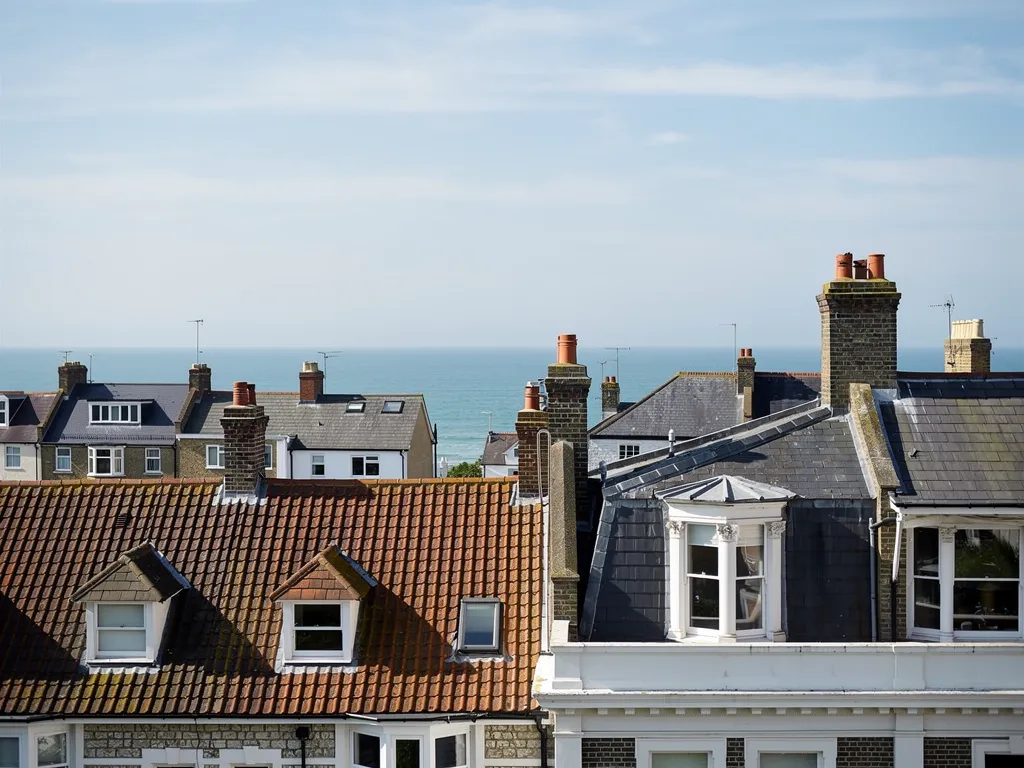
Article 4 directions in Adur and Worthing
An Article 4 direction withdraws chosen permitted development rights across a set area. The councils explain that such a direction does not ban development outright; it makes planning permission necessary for the specific items it lists.
Several local directions reach roofs. The Old Shoreham direction (ADC09) and the Kingston Buci direction (ADC08) take away Class C rights, including roof coverings, on homes whose frontage is on a road or right of way. In Worthing, the Warwick Gardens direction (WBC08) controls re-forming or re-covering a roof slope on houses looking onto a road or open space, and Warwick Place (WBC06) takes away Class C on the Warwick Place frontage. Western Row (WBC04) is annotated as withdrawing all dwellinghouse permitted development rights.
The Ambrose Place and Cowper Road directions in Worthing deal with other matters and leave roofs alone. Other directions exist too, so check your own address with the planning team rather than assuming.
Listed buildings and the National Park
A listed building follows a different rulebook. Under the Planning (Listed Buildings and Conservation Areas) Act 1990, any work that changes what makes a listed building special needs listed building consent. The Adur & Worthing guide lists mending a roof with different materials from the originals among its examples, and that can include fitting a different covering to a flat roof.
The South Downs National Park Authority says that everyday upkeep and small repairs in kind need no consent, but that consent is required once a repair alters or entirely renews original fabric and so touches the building's character. A flat roof is not normally historic fabric, but how it meets lead, parapets or stonework often is.
Some Worthing conservation areas, Castle Goring and Highdown among them, lie in the National Park for planning purposes, so the Authority rather than the borough deals with applications there. A flat roof on a Georgian terrace and one on a 1930s extension raise different questions, which is why we ask about the building's status first.
Getting an answer before the work starts
The easiest planning mistake to fix is the one you avoid before the scaffold goes up. Ask the Adur & Worthing planning team, or inside the National Park the park authority that acts as planning authority, whether your address lies in a conservation area, whether an Article 4 direction covers it and whether it is a listed building. Describe the new roof in plain terms and give them the survey photographs.
Where the work is notifiable, we explain the consent position and make the Building Regulations notification, through a registered building control approver or the council's team. The written quote follows the survey, so any planning point can be settled before you commit.
Timing can interact with the weather, so see replacing a flat roof in winter if a consent is likely to push the start into the colder months. Everything else on this type of work is on our flat roofing page.
Conservation area flat roofs: further questions
Does a flat roof on a rear extension need permission to replace?
Not normally, if it is replaced like-for-like. A rear flat roof that does not face the road is less likely to be caught by an Article 4 direction, but the building could still be listed. Check your address with the planning team.
What if the planning team says the new roof needs an application?
Then an application goes in before work starts, with drawings and the proposed materials. Starting first risks enforcement action. Our survey photographs and written specification give the planning team what they need to see.
Tell us about your roof
Describe what is happening and we will call you back to arrange a visit.
- Photographs of what we find
- A written quote with one total price
- Or call 01903 299063
10-year workmanship guarantee, in writing.