
Question answered
How do you fix ridge tiles?
The short answer
Ridge tiles are fixed by working from a scaffold or tower, lifting the loose or cracked tiles, clearing the old mortar, checking the timber below, then laying a fresh bed and fixing the tiles mechanically with clips, straps or screws before pointing. A dry-fix ridge system can replace the mortar entirely. The job is done up at the apex and is not one for a ladder.
Fixing a ridge means taking the loose tiles off, clearing the old bed, bedding them again and fixing them down mechanically. The sequence is simple to describe and unforgiving to get wrong.
Step one: make it safe and find the real fault
The first visit is about what is holding the ridge, not the tile on top. We look from the ground and, where access allows, from a tower or scaffold, checking for shifted tiles, mortar that has dropped out, cracked tiles and gaps at the ends of the run. Inside, a torch in the loft shows any chinks of light along the ridge and any wet timber, since a leak here often marks a ceiling well away from the ridge.
If a tile has already come off or is hanging, we make the area safe before anything else, so nothing falls onto a path or a neighbour's garden. Then we decide the size of the job. Sometimes a few tiles need re-bedding, and sometimes the whole run has to come off. Repointing alone is smaller and suits sound tiles; see when you can just repoint. The wider service is on our ridge tile repairs page.
Step two: lift, clear and check the timber
With access in place, the loose ridge tiles are lifted away singly and stacked. Cracked ones are discarded and replaced with matching tiles. The old bedding is chipped away along the whole length, down to the top of the roof tiles, so the new bed grips a clean surface and the courses beneath are not damaged.
This is also when we check what the ridge sits on. On many roofs a ridge board or a ridge batten carries the fixing, and if it is rotten or split, a new tile has nothing sound to be held by. The gap between the last roof course and the ridge is examined too, because that is where wind and rain slip underneath. We photograph each stage, so the survey record shows the state of the roof under the old mortar and you can see it for yourself. Any rotten timber is cut out and replaced before the new bed goes down, because a bed laid on soft wood fails in the next hard winter.
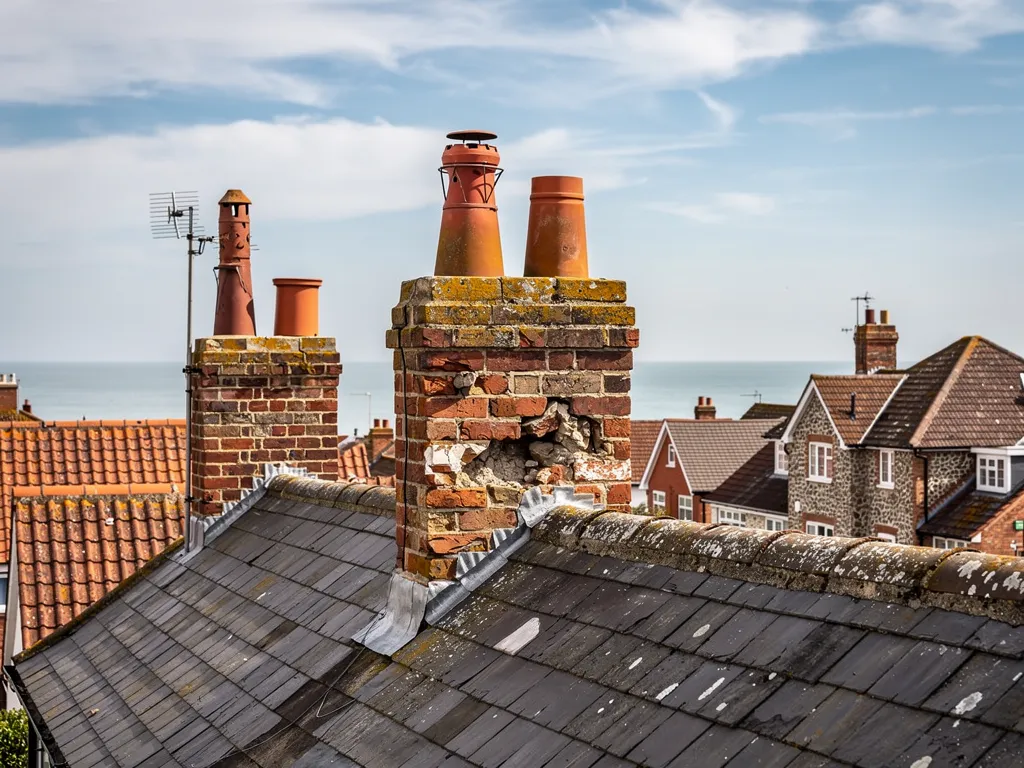
Step three: bed, fix and point
A fresh bed of mortar goes along the ridge, and each tile is set into it, aligned with its neighbour and tapped down. The change that matters came with BS 5534: since the 2014 revision, the code expects ridge and hip tiles to be held by a fixing as well as by the bed. That fixing may be a clip, a strap or a screw through the tile into the timber beneath, and the tile maker's instructions say which. Fittings at a hip or a ventilated ridge follow the maker's own instructions as well.
Once the run is fixed, the ends are finished, the joints are pointed and surplus mortar is brushed away. Mortar needs time to set before weather reaches it, which is why we do not lay a ridge in a gale or a hard frost. Mortar against dry fix is a trade-off, and each has its place.
The dry-fix alternative
A dry ridge system uses no mortar bed. Plastic or metal sections run along the apex, the tiles then fasten to those sections with clips or screws, so the whole run is held mechanically. It allows for movement, can go on in cold or damp spells and avoids the cracking of a mortar joint. BS 8612:2018 is the British Standard against which such systems are tested, and our BS 8612 page explains it.
Neither method wins in every case. Mortar suits some old ridges and conservation work, while dry fix suits a coastal roof that must ride out gales. We recommend the one that fits the roof and show you why in the survey photographs. On a tiled roof the choice rests on exposure, age and appearance, not on fashion. For the noise that loose verge caps make, see why a dry verge rattles.
Why it is not a DIY job
The apex is the highest and most exposed line on the roof, and the work is done from a tower alongside it. Ladders do not reach it safely, and roof tiles are brittle underfoot. A fall is the obvious risk. The less obvious one is a repair that fails because the old bed was left behind, the fixing was skipped or the timber beneath was never checked.
It also needs the right materials: matched ridge tiles, mortar mixed for the job and fixings that suit the roof. If you spot a loose tile, keep off the roof, stay clear of the foot of the slope and send us photographs from the ground.
Ridge fixing: two more questions
How long does a ridge repair take?
A short run of a few tiles can be done in a single visit, while a full ridge on a house takes longer because of access, the setting of mortar and the weather. The survey sets the programme, and we do not lay mortar in a gale or frost.
Do I need a new ridge or only new tiles?
Often the tiles are fine and it is the bed and fixing that have failed. We reuse sound tiles where they match and replace the cracked ones. A new ridge is only the right answer when the run is cracked throughout, the timber below is rotten or the old system cannot be fixed securely.
Tell us about your roof
Describe what is happening and we will call you back to arrange a visit.
- Photographs of what we find
- A written quote with one total price
- Or call 01903 299063
10-year workmanship guarantee, in writing.