
Question answered
Can you replace just one side of a roof?
The short answer
Yes, you can replace just one side of a roof. It makes sense when only that slope has failed, because it faces the worst weather or was damaged, and the other slope is sound. Expect a visible difference in colour at first, and remember that scaffold and set-up cost do not halve. Renewing half a roof sits right at the 50 per cent line that decides whether building control gets involved.
Yes, one slope can be renewed on its own, and sometimes that is the right call. Whether it is wise depends on the age of the other side, how well the coverings will match and where the Building Regulations thresholds sit.
When renewing a single slope is sensible
A roof does not age evenly. The slope that faces the open weather takes the driving rain, the sun and the salt, and it often wears out years before the sheltered side. If the tiles on that side are crumbling, the battens beneath are soft and the other slope is still in good order, renewing one side is a reasonable and proportionate job.
It also suits a roof damaged on one side by a falling branch or a storm, or one where a past repair has left a patchwork on a single slope. The point is that the decision follows what the survey finds, not a rule. We aim to recommend whatever repairs the fault with the least work, so we say plainly if one side will do, and equally if the other side is close behind and you would only be postponing a second scaffold. A roof that has already had patch repairs on the sheltered side is a good example of a slope to look at closely.
That second scaffold is the real risk to weigh. If the sheltered slope is likely to need work in a few years, doing both together may save money overall.
Matching old and new on a hipped or gable roof
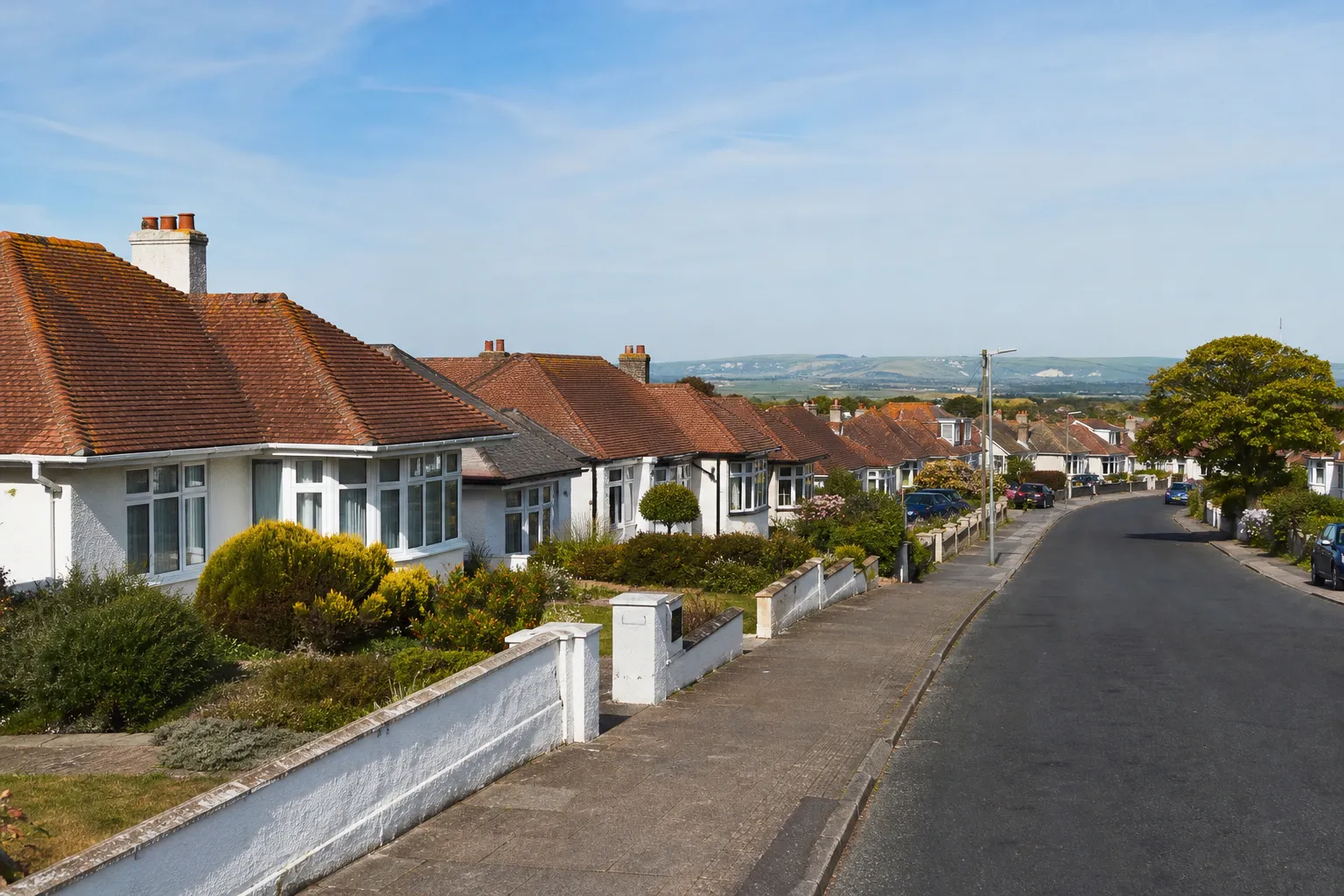
New tiles and slates do not look like weathered ones. A fresh slope beside an old one shows a colour and texture difference at first, and with clay and concrete tiles it can stay noticeable for a few years while the new covering weathers. On a semi-detached or terraced house, a half-done roof can also look odd if the new slope meets a neighbour's old roof along the party line.
You can narrow the gap by choosing a tile close to the original, or by blending in sound tiles lifted from a hidden slope, a point covered in reusing old roof tiles. A rear slope that cannot be seen from the road is the easiest to renew alone. A front slope on a conservation-area street is a different matter, and the planning team should be asked whether the covering must match. Terraces and semis add a further wrinkle, because the party wall line leaves the new slope abutting a neighbour's older covering.
The 50 per cent line and what it triggers
On the Planning Portal's test, a building control application is not normally required for re-covering when less than 25 per cent of the total building envelope is affected and less than 50 per cent of the roof is affected. You need approval if you exceed those limits, carry out structural alterations, or fit a covering that is significantly different in the event of fire.
One slope of a plain two-slope roof is about half the roof, so it sits right on the boundary. A hipped roof with a small extra slope, or a roof with a flat-roofed extension, shifts the sums either way. Your building control body, which is the council team or a registered building control approver, is the one to confirm how your own roof measures up. We explain the consent route and deal with the paperwork whenever the work is notifiable.
Going over the limits can also bring in the thermal upgrade rules, as the Planning Portal notes, so settle the question before you accept any quote.
Weight, structure and the other slope
Swapping lightweight old tiles for a much heavier covering on just one slope loads the roof unevenly. The Planning Portal flags approval where a new covering increases the weight by 15 per cent or more, while Approved Document A calls a load rise of more than 15 per cent a significant change. Our guide to a heavier roof covering covers the sources in full.
The timbers need the same scrutiny as on a full re-roof, and the stripped slope is the moment to give them it. Once one side is stripped, rafters, battens and the wall plate on that slope are laid bare, and the ridge board or the hips that join both sides are exposed to the other slope. Any rot there reaches into the half you were not planning to touch, as the page on roof timbers during a re-roof describes.
What it costs compared with doing the lot
A half roof does not cost half as much. The scaffold must still reach the eaves whatever the area, and the ridge, flashings and verges on the renewed side still need careful finishing. Materials and labour do fall in proportion to the area, but set-up, delivery and waste handling do not. For what moves the price, see the most expensive part of replacing a roof.
After the survey we give one total price for whichever job we recommend, and you can ask for the other option too, so a one-slope job and a full re-roof can be weighed side by side. The survey pictures of your own roof show why we lean one way. Where a full replacement is the answer we will tell you, and the roof replacement page outlines that route. Delivery, waste clearance and the final tidy are also done once, whichever option you choose, so keep these in mind when comparing.
Half-roof jobs: questions that come up
Will a new south-facing slope look different from the old north side?
At first, usually yes, particularly with clay and concrete tiles, which weather over several seasons. Natural slate tends to blend more readily. Choosing a close match, or reusing sound tiles from a hidden slope, narrows the difference.
Do I need building control if I only renew one slope?
Possibly. The Planning Portal test is under 25 per cent of the building envelope and under 50 per cent of the roof, and a single slope can sit on that line. Ask your building control body, and tell us about any extension or loft conversion at the survey.
Tell us about your roof
Describe what is happening and we will call you back to arrange a visit.
- Photographs of what we find
- A written quote with one total price
- Or call 01903 299063
10-year workmanship guarantee, in writing.