
Question answered
Do you need planning for commercial roof work?
The short answer
Usually not, if the work is like for like. The Town and Country Planning Act 1990 (section 55(2)(a)) leaves out works that keep a building's outward look materially unchanged. A change of material, a listed building or a conservation area can change that answer, and Building Regulations are a separate test.
Renewing a commercial roof like for like seldom involves the planning system. Altering how the building looks from outside, or working on a protected building, can.
Like for like and the appearance test
Section 55(2)(a) of the 1990 Act takes maintenance, improvement and alteration outside the definition of development when the outside of the building is left looking materially unchanged. For roof work that is the reason a worn run of profiled sheets can usually be renewed in the same profile, or a failed membrane in a similar one, without any application.
The test is how the building looks from outside, not the cost or size of the job. A roof of the same colour, profile and height reads as the same building. A roof that moves from pitched to flat, gains a parapet, rises at the ridge or changes from brick-red tile to grey sheet reads differently, and the planning team may take a view. When there is any doubt, email recent pictures showing the whole roof to the Adur and Worthing planning team and ask before the order is placed. A written answer from the council protects you if a neighbour or a landlord questions the work afterwards.
Why householder rights do not apply
The rights people quote online for roof windows and loft conversions sit in Part 1 of the General Permitted Development Order 2015, which deals with dwellinghouses. The Order's own definition leaves out blocks of flats, and a shop, office, warehouse or industrial unit is not a dwellinghouse either. Those rights therefore do not reach commercial roofs, and a contractor who tells you otherwise is guessing.
Any permitted development rights a non-domestic building may enjoy are found elsewhere in the Order and carry their own limits, so do not assume one applies to you. Where a job adds rooflights, plant, solar panels or a new access hatch, ask the planning team what it needs to see. Our page on replacing industrial rooflights covers the common case of renewing what is already there, and our wider commercial roofing pages show the systems involved.
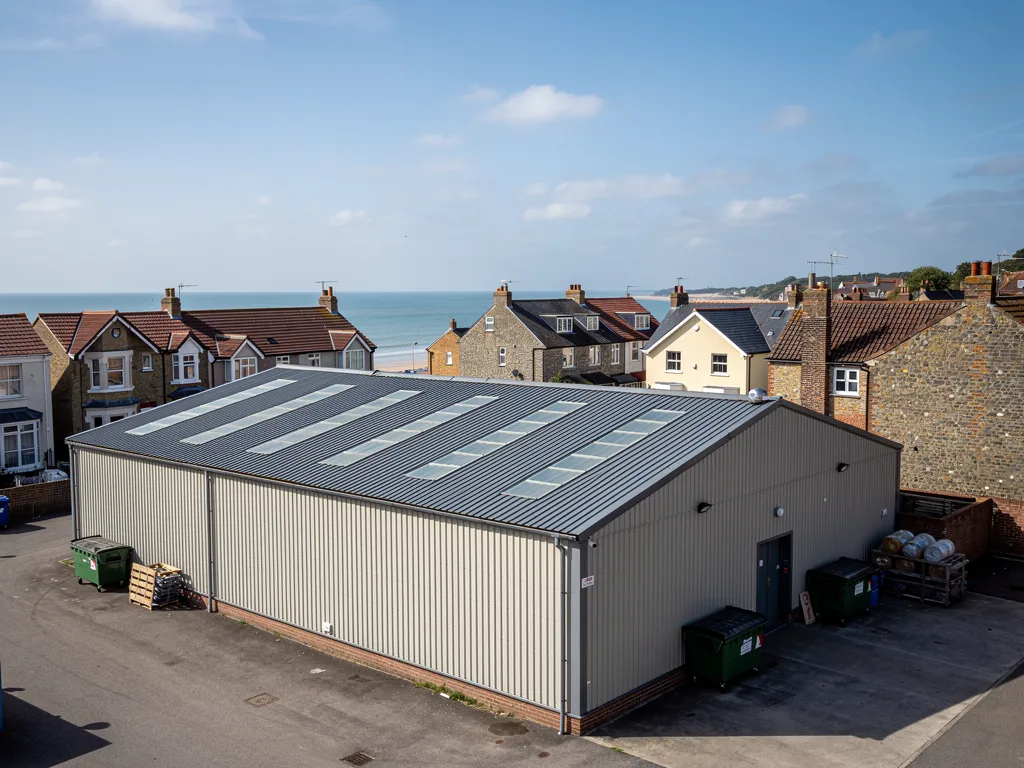
Listed buildings, conservation areas and Article 4
A listed building is the clearest exception. Section 7 of the Planning (Listed Buildings and Conservation Areas) Act 1990 forbids alterations that change a listed building's special character unless they are authorised, and Adur & Worthing Councils give an example of work needing listed building consent: a repair that uses materials which do not match the originals. That can catch an old warehouse, a chapel converted to business use or a former bank, so check the Historic List entry or ask the council before you order anything.
A conservation area or an Article 4 direction also deserves a check. An Article 4 direction withdraws named permitted development rights, and the council says it does not ban development outright; it means permission is needed for the matters the direction lists. Within the South Downs National Park, the Park's own Authority is the planning authority, though in its delegated areas a district council acts for it. Places of worship follow their own routes, covered in the FAQ below. Establish the building's status before anything else.
Building Regulations are a separate test
Planning concerns appearance and use; Building Regulations concern safety, structure and energy. The Planning Portal's roof guidance lists three triggers for approval: a new covering that performs significantly differently in a fire, a replacement covering weighing 15 per cent or more above the existing one, and any structural alteration. That guidance is written for houses, so on a commercial building confirm the tests with your building control body.
Approved Document A treats added load above 15% as significant, and classes any strengthening it requires as a material alteration. For Worthing and Adur the council's building control team sits at Worthing Town Hall, and a private registered building control approver is the alternative route. A lighter sheet over an old roof is not a free pass, because loading, fire performance and insulation all count in the assessment.
Practical steps before the work starts
Start with the building's status: listed or not, in a conservation area or not, under an Article 4 direction or not, and whether the lease means a landlord must consent. Photograph the roof, note the covering and colour, and decide whether the new one will match. Then ask planning and building control for their view in writing, since a written reply is worth far more than a remembered phone call.
A leak often sets the timetable; what to do when a shop or office roof leaks describes the make-safe work that can go ahead first. Costs depend on the system you choose, and VAT on commercial roofing is worth reading before you budget. Scaffolding over a public footway or road also needs a licence, and the scaffolders apply for it from West Sussex County Council, so allow time for that application when you set a start date.
Roof planning: two more questions
Does replacing roof sheets with a different colour need permission?
It may. Planning asks whether the change materially affects the external appearance of the building. A modest change on an industrial estate unit is a different matter from the same change on a listed or conservation-area building. Send the planning team a photograph and the proposed colour, and ask before the order is placed.
Who grants approval when a listed church has its roof renewed?
The answer turns on the faith and on whether worship still takes place. For a listed church in regular worship use, each of five denominations (Anglican, Catholic, Methodist, Baptist, United Reformed) runs its own approval process under the ecclesiastical exemption. Other faiths, and closed churches, need listed building consent from the council.
Tell us about your roof
Describe what is happening and we will call you back to arrange a visit.
- Photographs of what we find
- A written quote with one total price
- Or call 01903 299063
10-year workmanship guarantee, in writing.