
Question answered
Replacing a damaged roof sheet on an industrial unit
The short answer
To replace a damaged roof sheet, identify the sheet type first, then fit one with the same profile, thickness, coating and lap arrangement, fixed into sound purlins and sealed at the laps. Check whether the old sheet is asbestos cement before touching it. If neighbouring sheets are corroded or loose, replacing only one may not hold.
One split or corroded sheet can let water into a whole bay. Replacing it well depends on matching the profile, fixing into sound steel and knowing what the old sheet is made of.
Identify the sheet before ordering
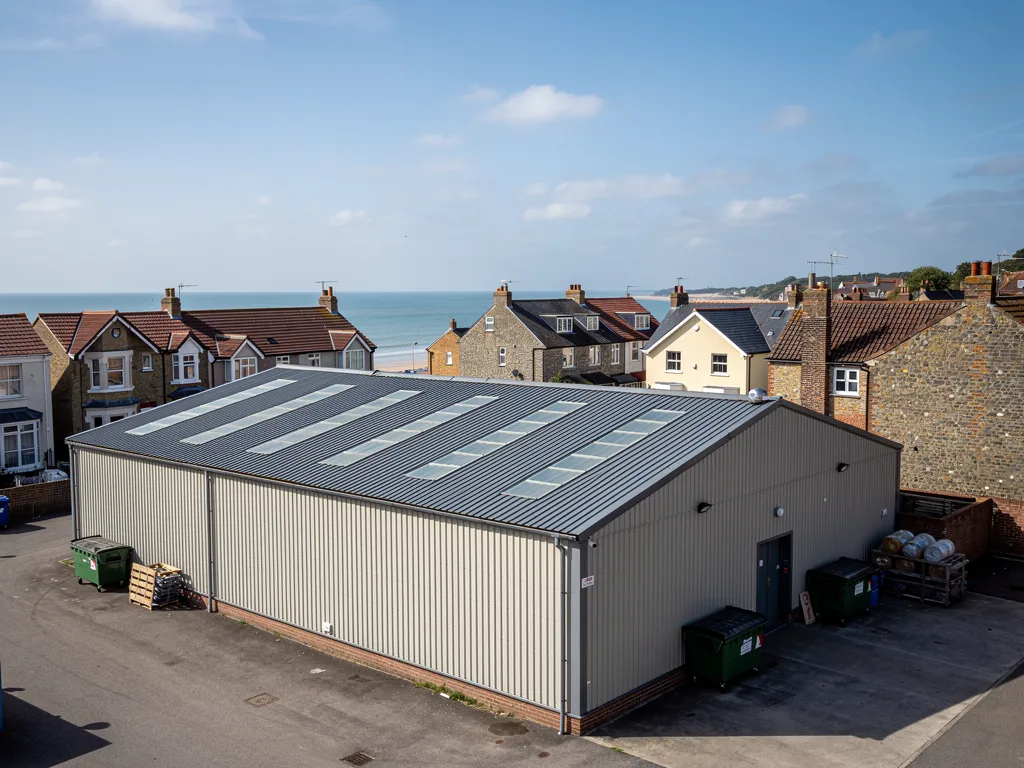
Industrial roofs use several sheet types: profiled steel, insulated composite panels, fibre cement and older asbestos cement. A single-skin steel sheet is one layer of coated metal. A composite panel is a sandwich of two skins with insulation between them. The two are not interchangeable, and the wrong one will neither seal nor carry load as the roof expects.
The profile is the wave or rib shape of the sheet, and it has to match the neighbouring sheets so that the laps close and the water sheds cleanly. Measure the pitch of the ribs, the depth, the overall cover width and the sheet thickness, and note the colour and coating. Pictures of the sheet and its laps, along with any label or batch mark that survives, let a supplier confirm the match before anything is cut or ordered, which saves a second visit.
Check for asbestos cement first
If the unit dates from before 2000, whether built or refurbished then, HSE's advice is to presume asbestos is somewhere in it, and an old roof is a likely place. HSE puts asbestos cement sheeting in the non-licensed category when it is lifted out carefully without being broken, which covers sheets weathered by age but not otherwise damaged. Once the material is badly damaged or crumbling, the job becomes notifiable non-licensed work, and a notice is required before it starts.
HSE adds that a roof of this kind is always fragile underfoot, and asks whether new non-asbestos sheets can go over the old ones so that nothing needs to be removed. Any waste is double-wrapped, labelled and carried in a lockable skip, never thrown into an ordinary one. Our guide to the industrial asbestos roof gives the wider picture. If nobody knows what a sheet is, do not drill, cut or walk on it until it has been identified.
Fixings, laps and the purlins beneath
A new sheet is only as good as what holds it down. It is fastened through to the purlins, the steel rails that span between the building's frames under the sheets, using the fastener type and spacing the system calls for, and the washers are checked so that they seal. Side laps and end laps are sealed and stitched as the manufacturer directs, and the overlap length is kept to the specified minimum, because short laps are where rain gets in during a gale.
Look closely at the purlins and the fixings around the damaged sheet. A rusted purlin or a loose line of fasteners will let a new sheet work free too. If the damage began with rust at a trimmed edge, our guide to cut edge corrosion explains how that starts, and it is worth treating before the replacement goes on.
Matching the coating and the neighbours
A new sheet beside old ones will look different for a while, because the factory finish on an old roof has weathered. Matching the colour as closely as possible is sensible, but performance matters more than shade: the coating should suit the roof's exposure, which on this coast includes sea air and gales.
Cut edges, drilled holes and scratches leave bare metal where corrosion starts, so they are treated and sealed on the day they are made, not left for a later visit that may never happen. Offcuts and swarf are swept off the roof as well, since steel filings left on a coated sheet rust and stain it. Where more than one sheet in a bay is tired, renewing a whole run is often better than patching sheets one at a time, and the survey pictures show which case you have. Our commercial roof condition survey is the usual way to find that out before ordering.
Doing the work while the unit keeps trading
Swapping one sheet is usually quick, but the first job is a safe temporary cover if rain is forecast. The work is arranged to avoid disturbing stock and staff, and the goods below are sheeted over. Details are in roof work while the business stays open.
If the gutter beside the sheet has failed too, deal with both together; industrial gutter lining explains the options. You get pictures of the damaged sheet and its surroundings, an explanation of whether one sheet or a whole run is the right answer, and a price in writing that lands as one figure. When the job ends, the roof is swept clear of offcuts and fixings, and all rubbish leaves with us. Our wider commercial roofing service covers larger projects.
Replacing a sheet: two more questions
Can a damaged sheet be patched instead of replaced?
A small split or hole in an otherwise sound sheet can sometimes be mended with a patch or a sealed cover. A sheet that is corroded, buckled or cracked across its width needs replacing. The pictures from the survey show which applies, and a temporary patch should never be mistaken for the lasting fix.
Do I need to tell anyone before replacing asbestos cement sheets?
Possibly. HSE says a notice is required before notifiable non-licensed work starts, and that covers material which is substantially damaged or broken up. Lifting intact sheets out with care is still non-licensed work. Identify the sheet first, then follow HSE's guidance on the method, the waste and the skip, and ask the contractor to show you how they intend to do it before the job begins.
Tell us about your roof
Describe what is happening and we will call you back to arrange a visit.
- Photographs of what we find
- A written quote with one total price
- Or call 01903 299063
10-year workmanship guarantee, in writing.