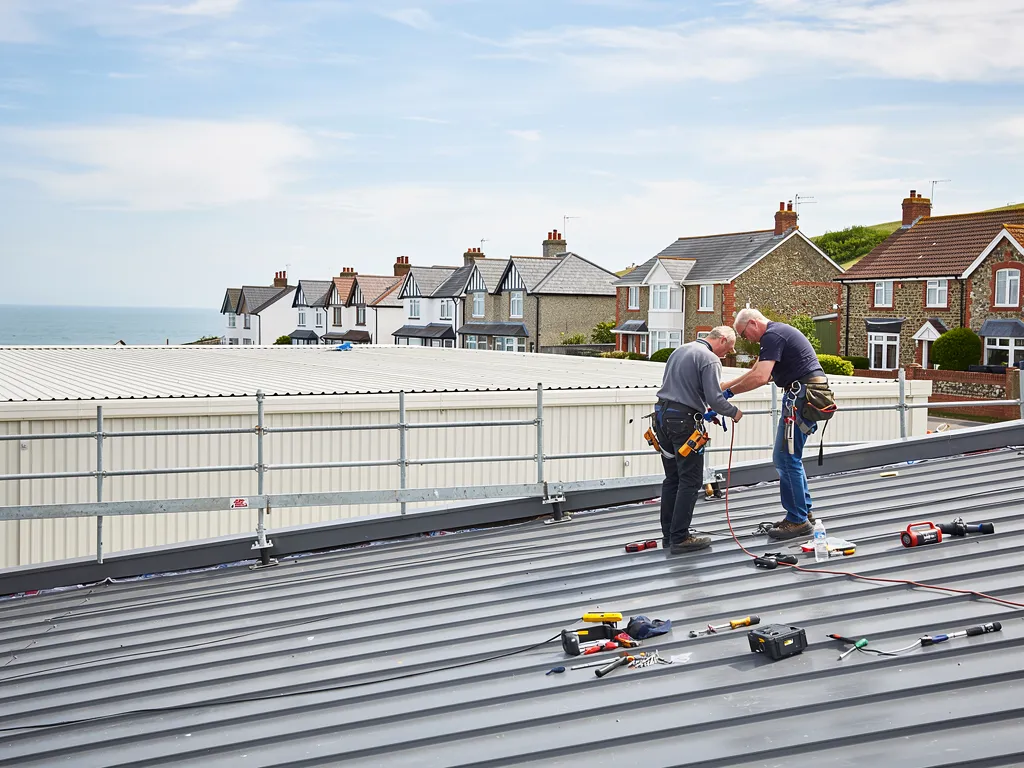
Corrugated cement sheets went onto a great many warehouses, workshops, farm sheds and trading-estate units, and plenty of them are still overhead. Some contain asbestos. You cannot tell by looking, because the sheet that is safe and the sheet that is not look the same from the forecourt. What you can do is treat the roof according to the age of the building, find out for certain, and then choose between taking the sheets off and covering them over.
That choice sits alongside the duty to manage asbestos that rests on whoever looks after a non-domestic building, and a set of Health and Safety Executive rules about what counts as careful work and what counts as damage. Get the order wrong and a plain repair can turn into a notifiable job with health records and a notice to file. Get it right and the roof is dealt with once, with a plan that everyone on site understands.
Below we go from the first assumption to the last skip lorry: why an older unit is treated as suspect, what to gather before a roofer visits, what testing adds, where careful removal ends and notifiable work begins, how removal compares with overcladding, and what happens to the waste.
Why an older unit is treated as suspect until checked
On building age the HSE gives a clear rule of thumb: a unit put up or refurbished before 2000 should be assumed to contain asbestos. Note the word refurbished. A 1960s unit that was re-clad or part re-roofed in the 1990s may carry sheets from two or three different eras on the same roof, and the newest-looking panel is not automatically free of it.
On an industrial building the HSE names roof sheeting and rainwater goods among the asbestos cement products found on site, and external soffits among the other places it turns up. So the question is wider than the main sheets. It covers the gutters along the eaves, the fascia and soffit line, the flue or vent surrounds and any lean-to or canopy tacked onto the side of the building.
What the roof itself can and cannot tell you
Age, profile and fixings give clues. Large-format corrugated sheets with a weathered, mottled surface and moss in the troughs suggest cement rather than metal. A patchwork of sheets in slightly different colours suggests repairs over the years. None of that proves anything either way, and the HSE points out that insulating board containing asbestos looks much like board that does not.
The practical rule is simple. Until a test says otherwise, plan as if the roof is asbestos cement, keep people off it, and do not drill, break or scrub it. Even sheets that turn out to be clear of asbestos can be brittle with age, so the plan for working safely at height stays the same either way. Our page on fragile roof safety sets out how that works on a live site.
What to gather before a roofer comes out
A survey visit goes faster and gives a firmer answer when the paperwork is on the table. Start by asking whether the building already has an asbestos register or a survey report. Many commercial landlords and managing agents hold one, often as part of a lease pack or a compliance folder. If it exists, send it to us before the visit, and tell us the date it was written and which parts of the building it covered.
The HSE guidance on the duty to manage asbestos starts from the question of whether asbestos is present. Who carries that duty can depend on the lease. On a single-let building with a full repairing lease it may sit with the tenant. On a multi-unit estate with a shared roof it more often sits with the landlord or managing agent. Your lease, your solicitor or your agent can say which applies.
The short list to send
These items save a return visit, and each one shapes the plan we put to you:
- the building's age, and the dates of any re-cladding or extensions
- any asbestos register, survey or sample result you hold
- whether the roof is shared with a neighbouring unit
- where machinery, stock, racking or offices sit under the roof
- whether the unit trades during the day and which hours are quietest
- any leaks, stained lining or ponding seen so far, with dates if you have them
Photographs taken from the ground help too, especially of the eaves, the gutter line and any patched areas. Do not go up to take them. We look closer at the ridge and rooflights during the survey, from safe access.
What sampling and a survey add before anyone prices the work
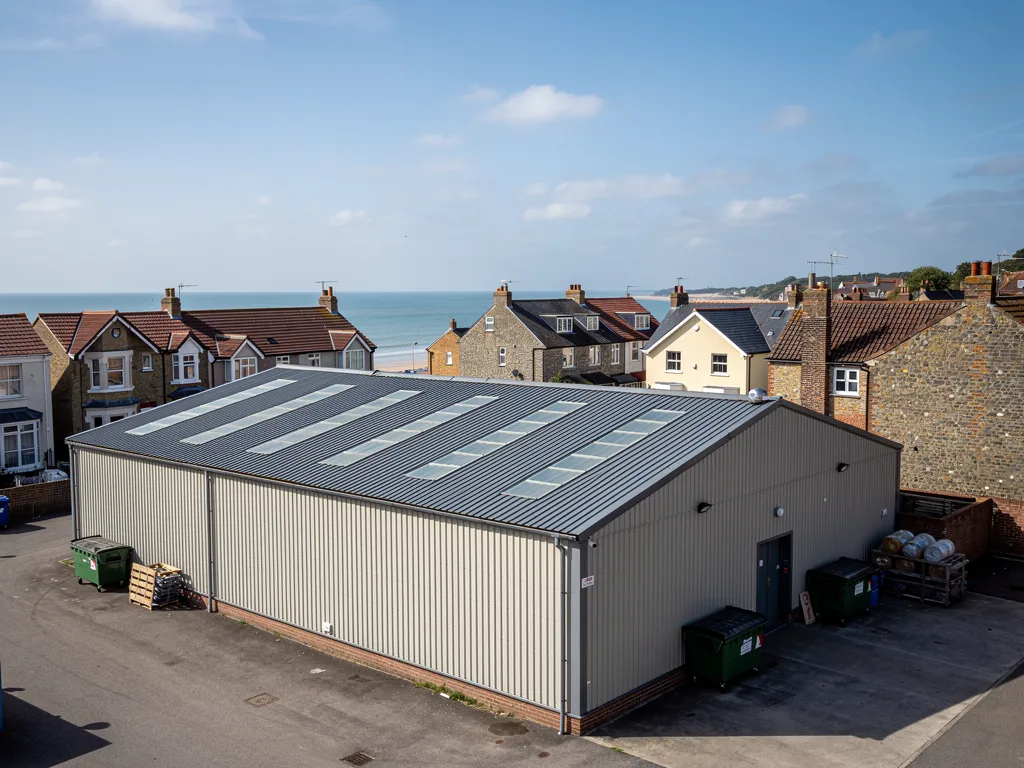
A specialist asbestos surveyor takes small samples from the sheeting and sends them to a laboratory. The result names the material in each sample. On a large roof that matters, because one building can hold several kinds of sheet. The original sheets may be asbestos cement, a later repair may be a fibre-cement sheet without it, and a lean-to may be metal. The survey should say where each sample came from, so the result can be matched to a position on the roof.
Why does this come before the price? Because the answer decides which route the job takes. A roof with no asbestos is stripped or covered like any other old sheet roof, and the plan turns on the structure beneath. A roof with asbestos cement turns into a choice between removal, which needs the waste procedure described later in this guide, and overcladding, which leaves the sheets in place under a new covering. Neither can be priced honestly until you know which applies.
Condition counts as much as content
A good survey records condition as well as type. Sheets that are cracked, holed or crumbling at the laps point towards a different plan from sheets that are weathered but whole. The HSE draws that same line when it separates carefully handled, weathered cement from material that has been substantially damaged, and we come to the effect on the rules in the next section.
Once the report is back we photograph the roof, the structure beneath and the eaves. The survey is followed by our written quote, which gives one total figure. It names the route we recommend, gives the reason, and describes the other route so you can compare the two.
Careful removal, and the point at which it becomes notifiable
The HSE counts taking off asbestos cement products such as roof sheeting as non-licensed work when the sheets are handled with care and come off without breaking up. Weathered cement that is otherwise sound falls in the same category. In practice careful means unscrewing or unhooking whole sheets, lowering them in one piece, and never dropping them.
Things change once the sheets are badly damaged or in pieces. The HSE gives one example: throwing an asbestos cement roof down from height. That puts the job into notifiable non-licensed work. A notice has to go in before the work starts, and the HSE says there is no minimum notice period. Workers on such jobs need a medical at least every three years, and the register of work, which counts as a health record, has to be kept for 40 years.
The HSE's guidance on asbestos cement roofs asks contractors to bring large pieces down by hand or by hoist, never by dropping them or sending them down a rubble chute. A quote that talks about stripping a roof quickly with a skip beneath is describing the wrong method.
Where it can start to go wrong
Once the cement starts to crumble and throws off significant dust, the HSE treats the job as notifiable non-licensed work. Old sheets can snap at a fixing or crack along a lap when the bolt is undone. That is why the plan allows for the roof being worse than it looks, with the notice and the health-record routine ready before the first sheet comes off.
Soffits and boards
If the survey finds asbestos insulating board in the roofline, that is a separate matter. The HSE classes most removal of insulating board as licensed work, so we treat it as its own step and bring in a specialist firm with the right authorisation.
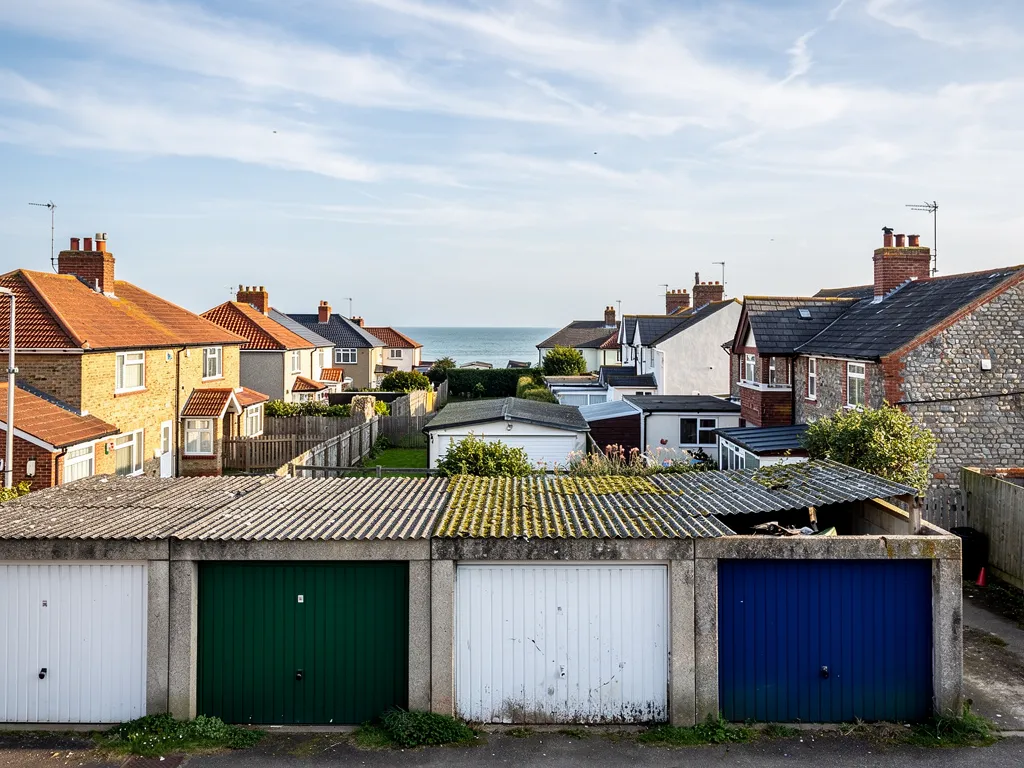
Strip it or cover it: how removal and overcladding compare
One of the HSE's own prompts before any removal is whether a non-asbestos covering could simply go over the top. On industrial roofs that is overcladding: a new metal roof is built on a frame above the old sheets. Our guide to overcladding an industrial roof explains the build. The two routes suit different buildings.
Removal gives you a clean building. The old sheets and their fixings go, the purlins and rafters become visible for inspection, and a later owner will not meet asbestos in the roof. It also brings the full waste procedure, the notice where the work turns notifiable, and the exposure of the building interior during the strip. MyBuilder (updated 21/08/2026) puts general asbestos removal at a starting rate of £50 per m², a household figure that gives a feel for the scale and not a price for a large unit.
Overcladding keeps the old sheets where they are and covers them. That avoids taking asbestos off the roof and avoids the waste, and it can keep the unit dry while it trades. The asbestos stays in the building, which means it still has to be recorded, still has to be allowed for in any later work, and still makes the old roof fragile below the new one.
What decides it
Four things carry most of the weight:
- the condition of the old sheets, since badly broken ones favour removal
- whether the structure can carry a second roof, because a new covering that is heavier by 15 per cent or more brings in building control, according to the Planning Portal
- your plans for the building, such as a sale, a lease change or a later redevelopment
- how much disruption the business can take
We put both options in front of you with the survey photographs, say which we would choose for the building and why, and leave the decision with you.
Wrapping, labelling, skips and working around a trading unit
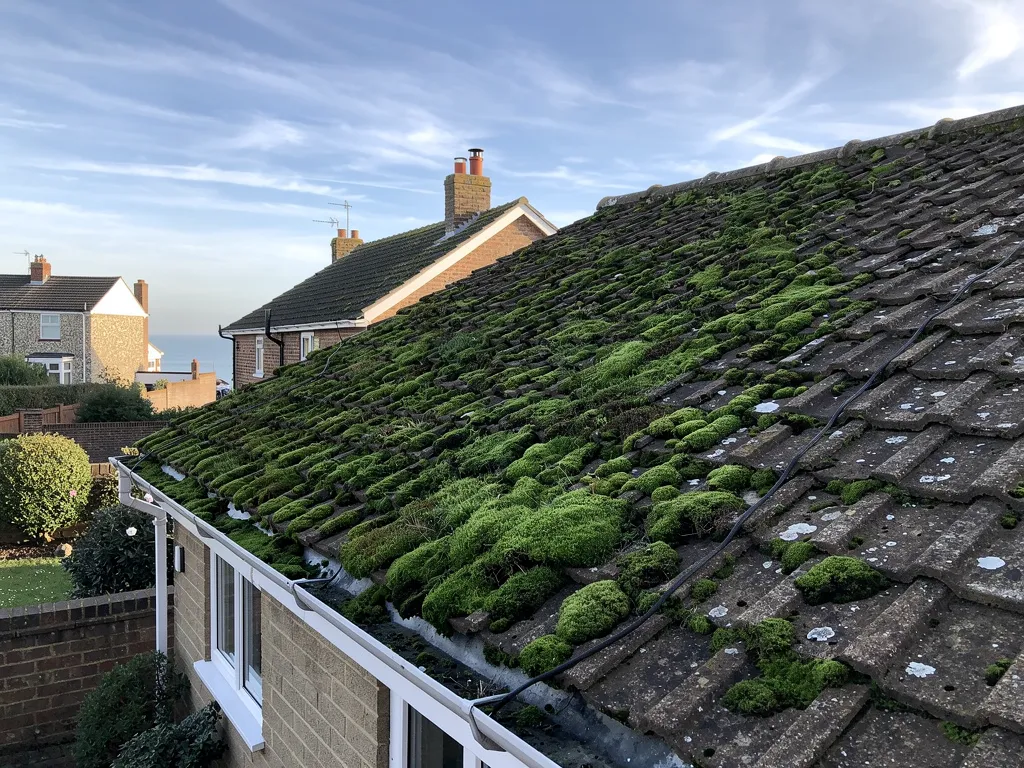
Where sheets come off, the waste rules apply. Asbestos waste, say the HSE, goes in two wraps with a label, and cement sheet travels in a skip that locks. It should not be blended into other waste. Sheeting tossed over the side of an ordinary skip does not meet the standard. Those points should appear in any method statement you are given, and a roofer who cannot say where the skip goes and how it locks has not planned the job.
A firm that carries construction or demolition waste falls into the upper tier of waste carrier registration, which renews every three years. Ask to see the carrier details and the paperwork that follows the waste to a site that accepts it. For a commercial roof the paperwork is part of what you pay for, and you may need it later for a sale, a lease surrender or a dispute with a landlord.
Doing it while the business runs
An industrial roof is rarely empty beneath. Stock, machinery, forklift routes and staff all sit under the sheets, and an exclusion zone has to be set up on the ground as well as at the eaves. Our page on roof work while trading goes through the arrangements for noise, deliveries and phased working.
When the survey is done our quote is written and totals one price, with the route, the sequence and the waste arrangements described in plain words. We describe how the working area will be fenced off from staff and deliveries, and we clear the site before we go. Our commercial roofing page covers the other work we do on industrial buildings.