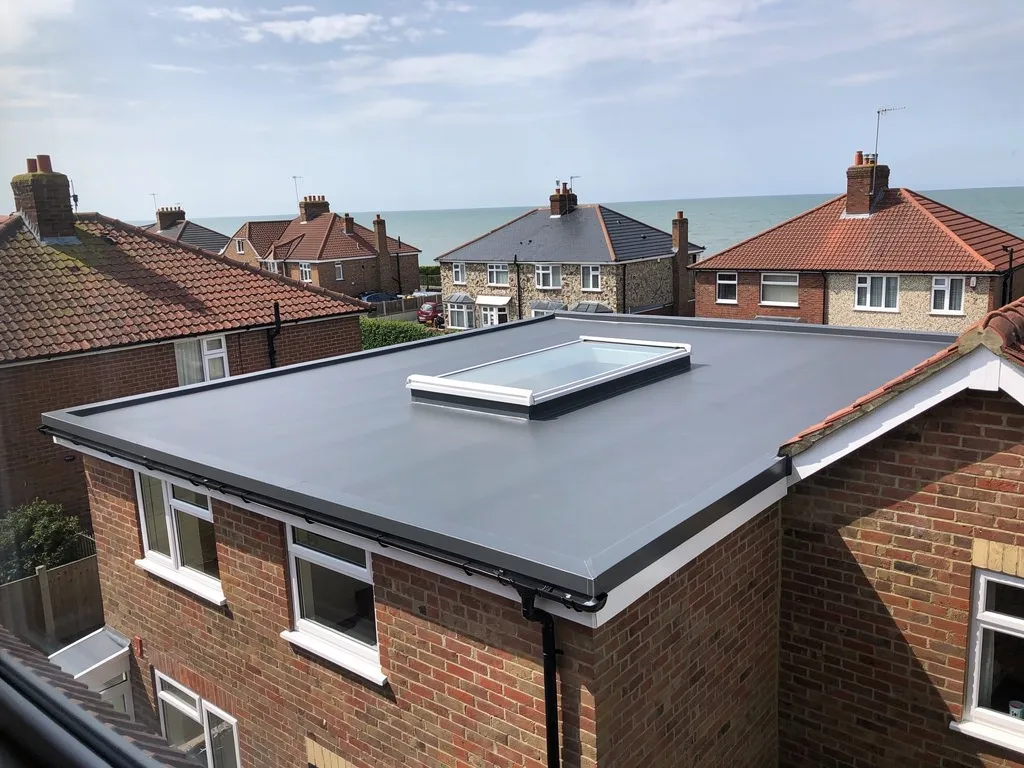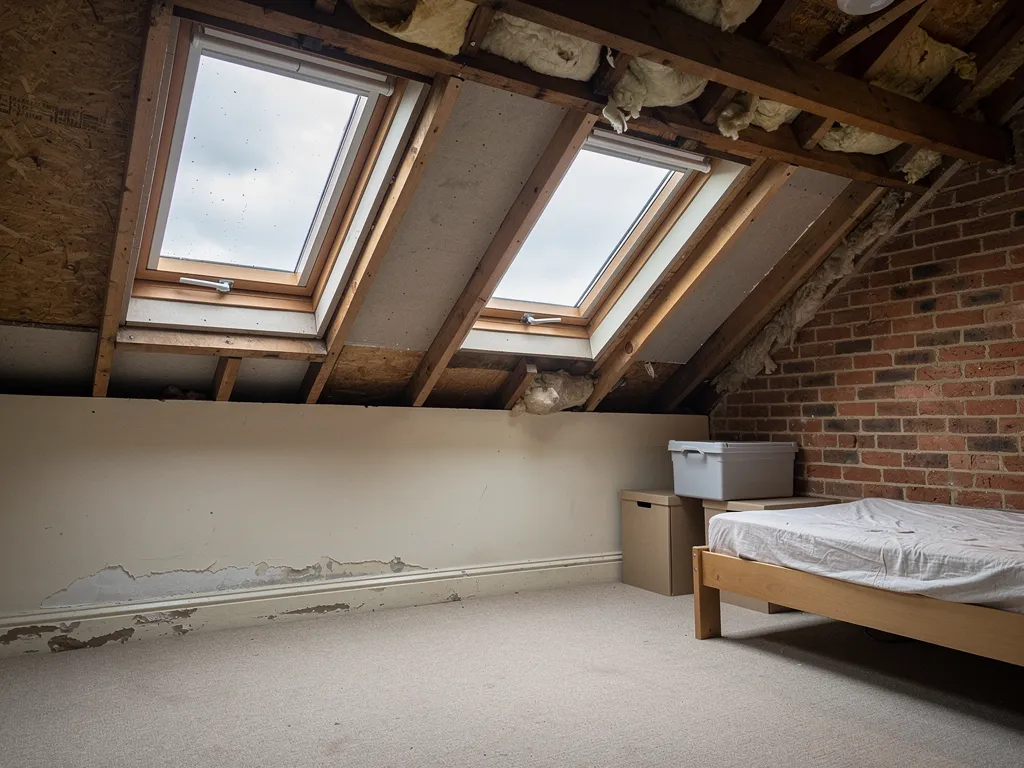
A flat roof is priced by the area it covers, so the figure you hear first is a cost per square metre. That number shifts a long way with the covering, because bitumen felt, rubber EPDM sheet, a GRP fibreglass shell, PVC membrane and sheet lead are different products laid in different ways. This guide sets out typical UK prices for each, then explains what pushes a quote up or down on a house in Worthing or anywhere else along this coast.
The ranges come from national cost guides, mainly MyBuilder (updated 21/08/2026), with Checkatrade and Less for repair prices and lifespans. They describe typical flat roofs around the country and are not a Watertight price list. Once we have surveyed your roof, we write up a single sum for the whole job and send photographs of what we found on it.
If you have not yet chosen a covering, read which flat roof material is best first, then come back to see what each option costs. Prices only make sense once you know what you are buying, and our flat roofing page shows the full range of work we do.
Per square metre: typical prices for each covering
MyBuilder puts a complete flat roof at between £2,800 and £7,500, averaging £75 per m², and quotes a general span of £45 to £100 per square metre. Its per-material figures, which are the ones a reader is really asking for when they type in a flat roof cost per m2, start inside that span and climb well above it for the dearer coverings.
| Covering | Typical UK range per m² |
|---|---|
| Felt | £70 to £100 |
| EPDM rubber | £90 to £130 |
| GRP fibreglass | £95 to £150 |
| PVC single-ply | £95 to £140 |
| Lead | £150 to £200+ |
Those are typical UK ranges from MyBuilder's flat roof cost guide, updated 21/08/2026. They describe replacing the waterproof layer on a roof whose deck is sound.
Why the ranges overlap
A GRP job priced near the bottom of its band can cost the same as an EPDM job at the upper end, so the covering alone does not settle the bill. The roof itself does: how big it is, how hard it is to reach, what sits beneath the old layers and how many edges, outlets and upstands it has. A long, plain rectangle is quicker to cover than a small roof broken up by a chimney, a rooflight and a step.
It also explains why a handful of square metres rarely follows the arithmetic. The work of setting up, stripping, drying out and finishing does not shrink in step with the area, so a small roof costs more per square metre than a large one. Treat any per-m² number as a guide to the order of the bill, then wait for the survey figure.
Felt and EPDM at the lower end
Felt and EPDM are the two coverings most often chosen when cost is the main concern, and they sit closest together on price. Felt means layers of bitumen sheet, usually torch-on, fused to the deck by heating the underside. MyBuilder gives £70 to £100 per m² for it. EPDM comes as one large sheet of rubber, glued to the deck and joined at the seams with tape, and MyBuilder gives £90 to £130 per m².
The difference in price is smaller than the difference in how long each is expected to last, and the sources disagree about both. Less (March 2026) puts felt at 10 to 20 years and adds that a good job can reach 20 while a poor one might fail in under 10. CORC, a conservation body, says well-maintained torch-on felt can last 30 years or more. For EPDM, GreenSpec gives 20 to 30 years, Less gives 30 to 50 and CORC says 50 or more. A safe reading is 20 to 30 years or more for EPDM, with workmanship and upkeep deciding where a particular roof ends up.
On a garage, MyBuilder's guide gives about £75 per m² for felt and £70 to £100 per m² for EPDM, which shows how close the two can be on a small, plain roof.
Our guide to EPDM rubber roofing explains how the sheet is laid and where it suits, and the felt option has its own page on torch-on felt roofing. A single large sheet leaves few joints to fail, while felt is laid in layers with laps, and that difference in construction is part of why the two are priced the way they are.

GRP, PVC and lead at the upper end
GRP, PVC and lead cost more per square metre, and each earns that premium in a different way.
GRP, glass-reinforced plastic, is laid in liquid form over a glass mat and cures into one joint-free shell with a coloured topcoat. MyBuilder gives £95 to £150 per m². Less (March 2026) gives 25 to 40 years for its life, and CORC says 25 years or more. It suits roofs with awkward shapes, because the resin runs round corners without joints, and it is a common choice for balconies and walk-on areas. The method, and its weak points at joints, is covered in our guide to GRP fibreglass roofs.
PVC is a welded single-ply membrane, with seams formed by heat rather than adhesive. MyBuilder gives £95 to £140 per m². It tends to be used on larger or more complex roofs where welded detailing at upstands and outlets is worth paying for. Its life depends heavily on how well the welds and the detailing at the edges are done, so the survey and the specification matter more than a headline number.
Lead on a flat roof
Lead is the premium choice, at £150 to £200+ per m² according to MyBuilder. It is heavy, slow to lay and needs a skilled hand to form the rolls and joints correctly. Less (March 2026) gives 50 to 100 years for a lead flat roof, though its price means it is usually kept for small, visible or listed areas such as the roof of a bay window, a porch canopy or a short run beside a chimney. On a big extension roof the cost rarely makes sense.
For any of these three, the sum on your quote depends on the same roof-specific factors as the cheaper coverings, which the next section covers. A premium covering laid on a poor deck or with weak edge details will not give the lifespan its brochure suggests.
What moves the price on your own roof
Four things usually separate one flat roof quote from another, and none of them is visible in a per-m² figure.
Access and scaffolding
A roof over a ground-floor extension may be reached with a ladder and a platform. A flat roof above a first-floor room needs scaffold, and for a standard two-storey house MyBuilder gives a scaffold figure of around £850 to £1,200. See whether the quote in your hand includes it. Where the scaffold stands on a pavement, a Highways Act licence is needed, which the scaffold contractor arranges and which can add time before work starts.
The deck underneath
Once the old covering comes off, the boards beneath may be sound, or they may be damp, soft or sagging. Replacing a stretch of deck adds timber and labour, and it is the item most likely to change a price after the first look. The survey photographs, and a check from the loft where there is one, tell us most of this before the quote is written.
Insulation and the Building Regulations
Approved Document L treats putting a new waterproof layer onto a flat deck as renovation of the thermal element. Where more than 50% of the surface of the roof is renovated, the whole element is expected to be brought up to the improved standard of 0.16 W/(m²·K). That can mean new insulation under or over the deck, which raises the price and also the performance. Where the work is notifiable, we tell you which consent applies and deal with the Building Regulations notification ourselves.
VAT
A re-roof is standard-rated at 20%. Whether the insulation part can be zero-rated, a relief that runs to 31 March 2027, turns on whether the insulation is a separate supply or part of one job, so we explain it on the quote rather than promise it here.

Repairs and patches: priced per m² too
Not every flat roof needs replacing, and the price of a repair follows different rules. Checkatrade's roof repair guide (table last updated June 2026, excluding VAT) gives typical UK repair prices per m² of £100 to £140 for bitumen flat roofs, £120 to £170 for EPDM and £130 to £180 for GRP.
Those numbers look higher than the new-roof figures in the first table, and that is not a mistake. A repair covers a small area, so the cost of getting there, finding the fault and making a neat join into the old covering is spread across fewer square metres. A repair is cheaper in total because the area is so much smaller, even though each square metre costs more.
Where a flat roof has many repairs behind it, the question is whether the next patch is the last one or the start of a pattern. The honest answer comes from the survey, not from the price list.
The tipping point between repair and renewal depends on what the covering looks like beyond the damaged spot, how old it is and whether the deck is wet. Water on a flat roof often travels under the membrane before it shows inside, so a leak in one corner can mean damp insulation across much more of the roof. For that reason we trace the leak to its source before proposing either course, and put forward the lesser repair whenever it genuinely cures the fault. Our page on repairing or replacing a flat roof goes through the signs that point each way.
Where a roof has failed for good, an overlay may be possible in some cases, which costs less than stripping but leaves the old layers in place. Whether that is sensible depends on what the survey finds beneath.
Reading a flat roof quote
A written quote should tell you what is being done in plain words and give one total price. Ours follows the survey, names the covering and comes with survey pictures of the roof itself. We keep our prices good and fair, and recommend only as much work as the fault needs.
When you hold quotes from different roofers, a few checks make them comparable without needing a breakdown.
- Does the price include VAT? Checkatrade's figures, for example, exclude it, while a homeowner's bill will not.
- Does it include scaffolding, where the roof needs it?
- Which covering is named, and over what insulation?
- What happens if the boards underneath turn out to be rotten?
- Is there a written workmanship guarantee, and for how long?
A guarantee is only as useful as the paperwork behind it, so ask for the terms in writing before you accept a quote and keep them with the receipt.
Wind and the edges
Edges and corners take the harshest suction in a gale, and on an exposed roof the fixing of the membrane at the perimeter matters as much as the middle. It is worth asking how the edges will be secured, what the membrane is fixed to, and whether the trims are screwed or simply stuck. We look at that in flat roof wind uplift, and the case for and against flat roofs more broadly is in our flat roof pros and cons guide.
Back to the main question: the price that matters is the one written after a survey of your roof. Send us photographs, or ask for a visit, and the quote follows.