When a flat roof starts to leak, there are three honest options. Repair the fault and leave the rest. Lay a new covering over the old one, which is an overlay. Or strip everything back to the deck and start again. Each is right for some roofs and wrong for others, and the difference is rarely visible from the ground.
Roofers face a temptation here, in both directions. A repair is quick and cheap, and some roofs are patched year after year at a cost that would have paid for a new one. A full replacement is a bigger invoice, and a roof that only needs a new flashing does not deserve one. Our aim is the least work that stops the water for good, whichever of the three that turns out to be.
The decision turns on four things: the covering material, its age, how widespread the damage is and whether the deck and insulation underneath are still sound. The sections below take them in turn, then cover the regulations that can apply when a roof is renewed, and typical costs for each route.
Finding the cause before choosing the cure
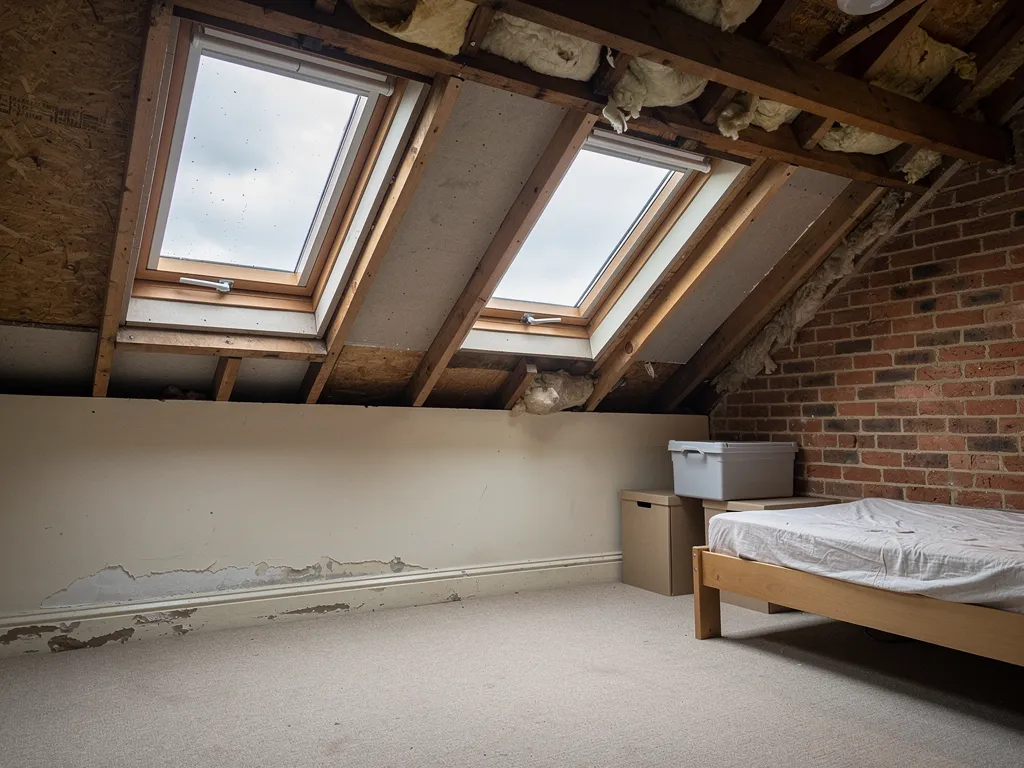
Water on a flat roof rarely behaves as it appears to from inside. A stain on the ceiling can sit well away from the opening, because water travels along the deck, the insulation or the top of the ceiling board before it shows. Choosing between repair and replacement without finding the real entry point is guesswork, and it is how the same roof ends up being patched three times.
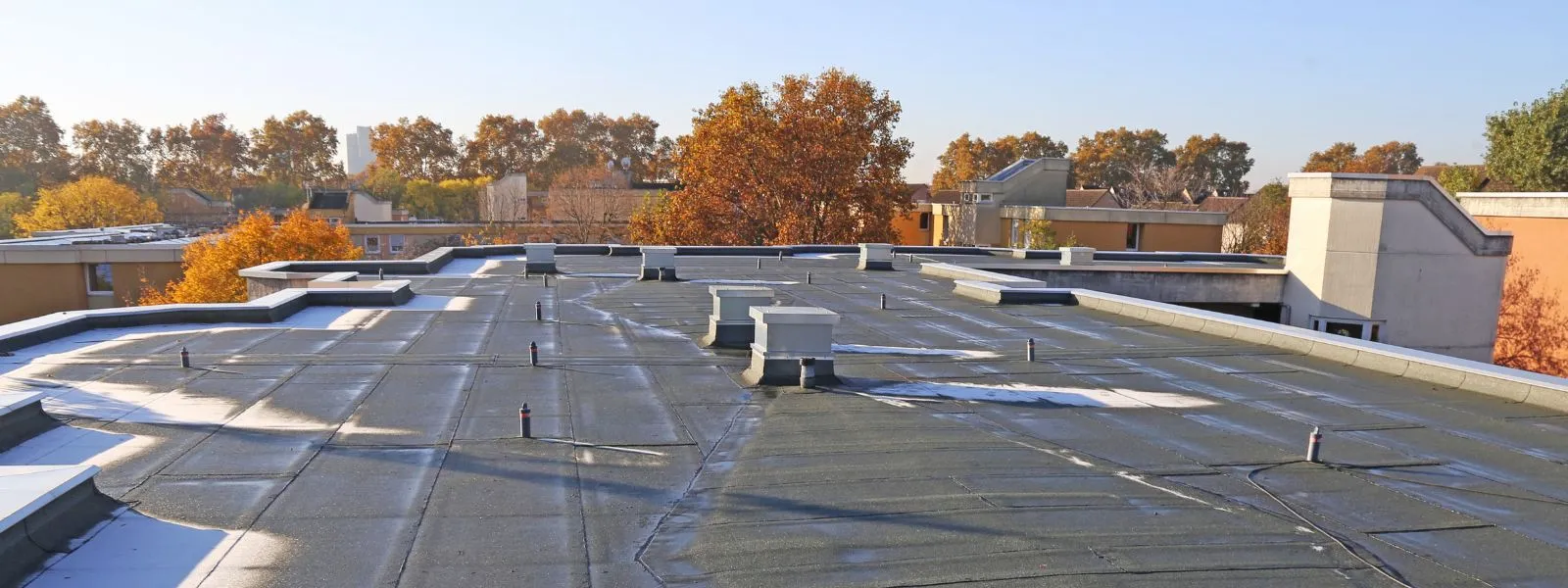
On a survey we look first at the places where flat roofs usually fail: the joints between sheets, the upstands and flashings at wall junctions, the edges and trims, the outlets and any rooflights or pipes that pass through. We also check for ponding, the standing water that shows where the surface sags or the fall is too shallow, and for blisters, splits and areas of brittle, crazed material. The flat roofing hub has the overview, and our guide to the signs of a flat roof leak lists what to look for yourself.
A single fault, such as a split at one corner or a failed seam beside a rooflight, points towards repair. Many faults across the roof, or faults that keep returning after repair, point the other way. The pattern is as informative as any single defect.
What the photographs should show
You should see pictures of the cause, not only a description. A close photograph of the open seam, the lifted upstand or the soaked insulation shows you what the quote is based on. Ask also for a view of the wider surface, because the condition of the whole roof is what decides the size of the job.
With an active leak, safety comes first. The repair-or-replace decision can wait for the weather to allow a proper look.
When a repair is the right answer, and by material
A repair makes sense when the problem is local and the rest of the covering is sound. The material matters, because each one ages and fails in its own way.
Torch-on felt has the shortest published life, quoted at 10 to 20 years, and one source adds that a badly laid roof may fail inside ten. Splits along laps, blistering and cracking at upstands are common, and a small area can be cut out and patched when the felt around it is still flexible. When the felt has gone brittle everywhere, patching tends to lift the next area, and replacement is nearer.
EPDM rubber is quoted at 20 to 30 years or more. A puncture, a failed adhesive seam or a poorly formed corner can be repaired with patches and bonding strips, and the rest of the sheet is often in good order. A repair is a sensible choice where the sheet is flexible and clean and the fault is local.
GRP fibreglass is quoted at 25 to 40 years. Cracks at movement joints, edge trim failures and crazing from an under-thick top coat can be ground out and repaired, and the topcoat renewed. Where the laminate has cracked widely because the deck has moved, a patch will not hold.
MyBuilder (updated 21/08/2026) gives a typical UK range of £150 to £1,500 for a roof repair, with minor repairs at £100 to £300 and moderate ones at £500 to £1,000. Checkatrade (ex VAT, table updated June 2026) gives typical repair prices of £100 to £140 per m² for bitumen flat roofs, £120 to £170 for EPDM and £130 to £180 for GRP. Cost for any of these routes is confirmed in writing after the survey.
The test we apply is whether a repair would be expected to give the roof several more good years. If it will not, the answer is a different job.

A spongy deck changes the answer
The deck is the structural board under the covering, usually plywood, OSB or boards on a timber frame. When water gets into it, the board softens, delaminates and rots. You can often feel it: the roof surface gives under your foot, rises in places or feels soft near a leak. From there, repair is no longer the answer.
A covering cannot be stuck reliably to a soft or wet deck. A patch over rotten board sits on nothing, a new membrane will blister and wrinkle as trapped moisture warms, and the roof loses the strength to carry anyone who steps on it to maintain it. In a warm roof the insulation under the covering can also be saturated, which loses its insulating value and holds water against the deck.
Spotting it early helps. Signs include a roof that feels springy underfoot, a covering that has risen into soft humps, a persistent damp ceiling that does not dry between showers, or fungal growth and a musty smell in the room below. We lift a small test area if access allows, and show you the board beneath.
Where only a small area is wet, the cure can be local: cut out the damaged board, fit new, and re-cover the area. Where the damp has spread, the whole deck is renewed, which means a full strip. Laying a new covering over a wet deck is the one thing never to do, because it seals the moisture in and the new roof fails early. Our guide to flat roof ponding shows how standing water leads to this damage in the first place.
A deck that is wet or soft needs replacing before any new covering goes on, whatever the covering is and however good the quote for it looks.
Overlay: laying a new covering over the old
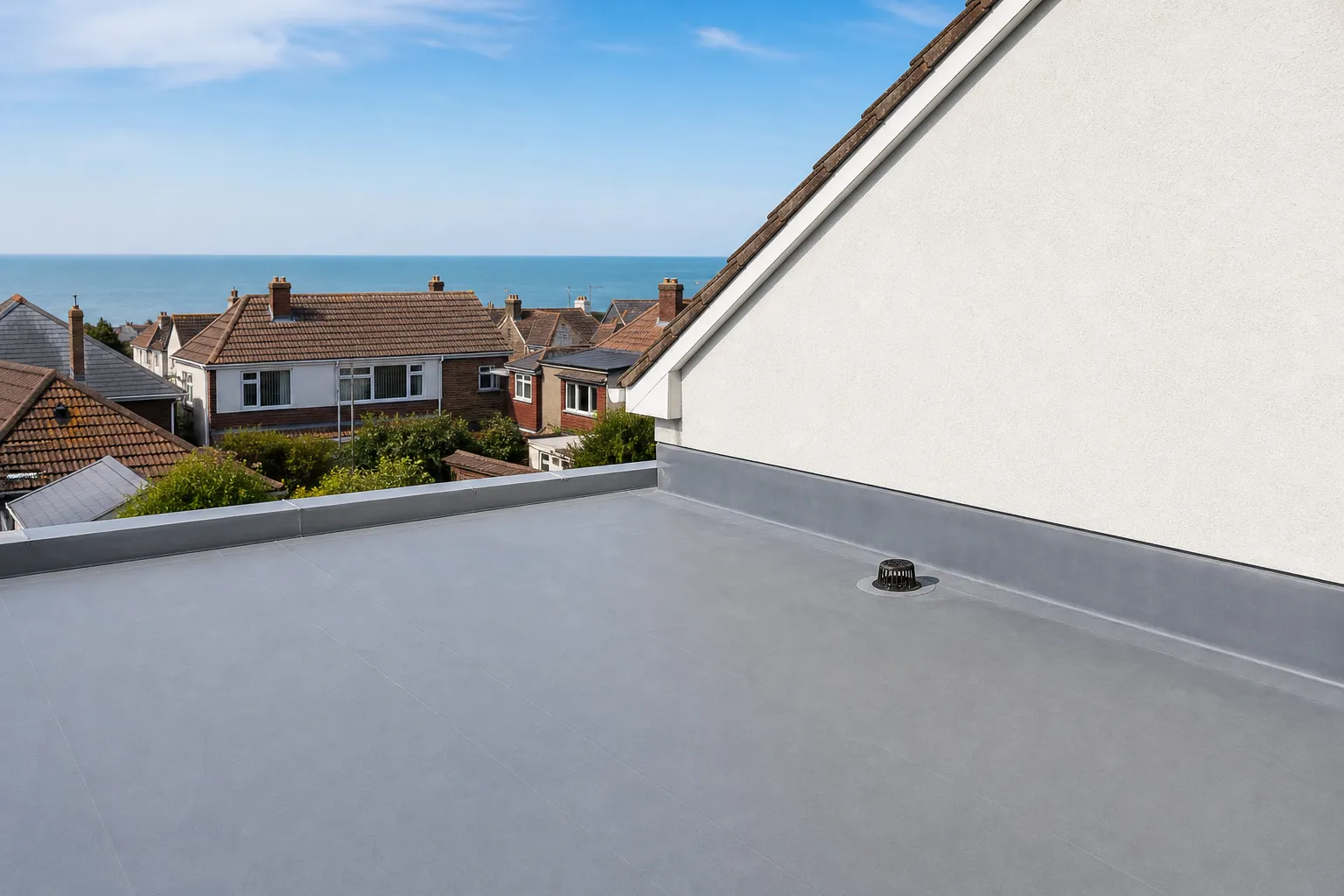
An overlay puts a new membrane over the existing one, without stripping it first. It is quicker, creates less waste and leaves the building weathertight throughout. Done in the right circumstances, it is a sensible middle route between patching and full replacement. Our guide to overlaying a flat roof explains it more fully.
The conditions matter. The existing covering and the deck beneath must be dry and sound. If water is trapped under the old layer, the overlay seals it in. The old surface must be flat enough, clean and compatible with the new material, because some products cannot be laid over others and a manufacturer's data sheet sets the rules. Existing blisters, wrinkles and ridges tend to telegraph through, so the old covering must be reasonably smooth.
Weight is another check. A second layer adds load, and the Planning Portal names a rise of 15 per cent or more in covering weight as a reason for approval. Approved Document A uses the wording 'more than 15%'. For a lightweight membrane over felt, the added weight is small, but it is still a question for the survey.
Overlay does not suit every roof. Where the original fall is poor and water ponds, an overlay inherits the problem and hides it. Where the insulation is soaked, or a roof is already on its second or third layer, the case for stripping gets stronger.
What an overlay saves, and what it does not
It saves stripping, disposal and some labour. It does not give you a new deck, a corrected fall or a drier insulation layer. If any of those are the real issue, the saving is false economy, and the roof will need doing again sooner.
When Part L comes into the decision
Renewing a flat roof can bring Building Regulations into play, and that affects cost. The Planning Portal sets two tests for repair and re-covering work: is less than 25 per cent of the building envelope affected, and less than 50 per cent of the roof? Pass both and building control is not normally involved. Fail either, alter the structure or pick a covering with different fire behaviour, and approval applies.
Part L then adds a thermal question. Its list of renovation work includes putting a new membrane on a flat roof. If more than 50% of the element's surface is renovated, or the job is a major renovation (over 25% of the external building envelope), the entire element should be upgraded. A roof built or replaced on an existing home is limited to 0.15 W/(m²·K), and Table 4.3 gives 0.35 as the threshold for existing roofs, with 0.16 as the improved value.
In practice, a full strip and re-cover of a flat roof is likely to mean new insulation, and that raises the roof's height at edges, upstands and doors. A small patch repair does not trigger any of this. An overlay sits in between, and whether it counts as renovation is a question for your building control body, which is either a registered building control approver or the Adur and Worthing building control team at Worthing Town Hall. Where the work is notifiable, we handle the notification and explain consent.
This is why the repair or replace choice is also a cost choice. A roof renewed to current thermal standards costs more up front, but it brings a warmer room below and a longer-lasting build-up. Our page on flat roof Building Regulations covers the rules in full, and the answer for your roof depends on how much is renewed.
Costs and a simple way to decide
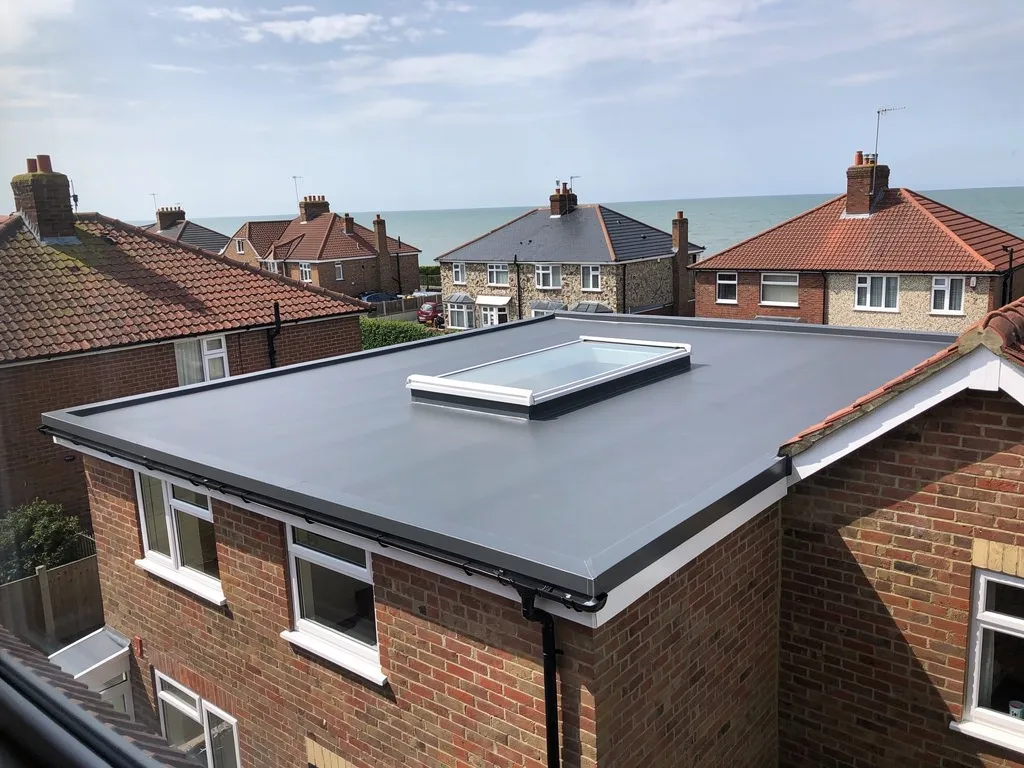
Cost is where many people want the conversation to start, but it is better placed at the end, once the condition of the roof is known. A few typical UK figures set the scale. MyBuilder (updated 21/08/2026) gives a range of £2,800 to £7,500 for a complete flat roof, averaging £75 per m², and £2,500 to £6,000 for the flat roof of a semi-detached house. By material, its per m² ranges are £70 to £100 for felt, £90 to £130 for EPDM and £95 to £150 for GRP. Our flat roof cost guide goes through them.
Those are national typical ranges, not Watertight prices. What moves a quote is the size of the roof, the access, how many outlets, edges and rooflights it has, whether the deck needs replacing and what the survey finds. Prices are good and fair, and each arrives in writing as a single sum once the roof has been surveyed.
A rule of thumb for the decision
Repair if the fault is local, the covering is flexible, the deck is dry and the roof still has several good years in it. Overlay if the old covering is sound but tired, the deck is dry, the fall is acceptable and the weight is not a problem. Replace if the deck is soft, the insulation is wet, there are many faults, repairs keep failing or its published lifespan is nearly spent. Where you are choosing a new material, EPDM against GRP is the usual comparison.
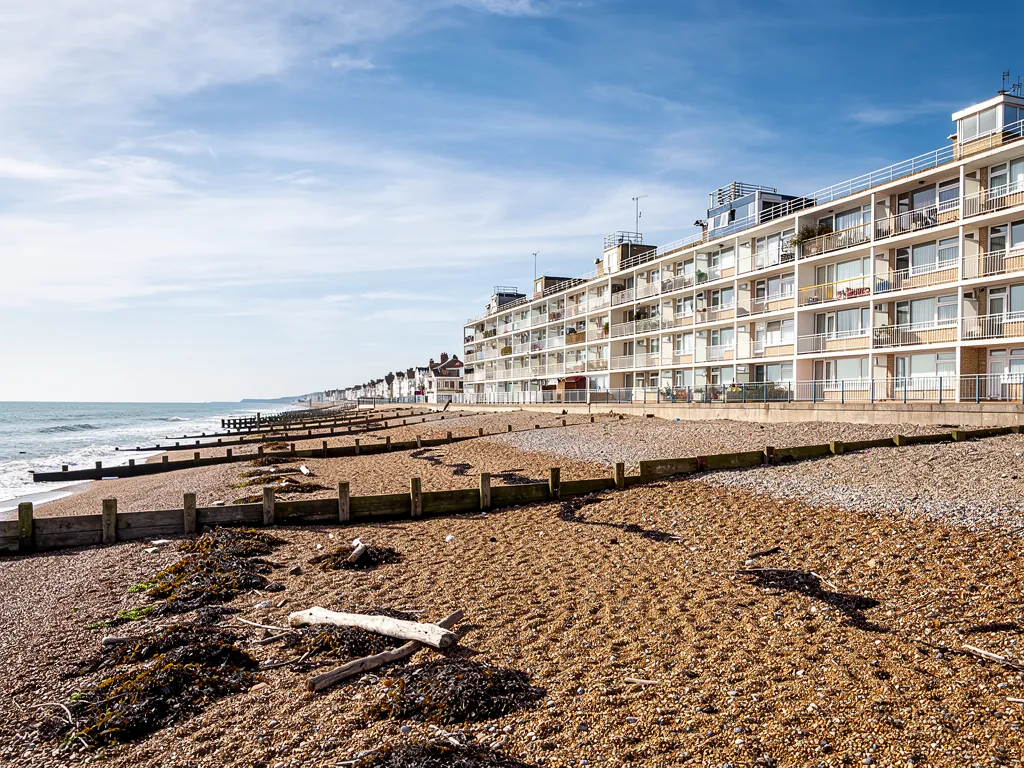
Two more points are worth remembering. A roof on the coast takes more punishment at its edges, so a replacement should include properly fixed trims, which our guide to flat roofs on the coast explains. And if the roof is on an extension, the original design may be the cause, in which case flat roof extension design is worth reading before you commit to a fix.