
Question answered
Do roofers put in Velux windows?
The short answer
Yes, roofers put in Velux windows. A roofer is the right trade for lifting the covering, setting the frame and dressing the flashing so the slope stays watertight. A carpenter or builder often frames a brand new opening and finishes the lining indoors, and an electrician wires any powered window. How many trades you need depends on whether the opening already exists.
Yes. Roofers fit Velux and other roof windows as ordinary work, though some of the job happens beneath the roof. This page sets out who does which part, and what to ask before booking.
A window in the slope is a roofing job
Because a roof window is set level with the slope, the tiles or slates run right up to its frame and every drop of water has to be guided past it. That is roofing work. The covering is lifted, the battens (the thin timber laths the tiles hang from) are trimmed back, the frame is fixed, and the flashing is dressed round it. Flashing is the sheet metal or lead that seals the joint between a frame and the covering. When it fails you get a drip rather than a draught, which is why the trade that understands water on a roof is the natural one for the job.
Roofers fit these windows during repairs, re-roofs and stand-alone visits. The brand makes no difference to the principle. Velux has become the word many people use for any roof window, but the method is the same for any pivot or top-hung unit: a flashing kit made for that frame and for your covering, whether plain tile, interlocking tile or slate.
Roofer, builder or loft specialist
Swapping a unit into an opening that already exists is usually one trade's work. The roofer lifts the old window, sets the new one in the same hole and renews the flashing. Nothing structural moves, so there is little to coordinate.
A brand new opening is different, because a rafter, one of the sloping timbers carrying the roof, has to be cut. The gap is then framed with trimmers, short cross timbers that pick up the load the cut rafter used to carry. Some roofers do that themselves. Others bring in a carpenter for the frame and keep the weatherproofing for themselves. Indoors, the plasterboard, the angled lining and the decoration fall to a plasterer, builder or decorator.
Where the window is one item in a full loft conversion, the conversion firm normally runs everything. Ask who answers for the roof around each opening, since a job divided between several trades goes wrong at the joins.
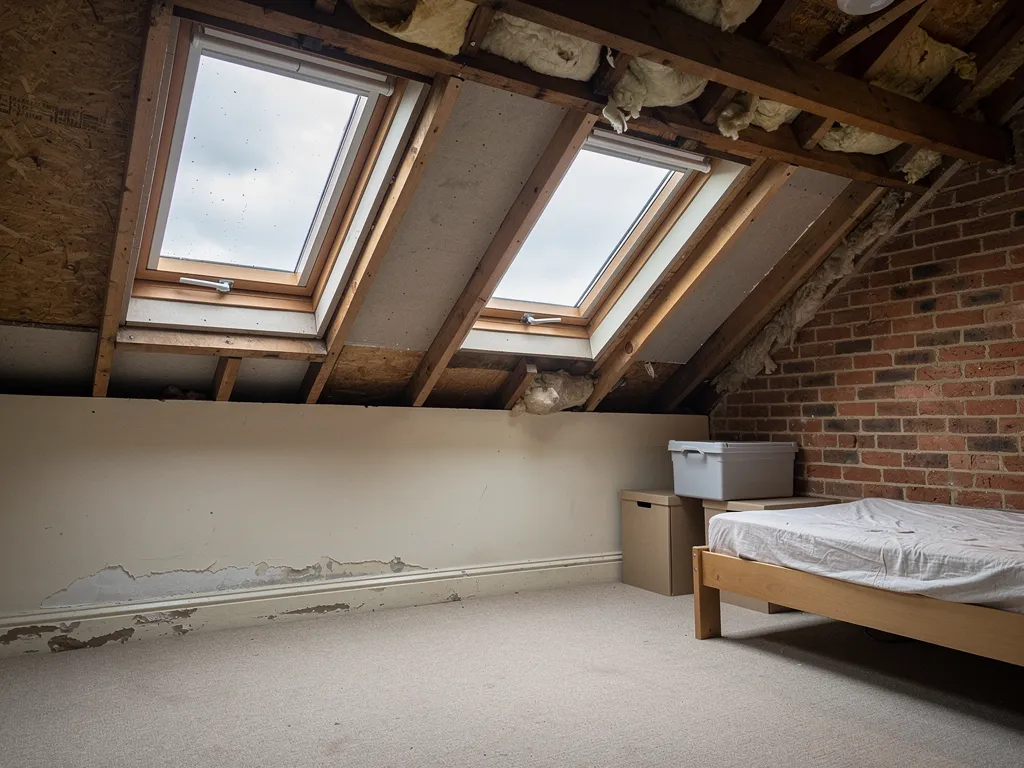
How a proper fitting goes
The sequence matters. The covering is stripped back round the opening, and the roof's second line of defence, a sheet laid under the battens, is cut and lapped over the frame, then tucked into a collar so water cannot track behind it. Roofers call that sheet the underlay. The window is fixed to the framing. The flashing kit is built up from the bottom edge, with the sides interleaved with the tiles or slates, and the head is finished last, so that water running down the slope is steered round the joints.
Insulation and a vapour seal go in around the frame from inside, which stops warm room air reaching cold timber and condensing there. Many badly fitted windows start to weep at exactly this point. A roofer who walks you through each layer before work begins is telling you how the finished window will behave in driving rain, which is more useful than a promise.
Rules that come with a new opening
Cutting a rafter is a structural alteration, and the Planning Portal names structural alterations as one trigger for approval on roof work. A new opening is therefore not a job to start casually. The window itself must also meet Part L of the Building Regulations, where the figure for a roof window is a U-value of 1.4 W/m²K or better, or a rating in energy Band B. Whether the opening needs planning consent is covered in our skylights and roof windows hub, where each question has its own page.
If the window will light a bedroom, it may also have to work as an escape route, with minimum dimensions that decide which size you can order. Those are set out in what size an escape roof window must be. When a job is notifiable, we send the building control notice and say which consents apply to your house.
Questions to put to whoever quotes
Find out which flashing kit is going in and whether it suits your covering. Ask how the underlay will be lapped, who frames a new opening, and who finishes the inside. Check that scaffold is in the price and that the total states whether VAT is included. A quote that answers all of this before work starts says more about the roofer than a low figure does.
For scale, MyBuilder's Velux guide (updated 21/08/2026) puts installation of a standard window at £350 to £600 including labour and fitting. A standard centre-pivot window costs £305 on its own, and scaffold comes to around £500. Treat these as national typical figures for a plain job. A new opening, a large unit or a hard-to-reach slope will shift them, and our price is a single written total sent after we have looked at the roof. For more on how the numbers stack up, see whether a skylight or a window is cheaper and rooflight prices.
Fitting a roof window: two practical points
Can I buy the window myself and ask a roofer to fit it?
Often yes, but check the box first. The window, the flashing kit for your covering and any blinds or sensors must all match. A kit made for plain tiles will not seal a slate roof properly. Ask the roofer to confirm the order before you pay, so a wrong kit is not found with the slope already open.
Does a roof window job need scaffold?
Frequently. Reaching the slope safely, and lifting a window up to it, usually calls for scaffold. Where it stands over the pavement, the scaffold firm applies for the licence from West Sussex County Council. Ask whether scaffold sits inside the price you are given, since on a single window it weighs heavily in the total.
Tell us about your roof
Describe what is happening and we will call you back to arrange a visit.
- Photographs of what we find
- A written quote with one total price
- Or call 01903 299063
10-year workmanship guarantee, in writing.