
Chapter one
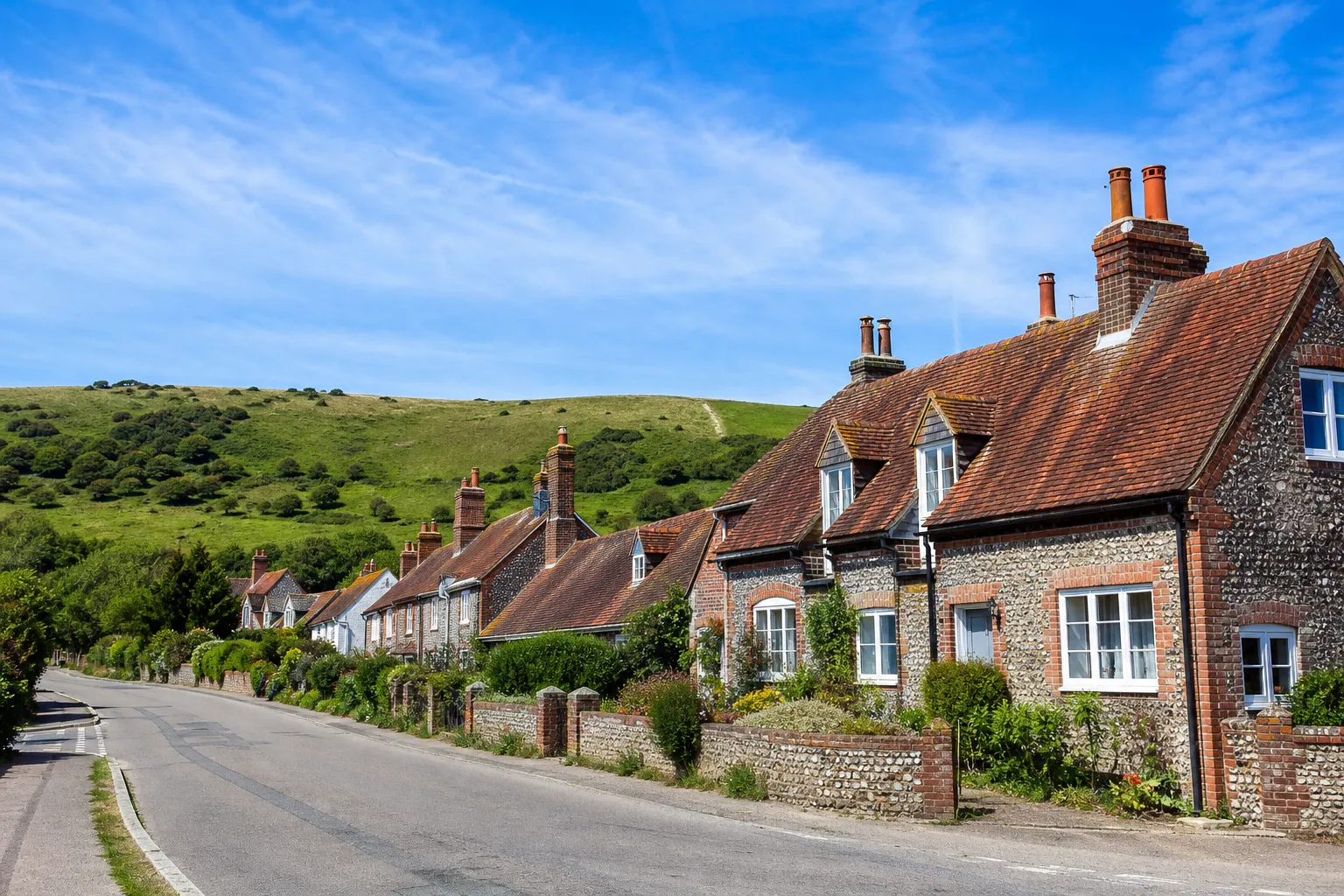
Tile and slate roofs around Selsey Road
The conservation area's brick walls carry clay tile and some slate, so repairs begin with matching what is already on the roof.
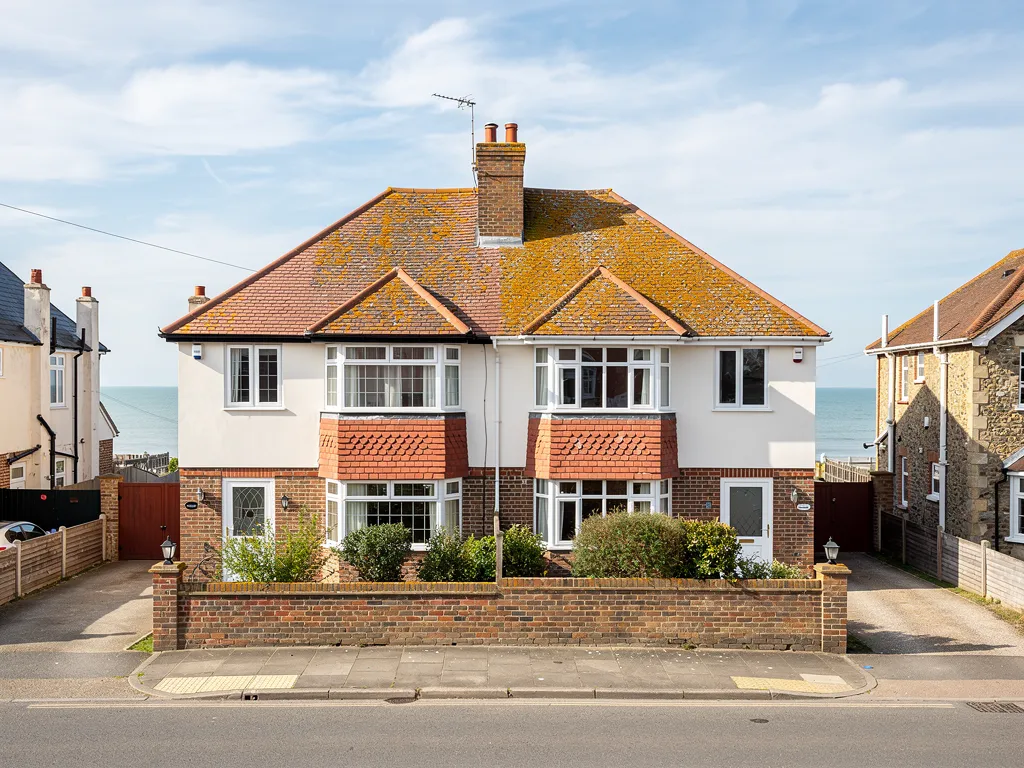
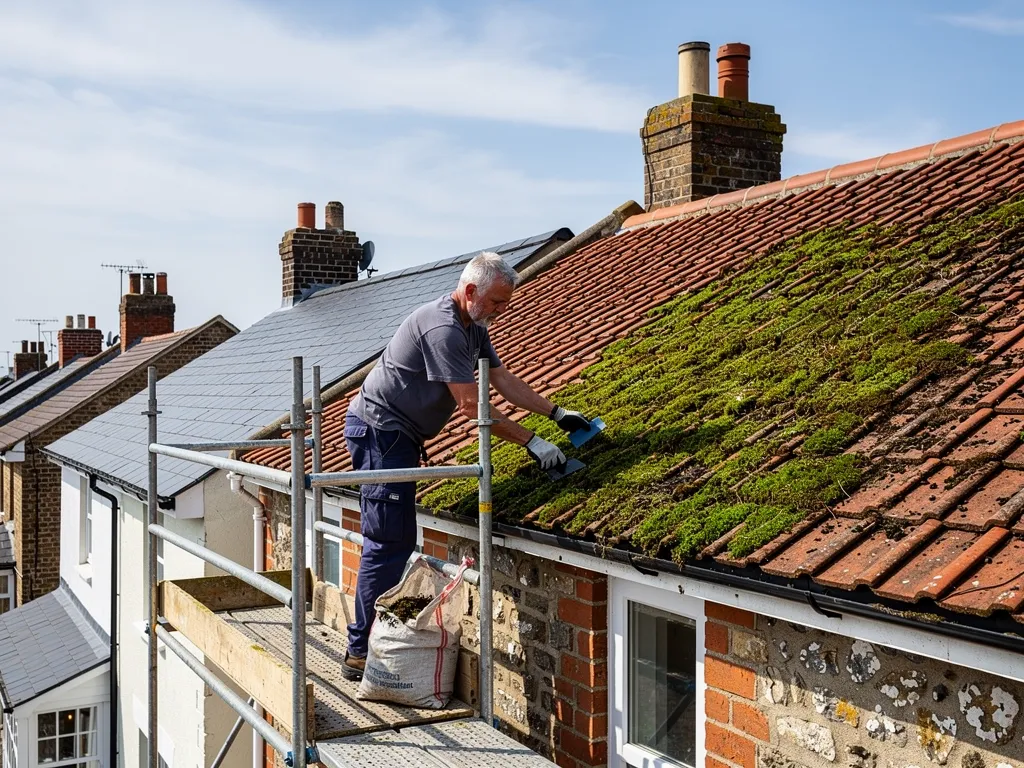
A roof repair in a conservation area starts with a plain question: what is on the roof now, and what would match it? Donnington's character appraisal, written by the district council in 2012, names thatch, clay tiles and some slate for the roofs, with red brick, Roman cement render and knapped flint on the walls. That list makes a survey straightforward. A slate roof and a clay tile roof next door to each other can age at very different rates, so we never judge one house by its neighbour. We photograph each slope, note the size, colour and texture of the tiles or slates, and decide whether sound salvaged material can do the repair or whether new covering has to be chosen to sit beside the old.
At a glance
- The appraisal lists thatch, clay tile and some slate
- Lead flashing seals roofs to chimneys and walls
- Since BS 5534's 2014 revision, ridges are mechanically fixed
1.1 Where tile and slate roofs let go
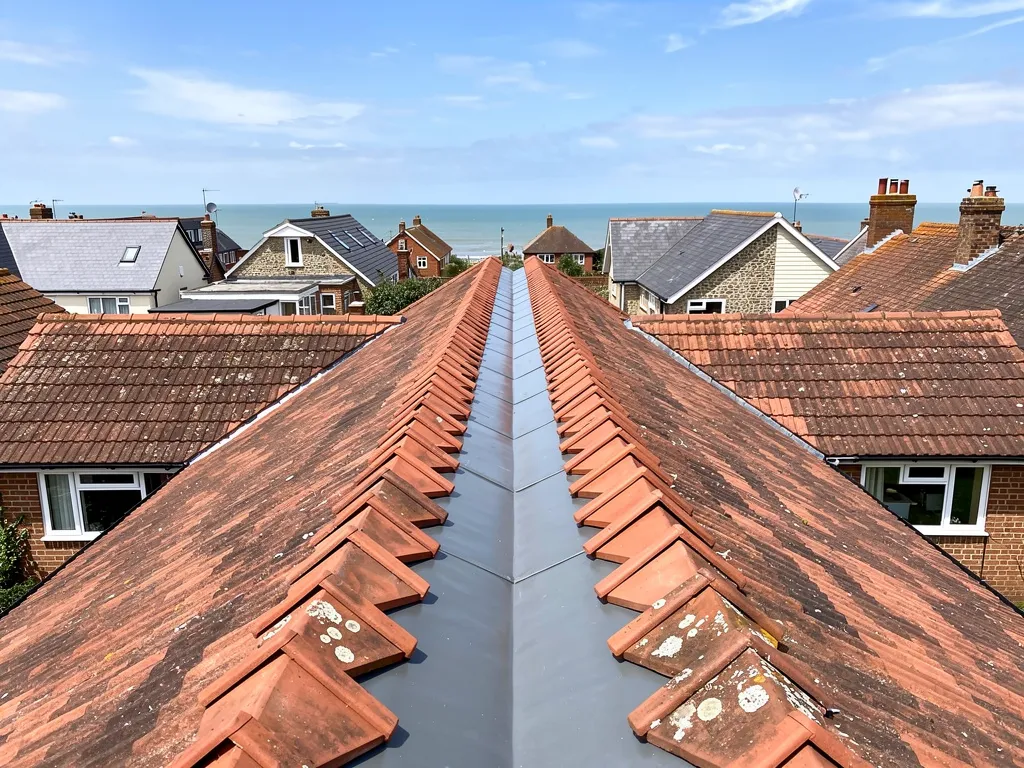
Clay tiles hook over the battens, the slim timber laths nailed across the rafters, and are nailed in at intervals. Frost can flake the face of an old tile, nails corrode, and a slipped tile leaves the batten beneath open to the rain. Slate fails differently: the nail rusts through and the slate slides a few inches, then drops. From the ground both show as a gap, or a course that no longer runs straight. The worst trouble is usually at a junction. A valley is the fold where two slopes meet, and when it splits, water runs into the roof timbers well away from the stain on the ceiling, which is why we trace a leak from the loft before we quote.
1.2 Ridges, chimneys and wall edges
The ridge is the top line where two slopes meet. Until the 2014 revision of BS 5534, a bed of mortar was commonly accepted as the only thing holding ridge and hip tiles on; now each tile is also clipped or screwed down into the timber beneath. Ridge tiles that have kept their shape are lifted, re-bedded and fixed again, and if they have cracked our ridge tile repairs page sets out the choices. Brick chimneys need a look too. Flaunching, the sloping mortar bed that holds the pots, cracks in frost, and the lead flashing around the stack can lift; our chimney repairs page covers both. Where a roof edge meets a rendered wall, a cracked finish can let rain run behind the lead, so we check the wall as well as the roof. A hairline crack in render is a small job now and a damp wall later.