
Roofers in Fishbourne

Fishbourne sits where the Fishbourne Channel meets the top of Chichester Harbour, among flint walls, red brick and clay tiles. We survey roofs here with sea weather in mind and photograph every fault.

Three kinds of roof at the head of the harbour

  • Clay tiles beside a flint wall

    Flint, red brick and clay tile

    The council's appraisal lists flint, red brick and clay roof tiles among the area's key characteristics. Where a clay roof meets a flint wall, a lead flashing locked into the joint keeps the junction dry.

  • A flint church beside a tiled roof

    The church, the Old Rectory and the mills

    SS Peter and Mary is flint rubble with freestone dressings, its south aisle added in 1847. The Old Rectory dates from the mid to late 16th century, refaced in the late 17th.

    Read more about The church, the Old Rectory and the mills

    Old fabric asks for repairs that match.

  • Coastal tiled roofs near water

    Harbour-edge exposure

    Most of the conservation area south of the A259 lies within the Chichester Harbour Area of Outstanding Natural Beauty.

    Read more about Harbour-edge exposure

    Open water, sea weather and salt air shape how tiles, ridges and verges are fixed and how gutters and fascias are looked after.

Street map of Fishbourne, west of central Worthing, with a pin on the town.

Protected status around

Planning authority
Chichester District Council
Councils
Chichester District Council and West Sussex County Council
Conservation area
Fishbourne Conservation Area (character appraisal 2012)
Landscape
Most of the conservation area south of the A259 lies in the Chichester Harbour Area of Outstanding Natural Beauty (designated 1964)
Parish church
SS Peter and Mary, Church of England
From central Worthing
24.2 road miles, west, about 34 minutes by car

Fishbourne roofs

Flint, clay and the harbour edge

Three roofing questions that come with Fishbourne's old walls, its church and its place at the top of the harbour.

Chapter one

Flint walls and clay tiles beside the channel

Flint, red brick and clay tile make a durable pairing, but the places where they meet need a flashing cut to suit them.

The council's conservation area appraisal for Fishbourne names flint and lime as important local building materials, and lists flint, red brick and clay roof tiles among the area's key characteristics. That gives the village a particular roofing problem: a clay-tiled slope often ends against a flint wall, a chimney or a brick gable, and each of those is a join where water can enter. Flint is not a flat material. Its face is rough and uneven, so a seal that suits brick may not suit it. We look at how the lead is dressed, how well it is locked into the wall, and whether the pointing around it has cracked or dropped out.

At a glance

  • The appraisal names flint and lime as local materials
  • Clay roof tiles are a key local characteristic
  • Flashings are locked into flint joints
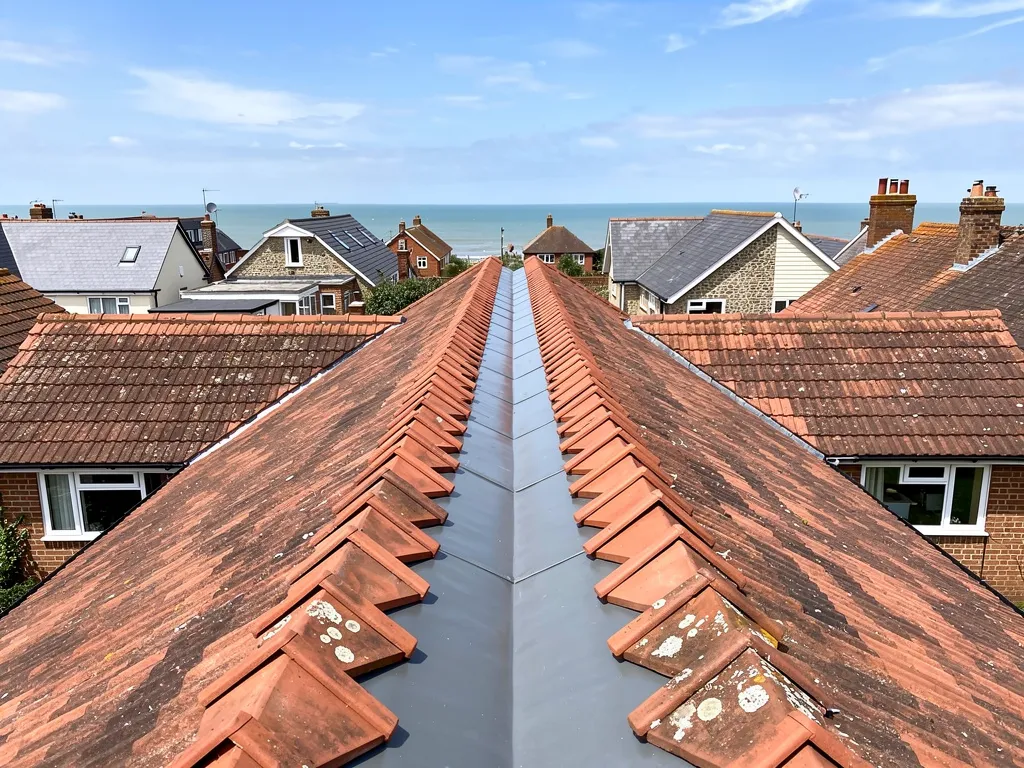
Lead-lined valley where two clay-tiled roof slopes meet

1.1 Lime, flint and the flashing

A flashing is a band of lead folded over a junction to shed water. On a flint wall it is held in a chase, a groove raked out of a mortar joint, then pointed up. Because the appraisal names lime as a traditional material, we match the mortar already in the wall and avoid forcing a harder mix in beside it. Where pointing has crumbled or the lead has curled away, water runs behind the covering and appears indoors at a distance from the fault, which is why the stain is never where we begin. Lead lasts: MyJobQuote says flashing can run past 80 years, and past 100 for higher codes. A code is the lead's thickness grade, and Leadworx calls code 4 the standard for general flashing.

Lead-lined valley where two clay-tiled roof slopes meet

1.2 Clay tile and salt weather

Clay roof tiles are among the area's key materials, and a clay roof close to the harbour takes salt-laden air as well as rain. The fixings, ridge details and gutters around the tiles take the brunt of it. We check nails, clips and ridge bedding for corrosion or movement, and our ridge tile repairs page explains the fixing choices. Salt also gathers on surfaces rain cannot reach, so soffits and fascias get dirty and need rinsing, a point HomeBuilding makes about marine air. Gutters near the harbour fill with salt-stained debris, and a blocked outlet overflows onto the wall head, so we clear and test every run while we are up there. Where a slope is worn across the board, our pitched roofing page sets out what re-tiling involves.
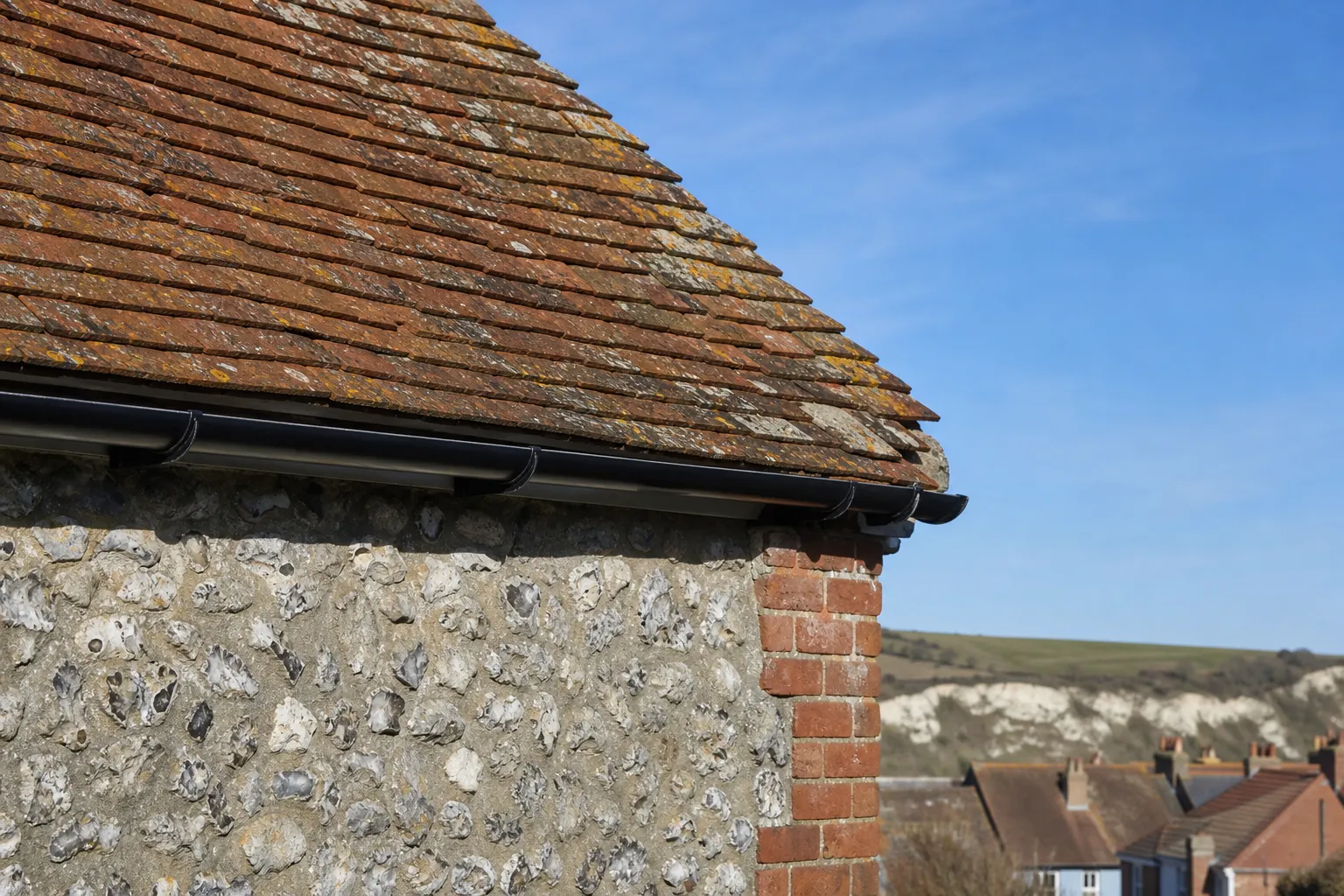
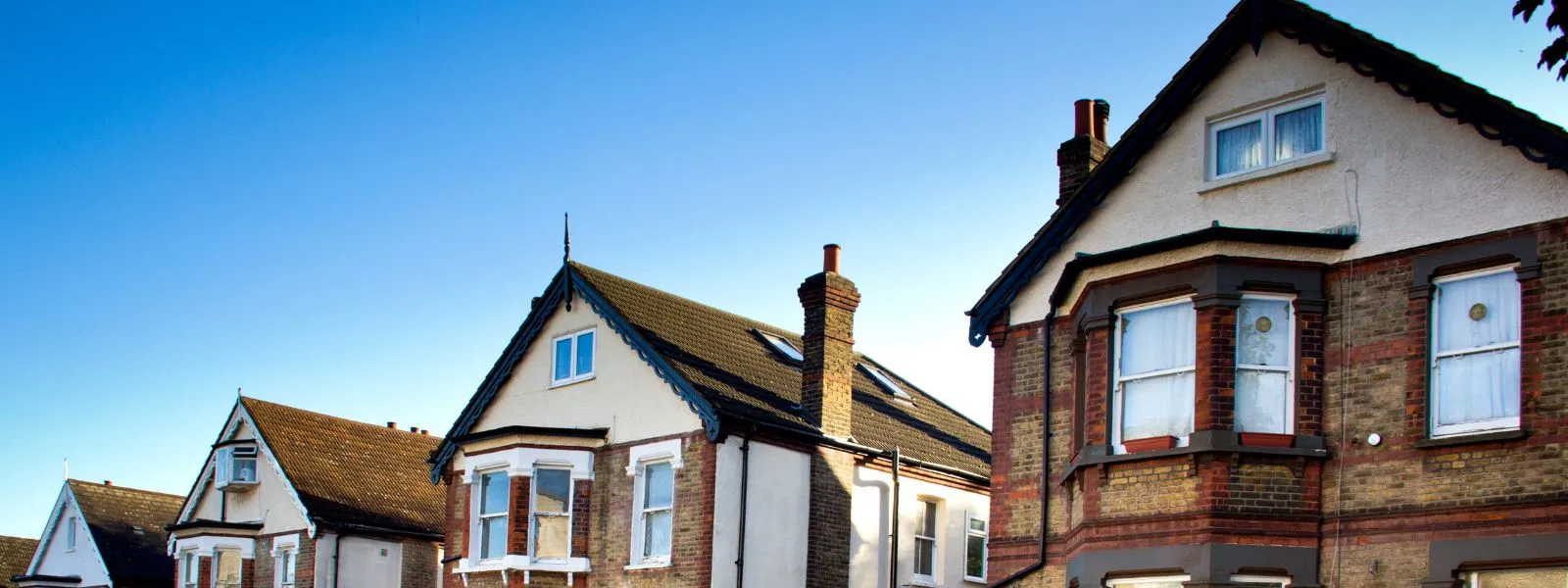
Old clay tile roof over a flint wall in a downland village

Fig. 1 On the survey Lead curled away from a flint joint
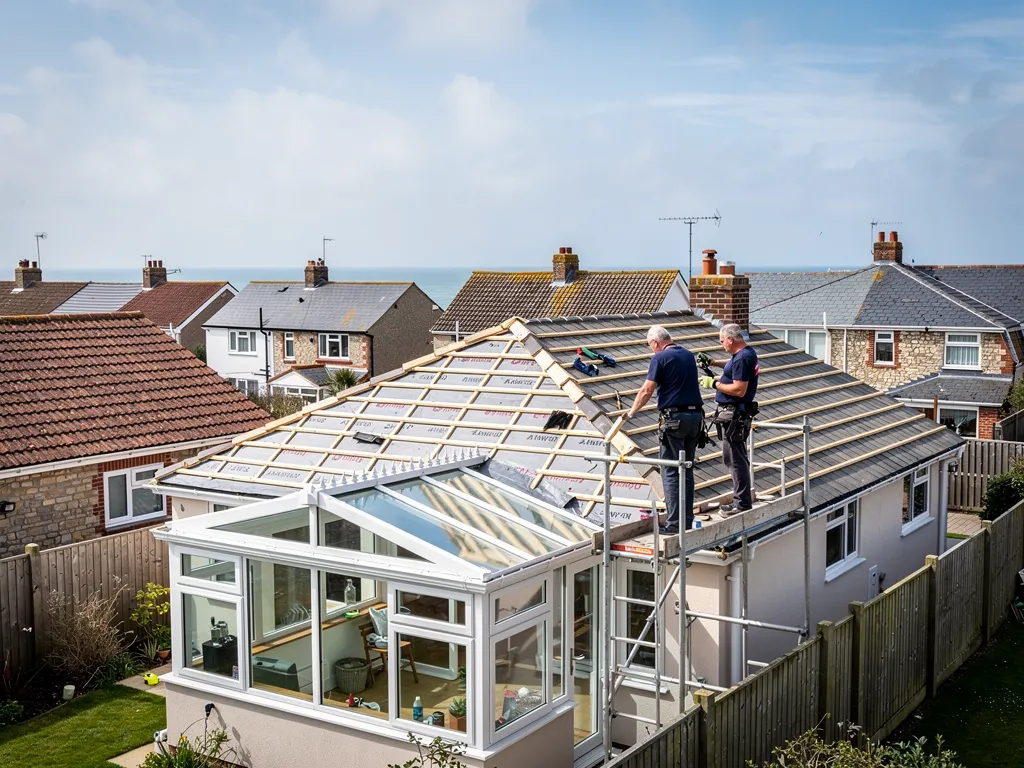
Roofer unloading tools from a plain white van on a residential street

Chapter two

The church, the Old Rectory and the mills

A flint church, a refaced rectory and two former mills show how old fabric and roofs have been repaired through the centuries.

The church of SS Peter and Mary is built of flint rubble with freestone dressings, and its south aisle was added in 1847, according to the Victoria County History. The Old Rectory is a house of the mid to late 16th century, refaced late in the 17th with stone and flint rubble and brick dressings. Beside the channel stood a tide mill, built in the 1790s and abandoned in the late 1830s, and Fishbourne Mill, built in the early 17th century, which worked until 1917. Buildings with this much layered history share a habit: they carry roofs repaired in several periods, in more than one material, over walls that moved as they aged. A change of tile size or colour at a join often marks an extension from another century, and it tells us where the oldest fabric lies.

At a glance

  • The south aisle at SS Peter and Mary dates from 1847
  • The Old Rectory was refaced in the late 17th century
  • Fishbourne Mill worked until 1917

2.1 Working out what you have

On a roof like that, the first job is to read it. We look at the line of the slope for sags, the condition of the timbers at the wall head, and whether earlier repairs used materials that no longer match. A patched roof with mismatched tiles tells us where leaks have been chased before. Quick sealant fixes often hide the original fault, and we would rather open the junction, photograph it and mend it properly. Our roof repairs page covers the range of smaller jobs that can settle a long-running leak.

2.2 Consent, church and listed buildings

SS Peter and Mary is an Anglican parish church. While it serves a congregation, works to its roofs follow the Church's own faculty route in place of the council's listed building process, and the parish decides what is done. If a building is listed and in private hands, listed building consent is the rule for anything that changes its character, so a house like the Old Rectory is not something to tackle without checking with Chichester District Council first. The Roman palace of Fishbourne lies beside the conservation area, a reminder that heritage here is layered. Before scaffold goes up near anything old, we ask who needs to be told. Bats and nesting birds also have legal protection in old roofs.

Who agrees to roof work on an old building

Anglican church in use
The Church's faculty jurisdiction (Exemption Order 2010, art 5)
Closed or redundant church
Council's listed building consent is needed
Listed house
Consent needed for work that alters its character (Listed Buildings Act 1990, s7)
Scheduled monument
Needs the Secretary of State's approval first

Source: Ecclesiastical Exemption Order 2010; Department for Culture, Media and Sport guidance; Listed Buildings Act 1990, fetched October 2026

Chapter three

Open water, protected landscape and the re-roof decision

A roof at the top of a harbour deserves fixings chosen for the site, and the choice between repair and re-roof follows from them.

Fishbourne is a village at the head of the Fishbourne Channel of Chichester Harbour, and the appraisal records that most of the conservation area south of the A259 lies within the Chichester Harbour Area of Outstanding Natural Beauty, designated in 1964. Wind on open water meets a roof with little to slow it. Marley notes that a roof pitched under 30 degrees can suffer heavy negative pressure on the slope that faces the wind. Wienerberger adds that every tile laid single-lap must be secured by at least one nail or clip, and that the specification should reflect the site's location, height above sea level and exposure to wind. Marley also publishes a minimum pitch for each tile, from 15 degrees for its Lincoln clay pantile to 35 degrees for its concrete plain tile, so we check the data sheet before promising that a new covering will suit an existing slope. We use those as our working rules for any re-roof near the harbour, and we follow the maker's fixing specification for the actual slope, its height and its pitch.

At a glance

  • Low pitches face severe suction on the windward slope
  • Each tile in a single-lap system gets its own fixing
  • Dry ridge jobs are guided at £500 to £1,000
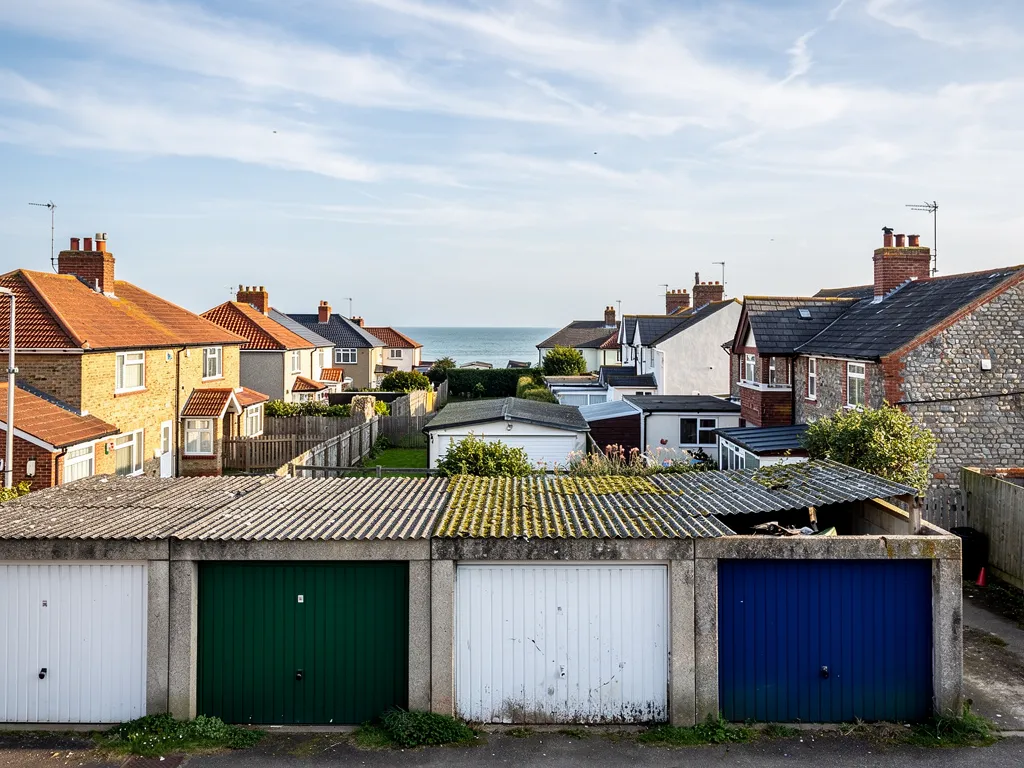
Row of concrete sectional garages with weathered grey corrugated roofs

3.1 Ridges and verges

The ridge, where two slopes meet, and the verge, where a slope ends at a gable, are the first places a gale attacks. Under BS 5534 as revised in 2014, ridge and hip tiles are screwed or clipped down as well as bedded, because mortar by itself no longer carries the load, and dry-fix ridge systems are tested against BS 8612:2018. MyBuilder guides a dry ridge job at £500 to £1,000, with dry ridge at £40 to £60 per linear metre.

Row of concrete sectional garages with weathered grey corrugated roofs

3.2 Repair or re-roof, and who signs it off

If faults cluster in one place, a repair usually answers. If fixings are failing everywhere, stripping and re-covering becomes the better course. Building control is not normally needed for work touching under 25 per cent of the building envelope and under 50 per cent of the roof, but beyond those limits an application applies, and so it does for a covering 15 per cent or more heavier. The protected landscape and the conservation area bring planning questions for roof windows and dormers, and our roof planning permission guide covers them. The written quote arrives after the survey; read it for scaffold and VAT.

Typical UK costs for a harbour-edge roof

  • Repointing ridge or hip tiles£200 to £400
  • Dry ridge, typical job£500 to £1,000
  • Scaffold, two-storey house£850 to £1,200
  • Hipped re-roof, semi£8,000 to £12,000

Guide figures are national and undated by site. Your total comes in writing, after we have photographed your roof. Source: MyBuilder slate roof, dry ridge, scaffolding and new roof price guides, updated 21/08/2026.

Fishbourne roof questions, from the flint walls to the harbour

How should a lead flashing meet a flint wall in Fishbourne?

It is turned into a chase, a groove raked out of a mortar joint, then pointed up so the top edge is locked in. Flint faces are rough, so the lead must be dressed to follow them. We match the lime mortar already in the wall, and photograph the junction before and after. If the old lead has split, the repair goes to the junction, not to the stain it caused.

Does the Chichester Harbour landscape designation change how I repair my roof?

Not for a repair that keeps the same covering. The designated landscape and the conservation area matter more for new roof windows, dormers and changes of material, which our planning guide explains. If the house is listed, listed building consent applies to work affecting its character. Ask Chichester District Council's planning team when in doubt, and send us the address and photographs so we can describe the roof you have.

Are mortar ridge tiles still acceptable on a harbour-side house?

Mortar can still be used, but alone it is no longer relied on. Since the 2014 revision of BS 5534, ridge and hip tiles are also mechanically fixed, and dry-fix systems follow BS 8612:2018. Near open water, where gusts reach a roof with little cover, that extra fixing matters. We check how your ridge was laid, then re-bed and fix it, or fit dry ridge.

What should I look for in a written roofing quote near Fishbourne?

It should name one total price for the surveyed work, accompanied by photographs of your roof, and show whether scaffold and VAT are included; VAT is 20 per cent on a re-roof. When the job is done our crew sweep up, take the rubbish away and leave the gutters clear. If a repair is enough, the quote covers only the repair.

Tell us about your roof

Describe what is happening and we will call you back to arrange a visit.

  • Photographs of what we find
  • A written quote with one total price
  • Or call 01903 299063

10-year workmanship guarantee, in writing.

Call Get a quote