
Chapter one
Flint walls, brick corners and cottage roofs
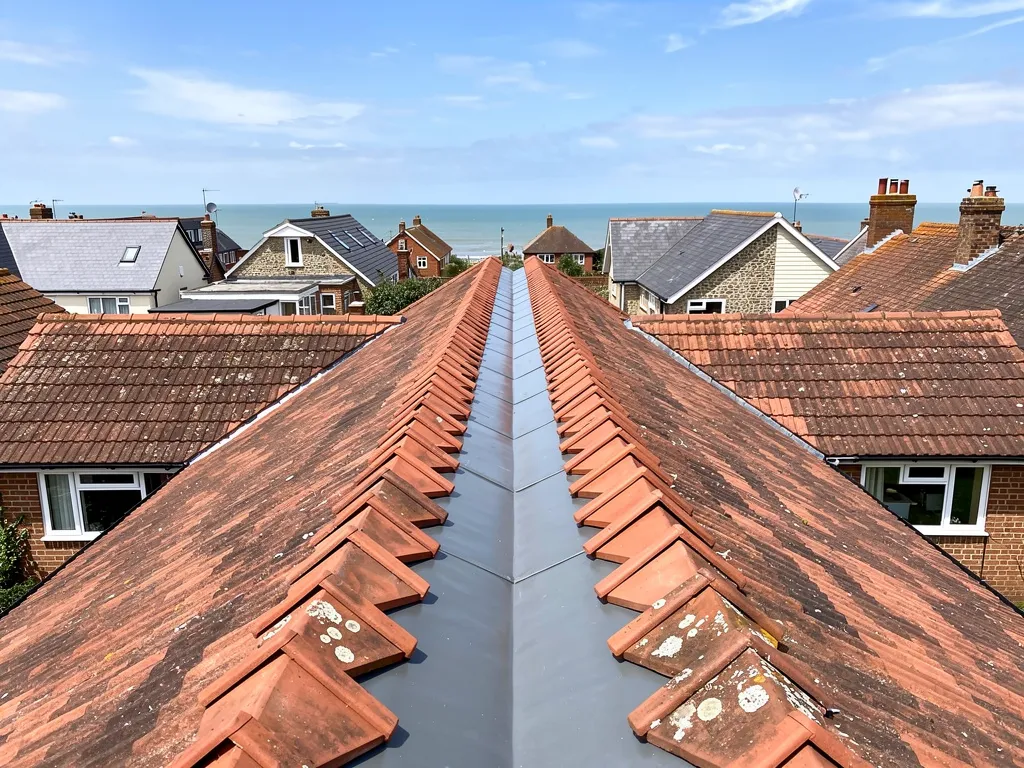
Beside a flint wall the roof is sealed with lead, and the lead details decide whether an old cottage stays dry.
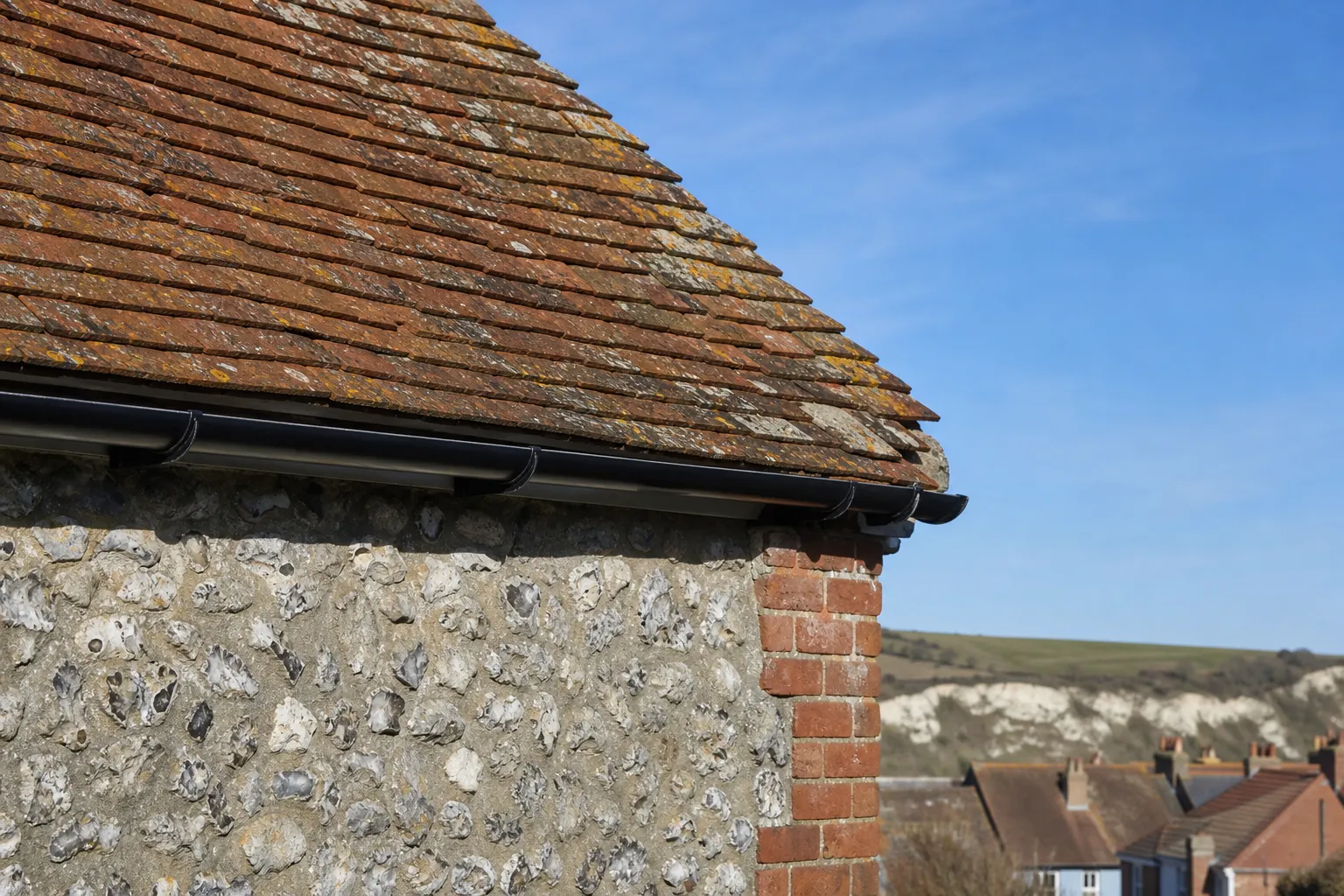
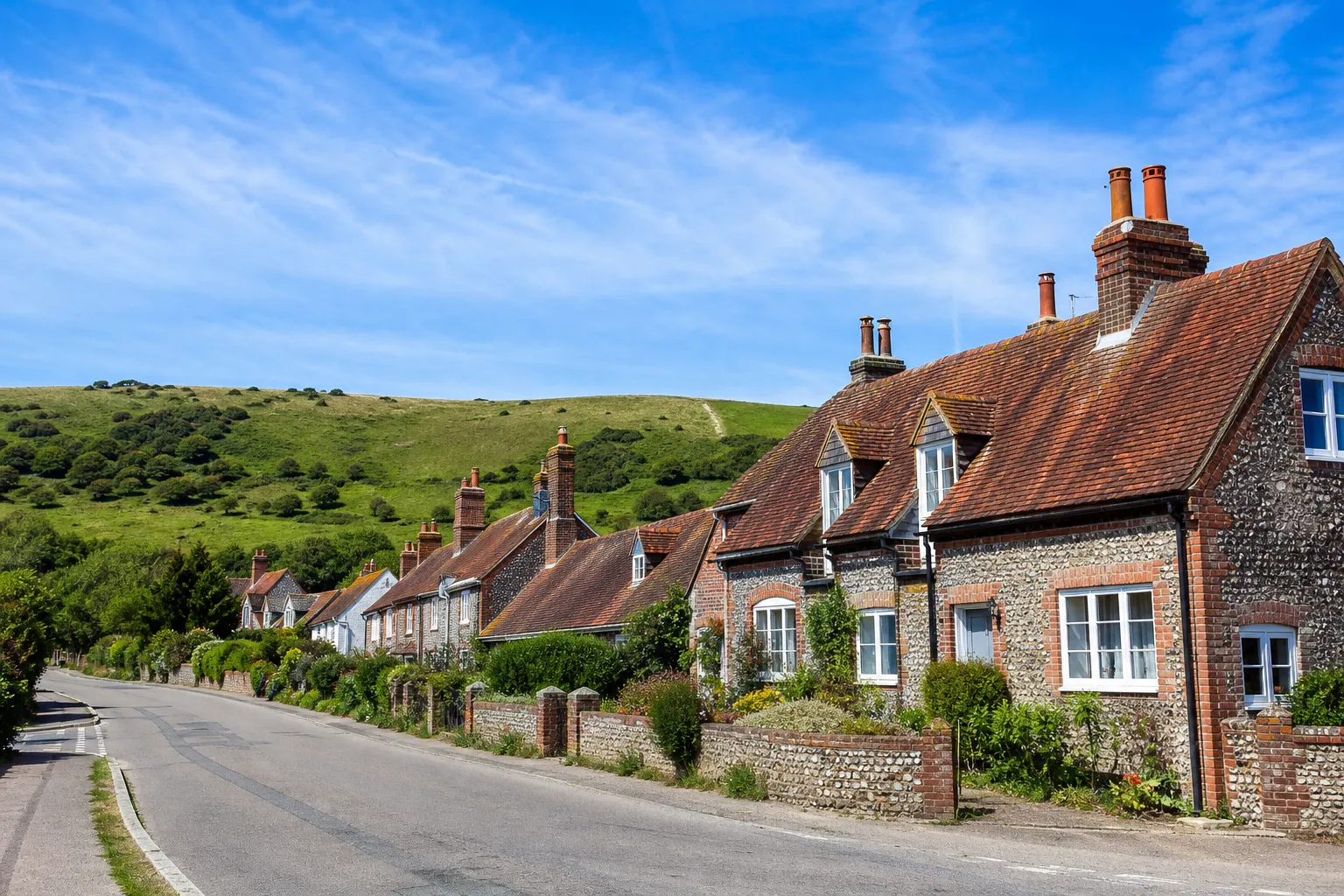
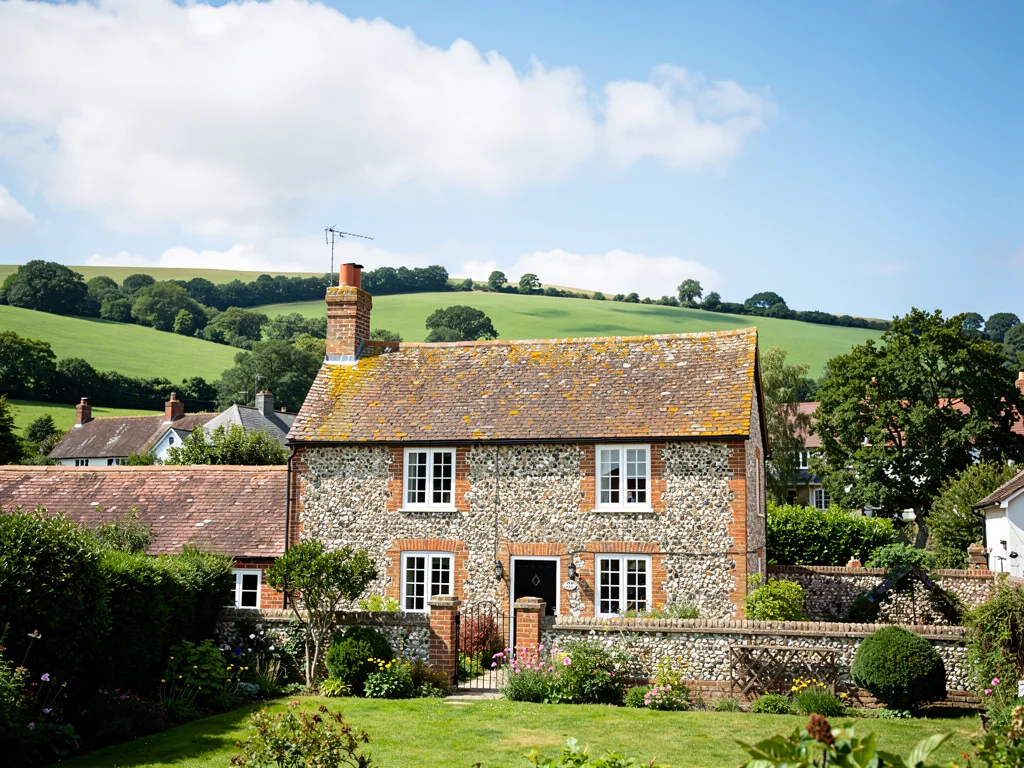
The Victoria County History, writing in 1953, describes East Lavant's older buildings in some detail. One house has walls of split flints with brick quoins, the corner dressings, from the 17th century. Close by are an early 17th-century timber-framed cottage under a thatched roof and a second thatched cottage of plastered flint or rubble. Flint is hard and irregular, so a roof abutting a flint wall must be sealed to a face that was never cut square. The seal is lead flashing, a strip of metal bent over the junction, and the quality of that strip, and of the pointing it is tucked into, decides whether the room beside the chimney stays dry.
At a glance
- East Lavant has houses of split flint
- Brick quoins there date from the 17th century
- Code 4 lead is the usual choice for flashings

1.1 Lead into flint
A flashing is held by turning its top edge into a joint in the wall and wedging it there. On flint the joints are wide and uneven, so the old mortar around lead tends to fail first, and water tracks down behind the strip. The cure we favour is to cut the joint back, fit fresh lead and point it again; a smear of sealant on top only masks the gap for a season. Photographs of the cracked pointing and the gap behind the lead go with the quote, since the top edge of a flashing can sit loose while the strip below it looks sound from the lane. Lead is graded by code. Leadworx says code 4 has become the standard for general flashings, with thinner code 3 reserved for soakers, small bent lead pieces that lie under each tile course against a wall. Our lead roofing page goes through the codes.
1.2 Stacks and verges
Brick chimney stacks on cottage gables take the full force of the weather. We check the pointing, the flaunching, which is the mortar slope around the pots, and the flashing at the base. The verge is the gable-end margin of the roof, and under BS 5534 the tiles around a roof's perimeter are fixed twice, Marley notes, not left to mortar alone. A stack that is losing mortar from its upper joints can often be repointed, and MyBuilder gives £500 to £2,000 for chimney repointing as a typical UK range. Where a stack leans or its brickwork has eroded, rebuilding is the better answer, and our chimney repairs page explains when that point is reached.
Leadwork facts for a flint cottage
- Code 3, 1.32 mm
- Soakers and light duty
- Code 4, 1.80 mm
- The usual choice for general flashings
- Code 5, 2.24 mm
- General, vertical and pitched work
- Flashing lifespan
- Over 80 years, and over 100 for higher codes
- Patch repair, typical UK
- £150 to £250
Source: Leadworx; MyJobQuote (22/09/26)