
Roofers in Bosham

Bosham sits on a channel of Chichester Harbour, with a Grade I church, a conservation area designated in 1969 and Article 4 rules that reach roof coverings. We survey roofs with all three in mind.

Three kinds of Bosham roof, and what to check

  • A tiled church roof and spire

    Holy Trinity and its tiled roof

    Holy Trinity is Grade I, built of rubble with ashlar dressings and roofed with tile under a broach spire.

    Read more about Holy Trinity and its tiled roof

    Work on a church that old begins with its consent route and the condition of the timbers beneath.

  • Handmade clay tiles on a roof

    Handmade clay tiles, and some slate

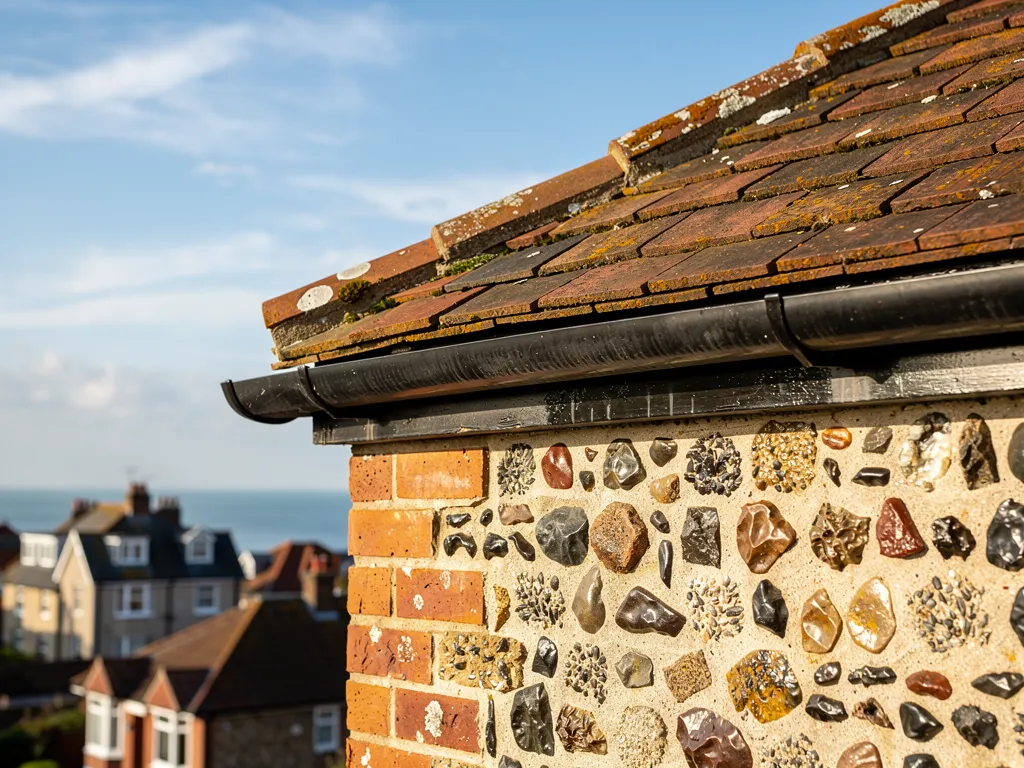
    The council's appraisal says Bosham's roof tiles are usually handmade clay, with some slate roofs. Handmade tiles vary in size and texture, so patching with machine-made ones leaves a visible scar across the slope.

  • A thatched timber-framed house

    Thatch and timber frame by the water

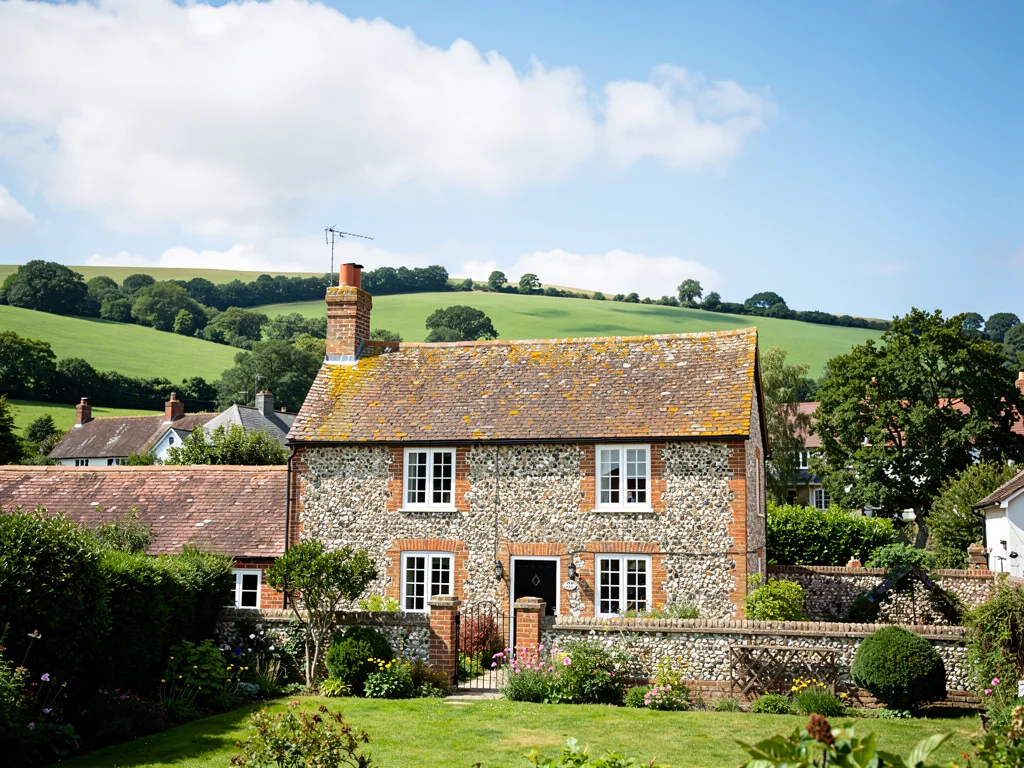
    Parker's Pound has early-17th-century timber framing with brick nogging and a thatched roof, and the Manor House dates from about the middle of the 17th century.

    Read more about Thatch and timber frame by the water

    Old frames move, and the coverings over them move too.

Street map of Bosham, west of central Worthing, with a pin on the town.

Bosham areas, listings and directions

Planning authority
Chichester District Council
Councils
Chichester District Council and West Sussex County Council
Conservation area
Bosham Conservation Area, designated October 1969, based on the High Street, Quay Meadow, Bosham Lane and Shore Road
Article 4
Houses: changes to roof coverings, chimney alterations and solar panels on slopes facing a highway, waterway or open space
Listed examples
Holy Trinity Church, Grade I; Mariners Terrace, Grade II
From central Worthing
26 road miles, west, about 38 minutes by car

Bosham roofs

Quay, church and the Article 4 streets

Rules, materials and tide: what shapes roofing decisions in a village built along the harbour edge.

Chapter one

Article 4 rules for Bosham's roof coverings

In the conservation area, changing the covering on a house that faces a public area is a planning matter, not a free choice.

The Bosham Conservation Area was designated in October 1969 and is based on the High Street, Quay Meadow, Bosham Lane and Shore Road. Chichester District Council has also made Article 4 directions for it. Ordinarily a homeowner can do a good deal to a house without applying for planning permission; an Article 4 direction takes specific rights away in a defined area, so that an application becomes necessary. The council's residents' guide says that for houses, on elevations fronting a public area, these directions reach changes to roof coverings, alterations to chimneys, and solar panels on a roof slope facing a highway, open space or waterway.

At a glance

  • The conservation area dates from October 1969
  • Roof coverings fall under Article 4 for houses
  • Chimney changes and roof solar are caught too

1.1 What a matching repair means here

Putting back the same covering is different from replacing it with another. A repair that matches sits outside planning control, because nothing about the look of the roof has changed. Swapping handmade clay for concrete, or clay for slate, does change the look, and in Bosham's Article 4 area that needs an application. So before any quote we record the existing tile or slate by type, size, colour and texture, and the quote describes a matching covering. If you would like a different material, the first step is a conversation with Chichester District Council, not a purchase order. The sensible order is survey, then photographs, then an email to the planning team with those photographs attached, then the quote. That way nobody orders tiles the council would not accept, and any condition it attaches is known before work is booked.

1.2 Chimneys and solar panels

The same directions cover demolishing or altering chimneys, and fitting solar panels on a slope that faces a highway, open space or waterway. That matters because chimney work is so often part of a roofing job: new flashings, re-seated pots, rebuilt top courses of brick. Ask the council before a stack is shortened, rebuilt in different brick or taken down. A chimney also frames the view along the street, so a stack that is only half sound is often better repaired than removed. Removing a chimney breast inside the house always needs Building Regulations approval, and a party wall notice when it is on a party wall. Our chimney repairs page sets out the repair options for stacks that are staying.

What the Bosham Article 4 directions reach on a house

ItemPosition in the directions
Roof coveringA change needs planning permission
ChimneyAlteration or demolition needs planning permission
Solar panelsPermission needed on a slope facing a highway, open space or waterway
Matching repairNot usually development; confirm with the council
Source: Chichester District Council, Residents' Guide to the Bosham Article 4 Directions; fetched October 2026

Chapter two

Handmade tiles, flint walls and a harbour church

Bosham's roof tiles are usually handmade clay, and the council's materials list shows what a good match has to copy.

Stacks of new handmade clay plain tiles on scaffold boards

The council's character appraisal lists Bosham's materials as timber framing and cladding, imported grey stone, knapped or boulder flint, red, brown and white brick, and usually handmade clay roof tiles, with some slate roofs. A handmade tile is shaped by hand, so each one differs a little in thickness, texture and colour, and a roof of them has a soft, uneven face. Machine-made tiles are flatter and more uniform, so a patch of them stands out. When we match a repair we sort the sound tiles from the roof's own stock and reuse them first, then look for matching handmade tiles to fill the gaps.

At a glance

  • The appraisal says tiles are usually handmade clay
  • Some Bosham roofs are slate
  • Holy Trinity is Grade I; Mariners Terrace is Grade II
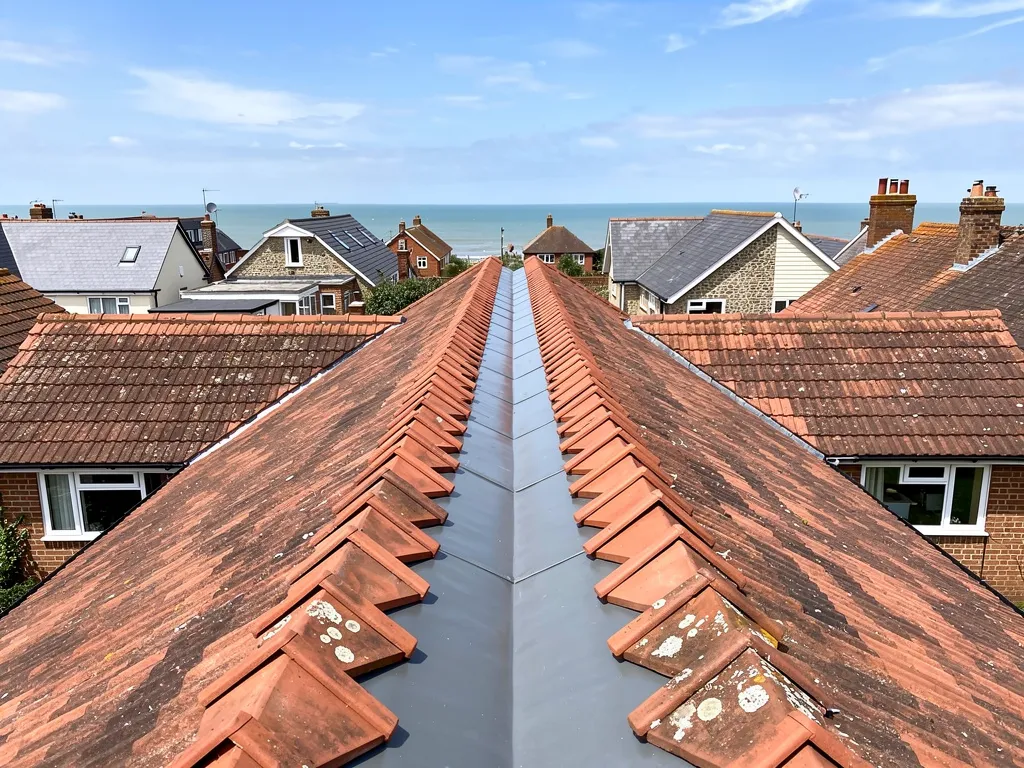
Lead-lined valley where two clay-tiled roof slopes meet

2.1 What fails first on a clay roof

Marley cites the Building Research Establishment as setting a minimum life expectancy of 60 years for clay tiles, while on the Building Conservation Directory's site an article cautions that the 60-year figure is clearly not a dependable guide to old peg-tile roofs. Both can hold: the clay itself lasts, while age and fixings vary from one roof to the next. What gives out first is often not the tile but the nails and battens beneath it, and any mortar bedding on the ridge. We lift a sample of tiles to see the battens and nail fixings, then decide between re-hanging the sound tiles and recovering the slope.

Lead-lined valley where two clay-tiled roof slopes meet

2.2 The church and the terrace

Holy Trinity is Grade I, a rubble church with ashlar dressings, a tiled roof and a broach spire. As an Anglican church in active use, it comes under the Church's own faculty process for roof work. Mariners Terrace is Grade II, and for a listed roof repairs that do not match need listed building consent, so Chichester District Council's conservation team is where to ask. Listed roofs are where a mistake costs most, so on them we write down every step, name the tile and where it came from, and keep reusable old tiles in a labelled stack on site until they go back up. Flint walls matter to a roofer too: wherever a roof abuts one, the lead flashing is tucked into the joints, and on boulder flint the face is so uneven that the joint decides whether the wall stays dry.

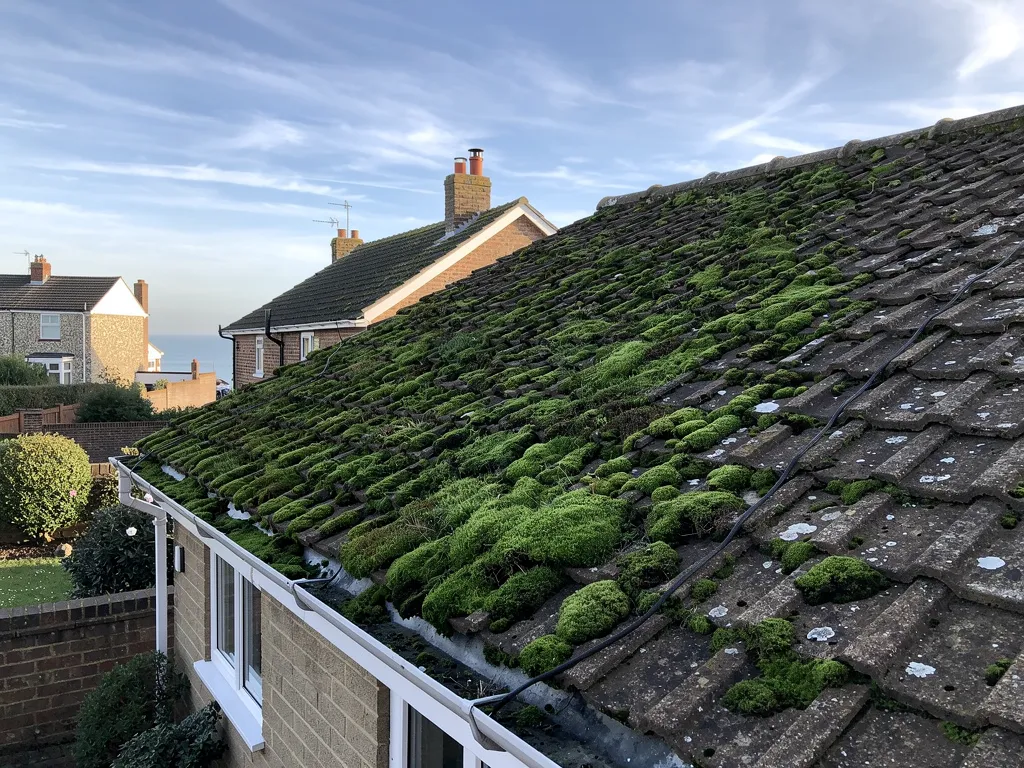
Bungalow roof heavily covered in green moss on its north-facing slope
Fig. 2.a On the survey Handmade tiles slipping where old nails have tired
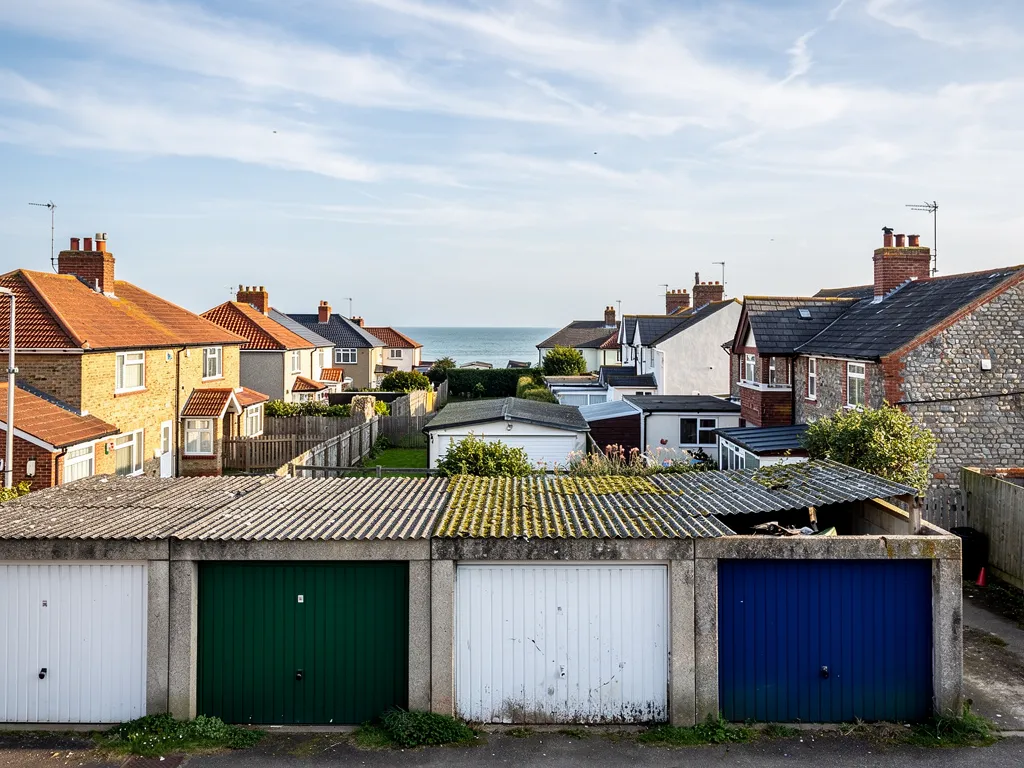
Row of concrete sectional garages with weathered grey corrugated roofs
Fig. 2.b Put right Sound tiles re-hung on fresh battens and fixings

Chapter three

Salt, damp and gutters on Bosham's tidal edge

A roof beside the Bosham Channel meets salt air, standing damp and soffits that rain does not reach to rinse.

Bosham stands on the Bosham Channel of Chichester Harbour, and the water is part of every roof's daily weather. HomeBuilding observes that marine air carries a lot of salt, and that soffits and fascias collect salty deposits in places the rain never rinses. That is the pattern we look for along the eaves of a harbour house: crusting on the underside of a fascia, flaking paint, a gutter whose brackets have rusted or whose joints have opened. Salt is no reason to avoid a material, but it makes cleaning and checking a regular part of owning a house here.

At a glance

  • Rain rinses open surfaces but not soffits
  • Gutter makers advise a slight fall towards each outlet
  • Gutter brackets sit no more than 900mm apart

3.1 Gutters that drain

Makers of gutter systems advise a small fall towards each outlet, somewhere between 1:600 and 1:350, and Brett Martin spaces its supports at 900mm or less. A gutter sagging between two brackets keeps water standing, overflows against the wall and stains it, and on a flint wall that water can sit in the joints for days. Overflow also darkens brick and finds its way in at window heads. We check the fall with a level, test the brackets by hand and clear the outlet. A leaking joint can often be renewed with a fresh seal in minutes; a gutter whose back has rotted needs replacing. Leaves and weed growth are worth clearing before autumn, and a sagging run can often be re-hung on new brackets, so replacing every metre is not always the answer. For the larger job, our gutters, soffits and fascias page covers replacement from end to end.

3.2 Washing and checking

A zinc manufacturer advises rinsing the metal with clean water twice a year or more to limit salt build-up, and the idea makes sense for any sheltered metal or painted timber near the shore. A hose from the ground reaches the eaves of a bungalow; a two-storey house needs a ladder or a pole, which is a job for someone with the right access. Leave old tiles alone with a pressure washer, since MyBuilder warns that it may damage delicate tiles. A survey of the eaves is a good moment to look at the rest of the edge too: the verge, the first row of tiles and the lead in the valley. On the roofs that face the water we photograph from the ground first, then from a ladder, before deciding where a closer look is needed.

Typical UK roofline costs per metre

  • Guttering replacement£30 to £70
  • Fascia£80 to £150
  • Soffit£100 to £180

These are national guides, not our prices. The length of run and the height of the scaffold decide your total, which arrives in writing after the survey. Source: MyBuilder gutter, fascia and soffit replacement cost guide, updated 21/08/2026; typical UK ranges per metre.

Bosham roof questions, from Shore Road to the church

What tiles match a Bosham roof when the original handmade ones have broken?

We reuse the roof's own sound tiles first, sorting them by size and colour, then source matching handmade clay tiles for the gaps. The council's appraisal says Bosham's tiles are usually handmade clay, so a machine-made substitute would stand out and, in the Article 4 area, a change of covering needs planning permission. Photographs of the existing tiles go to the council with any enquiry.

Do the Bosham Article 4 directions mean I need permission to repair a roof?

Not for a repair that matches. Putting back the same tile or slate does not materially change the building's appearance, so it is not usually development. A change of covering on a house is different: the directions say it needs planning permission where the elevation fronts a public area. Confirm the position for your address with Chichester District Council before you commit to a quote.

Is Mariners Terrace's Grade II listing handled like Holy Trinity's Grade I?

No. Holy Trinity is an Anglican church in regular use, so work on it follows the Church's faculty process. Mariners Terrace is a row of houses: repairs that do not match the original materials need listed building consent from the council, and like-for-like repair in matching materials does not. The two buildings sit in the same conservation area, but their roofs follow different routes.

Should I wash the salt off the fascias on my Bosham house?

Rinsing helps, because deposits build up where rain cannot reach. A zinc manufacturer recommends rinsing zinc with clean water twice a year or more, and sheltered painted timber benefits from the same habit. Keep a pressure washer away from old tiles. If a fascia has failed, the quote for replacing it arrives as one total after the survey, and it takes in the gutter brackets fixed along that same run of eaves.

Tell us about your roof

Describe what is happening and we will call you back to arrange a visit.

  • Photographs of what we find
  • A written quote with one total price
  • Or call 01903 299063

10-year workmanship guarantee, in writing.

Call Get a quote