
Question answered
Solar panels on a commercial roof
The short answer
A commercial roof can often take solar panels, but only after two checks: the structure must carry the extra load and the wind forces on it, and the roof covering must have enough life left to stay beneath the array. If the covering will need replacing soon, renew it first, because lifting panels later to mend the roof costs far more than doing it in the right order.
Panels will sit on your roof for decades, and the roof under them has to last as long. Checking the structure, the covering's remaining life and the fixing method comes before any quote for the panels themselves.
Roof life comes before panel life
Panels are bought for the long term, so the sensible first question is how long the roof under them will last. A flat membrane that is already ageing, or profiled metal sheets with failing fixings and rust at the laps, will need attention within a few years. Fitting an array over the top and then renewing the covering means taking the whole system off, paying twice for access, and risking damage to the panels and the wiring on the way.
A survey should give a clear view of what the covering is, what condition it is in and how long it is likely to last, in plain terms. Where the answer is a short time, the usual advice is to renew the roof first, then fit the panels to the new surface. Our notes on the commercial roof survey explain what a surveyor looks at.
Treat any guarantee on the existing roof as a question to ask, not an assumption. Make sure the roof installer and the solar installer both know what the other will be doing.
What the structure has to carry
Panels add weight, but the bigger demand is often wind. A flat array is a sail, and the wind pulls on it as well as pressing down. Whatever holds it down, whether ballast blocks, clamps or fixings through the covering, transfers those forces to the structure below. Light steel purlins, old timber decks and thin sheeting have limited spare capacity.
A structural engineer should confirm that the roof can take the load and the fixing layout. This is not a formality. The same panels on two similar-looking roofs can be fine on one and unsafe on the other, depending on the span, the age of the members and how well the roof is tied to the walls.
Ballasted systems on flat roofs avoid drilling but add a lot of weight and can restrict drainage if the layout is careless. Fixed systems avoid the weight but pass through the covering, which raises the waterproofing question in the next section.
Fixings, sealing and metal roofs
Every hole through a roof is a place where water can enter, so ask how each fixing is made weathertight and who is responsible for it. On a flat roof, brackets are normally set on upstands or pads that are welded, glued or sealed into the membrane by the roofer. On a pitched tile or slate roof, hooks are fitted under the covering and the surrounding tiles reinstated.
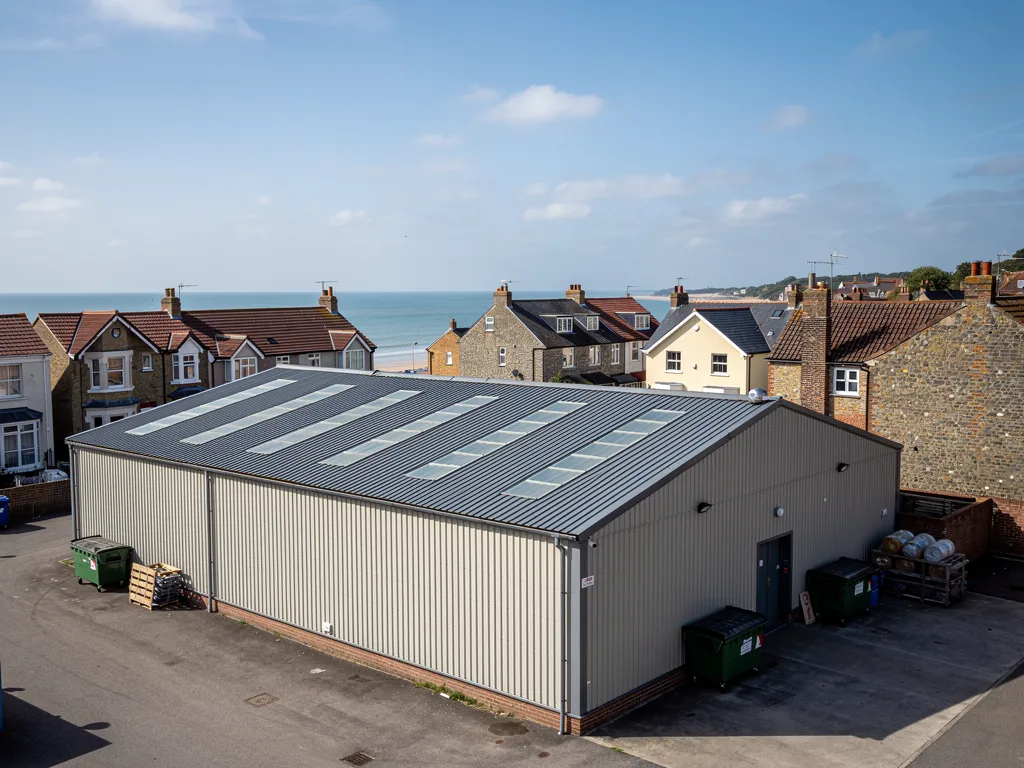
On profiled metal sheeting, clamps that grip the seam can avoid drilling the sheet at all, which is one reason such roofs are popular for solar. The sheets still have to be sound, however, and a coastal building needs fixings suited to its sea air. Our page on metal roofs near the coast covers how salt affects them.
Ask for a diagram showing every fixing point, plus a written method for sealing each one. If the roof carries a manufacturer's guarantee, check with the maker whether the solar fixings affect it, and get the answer in writing before the work starts.
Access, cabling and fire safety on the roof
Panels create new hazards on the roof: more things to trip over, more roof edge to protect, and cables running to the plant room. The plan should include edge protection, safe walkways and a clear route for cables that does not cut across a drain or lead through the membrane at a bad point.
Maintenance matters as well. Roof inspections, gutter clearing and repairs to the covering all become harder with an array in the way. A gap round the edges and between rows lets someone reach the roof surface safely, and the layout should leave the outlets and any rooflights reachable.
Fire safety is part of the electrical design. Isolators, labelling and routes for the fire service are set by the electrical installer, not the roofer, but they affect how panels are placed on the roof. Ask the solar installer to share the layout with the roofer before it is fixed.
If the roof is a church or village hall, the consent route may be different; see church and village hall roof repairs.
Doing the roof and the panels as one plan
The route with least disruption is usually to treat the roof and the panels as one project. The roofer renews or repairs the covering, builds in the upstands or brackets, and tests the roof for leaks, then the solar team fits the array on a surface that is known to be sound.
Where a green roof is also being considered, the two can coexist on some flat roofs, but the loading and layout need planning together. Read green roofs on commercial buildings first. For a shop with flats above, shop flat roof repairs sets out the questions about who owns and maintains the roof.
Ask whether permission is needed before you commit, and check with the Adur & Worthing planning team, because it depends on the building and its location. The survey and written quote come first, and the quote should state the roof work and any scaffolding.
Our commercial roofing page lists the other jobs we cover.
Panels on a business roof: two more questions
Do solar panels damage a flat roof membrane?
They can if they are placed carelessly, because feet, ballast and cable runs can wear or puncture the surface. Protective pads, set routes and a sound membrane underneath prevent most of that. Ask for the membrane to be checked and photographed before the array goes on, and again at the end.
Who removes the panels if the roof needs work later?
Normally the solar installer or an electrician, since the panels are wired live. Agree beforehand who lifts them, who refits them and who pays, because a roof repair under an array involves both trades and can take days longer than one without panels.
Tell us about your roof
Describe what is happening and we will call you back to arrange a visit.
- Photographs of what we find
- A written quote with one total price
- Or call 01903 299063
10-year workmanship guarantee, in writing.