
Question answered
Can you repair your roof before the insurer agrees?
The short answer
You can usually have emergency work done to keep further water out, but advice issued for Storm Eunice in 2022 was to check with your insurer first. Permanent repairs are different: wait until the insurer has seen the evidence or agreed to the work. Photograph the damage, keep receipts and read your policy wording before committing.
You can stop the damage getting worse straight away, but permanent work is a different matter. The sensible order is to protect the home, tell the insurer and record everything before repairing.
Temporary protection comes first
When water is coming in, waiting days for an insurer's reply is not realistic. The trade body for insurers put out advice during Storm Eunice in 2022 that had two halves: arrange emergency repairs to stop damage spreading, and speak to your insurer before you do. Both halves matter.
Temporary work means making the roof weatherproof, not mending it for good. That might be a fixed tarpaulin over a gap, a few replacement tiles on an exposed area, or a patch on a flat roof. The point is to protect ceilings, insulation and contents from further harm, and to hold the position steady until someone has looked at it properly. A good temporary repair is easy to remove without disturbing the damage underneath.
Keep what comes off, such as broken tiles and damaged flashing, until the insurer says you can dispose of it. They may want to inspect it or send an assessor, and the loss adjuster page explains that visit.
Why permanent work should wait
Once a roof is repaired, the evidence disappears. An insurer deciding between storm damage and wear needs to see what was there, or good pictures of it. The Financial Ombudsman Service looks at whether the damage suits a storm and what really brought it about, and those are hard questions to answer about a roof that has already been rebuilt. A tile that is gone and a flashing that is new cannot be examined by anyone.
Some policies also say work must be approved, or must use a contractor from the insurer's list, for the cost to be met. Check the section on repairs and the conditions that apply to claims. If the wording is unclear, ask in writing.
Waiting is different from doing nothing. If the temporary cover is holding, an inspection a few days later is rarely a problem. Our page on temporary roof repairs explains how long a stopgap is realistic.
Telling the insurer, and what to say
Ring the claims line or use the online form as soon as you can, and say when the damage first came to light and what you believe lies behind it. Say what temporary steps you have taken or plan to take, and ask whether the insurer has a preferred contractor or wants a report before permanent work begins.
Write down the reference number, the name of the adviser and what was agreed. Follow up by email so there is a record. If the insurer is slow, a written reminder quoting the date of your first contact helps. Ask directly how long they expect to take to visit or respond, and whether a roofer's photographs and report would be accepted in place of a visit.
If a ceiling is already sagging, treat that as urgent in its own right; see a bulging ceiling with water. If a tree has come down, a fallen tree on the roof raises extra points about who removes it, and when.
Records that protect the claim
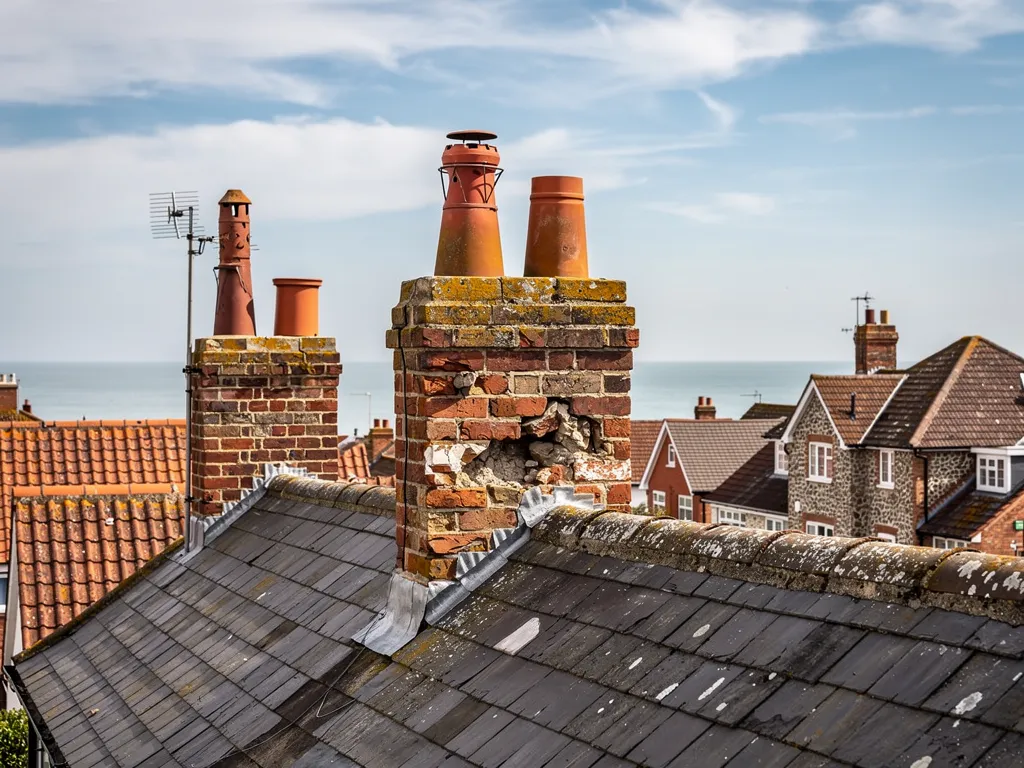
Take pictures of the damage from the garden, from inside the loft and from every room where water has shown, before and after any temporary work. Include the date on each if you can, and keep the original files. Keep receipts for tarpaulins, hired equipment, emergency call-outs and anything you buy to protect belongings.
A roofer's written report with photographs of the cause adds weight, particularly if it states what was damaged and how. Our survey photographs come with the quote, which gives you evidence in a form an insurer can read. The full list is in evidence for a roof insurance claim.
Never exaggerate damage or alter dates. A claim resting on accurate records is easier to defend if it is questioned. If you rent the property or share the building, let your landlord or the managing agent know in parallel, because the roof and the policy may not be yours alone.
When the insurer refuses or delays
A refusal is not always the end. Request the outcome in writing, naming the clause relied upon. The Financial Ombudsman Service points out that the insurer carries the burden of showing an exclusion applies, and that you complain to the insurer first, with the Ombudsman available later at no cost.
See a rejected roof claim for the next steps.
If you have already paid for urgent work, keep the invoice and send it with your complaint. Where the temporary repairs were needed to stop further damage and the insurer was told, that supports your case. Where the roof still leaks, it is better to make it safe than to wait for an answer that may take weeks. The emergency roof repairs overview lists what a roofer can do straight away, from covering a gap to clearing a blocked outlet, so the property is protected while the paperwork catches up.
Repair and insurer timing
Will I lose my claim if I fix a leak before the insurer visits?
Not necessarily, but it can leave the insurer with less to examine. Temporary protection that stops further damage is generally sensible, ideally after you have spoken to the insurer. Record the damage first, keep the removed parts and tell the insurer what was done and why.
Must the roofer be one the insurer has chosen?
Check your policy. Some require it for repairs they arrange, others pay for work you organise yourself on the strength of estimates and invoices. Ask in writing before you instruct anyone, and keep the reply with your other papers.
Tell us about your roof
Describe what is happening and we will call you back to arrange a visit.
- Photographs of what we find
- A written quote with one total price
- Or call 01903 299063
10-year workmanship guarantee, in writing.