When a roof is damaged, two different jobs are waiting. One is to stop the damage from spreading today. The other is to repair the roof so that it holds for years. They are not the same job, they rarely happen at the same moment, and confusing them is how a quick fix ends up left in place for a season.
A temporary repair is the first of the two. It might be a tarpaulin over a stripped slope, sheeting inside an opening, a board across a hole, or a few replaced tiles on a gap that has let rain in. Each suits a different kind of damage, and each has limits that are worth understanding before you agree to one. A cover that suits a missing ridge tile is not the one for a fallen branch through the covering.
What follows describes the common methods, what they do well, where they fail, and how long they can be expected to last. It also covers what to avoid, how temporary work fits with an insurance claim, and how a roofer decides the moment has come to repair permanently. For the wider picture of urgent work, our emergency roof repairs page sets out how we approach it.
What makes a repair temporary
A repair is temporary when it is designed to be removed, replaced or built over. Its purpose is to keep water out for a limited time, nothing more. It does not restore the roof's covering to its full state, it does not usually deal with the cause of the damage, and it is not expected to survive many months of weather.
That sets a clear test for any temporary measure. Can it be fitted safely in poor weather? Will it stay put in a gale? Does it protect the structure without hiding a fault that needs finding? And can it be taken off without harming what is underneath? A good make-safe passes all four.
Why it is done first
Water that gets into a roof does damage out of all proportion to the size of the opening. It soaks insulation, stains and loosens plasterboard, swells timber and works into walls, which is why the opening is closed first and the permanent repair planned second. The permanent job depends on dry timbers and calm weather, and neither is guaranteed at the moment the damage appears.
What it should not do
A temporary cover should not create new damage. Nails driven through sound tiles or heavy sealant smeared over slates leave marks that must be put right later. A roofer making a roof safe should be able to say how the cover is held, where it will be removed from, and what it will protect in the meantime.
Nor should it be mistaken for the repair. The cover buys time. It is the survey, the diagnosis of the cause and the permanent work that decide whether the roof stays dry next winter.
Tarpaulins: the usual first answer
A tarpaulin is the best-known temporary cover, and for good reason. A heavy-duty sheet can cover a large area quickly, it can be fitted from a safe position without disturbing the damaged covering, and it comes off cleanly. For a stripped section of slope, a collapsed area or a roof with several broken tiles, it is often the sensible choice.
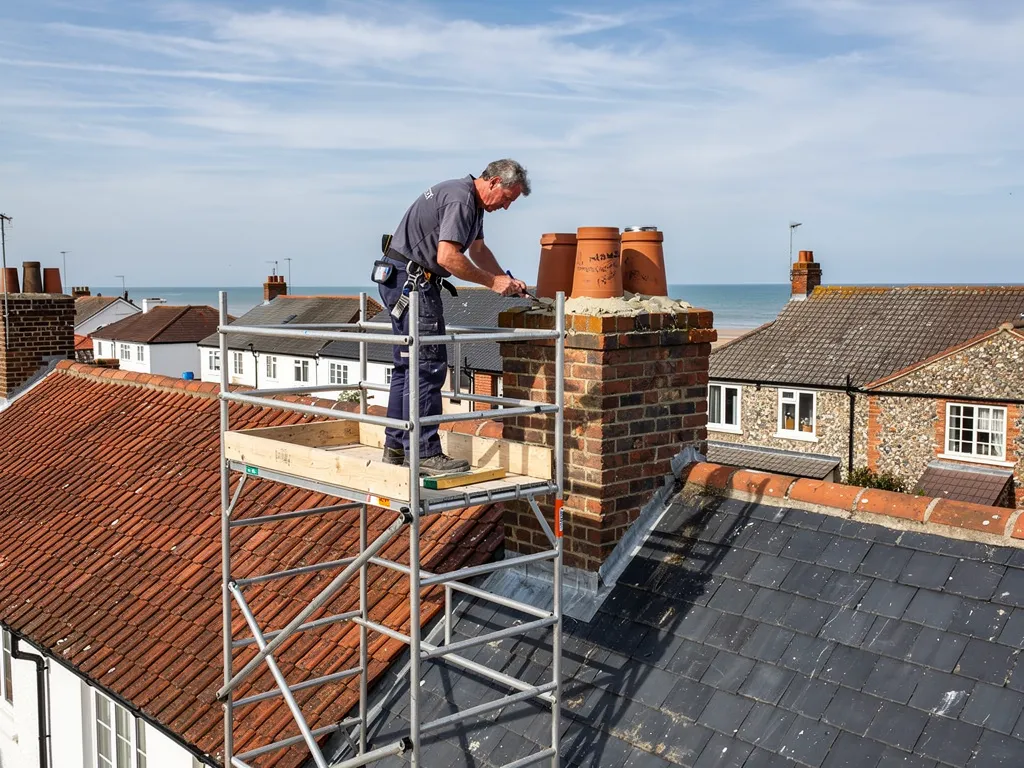
How it is fitted decides how well it works. The sheet is normally taken over the ridge, so that water runs down the outside rather than finding a gap at the top, and is held by timber battens, the narrow strips of wood that pin the edges down, rather than by tying to guttering. The battens are fixed to the roof structure in a place that will be repaired anyway, or weighted and strapped in a way that causes no new damage. The lower edge should lap into the gutter or be left to shed water clear of the wall, with no pocket that can collect and pool.
Where tarpaulins fail
Wind is their enemy. A sheet that is loose at any point flaps, and flapping wears holes at the fixings, lets rain blow under the edge and can lift the sheet entirely. Sunlight degrades cheap plastic, so thin sheets become brittle and tear. Water ponds in hollows and adds weight.
A tarpaulin is therefore worth checking after every gale. If it has slackened, tighten it. If it has torn, replace it.
On a roof facing the sea weather, the sheet has to work hard, and expect it to serve for a spell of weeks at most, never a whole season.

Sheeting, boards and covers for openings
Where the damage is an opening rather than a worn patch, a flat cover may be better than a draped one. A hole left by a fallen branch, a section of covering torn away or a skylight smashed by debris can be closed with a board or a sheet of heavy membrane fixed to the structure around it.
Plywood or similar board, cut to overlap the opening and fixed to rafters or battens, gives a firm closure that does not flap. A waterproof membrane laid over the board and lapped under the covering above it sheds water in the way the roof is meant to. Where the opening is in a flat roof, a patch of membrane or a tape-backed sheet can cover it while the proper repair is arranged.
Closing from inside
Sometimes the safest way to stop water is from the loft. A sheet laid below the opening, taken to a bucket or drain point, can carry water away while the weather prevents work outside. That is not a roof repair, since it leaves the structure above exposed, and it should be seen as a short-term way to protect ceilings and insulation until the outside can be reached.
Skylights and roof windows
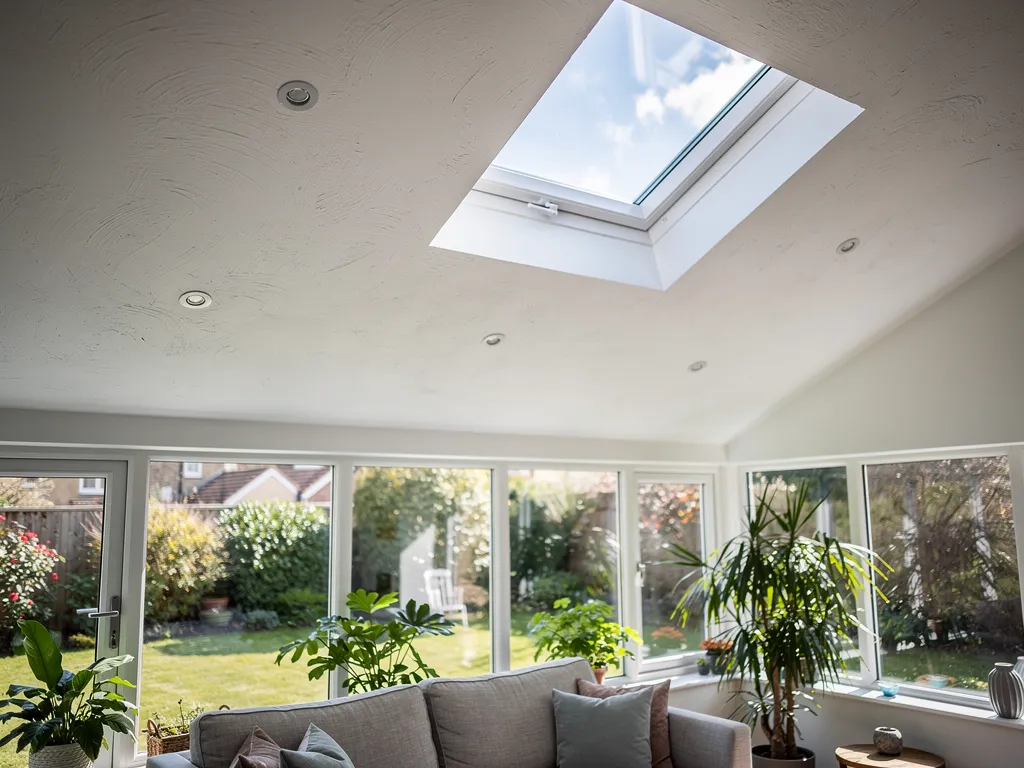
A smashed pane or a lifted frame can be covered with board and membrane, fixed outside the frame so that it sheds water over the flashing. A temporary cover on a roof window needs care. The window's flashing is often a close-fitting part of the weathering, and screws driven into the wrong place can create a fresh leak.
In each case, the key points are the same: the cover must overlap the opening on all sides, shed water clear of it, and be fixed to something sound. If it is only stuck on, it will not survive a gale.
Patches: tiles, lead and flat-roof membranes
Some damage is small enough that a patch is the quickest answer. Spare tiles or slates can be put back where they have slipped, a lifted ridge tile can be re-seated, and a split in a flat roof's covering can be closed with a patch of membrane or felt. A well-fixed patch can last well, even if it was meant to be temporary.
On a pitched roof, a replaced tile or slate should be fitted in the way the original was, with the correct fixings. A tile simply pushed back into a gap and left unfixed can slip again in the next gust. If the roof has lost several in a row, the cause may be a wider failure, such as perished battens, and the patch will not hold. Our guide on tiles blown off the roof looks at what to check.
Flashings and lead
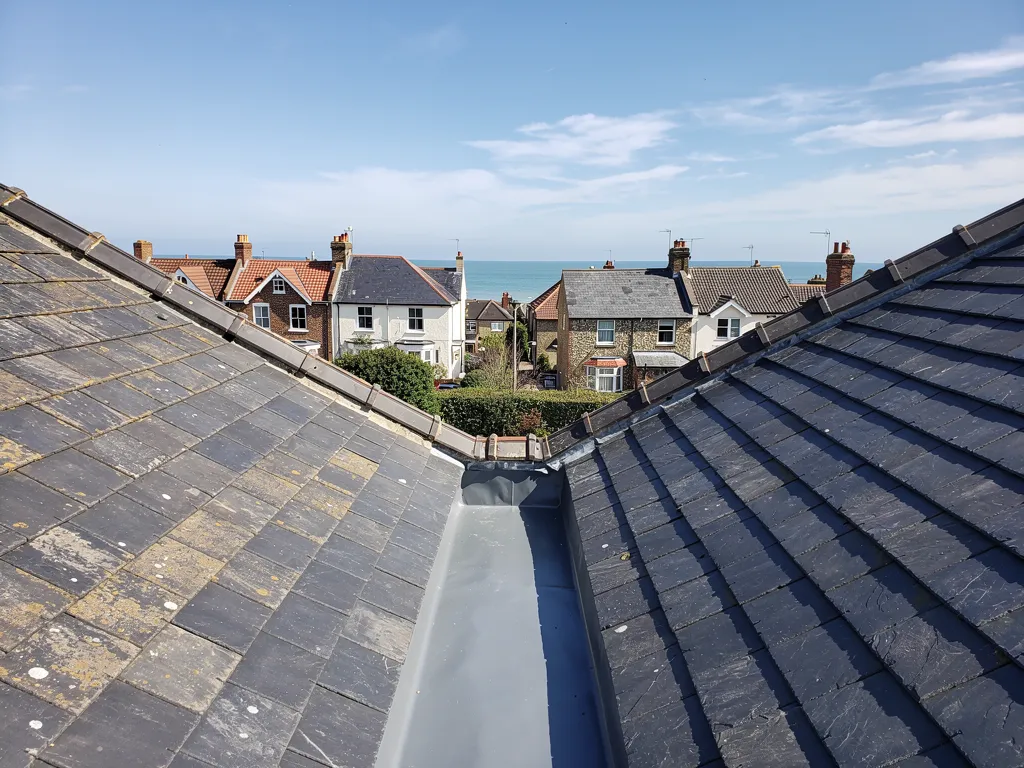
A flashing is the strip of lead, or sometimes another metal, that weathers the joint between a slope and a wall or chimney. When one has been lifted by wind, a temporary measure is to dress it back and hold it with a metal clip or a flashing tape. Tape is a stop-gap, since it relies on adhesive that fails with age and cold, and the flashing needs to be re-dressed and pointed in properly afterwards.
Sealants and bitumen products
Sealants and bitumen-based compounds are sold as instant fixes, and they have a role in a trained hand on a clean, dry surface. Smeared over a wet or dirty joint they do not bond, and they can hide the line of a fault from the person who needs to find it. They also leave a mess that a permanent repair must first remove.
It is the cause, not the symptom, that decides which patch is right. A patch over a stain, with no search for the opening, is only a guess.
How long each method lasts
No temporary measure has a fixed life. Wind exposure, the quality of the materials, the way the cover was fixed and how much the roof moves all play a part. The table gives a rough order of what to expect, and it is a guide to relative durability, not a promise.
| Method | Suits | Expectation |
|---|---|---|
| Tarpaulin | Stripped slopes, several tiles | A stop-gap of days to a few weeks, and weaker in repeated gales |
| Board and membrane | Holes, smashed windows | Firmer than a sheet, still short-term |
| Re-seated tiles | A few slipped or missing tiles | Can hold until the permanent job if properly fixed |
| Flashing tape | Lifted lead at a wall or chimney | Short-lived, as adhesive ages in cold and wet |
| Sealant or bitumen | Small gaps on clean surfaces | Unreliable, and often masks the real fault |
Reading the table
The ranking follows how each measure copes with weather and movement. A firmly fixed board stays put better than a sheet. A sound tile fixed correctly can last until the permanent repair is carried out. Tape and sealant depend on adhesion, and adhesion is the first thing to go on a coast, where damp, salt and temperature swings work against it.
If a temporary cover is going to remain for more than a short spell, it needs checking. After each gale, look from the ground for movement, slack, tears and ponding. If you notice any of them, tell the roofer rather than climbing up. A cover that was fitted well and is watched closely will last longer than the same cover left alone.
The date by which the permanent repair is done should be agreed when the cover goes on, so that it does not become a fixture.
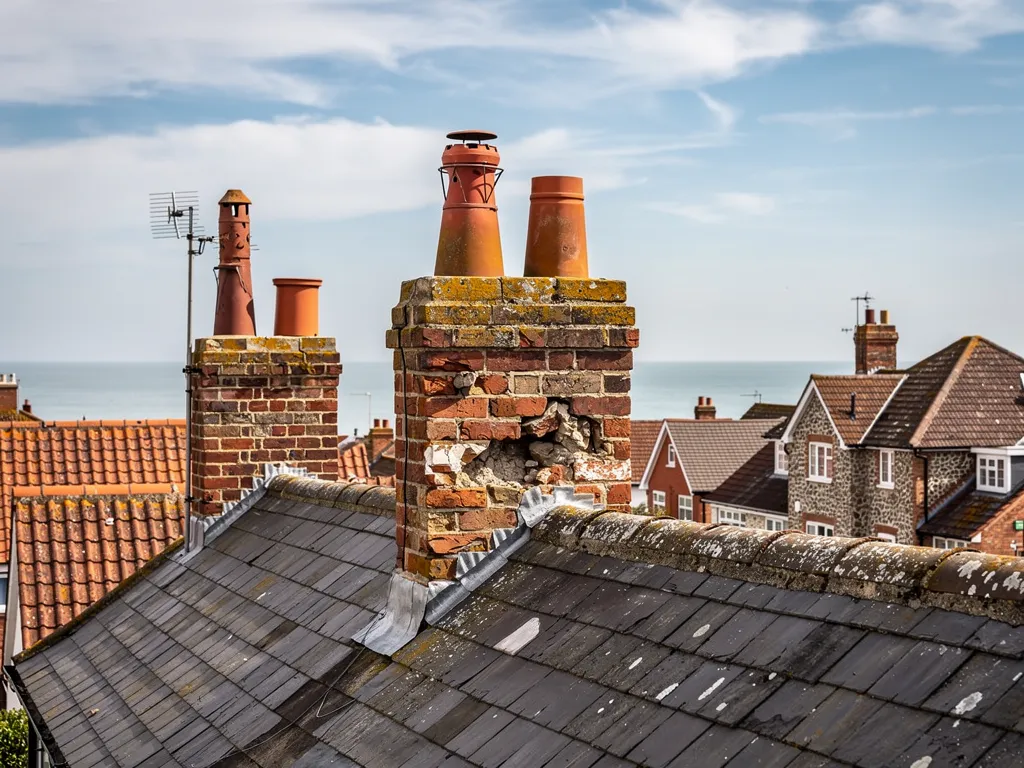
Insurance, safety and moving on to the permanent repair
If you plan to claim, speak to your insurer before arranging temporary work, but do not let a call hold up a cover that the weather demands. Photograph the damage before anything is fixed, keep the invoice for the temporary work and keep any removed materials until told otherwise. Our guide to making a storm damage insurance claim sets out the whole process.
Safety comes first. Please do not go onto a damaged roof to fit your own cover. A storm-hit roof can have loose tiles, weakened battens and wet surfaces, and a gale makes a sheet hard to control at height. A roofer has the access equipment and the experience to work safely.
When the cover should give way
The signal to move on is simple: the roof has dried, the weather has settled, and the cause has been found. At that point the roofer lifts the temporary cover, shows you the damage underneath, and puts forward the smallest permanent repair that will cure the fault. Sometimes that is only a few tiles. Sometimes it is a flashing, a valley or a section of batten and underlay, and sometimes the covering is so worn that a larger repair is the better value. We say which, and why, and the survey photographs show the evidence.
Once the survey is complete, the permanent job is priced in the written quote, and the figure depends on access, the covering, the area and what is found. For the typical ranges and what moves them, our guide to emergency roof repair costs is the next step.
If a temporary cover is on your roof now, ring the roofer who fitted it and agree the next stage before the next gale tests it.