A tree on a roof is frightening and it is also unusually clear-cut. A trunk or a heavy limb has come down, the damage is obvious, and nobody is likely to argue that it was gradual. That clarity helps in one respect, because the cause is rarely in doubt. It does not help with the practical problem, which is that a loaded roof is more fragile than it looks, and the wrong first move can make the damage worse.
The sequence that works is the same almost every time. People and services come first. The insurer hears about it next, before anything is cut or carried away. Then a tree surgeon takes the tree off, and only after that can a roofer see what is underneath, brace or cover the opening, and plan the lasting repair. Skipping a step, or doing them in the wrong order, is how a bad day turns into a ruined ceiling and a disputed claim.
This guide walks through each step in order. Some decisions belong to your insurer or to the tree's owner, and where roofing knowledge can help, we set out what to expect from a survey and a make-safe. Our emergency roof repairs page covers the wider service.
The first minutes: people, services and distance
Nothing on the roof is worth risking anyone for. Get everyone out of the rooms under the damaged part of the house, and out of the garden near the tree, until you know how it is resting. A tree that has come down is often held by a few branches or by the roof itself, and it can settle or roll without warning. Keep children and pets away from it and from the sides of the house.
Check for anything the tree has pulled with it. Overhead lines and service cables are the first concern. If a wire is down, or lying in or across the branches, treat it as live, stay well back and tell the electricity network operator. Do not try to move a branch that is touching a cable. If you smell gas, or hear hissing from a pipe, leave the property and call the emergency gas number from outside.
Inside the house
If the trunk has gone through the roof, water, plaster and debris may be coming down into the rooms below. Cut the power at the consumer unit, but only if the route there is dry, and stay out of any room where the ceiling is sagging. A ceiling can carry a surprising weight of water and debris, then give way suddenly. Close the door and leave the room alone.
If anyone is hurt, or a person is trapped, that is a matter for the emergency services and not for a roofer. Once everyone is safe, take a few photographs from a distance, from the ground only, before anything changes. Those pictures are the start of your record, and they cost nothing.
Resist the urge to start cutting. A saw in untrained hands, on a tree loaded against a building, is how people get hurt.
Ringing the insurer before anything is moved
Call your insurer early. Tell the insurer what has happened before you agree anything, then have a temporary repair done to stop the damage spreading, and keep photographs of the tree, the roof and every receipt. That order is worth following, because the policy may set out who pays for emergency work, and whether it must be done by a firm the insurer chooses.
Have a few facts to hand when you ring: the policy number, the time the tree came down, which part of the house it hit, and whether anyone was hurt. Ask what the insurer wants you to do about the tree and about covering the roof, and ask for the answer in writing, even if that means a follow-up email. Write down the name of the person you spoke to and the time of the call.
What to record before work begins
Take photographs of the tree where it lies, the roof from every safe angle, the ceiling and room below, and any damage to fences, walls, cars or outbuildings. Photograph the stump and the root plate as well, since the insurer might ask whether the tree looked healthy. If the tree has come from a neighbour's land, photograph the boundary and the point where it stood.
Keep every receipt for emergency work, including the tree surgeon's and the cost of temporary cover. What gets reimbursed depends on the policy and on the insurer. A dated record made before the evidence is cleared makes any later conversation simpler.
If you want to understand how photographs support a claim in more detail, our guide to repairing before the insurer visits explains what to keep and when.
Whose tree it was, and why the insurer will ask
One of the first questions an insurer asks is where the tree stood. If it grew in your own garden, the loss is usually dealt with under your own buildings policy. If it came from a neighbour's land, from a street tree or from a public space, the picture can differ, and who is responsible may depend on facts that nobody can settle on the day. That is a legal question, so what follows are practical pointers and not a ruling.
Photograph where the trunk and roots stood, so there is no doubt later. Note the condition of the tree if you know it, whether it was dead, diseased or recently cut, and whether anyone had raised concerns about it earlier. Do not assume it was your neighbour's fault or your own, and avoid making accusations in the first few hours. Tell your neighbour what has happened, politely and early, because they may need to tell their own insurer.
Trees with protection
Some trees are protected, by a preservation order or by standing in a conservation area, and the council can tell you whether this one was covered. Safety comes first, but ask the council before removing anything beyond what the danger demands.
Where the tree belonged to someone else, the owner's insurer may become involved, and it can take time to settle. That should not delay making your roof safe. The usual approach is for your own insurer to deal with the loss and, if it is entitled to, pursue the other party afterwards. Your job is to keep the evidence, tell the insurer the facts as you know them, and avoid signing anything that waives rights.
Tree surgeon first, roofer second
A tree on a roof should come off before anyone studies the roof. The weight can be doing two things at once: damaging the roof, and in places holding a broken structure up. Taking it off clumsily can release a cracked rafter or let a trunk roll and punch further through. For that reason the job belongs to a tree surgeon with the right equipment, and not to a roofer working around the branches.
A competent tree surgeon will usually look at how the tree is bearing before touching it. They may cut it down in sections, lowering each piece clear of the house with ropes or a crane, and starting with the parts that carry the least load. They will want access to the garden, and sometimes the road. Ask what they plan to do to protect the roof, and ask for a written price before they start.
Before the first cut
Photograph the tree where it lies before any work begins, and tell the insurer the surgeon is about to start. If the insurer wants to inspect the tree in place, it will tell you. Where the situation is not dangerous, waiting a day for an insurer's view can be sensible. Where the tree is leaning on a failing roof or blocking an exit, safety outranks that.
Once the tree is off, leave the debris on the roof for the roofer to examine, or ask the surgeon to stack what falls in one place. Broken tiles, slates and fragments of timber show how the roof failed, and they can matter later. A roofer who arrives to find the slope swept clean has less to go on.
If the tree is gone and rain is forecast, ring a roofer straight away. Our guide on when to call an emergency roofer explains how to describe the situation, so that cover can be arranged quickly.
What the roof structure needs checking afterwards
The visible damage is often only part of it. A falling tree delivers a heavy blow in a small area, and the force travels through the frame. Rafters are the angled timbers the covering is fixed to. Purlins are the horizontal beams that support the rafters between ridge and wall. The ridge board runs along the top, and the wall plate sits on top of the wall to take the load. Any of these can crack, split or move without much to see from outside.
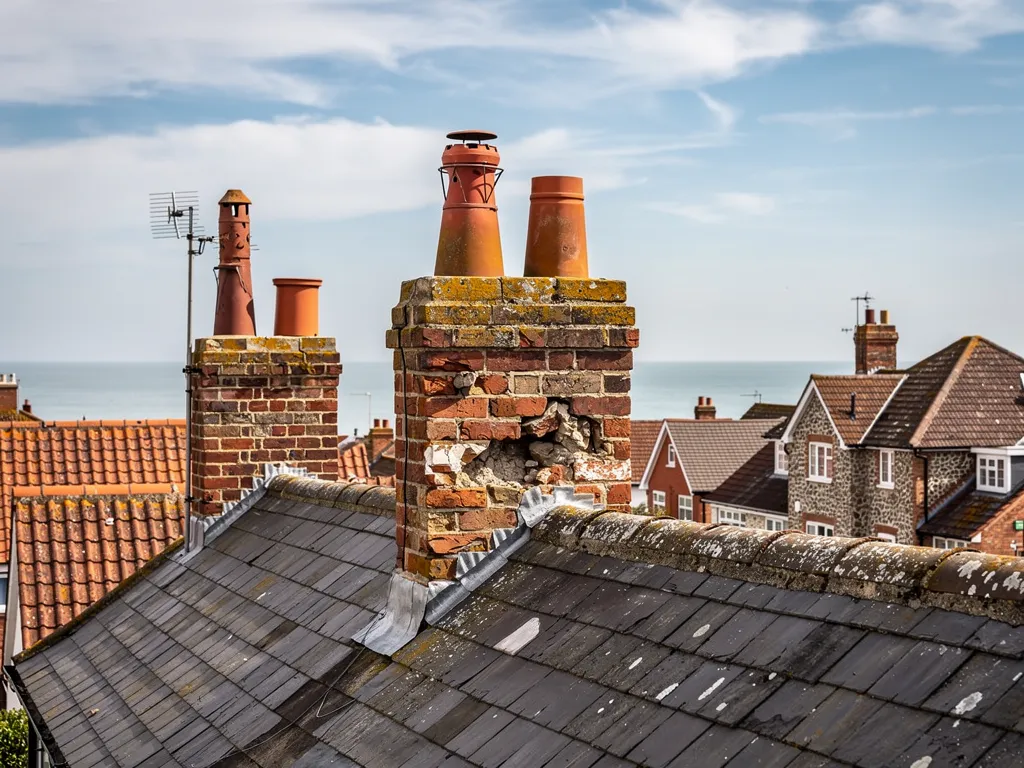
On the outside we look for a ridge line that is no longer straight, a slope that dips where it was flat, slipped courses a long way from the impact, and displaced chimney stacks. From the loft, if it is safe to enter, we look for split or snapped timbers, joints that have pulled apart, nails drawn from their holes and light showing through where the roof should be dark. Inside, a door that sticks, new cracks across a ceiling or a wall, or a window that will not close can mean the frame has shifted.
Deciding between propping, repair and a structural opinion
If the frame is only slightly damaged, the answer may be to replace a few timbers and re-cover the area. If the damage is wider, temporary props may hold the roof up until the structure is rebuilt. Where there is real doubt about the frame, the owner may be advised to ask a structural engineer for an opinion before the repair is designed.
Structural repair touches the house's frame and not only its covering. Where a job is notifiable under the Building Regulations, we explain what is needed and handle the notification. Bats are protected by law, and so are nesting birds, so if either is found in the damaged roof space, stop and take advice before disturbing them.
Making the roof safe and planning the repair
The make-safe comes first and is deliberately modest. Its purpose is to keep further rain and wind out of the house, not to rebuild the roof. A punctured roof is made safe before anything else. Typically that means securing loose material, supporting any weakened section, closing the opening with sheeting or boards, and strapping a tarpaulin over the whole area so that it cannot lift. Any cover is temporary and will not last a season, but it can protect a room until the weather allows proper work.
We photograph what we find while we are there, from outside and from the loft, because the same photographs help you explain the loss to your insurer and help us price the repair. The survey comes with a written quote after the cause and extent are clear. We recommend the least work that properly puts the roof right, and say plainly if the damage is bigger than it first looked.
What drives the repair
The cost and timing depend on how many timbers need replacing, the covering involved, the access needed and whether the damage reaches the chimney, gutters and roofline. Matching old tiles or slates can take time on an older roof. For a listed house, or one inside a conservation area, check with the council before any work beyond like-for-like repair.
Any ridge or hip tiles that are re-laid get a clip or screw in addition to their bedding, in line with BS 5534.
After the repair, it is worth walking round the garden and looking up. Trees that have dropped one limb may drop another, and our guide to preparing your roof for storm season includes checking what is growing close to the house.