Most roof faults are not emergencies. A tile that slipped on a dry afternoon, a gutter that weeps at one joint or a ceiling stain that dried out months ago can all wait for a proper survey and a repair booked in a settled week. Others cannot. Water running through a light fitting, a ridge that shifted in a gale or a branch lying across the slope needs attention before the next shower, because the damage spreads with every hour of weather.
The useful test is not how bad the roof looks from the pavement but what happens tonight if nothing is done. If the answer is more water indoors, a risk of something coming down on a person, or a risk of the structure moving further, treat it as urgent. If the answer is very little, there is time to find the cause and fix it once, properly, instead of paying for a rushed patch.
This guide sets out the clear emergencies, the grey areas in between and the faults that can wait, with what you can safely do while you phone for help and what a roofer should do when they arrive.
Water coming in right now
When water is entering the house while you watch, the roof is an emergency whatever the cause. The reason is speed. Water that gets past the covering soaks the insulation, saturates the plasterboard and runs along joists and cables, and each hour of rain widens the damage and lengthens the drying out afterwards. A drip into a bucket can be managed for a night. A steady run, a ceiling that has begun to sag or a stain that spreads while you look at it cannot.
Signs that should not wait
Treat these as urgent: water falling or running from a ceiling, a light fitting or an extractor fan; a ceiling that bulges or feels soft to the touch; water running down an internal wall; and a loft where you can hear or see a steady flow. Our page on a bulging ceiling explains how to release trapped water safely, and the one on a leak near electrics covers the case where wiring is involved. If water is anywhere near a socket, a fitting or the consumer unit, keep clear and switch the affected circuit off at the board if you can reach it dry.
Where the stain is not the opening
The wet patch you can see is almost never directly under the hole. Water runs along the underlay (the waterproof sheet under the tiles) and then down a rafter or a wall before it shows. That is why an emergency visit starts by making the house safe from further water, and the search for the true entry point comes once the weather allows. Do not wait for the stain to explain itself before you call, and do not paint over it afterwards, because the edges help the survey.
Hazards overhead and movement in the structure
Not every emergency involves a drip. Some are about weight and gravity, and they matter even when the house is bone dry inside.
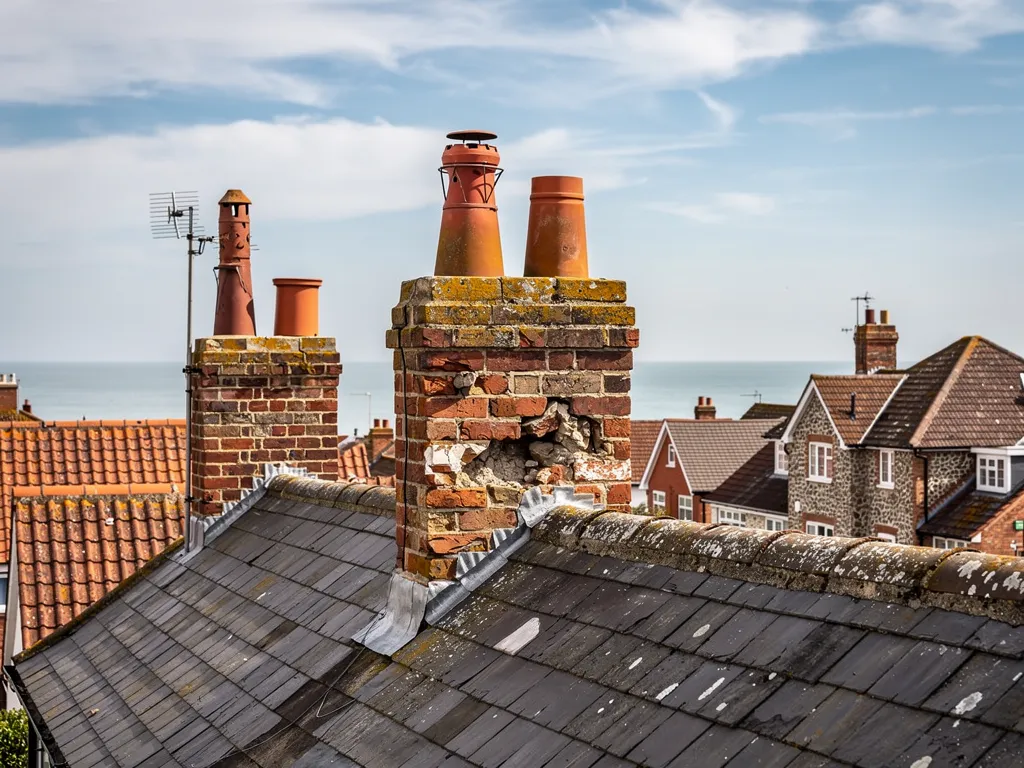
A ridge or hip that has lifted after a gale is one. Ridge tiles run along the apex and hip tiles run down the sloping corners, and when the fixings behind them fail, a whole run can slide off. Tiles or slates hanging loose above a front door, a path or a car port belong on the same list, as do chimney stacks that lean, have dropped bricks or show a fresh crack at the base. Our page on a chimney damaged in a storm covers that case in detail.
Trees, flashing and collapsed sections
A fallen tree or a heavy limb on the roof is an emergency even if the covering looks intact, because the rafters beneath may be cracked and the load can shift. Keep out of any room directly under it. Lead flashing that has peeled back in the wind exposes the joint it was protecting, so rain will find its way in at the next shower, and a gutter pulled away from the fascia can drop onto whoever walks beneath. Sagging in a roof plane, a ceiling that has dropped or a sound of cracking timber also calls for an immediate visit.
What to do before anyone arrives
Move children and pets out of the rooms beneath the damage, close the door of the affected room and cordon off any path or drive under loose material. Do not climb up to look. Photographs taken from the ground or from an upstairs window, with a phone zoomed in, give a roofer much of what they need to bring the right gear and plan the make-safe before the visit. Add a line on which elevation faced the wind.
Faults that can wait for a planned repair
Plenty of roof problems feel alarming and are not. Knowing which ones can wait saves money, because an out-of-hours call can cost more than a booked job, and it often gives a better result, because a roofer can plan the materials and the access instead of working against the clock.
These usually fall into the planned category when the loft is dry and nothing hangs loose: a single slipped or cracked tile on a dry day; a patch of moss or lichen; a gutter that overflows in heavy rain but does not enter the house; worn pointing on a ridge that is still firmly fixed; a stain that has dried and is not growing; and cosmetic damage to a fascia or soffit, the boards under the eaves, with no water behind it.
The test of a dry week
If you are unsure, use time as the test. Put a container under any drip, mark the edge of a stain in pencil, and check it after the next rain and again after a dry spell. A mark that stays the same size is an old fault. A mark that advances after every shower is an active one and should move up the list.
Why a planned repair is better
A survey that produces pictures of the fault, a written quote and a booked date in a fine week give the repair the best chance of lasting, because the roofer can fetch the right materials and set up safe access instead of working against the clock and the weather. Our storm season preparation guide describes the checks that catch small faults before an autumn gale turns them into urgent ones. The aim is to book the job while it is still small, which is almost always cheaper than waiting for it to become an emergency.
The grey areas, and how to judge them
Between the clear emergencies and the clear postponements sits a middle group, where the right call depends on the weather forecast, who lives in the house and what lies directly below the fault. A few questions settle most of them.
Four questions to ask
- Is water entering now, or could it tonight? A missing tile over a bedroom with a gale and rain forecast is more urgent than the same tile in a dry week.
- Is anyone at risk if it fails further? Loose material above an entrance, or a chimney over a bed, moves a fault up the list.
- What sits below? A roof void over an empty garage can take a drip for a night. A roof over a nursery, a fuse board or a bedroom of a vulnerable person cannot.
- Will the damage multiply? Soaked insulation and ceilings cost far more to restore than the repair would have cost.
Flat roofs and ponding
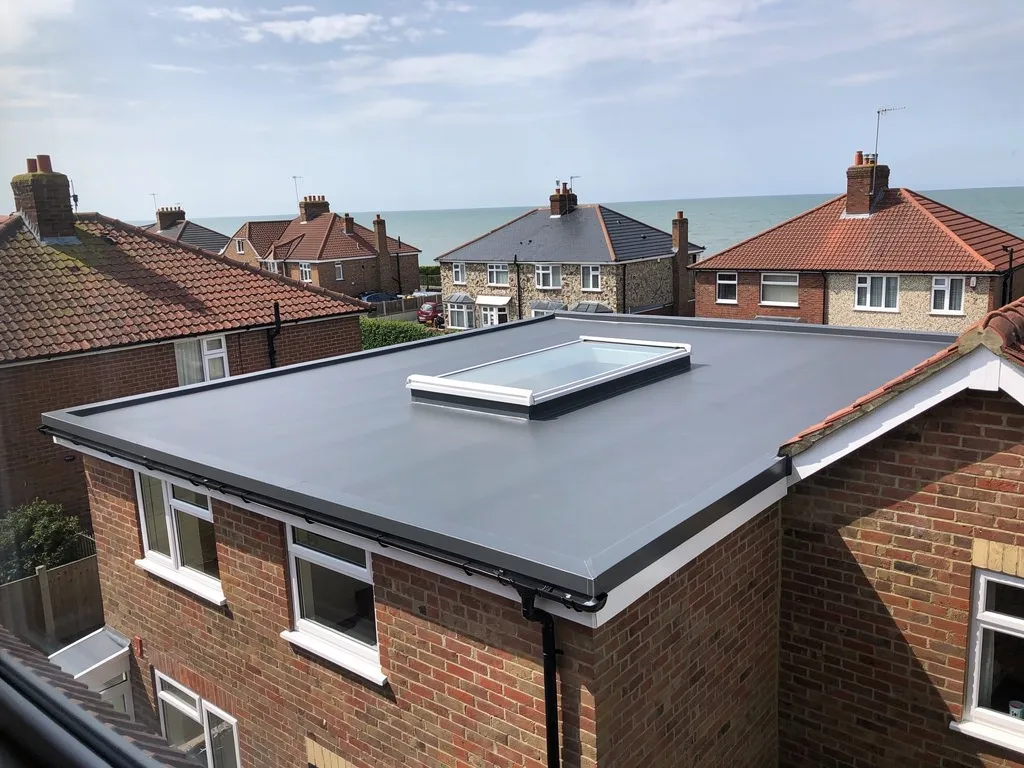
Flat roofs sit in the grey area more often than pitched ones. A small pond that drains within a day or so is a maintenance matter. Water that stays, a bubble in the membrane or a leak showing inside is urgent, because the covering is already breached. Our page on an emergency flat roof leak goes through the options.
Landlords and tenants
Where a tenant reports water coming in, treat it as active until proved otherwise, and ask for photographs and dates. A landlord who acts quickly on the make-safe stage avoids the larger bill that follows from letting water sit. Ask the tenant which rooms are affected and whether any light fittings have been wet, and keep their messages, as a record of when the problem was first reported often matters later.
What an emergency visit actually does
An emergency visit is a make-safe, not a finished repair. The aim is to stop water and hazards getting worse and to leave the roof in a state that holds until a proper fix can be done in suitable weather. Leaks and storm damage are what we deal with first, and the first priority on arrival is the opening that is letting water in.
In practice that means one or more of these: refixing or replacing slipped tiles; sheeting the opening with a tarpaulin battened to the roof rather than simply weighted; temporarily boarding a hole; clearing a blocked valley or gutter; securing loose lead; and making a fallen or unstable chimney stack safe. The make-safe method depends on the covering and the exposure. Our guides to using a roof tarpaulin and to temporary roof repairs explain what holds and what does not.
What happens afterwards
Once the immediate danger has passed, we trace the real way in, photograph what we find and send you the permanent repair in writing, given as a single total. The figure moves with the reach needed to get at the roof, the covering, the extent of the damage and anything else the inspection exposes. Once the roof is dry, the lasting repair is planned around what the inspection found, and the temporary cover comes off then. Our emergency roof repairs page describes the whole service.
Heritage buildings add a step, because works to a listed roof or one in a conservation area may need consent. If that applies to you, read emergency repairs to a listed or conservation roof before any permanent work starts.

Safety, insurers and the phone call itself
Before a roofer arrives, the single best precaution is to stay off the roof. Wet slates and tiles are slippery, falls from the eaves cause serious injuries, and a fragile surface such as a conservatory or garage roof will not take a person's weight. Everything a roofer needs can be gathered from the ground and the loft.
What to tell us on the phone
Give the address and the type of roof if you know it, what you can see inside, where the water is coming in, whether it is still raining and whether anyone in the house is elderly or unwell. Send photographs of the ceiling, the loft and the outside by WhatsApp, because they help us bring the right materials and access equipment. You can reach us on 01903 299063.
Telling your insurer
If you might claim, ring your insurer early, before you agree to anything beyond a make-safe. Insurance industry advice published for Storm Eunice in 2022 urged owners to get in touch promptly and to have temporary repairs done to limit further damage, while checking with the insurer beforehand. Keep every receipt and photograph the damage before anything is moved or thrown out, and ask for the make-safe to be described on paper. If a claim is turned down later, our page on a rejected roof claim explains the next steps.
When the leak has stopped
A wet house is the second half of the emergency. Read our guide to drying out after a roof leak to deal with ceilings, insulation and electrics while the roof is being fixed.