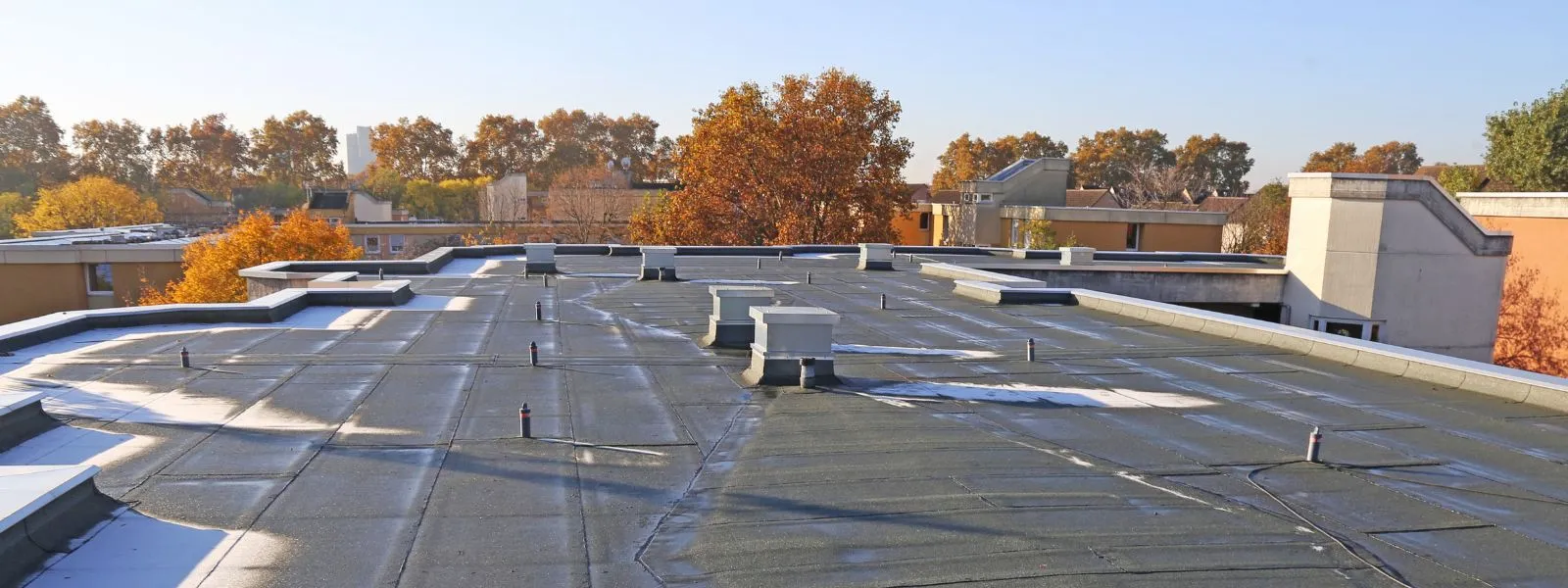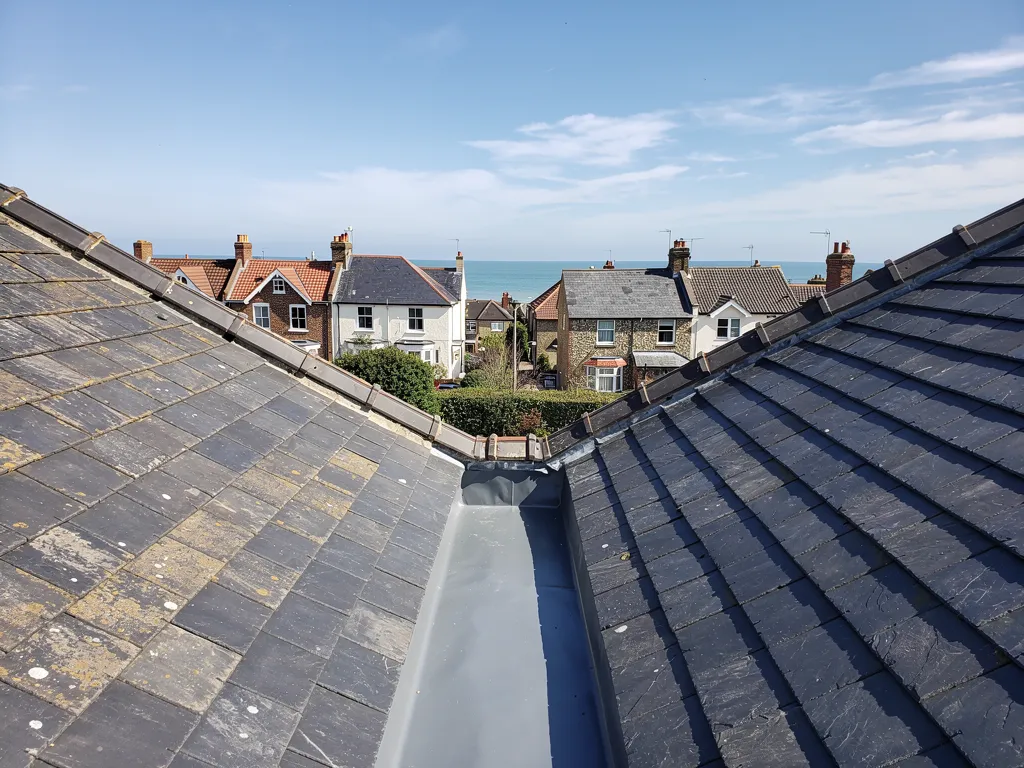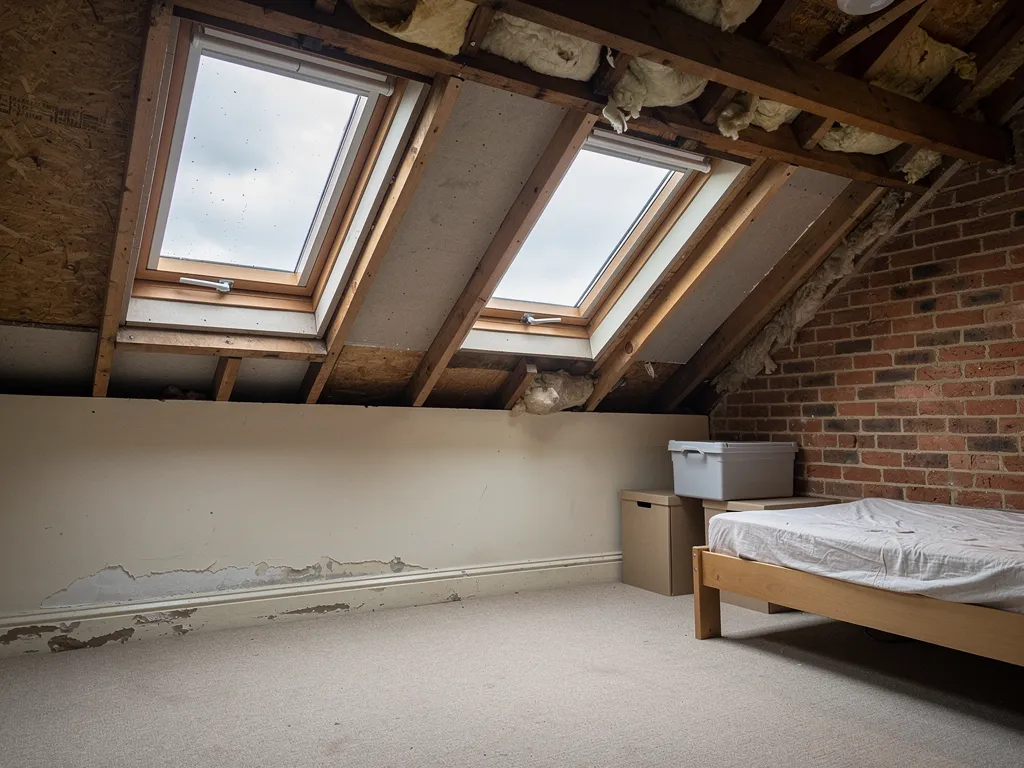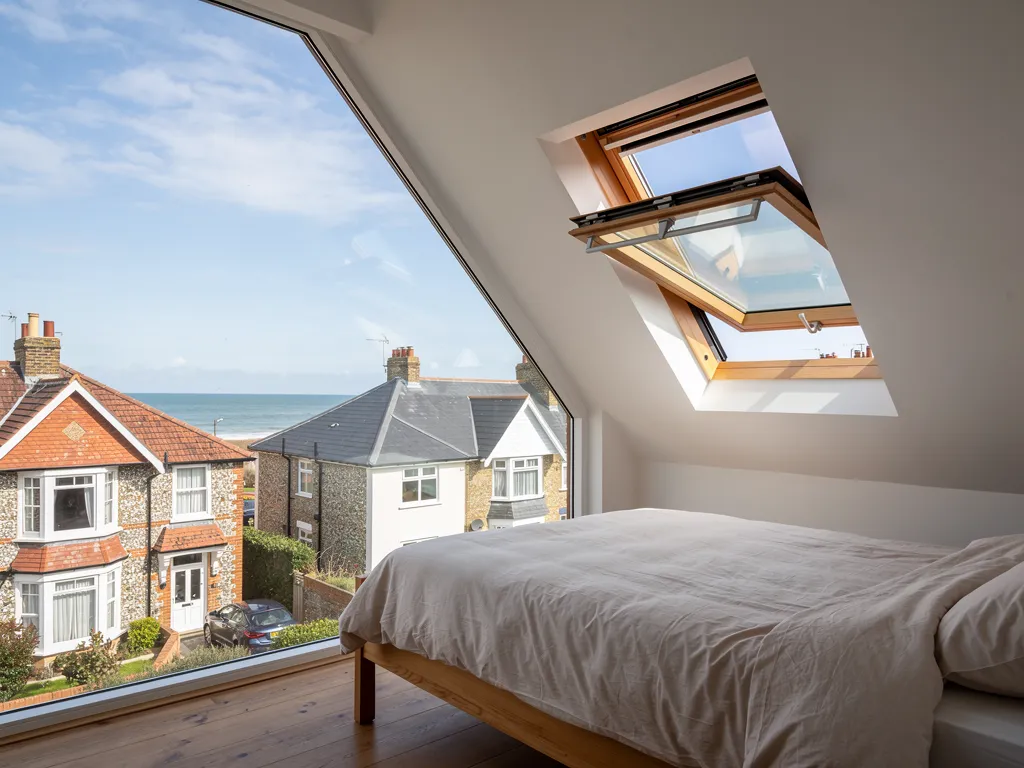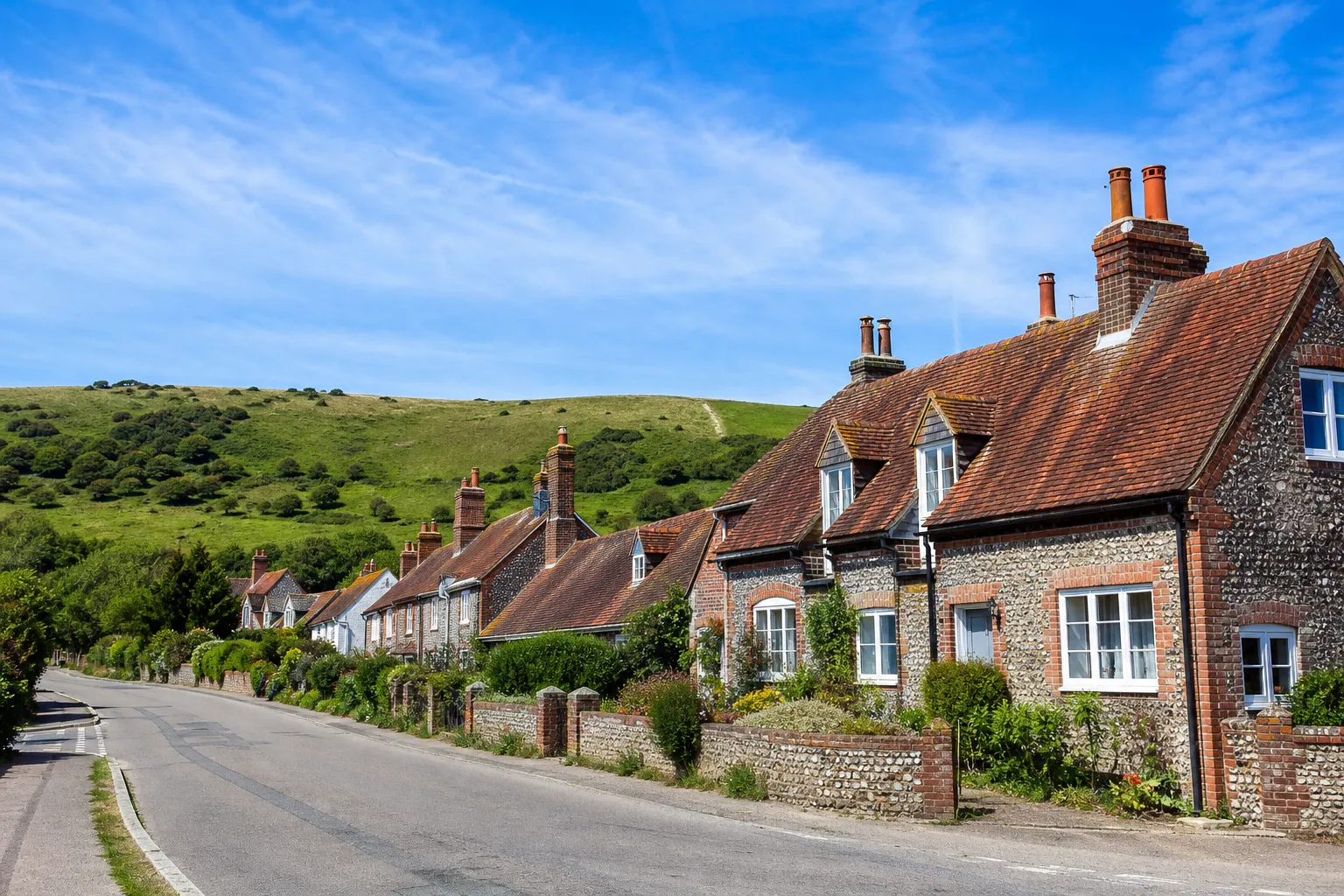
Walk along a row of garages, or look down on the back of a 1960s terrace, and much of what you see is built up felt. It is the traditional flat roof covering in Britain: sheets of bitumen reinforced with a fabric or polyester core, rolled out and heated so the underside melts into the layer below. The result is a membrane with no gaps between the sheets, which is why it has lasted as a type for so long.
It is also a covering where the method matters more than the material. Two roofs made from the same rolls of felt can behave very differently. One has a sound deck, a carefully lapped cap sheet and neat edge details. The other has thin heating, rushed upstands and a deck that holds water. That gap is why published lifespans for felt are so far apart, and why we explain both ends of the range below.
This guide walks through the layers, the way the sheets are fused, what a realistic lifespan looks like, and what responsible use of a naked flame involves. It also covers when repair makes sense and when a fresh covering is the better job, so you can read a quote with confidence.
What torch-on felt actually is
Felt is a poor name for a modern product. The old roofing felt was a paper-like sheet soaked in bitumen, a black petroleum residue that sheds water. Today's sheets still use bitumen, but it is modified with polymers so it stays flexible in cold weather and resists softening in summer, and it is carried on a reinforcing layer of polyester or glass fibre that stops it tearing when the building moves.
Torch-on is the name for the way those sheets are fixed. The roofer unrolls the sheet, then heats the underside and the surface beneath with a gas torch until the bitumen turns glossy and starts to flow. Pressed down at that moment, it fuses with the layer below. Once cool, the two are one piece. Other flat roof coverings work differently: EPDM, a synthetic rubber, comes as a single sheet glued down, and GRP, glass-reinforced plastic, is laid wet and cures hard. Our guide to fibreglass roofing sets that one out.
Why it stays popular
Felt is familiar to most roofers, copes with awkward shapes such as bay roofs and extensions with several upstands, and can be repaired in sections. It is also usually the lowest-priced of the common coverings, a point we come back to under cost. MyBuilder (updated 21/08/2026) gives a typical UK range of £70 to £100 per m² for felt on a flat roof, against £90 to £130 for EPDM and £95 to £150 for GRP.
What felt is not is maintenance-free. It is a layered, fused covering that ages in the sun, so it is worth understanding how it is built before you judge a quote.
The layers, from deck to cap sheet
A felt roof is a stack of layers, and every layer has a job. At the bottom is the deck, usually timber boards or sheet material fixed across the joists. It must be dry, firm and laid to a fall, because a felt roof cannot make up for a deck that dips. Our page on warm, cold and inverted flat roofs explains where the insulation sits in relation to that deck, and that choice decides the layers beneath the felt.
On a warm roof, a vapour control layer goes first. It is a sheet that blocks moist air from the rooms below reaching the cold side of the insulation. Rigid insulation boards follow. A cold roof reverses that: the insulation lies in the depth of the joists under the deck, and the felt goes straight onto the boards.
The felt itself
Above the deck and insulation come the felt sheets. A base layer, often secured with nails or a heated edge, is overlaid with a cap sheet, the top layer that takes the weather. The cap sheet often carries a mineral finish, small chips of slate or similar stone pressed into the surface, which shields the bitumen from sunlight and gives it a more even, grainy look. Without that protection the bitumen ages faster.
Details do as much work as the flat areas. At a wall abutment the felt is turned up as an upstand and sealed beneath a flashing. Edges finish at a drip trim or a gutter. Every outlet, vent and pipe needs its own treatment. Many faults on a felt roof begin at one of these details, not out in the middle of the sheet.

How the sheets are fused and lapped
A felt roof is only as sound as its joints, so the laps decide the outcome. Each cap sheet overlaps the one beside it by a set margin, and the roofer heats the lap so a small bead of bitumen squeezes out along the edge. That bead is a useful check: a continuous bright line along a seam shows the bitumen has flowed. A dull or patchy seam suggests the heating was rushed.
The base layer and the cap sheet are laid so their joints do not line up. Staggering them means that a single flaw in one layer meets solid felt in the next. Where a flat roof is large, sheets also run in the direction of the fall, so water flows over a lap, not against it.
Falls and drainage
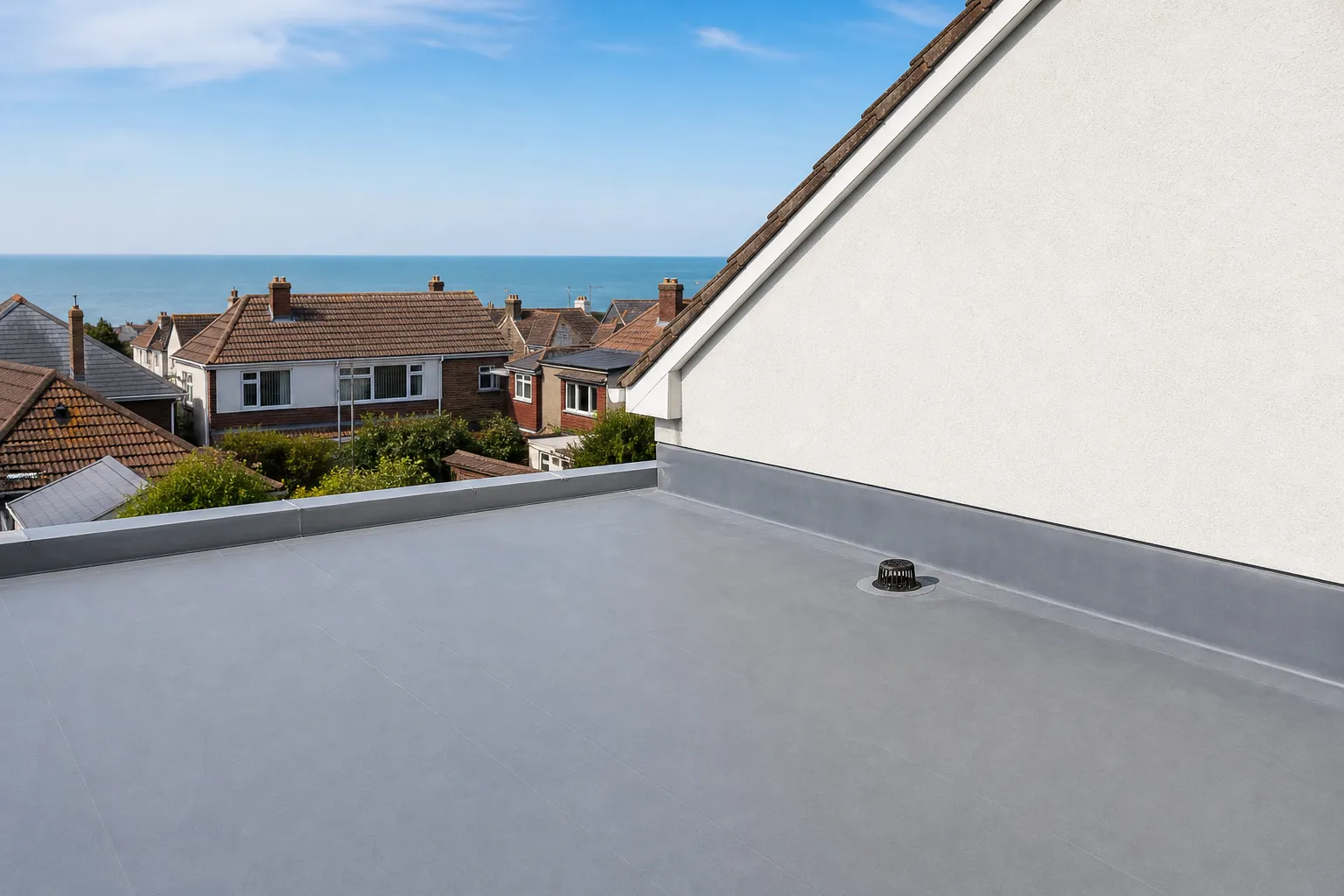
Water that stands on a felt roof speeds up its ageing. IKO, citing the 2018 edition of BS 6229 (since revised), sets a 1:80 minimum for a finished flat roof. The design target is steeper at 1:40, which leaves room for building tolerances and sagging while still delivering 1:80 once built. Even with a correct fall, shallow puddles can form around outlets and in the middle of long spans. A pond that is still there two days after rain is worth a look, and a routine look after heavy rain is enough to catch it.
The edges matter in a coastal gale, because a gale gets under the perimeter of a flat roof before anywhere else. We check how the edge trims are fixed and whether the felt is stuck properly to the deck at the corners, since that is where a loose roof starts to peel.
How long does torch-on felt last?
This is a question where published answers disagree, so the honest reply is a range with a reason attached. Less (last updated March 2026) puts torch-on felt at 10 to 20 years, and adds that a good felt job can last 20 years with a poor one failing in under 10. The CORC figure is more optimistic: torch-on felt, if well maintained, can last 30 years or more. MyBuilder (updated 21/08/2026) says flat roofs in general typically last 15 to 30 years.
These are typical ranges, not promises. No one can guarantee a lifespan, and a manufacturer warranty tells you little about the service life a roof will give. What the range tells you is that the starting build and the later upkeep matter at least as much as the product.
What shortens a felt roof
Standing water is the usual culprit, followed by a deck that moves and splits the felt. Foot traffic on a mineral-finished roof wears the chips away. Blocked outlets, overhanging branches and moss hold moisture against the surface. Sunlight dries out the bitumen over time, which is why a cap sheet with its mineral finish intact lasts longer than one worn smooth.
What helps it last
A dry, sound deck, a correct fall, neat details and an occasional look at the surface. If you have a felt roof of unknown age, the best step is a survey: we check the laps, upstands, outlets and surface, then send you photographs of your own roof. After that you get one written price for the felt work.
Fire care when felt is laid with a flame
The flame is the one feature of torch-on work that deserves a direct conversation. A gas torch heats the felt to a point where the bitumen flows, and the heat spreads to whatever is nearby. Timber decks, fascias, wall plates, roof edges and any insulation behind a flashing can all be exposed, and a smouldering spot may not show until the roofer has left.
That is why the preparation counts as much as the application. Before the flame is lit, the area should be clear of loose materials and debris, and the places where felt meets timber or insulation need thought about how heat will reach them. The route to the roof, and the way out of it, should stay clear while the flame is in use.
Questions worth asking
It is reasonable to ask your roofer how the flame will be controlled near timber details and the roof edge, what the roofer will check once the last sheet is down, and who will keep an eye on the roof after the torch is put away. A careful contractor will answer plainly and without fuss.
There are also ways to avoid open flame where that suits the building. Self-adhesive and cold-applied felts, EPDM and GRP all go down without a torch. Which is right depends on the existing roof, the details and your budget, and we explain the trade-offs after the survey instead of defaulting to one product.
Where a roof sits above a loft or a timber-framed extension, we pay particular attention to how heat will travel through the details. If you are unsure about the method being proposed for your own roof, ask the question before work starts.
Repair, overlay or re-felt, and what moves the price
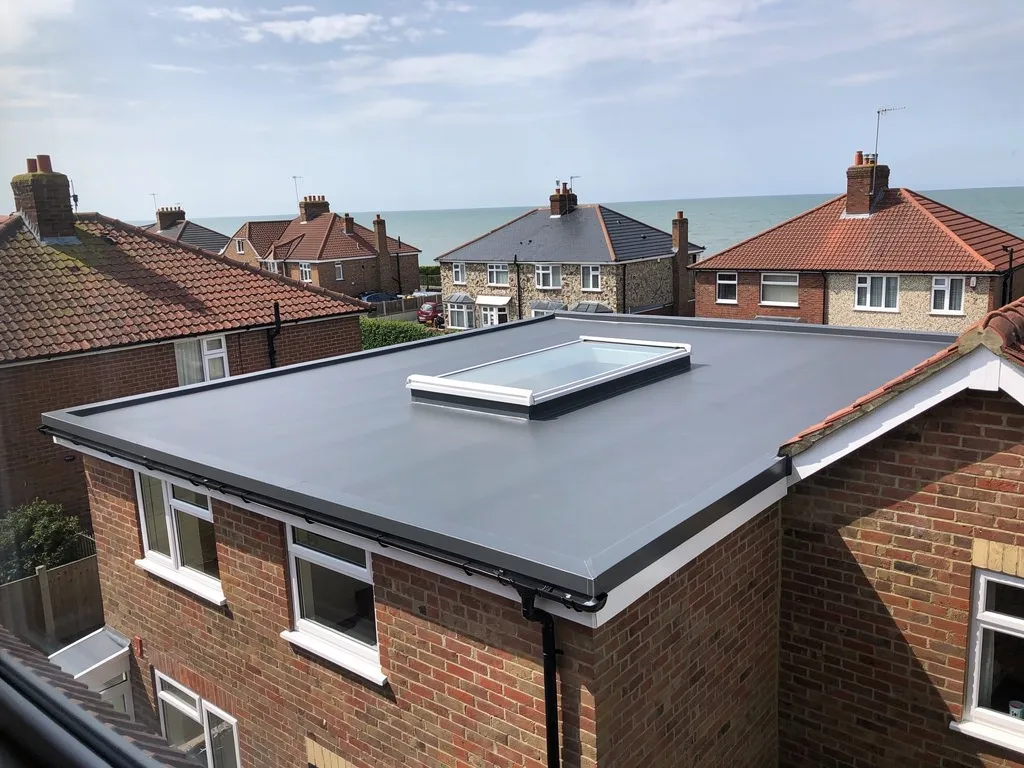
A felt roof does not have to be replaced the first time it leaks. A split along a lap, a lifted upstand or a failed seal around a pipe can often be cut out and patched, provided the felt around the fault is sound and the deck beneath is dry. Repairs stop making sense when blisters, splits or ponding are spread across the whole surface, or when the deck has gone soft. If you are weighing the alternatives, our flat roofing page compares the coverings we fit.
A full re-cover removes the old layers, checks the deck and starts again. Sometimes a new felt system can go over the old one, but extra layers add weight and can trap moisture, so we look at what is underneath before agreeing it.
Cost and Building Regulations
Typical UK flat roof prices are on a per m² basis. MyBuilder (updated 21/08/2026) gives felt at £70 to £100 per m². Access, the shape of the roof, the number of details, disposal of the old covering and whether scaffolding is needed all change the total, so read each quote for VAT and scaffolding, since either can sit outside the figure.
Re-covering a felt deck is renovation of a thermal element in the wording of Approved Document L (paragraph 11.2), so better insulation may be needed alongside it. That also affects the depth of the roof build-up, so raise it early. We explain that in our guide to Building Regulations for a flat roof. Where work is notifiable, we set out the consent position and deal with the notification, and the old felt goes off site with us, leaving nothing behind.