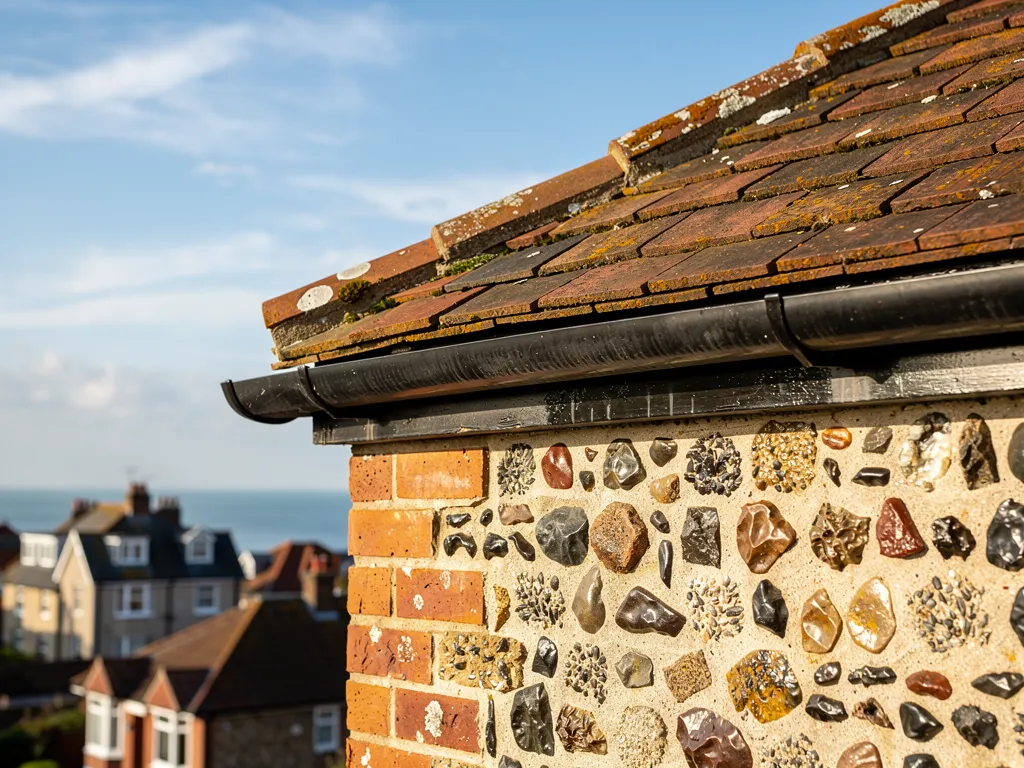
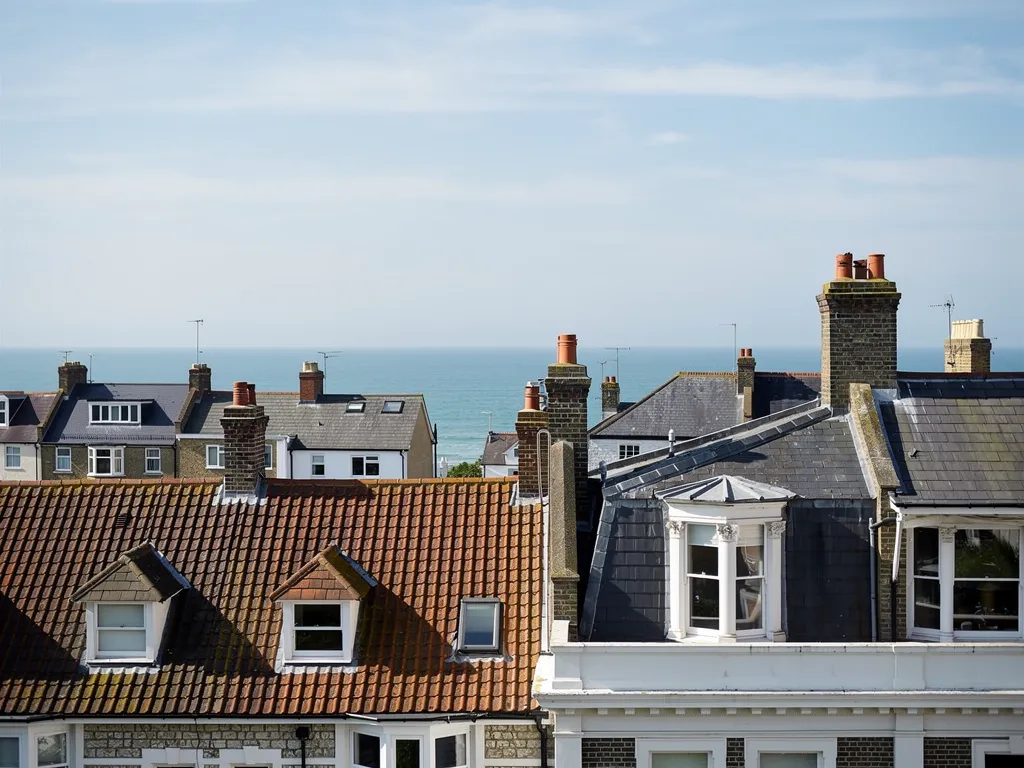
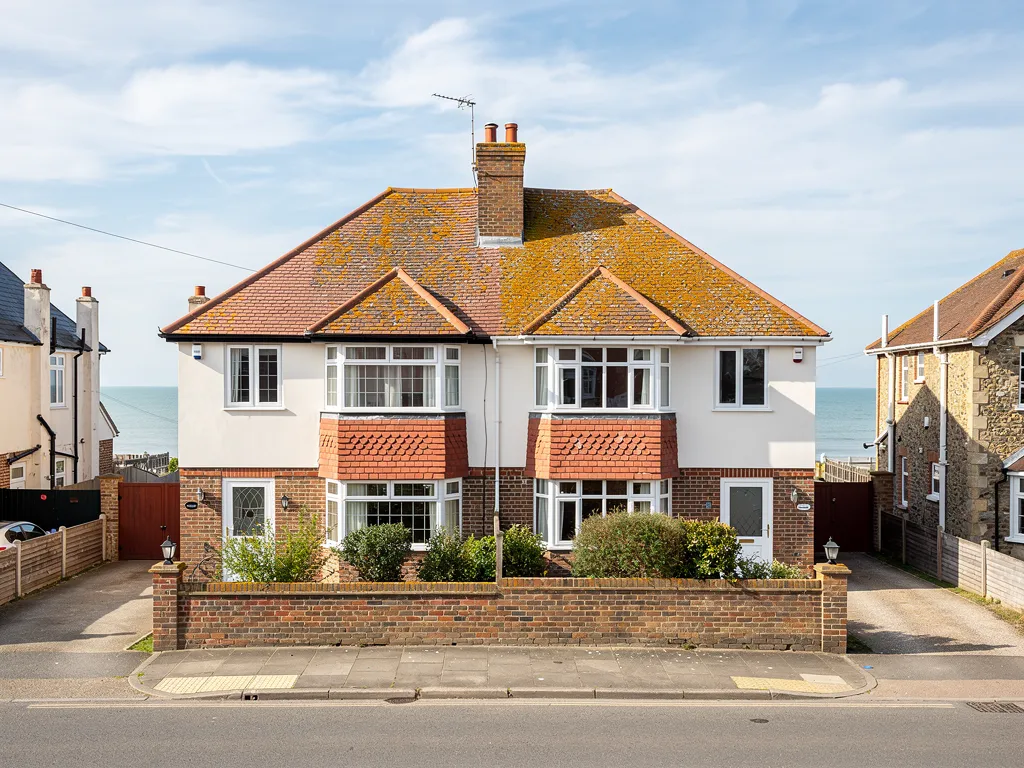
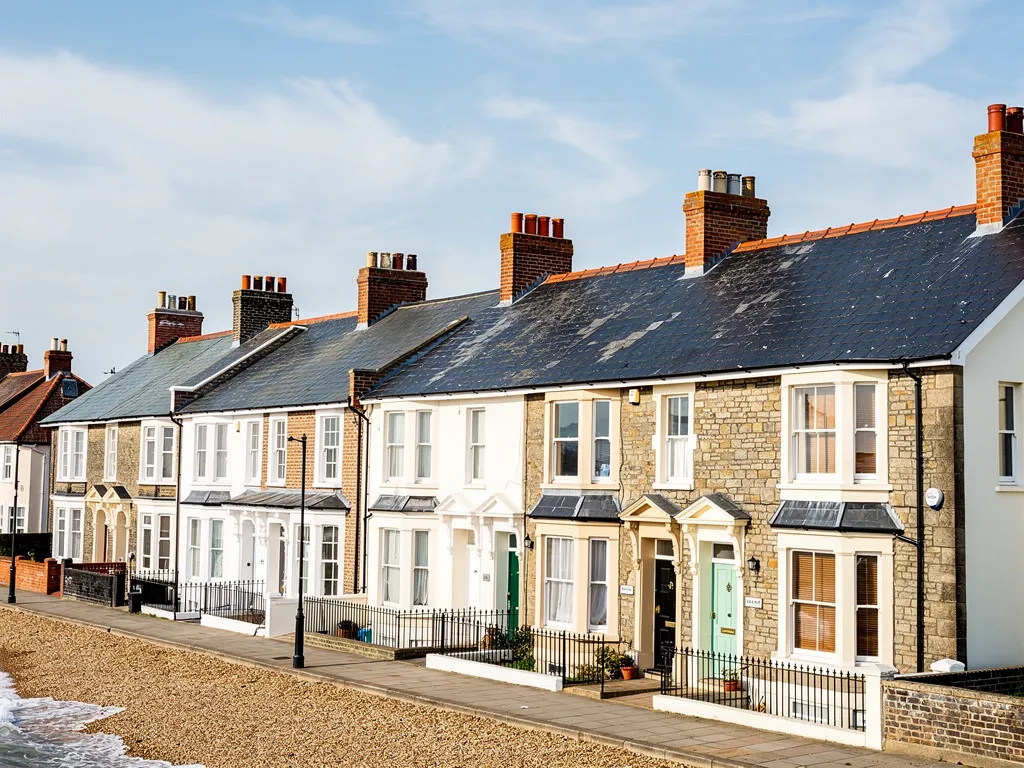
Sooner or later, most Horsham stone roofs need slabs they no longer have. A few have cracked, some have slid out of line, and a section of the roof was perhaps patched with something else decades ago. The natural wish is to buy more of the same, but new supply has been a problem for years, and nothing sold as a lookalike behaves the same way on a roof.
That leaves a short list. At the top is the roof's own stone, sorted and relaid. Next comes newly cut Horsham stone, if any can be sourced, then reclaimed stone with a clean history, and last the clay tiles that many owners end up using. Each step down costs the building something, in appearance, in authenticity or in the consents it needs.
This guide takes the options in that order, so you can see where your roof sits. For the wider picture of the material we work with, our Horsham stone roofing page is the place to start, and our guide to church stone roofs covers a different set of approvals.
What the preservation societies reported on supply
In 2019 a charity that campaigns for old buildings described a crisis of supply for Horsham stone roofing slabs. The thin slabs used for roofs tend to come from the top of the quarry, and that layer had been worked out at the source then in use. The society also said that no geologically appropriate substitute exists. Horsham District Council was reported to be working with Historic England on the problem.
Those are 2019 reports, and we have not seen a current statement on quarry supply, so treat them as the background to the problem rather than a picture of today. What they explain is why owners were already using two fallbacks. Many, the reports said, turned to clay tiles. Others used reclaimed stone slates, which in practice often meant stone taken from other historic structures.
What no substitute means in practice
Geologically appropriate means the same kind of rock, with the same colour, grain and way of weathering. A different stone can look right when first laid and then age in a way that sets it apart within a few winters. A sandstone and a limestone also behave differently in frost and in rain, and the Stone Roofing Association advises against ever putting limestone slates on the same roof as sandstone ones.
So when someone offers a stone that looks close, ask what the rock is and where it came from. If the answer is vague, the slabs are not a safe match for a Horsham roof, whatever they look like in a sample.
First choice: the stone already on your roof
The Stone Roofing Association is clear about the order of things. Its Horsham roof guide puts one rule above the others: use the roof's own slates again wherever you possibly can. It is the one source that matches exactly, and it keeps the roof's character intact.
Reuse works because a stone roof usually has more good slabs than it looks as if it does. Strip the roof and sort the slabs by size and condition, and many that seemed tired turn out to be sound. Some are cracked across and have to go, but others have simply slid, or lost their fixing, and can go straight back. A skilled team also fills gaps by moving slabs about: a large slab that has cracked can be cut down and used in a higher course, where the pieces are smaller.
The laying pattern helps here. Stone roofs use diminishing courses, with the biggest slabs at the eaves, the bottom edge, and the smallest near the ridge. A broken slab lower down can be replaced by a sound slab from further up, if the supply at the top is more generous than it needs to be. We describe the method in our guide to relaying a stone slate roof.
Where reuse runs short
A roof with a long history of patching may not have enough sound slabs left to cover itself. At that point the shortfall has to come from somewhere. On the same page, the guide asks that any gap be filled with new Horsham slabs of the right kind when available, which ranks new stone ahead of reclaimed.
Reclaimed stone and the question of where it came from
Reclaimed stone is what many owners reach for when new slabs cannot be found. It deserves caution. The Stone Roofing Association advises steering clear of slates stripped from other buildings wherever you can, since a market for them rewards the breaking up of historic roofs. If you cannot avoid them, it asks that the seller's source is verified so the stone is known to be legitimately obtained.
The reports from 2019 say much the same from another angle: reclaimed stone is common in practice because supply is short, and it often comes from other historic structures. Both statements are true, and they pull in opposite directions. The practical conclusion is that reclaimed stone is a fallback with a paper trail, never a first resort.
Questions to ask a supplier
Where did the slabs come from? Was the building they came from derelict, or was a sound roof stripped for profit? Is there any record, such as a receipt from a demolition contractor or a written note from the previous owner? What kind of rock are they, and are they sandstone like Horsham stone itself?
If a supplier cannot answer, that tells you something. A legitimate yard will usually say where its stock came from, even if only in general terms. Those questions are enough to start with, and we will go through any offer with you before the stone is bought.
Reclaimed stone also arrives in mixed sizes and conditions. Part of the cost of reclaimed material is the time spent grading it, and we allow for that when we survey.
Clay tiles, the substitute owners most often reach for
The 2019 reports say owners usually use clay tiles when stone cannot be had. That matches what the village appraisals show: Steyning lists clay peg tiles beside Horsham slabs on older buildings, Henfield describes peg tile as the usual covering, and Storrington mentions many local clay types. Clay is a traditional covering in these villages, and that is its great advantage as a substitute. It belongs to the same setting.
It is still a change. A peg tile is small, even in size and regular in pattern, and it makes the roof look different from the irregular, heavy look of stone. The roof's slope, its timbers and its details were all designed around stone, and a different covering behaves differently under them. We check the structure before anyone fits a new covering, and if the new material is heavier than the old, the Planning Portal sets the line for Building Regulations approval at a covering that is 15 per cent or more heavier.
Consent for a change of covering
On a listed building, replacing stone with clay is an alteration that affects the building's character, and the Stone Roofing Association says changes to listed Horsham roofs need listed building consent from the local authority. Without listing, a conservation area or Article 4 direction can still bring planning into it. Ask the council's planners first.
If clay is the decision, a part-clay, part-stone roof is also possible, with stone kept on the street-facing slopes and clay used on a rear slope. Whether that is acceptable depends on the building and on the consent officer, so raise it early.

Mixing coverings and using shadow slates
Even with the best sorting, a stone roof can end up one or two courses short. Traditional repairers handled this with shadow slates, which the Horsham conservation area appraisal notices on roofs repaired in both lapping systems at once. A shadow slate is a small strip of Welsh slate set in mortar under a joint, doing the weathering that stone alone cannot.
Single lap is a system found only on Horsham stone roofs, and there the joints between slabs are covered by these slate shadows. Used with judgement, they are the accepted way to bridge a shortfall without introducing a different stone. Used carelessly, they spread across the whole roof and turn it into a patchwork.
Double lap and single lap
In the double lap system, each slab overlaps the one below by a decent margin, as with most tiles and slates. Single lapping is the Horsham variant, with slabs butted side by side and slate shadows doing the weathering underneath. The Stone Roofing Association prefers double lap to be kept or put back where practical, and notes that converting from single lap needs the roof's loading and stability to be reviewed, plus building control approval and, for a church, a faculty.
The same advice applies to listed buildings: changes need listed building consent. In other words, the roof's current method of laying is itself part of what is protected, and a switch from one method to another is a significant decision. We never change the lap without telling you what it means for the timbers and for consent.
Deciding between the options for your roof
The right answer turns on how much of the roof has failed and what protection covers the building. A few slipped slabs call for sorting and relaying. A roof with real losses might call for a mix of reuse, a small amount of new or reclaimed stone and shadow slates. A roof that has already lost most of its stone and been covered in other materials might sensibly continue in clay.
Our survey starts in the loft, where the timbers and the underside of the stone show how the roof has been mended in the past. We then look at the outside, photograph every fault on your own roof, and follow the water to its source. You receive the photographs with a written quote as one total price. The price is driven by access, the amount of usable stone, the condition of the timbers, which covering is chosen and how big the roof is.
Check the timbers before the covering
Sagging rafters and battens change the plan, because a covering cannot hold its line on timbers that have moved. Our guide to sagging stone roof timbers explains what to look for, and we deal with any structural fault before a single slab is relaid.
Some owners worry that a survey will simply recommend a full re-cover. It need not. If a section of ridge, a hip or a gable verge is the only trouble, we tell you that, and the quote covers only that work. We would rather tell you that the roof can keep its own stone than sell you a covering you do not need. Photographs of the existing slabs and of the proposed covering go with the quote, so the two can be compared directly. When we leave, nothing is left behind on your drive.