
Question answered
Stone roofs in the South Downs National Park
The short answer
For a stone roof inside the South Downs National Park, planning questions go to the South Downs National Park Authority, even where the address sits in the Adur and Worthing, Arun, Horsham or Lewes council area. Park status alone does not block like-for-like re-roofing, but listed buildings still need listed building consent for work that changes their character.
If your stone slate roof stands inside the National Park, planning questions go to a different body. Knowing who decides, and what Park status does and does not change, saves delay.
Which body decides
Decisions for the Park are taken by the Authority's own Planning Committee. For addresses in what it calls the recovered areas, among them Horsham, Arun, Lewes, Mid-Sussex, Wealden, Brighton and Hove and Adur and Worthing, it says planning and enforcement matters are its responsibility, not the district's.
An owner of a stone roof near Steyning or up on the Downs may therefore pay council tax to Horsham yet deal with the Park for planning. The two are easily confused, and a call to the wrong office wastes a week or more while the right one waits to hear from you.
Within Worthing itself, the councils record that Castle Goring and Highdown conservation areas sit under the Park Authority for planning purposes. Check your address on the Park's own map, or ask them directly. What Horsham stone is gives the background to the roofs you are likely to meet there, and Horsham stone roofing covers our work on them.
What the Park adds, and what it leaves alone
A National Park counts as article 2(3) land under the General Permitted Development Order. In practice that means roof additions such as dormers are not permitted development there. Roof windows can remain permitted development with conditions, and the detail sits in our skylight planning pages and not here.
Straight like-for-like re-roofing is untouched by Park status. Building Regulations are untouched as well, and the Park Authority does not stand in for building control, so check with your building control body on that side.
The point for a stone roof is simple. Put back the same material in the same manner and the Park raises no hurdle of its own. Change the covering, the pitch or the character, and you ask the Authority first, whether or not the building is listed.
Do not confuse a conservation area with the Park either. A conservation area inside the Park is a further layer, and in parts of Adur and Worthing an Article 4 direction takes away certain rights, so confirm what applies to your street before assuming the Park is the only rule that matters.
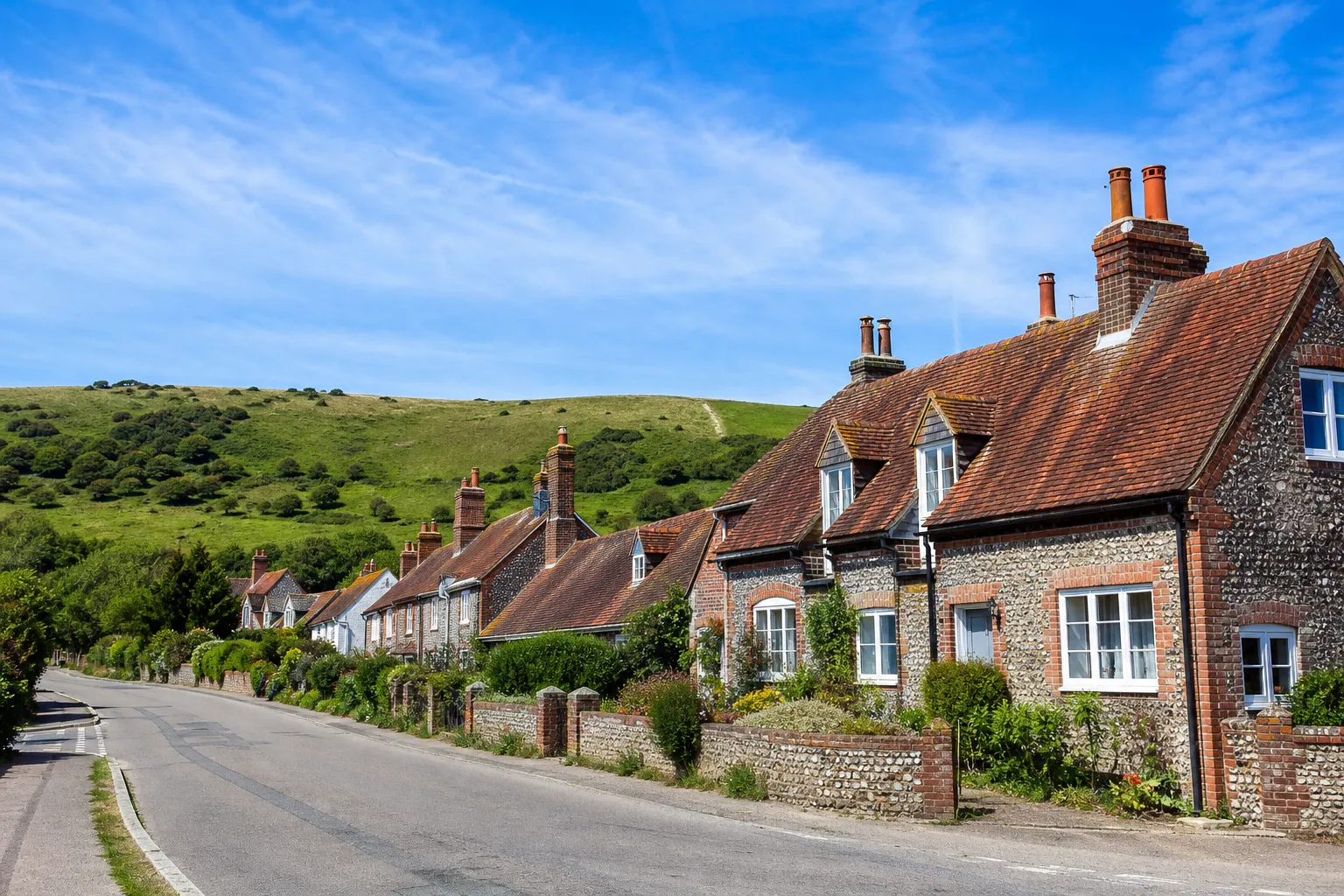
Listed houses, barns and churches
Many stone slate roofs belong to listed buildings. The Authority separates two cases. Routine maintenance, and minor repairs in matching form carried out on the spot, need no listed building consent. Repairs that become alterations, or replace historic features wholesale and so alter how the building reads, do need it.
That draws the line neatly. Resetting a few slipped slabs is maintenance. Stripping the roof and covering it in another material is not. Time does not rescue an unauthorised change either: the Authority states that unauthorised listed building works can be enforced against however old they are. Anything done without consent in the past can still come back to the current owner.
Churches in use for worship in certain denominations sit under their own exemption; church stone roofs sets out which. Everyone else, including a church that has closed, comes under ordinary consent.
Method, mortar and records
Park planners and district conservation teams care how stone goes back. Horsham District Council's Steyning appraisal singles out mortared joints on relaid slab roofs as inappropriate, and it records that the village still has a great many slab roofs. That tells you what an officer is likely to look for.
Methods such as lime torching under the slates need to suit the roof; torching under stone slates explains the idea. Where stone is short, the source of any extra slates matters, covered in checking the provenance of reclaimed stone slates.
Photographs of the existing roof strengthen a case. Pictures of the courses, ridge, valleys and any past repairs show an officer exactly what is there before you propose a single change, and they are the first thing we take on survey.
Preparing your enquiry
Before work, gather the address, whether the building is listed, a few clear photographs and a description of what you want done. Say whether you mean to reuse your own stone, top up with new slates or change the covering.
Then contact the right body. For an address in the Park, that is the Authority, which publishes a general planning enquiries page for exactly this purpose. For one outside it, it is the district or borough council. For Adur and Worthing, a single development management team, working from Worthing's town hall, serves both councils, yet each is still a planning authority in its own right, with its own conservation areas and directions.
We help by surveying, photographing and writing up the repair needed, with the written quote giving a single total. For the Building Regulations side, see Building Regulations when changing a stone roof. The Authority's own listed buildings guidance is also worth a read before you ring.
Park roofs: two more questions
Does the National Park stop me repairing my stone roof?
No. Like-for-like repair and re-roofing are unchanged by Park status. The extra care is for listed buildings and for any change of covering, pitch or character, where you should ask the South Downs National Park Authority first.
Will the Park Authority deal with my Building Regulations application?
Planning and building control are separate matters. The Authority handles planning. For building control, speak to your building control body, which is either the council's team or a registered building control approver.
Tell us about your roof
Describe what is happening and we will call you back to arrange a visit.
- Photographs of what we find
- A written quote with one total price
- Or call 01903 299063
10-year workmanship guarantee, in writing.