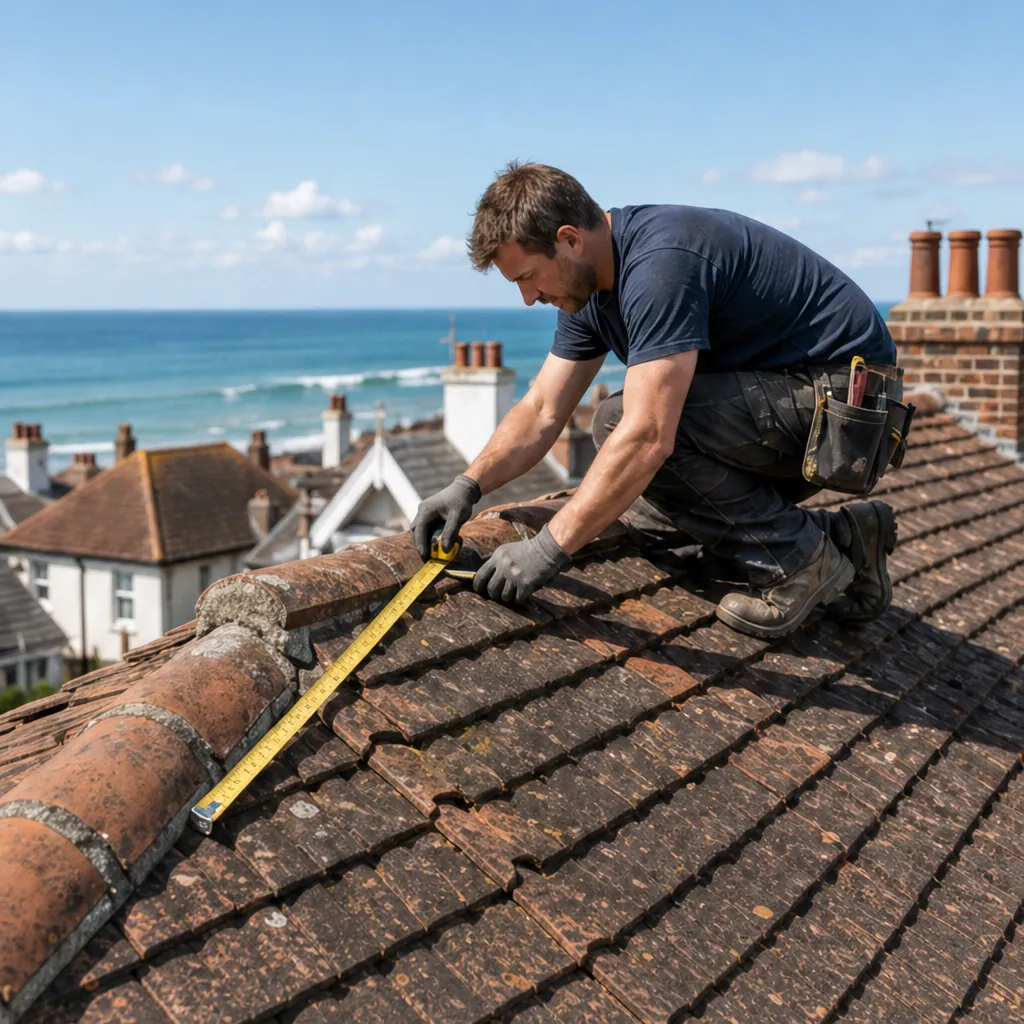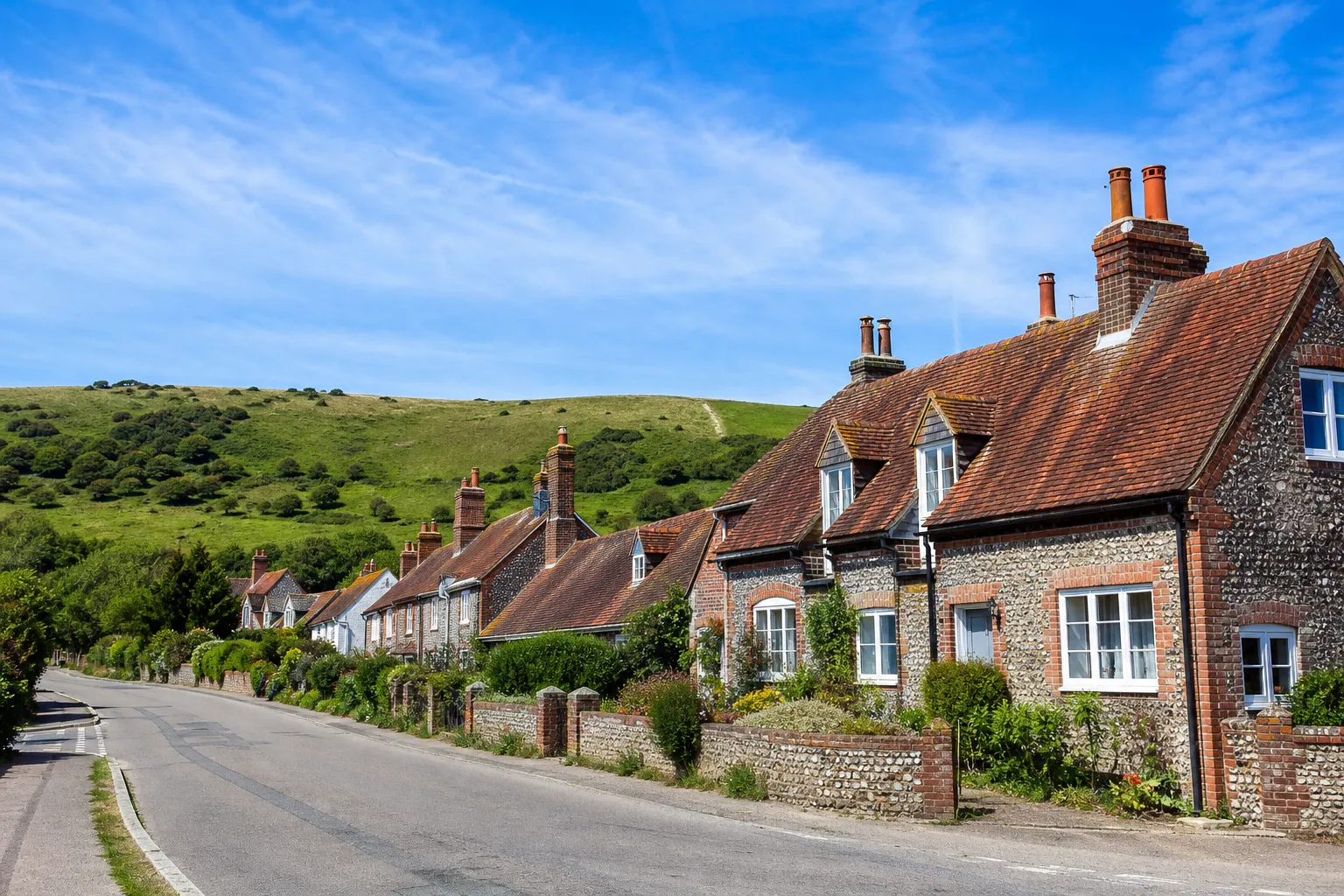
Where two roof slopes meet at the top, the join is the ridge, and the ridge tiles are the curved or angled caps laid over it. Ask three people what a ridge repair costs and you may hear three prices, because they may be describing three jobs. One roofer is filling a few cracks in the mortar. Another is lifting every tile and bedding it again. A third is stripping the lot and fitting a dry ridge, a system of clips, brackets and a vented roll that holds the tiles without relying on wet mortar.
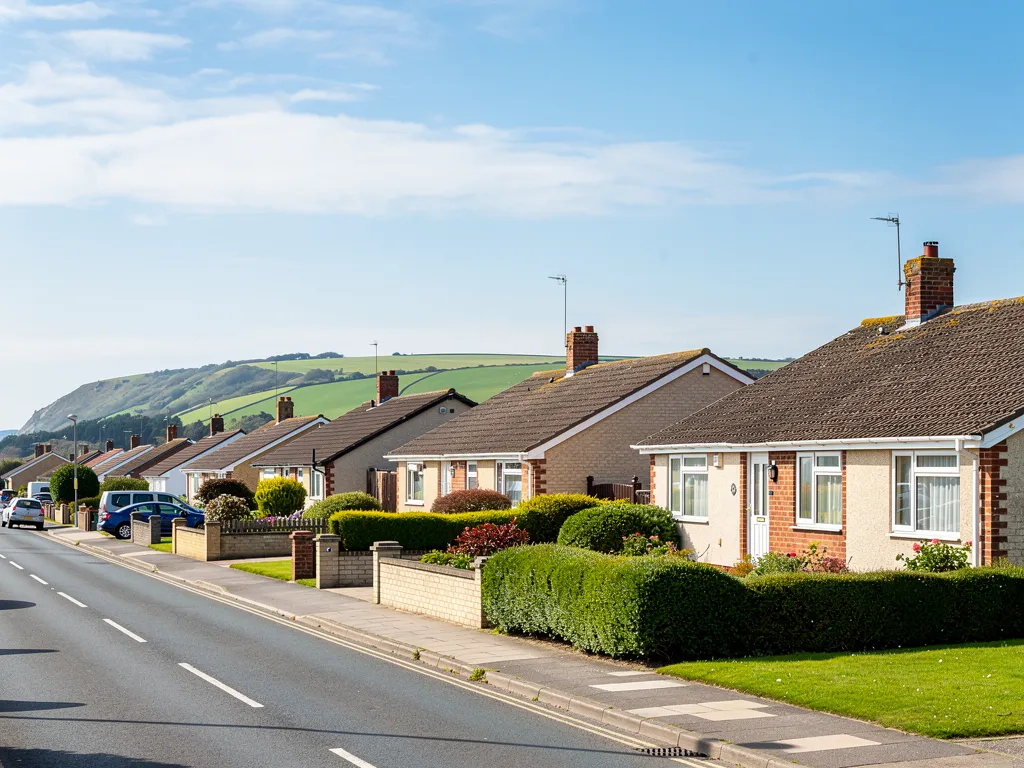
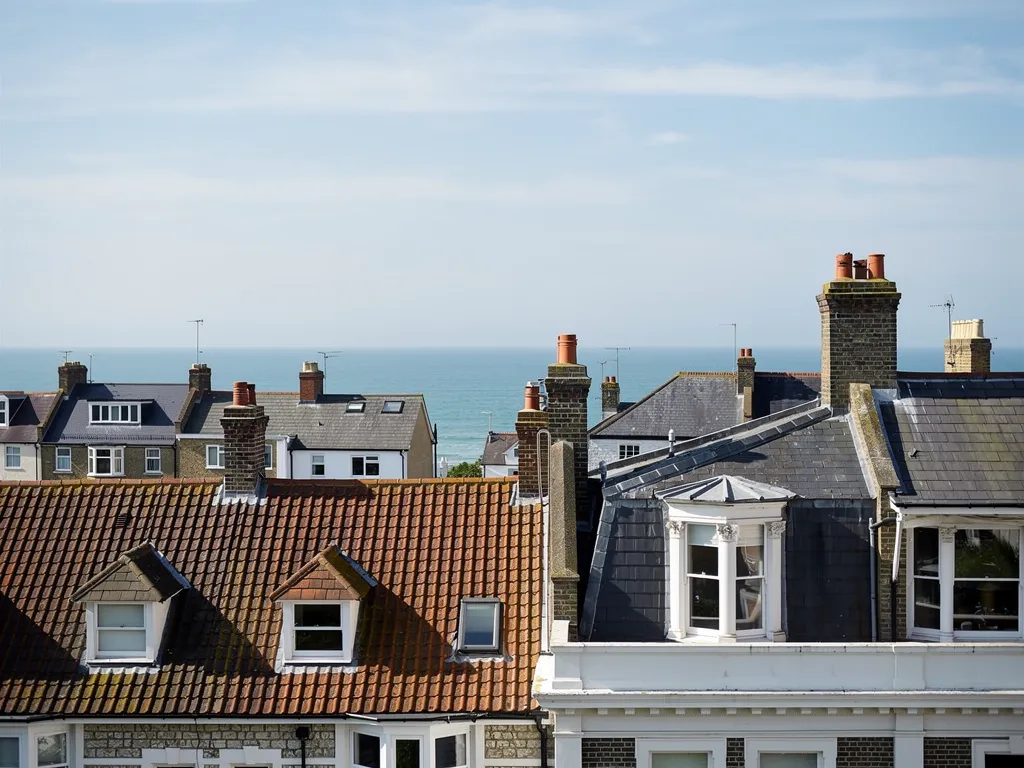
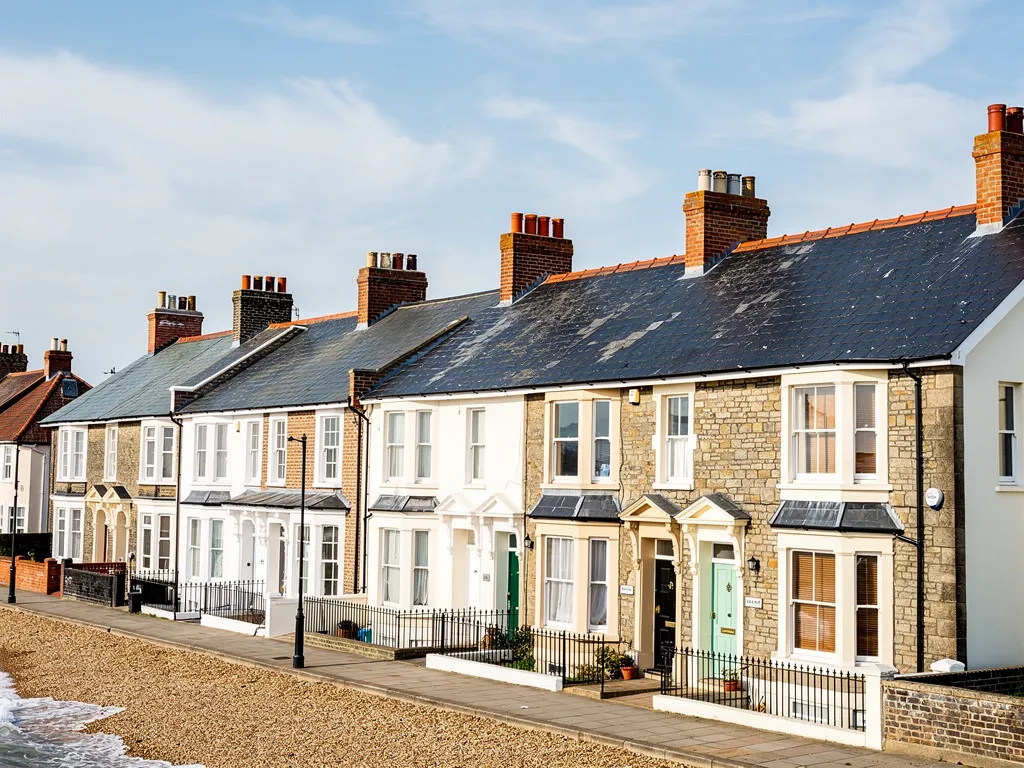
The cost also depends on something that has nothing to do with the tiles: how safely and easily a person can reach the top of your roof. A bungalow with a low ridge and a three-storey Victorian terrace overlooking the seafront are very different propositions, even when the length of ridge is the same.
Below are the typical UK ranges that national cost guides publish, each with its source and date, followed by the factors that lift or lower a figure. Those ranges are not our prices. Yours is worked out once we have inspected the roof, and it reaches you as a written quote alongside photographs of the ridge itself.
Typical UK ranges for the three ridge jobs
National guides split ridge work into repointing, re-bedding and dry ridge. The table sets out what they publish. All are typical UK figures, which makes them a rough yardstick for a quote, not a forecast for one particular house.
| Job | Typical UK range | Source |
|---|---|---|
| Repointing ridge or hip tiles | £200 to £400 | MyBuilder, updated 21/08/2026 |
| Re-bedding or replacing ridge tiles | £300 to £600 | MyBuilder, updated 21/08/2026 |
| Dry ridge, per linear metre | £40 to £60 | MyBuilder, updated 21/08/2026 |
| Dry ridge, typical whole job | £500 to £1,000 | MyBuilder, updated 21/08/2026 |
| Dry ridge, per metre (second guide) | £50 to £70 | Checkatrade, updated October 2026 |
| Dry hip, per metre | £70 to £100 | Checkatrade, updated October 2026 |
A hip is the sloping line running down an outward corner of the roof, and a hipped roof has more of it to treat than a gabled one. That is why the guides give dry hip its own rate.
Two things stand out in the table. The lowest figure belongs to the job that least resembles a lasting repair, which we come to later. And the per-metre rate for dry ridge makes it easy to estimate a plain gable: measure the ridge from the ground along the edge of the house, multiply by the rate, and you have a rough guide before access is added.
The rate for hips is higher because a hip needs more cutting and fixing at the junction at the top of the slope, where several tiles meet.
Repointing, re-bedding and replacing: what each one involves
Repointing is the lightest touch. The old mortar between and under the ridge tiles has cracked or crumbled at the edges, so a roofer rakes out the loose material and fills the joints with fresh mortar. It suits tiles that are sound and still firmly seated. It cannot help a tile that rocks, because fresh pointing on a loose tile just seals a movement.
Re-bedding goes deeper. The roofer lifts the ridge tiles, clears the old mortar, lays a fresh bed and sets the tiles back, replacing any that are cracked. Done properly today, the tiles are also held by mechanical fixings, such as clips or straps, because BS 5534 does not let a mortar bed carry ridge and hip tiles unaided. The reasoning is covered in our guide to BS 5534 and ridge tiles.
Why repointing alone can be false economy
If the bed beneath the tiles has gone, pointing the exposed face only hides the failure. A gale gets under the loose tile, lifts it, and the ridge is open again. That is why the first thing we do on a survey is press the tiles and watch whether they move, then show you the result in photographs. If they rock, repointing is not the answer, and we will say so even though it is the smaller job.
Replacing damaged tiles
Cracked or missing tiles add to a re-bedding job. Tiles that match your roof can be harder to find on older houses, and a mismatched replacement shows up along the skyline. Where the original pattern is no longer made, the roofer may search for salvaged ones, and that search can add time and cost. Our guide to repointing ridge tiles explains when that lighter option is enough.
What a dry ridge adds to the figure, and what it saves
A dry ridge replaces the wet mortar with a mechanical system. A batten or bracket is fixed along the ridge line, the tiles are secured to it with clips or screws, and a vented, flexible roll closes the gap between tile and slope. The ridge sheds rain the way the main roof does, and no mortar bed has to cure, crack or fall out. BS 8612:2018 is the standard such systems are tested to. Our comparison, mortar or dry-fix ridge, covers the choice itself.
On price, the dry route usually costs more per metre than a plain re-bed, because the components are a cost of their own and the job takes careful setting out. Against that, it is a method that does not depend on mortar in cold or wet weather, and it can be quicker to complete on a dry day. Our note on laying ridge mortar in cold weather shows why that matters on a winter job.
Where the saving comes from
A bedded ridge on an exposed coastal roof may need attention again after a hard winter, and each visit costs access and labour. A dry system is built to avoid that cycle, so the extra on the first bill can be offset by fewer return visits. We would not call that a promise. It depends on the tile, the exposure and the quality of the fixing, which is why the survey looks at all three.
Not every roof suits a dry system without checking. Some old or unusual ridge tiles do not sit well on standard clips, and a listed or heritage roof may need advice first, a point our guide on dry-fix and heritage roofs returns to.
Access and scaffold: the part of the price that has nothing to do with tiles
Reaching the ridge safely often costs as much as the repair itself. On a low single-storey roof a roof ladder and a tower may be enough. On a taller house, work along the ridge normally calls for a scaffold, and that is a cost in its own right. MyBuilder gives a typical UK range of £850 to £1,200 for a standard two-storey scaffold, updated 21/08/2026, and £400 to £900 for a chimney scaffold. Checkatrade, updated October 2026, puts a semi-detached scaffold at around £875 per month.
If the scaffold overhangs the pavement, a scaffold licence is needed from the highway authority, which in Worthing and Adur is West Sussex County Council. The firm putting up the scaffold applies for it, with at least 10 working days' notice. A ridge job on a street-fronting house is therefore planned around the licence.
Ways to keep access cost down
If a ridge repair is the only job needed, it is worth asking whether the work can share scaffold with something else. A chimney that needs repointing, a gutter that wants replacing or a verge that has loosened can all be done in the same visit, so you pay for one set of access instead of two. We check for that on the survey, and we say what else we have seen up there.
Equally, a small cracked-tile repair near the end of a gable can often be reached without full scaffold, and we will tell you if that is true of your roof. Ask whether the price covers scaffolding and VAT, since leaving either out is an easy way for one price to look lower than another.

When a ridge repair stops being the sensible spend
Ridge failure is often a symptom rather than the whole disease. Tiles loosen because the mortar has aged, but also because the battens beneath have rotted, the rafter ends have moved or the whole roof has been shaken by years of wind. If the battens at the top of the slope are soft, new ridge tiles have nothing sound to sit on.
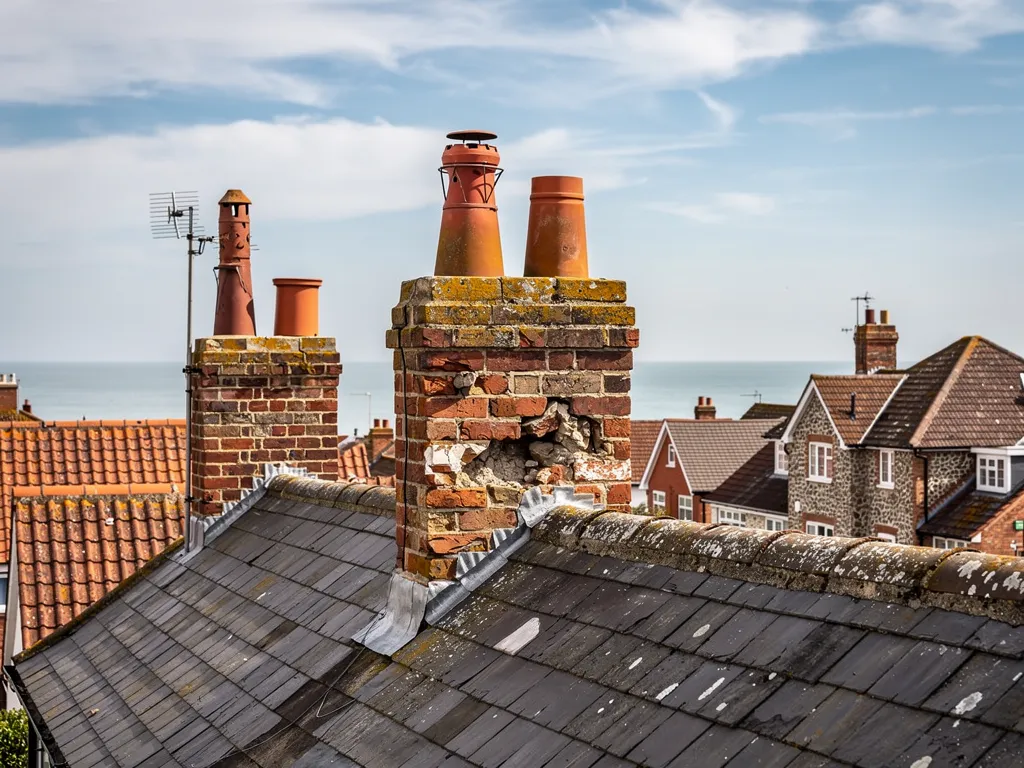
At the survey we lift a couple of ridge tiles where possible, inspect the timber and the underlay at the top of the slope, and take pictures as we go. When the trouble stays on the ridge line, a repair or a dry ridge is the smallest sound job. When the covering is nearly spent, we tell you plainly and describe what recovering a section or a full re-roof would involve. MyBuilder publishes a typical range of £5,000 to £12,000 for a re-roof, updated 21/08/2026, which helps put a ridge repair in context.
Signs the ridge is the least of the problem
Slipped tiles across the slope, moss that holds water against the surface, a sagging line along the roof, or leaks that return after earlier ridge repairs all point to something wider. Our page on ridge tile repairs and dry ridge describes what we check, and the survey tells you which situation you are in.
Fixing a ridge that sits on a failing roof can be money spent twice. Our rule is the smallest job that genuinely cures the fault; where that is the ridge and nothing more, you hear it from us. Where it isn't, a repair would only put off the bigger bill.
Reading a ridge quote
A sound ridge quote is written, it names the method, and it comes after someone has been on or beside your roof. You should be able to tell from it whether the job is repointing, re-bedding or dry ridge, how much of the ridge and hips it covers, and whether tile replacement, access and waste removal are part of the price. Ours is sent once the survey is done, stated as one total, with pictures of your own ridge attached so the fault behind the figure is visible.
Judge quotes by what they cover as well as by the total. If one says repoint and another says re-bed and mechanically fix, they are not the same job, and the difference in price may simply be the difference in method. If one is far lower than the rest, ask what is missing: scaffold, VAT, removal of the old mortar from site or the replacement of cracked tiles.
A few things worth asking any roofer
- Will the ridge tiles have a mechanical fixing as well as a mortar bed?
- Are cracked tiles replaced, and will they match?
- Is scaffold included, and is VAT?
- Is the site cleared and the old mortar taken away?
Ask the same questions of any firm that quotes. If you are weighing a dry-fix against a bedded ridge for your own house, our guides on mortar or dry-fix and on dry verge systems will help you decide what to ask for.