
Question answered
How long does a roof survey take?
The short answer
A roof survey on an ordinary house typically takes from a few minutes for a ground check to around an hour for a ladder and loft inspection. A drone flight is short, though the images take time to review. Large, steep, multi-level or commercial roofs take longer, and the written findings follow the visit.
A survey of a house roof is measured in minutes and hours, not days. The method, the size of the roof and the access decide where a particular visit falls, and the report or quote follows afterwards.
Time on site by method
A look from the ground with binoculars or a zoom lens is quick: a few minutes round the house to see the main faces of the roof. It gives a fair first impression of the covering, ridge and chimneys, but only of what shows from below. Loft timbers, underlay and any damp stay out of reach until someone goes inside.
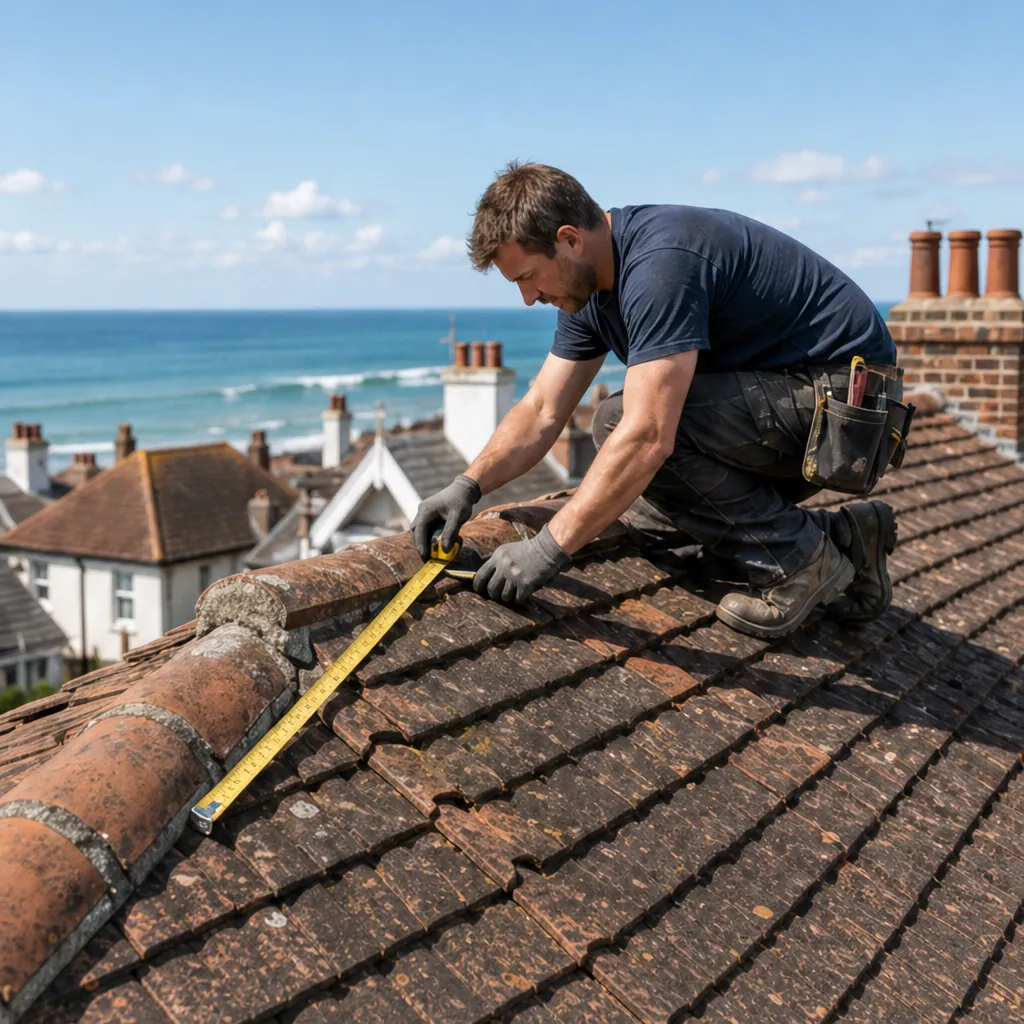
A ladder and loft survey takes longer, and is what most owners picture when they ask for a survey. The surveyor looks at the roof edge, gutters and reachable slopes, then goes into the loft to check timbers, underlay, insulation and any damp. For a typical semi or bungalow that is around an hour, give or take.
A drone flight is brief in the air, often a matter of minutes, because it only has to circle the roof, though sorting the footage afterwards takes longer. A pole camera inspection is similar, working round the eaves and up the slopes in sections. Thermal scans depend on conditions, since they need a difference in temperature between inside and out, so the visit may be timed for early morning or evening.
None of these figures is a rule. They are a guide for planning your day.
What makes a survey run longer
Roof area is the obvious factor, more than the footprint of the house. A large detached house with several roof faces, dormers and chimneys has more to cover than a small terrace. Complex shapes, such as hips, valleys and extensions added over the decades, mean more junctions to check, and junctions are where leaks usually begin.
Access matters just as much. A roof reached by a short ladder from a side passage is quick, and the same goes for a single-storey house with low eaves. Anything taller adds ladder work and time. One that needs a long ladder, a roof ladder, or crossing a neighbour's land with their permission takes longer. A steep slate roof, a tall stack or a flat roof behind a parapet may call for extra equipment.
Condition plays a part too. A roof with several faults needs each one photographed and explained. A cramped loft full of stored boxes slows the loft check, so clearing a path beforehand saves time.
Commercial roofs, long terraces and blocks of flats take longer again, and are sometimes done in stages across more than one visit.
From visit to written findings
The visit is only part of the elapsed time. Pictures have to be sorted, the cause of each fault written up and, if you asked for one, a quote prepared. With us, the quote arrives once the survey is finished, together with pictures from your roof, so nothing has to be decided on the day itself. The gap between visit and paperwork is where the thinking happens: the surveyor reviews every image, matches the loft findings to the outside, and works out the smallest repair that will hold.
An independent inspection report usually takes longer than a quote, because it is written in more detail. Ask when you will receive it, how, and in what form.
If a visitor says they can inspect and price your roof inside ten minutes, check what they actually looked at. A fast answer is fine for a slipped tile visible from the road. It is less convincing for a drip that turns up only in heavy weather, which usually needs the loft and some tracing back from the stain. The guide to survey versus quote explains how the two fit together.
Getting ready so it goes smoothly
A few small steps help. Tell the surveyor where the stain is and when it appears. Clear the way to the loft hatch and a path along the joists. Dig out a note of earlier repairs, scaffold dates or paperwork. Open side gates and keep any dog indoors. If the loft is boarded or used for storage, say so in advance, because moving boxes while a surveyor waits eats into the time available for the roof itself.
Choose a dry, bright day where you can, as wet or windy weather can make parts of the roof unsafe to climb and the visit may need to be rearranged. Heavy rain is also the best time to see where water gets in, so mention it if that matters to you.
You can do a first look yourself from the garden before they arrive; see checking a roof from the ground. If you are weighing a survey offered without a fee, free roof inspections explains what to look for. Buyers will find more in homebuyer surveys and the roof, and the whole area is covered under roof inspections and surveys.
Survey timing: two more questions
Do I have to be indoors during the survey?
For an outside check by ground, ladder or drone, not necessarily, provided access is clear. For the loft you need to let the surveyor in. Being present also means they can show you what they find and ask about past leaks.
Can a survey go ahead in the rain?
The inside can. A loft check in wet weather is useful because water may be visible. For the outside it is a safety matter: wet slopes and ladders are risky, so a surveyor may postpone climbing and work from the ground, a pole camera or the loft.
Tell us about your roof
Describe what is happening and we will call you back to arrange a visit.
- Photographs of what we find
- A written quote with one total price
- Or call 01903 299063
10-year workmanship guarantee, in writing.