You have paid for a survey, opened the report and found the roof in amber or red. It is an anxious moment, because a roof can mean a bill of several thousand pounds and the sale may be only weeks from exchange. The first thing to know is that a general survey is a broad look at the whole house. The surveyor covers walls, floors, damp, drains and the roof in a single visit, so their comments on the roof are an alert to follow up, not a full diagnosis.
That is where a roofer comes in. A specialist visit looks at the roof for as long as it takes, goes into the loft, photographs what is found and says whether the problem is urgent, due soon or simply a sign of age. You then hold a written report and a written quote, and those two documents are what you need to decide whether to go ahead, ask the seller to act, or renegotiate.
This guide covers what the wording in the report usually means, how to arrange the follow-up, what to ask the roofer to cover and how to use the answer. Checks you can make before you commit to buying are in our guide to roof checks when buying a house.
Reading what the report actually says about the roof
Survey reports use cautious language, and the wording is deliberate. A phrase such as "the roof covering is nearing the end of its life" is a judgement about age. "Slipped tiles were noted" records something seen from a distance. "Further investigation by a roofer is recommended" means the surveyor could not tell from where they stood.
It helps to remember how a general survey looks at a roof. The surveyor often works from the ground, from the upper windows and from the loft hatch, and may use binoculars. They are not usually on the roof, and they do not usually lift tiles or test flashings. What they write is therefore a view of what could be seen, which will sometimes overstate a small matter and sometimes miss a hidden one.
Sorting the comments into three kinds
Read each roof comment and put it into one of three piles. The first is urgent: signs of water getting in now, such as stains on a ceiling, damp in the loft or a visible hole. The second is due soon: worn mortar, a sagging ridge or aged flashings that are not leaking yet. The third is background: general age, moss or a note about the type of covering.
Many roof comments in a survey fall into the second and third piles. That does not make it harmless, because it affects what you spend in the first years of ownership, but it does mean there is usually time to inspect properly. Take the report to your solicitor and the roofer alike, and keep the surveyor's exact wording to hand when you talk to either.
Arranging the roofer's follow-up visit
A buyer does not own the house yet, so access has to come through the seller. Ask your solicitor or the estate agent to request a time, and say plainly that a roofer needs to see the outside and the loft. Most sellers agree, since a clear answer on the roof helps the sale as much as it helps you. Give them a rough idea of how long it will take and who is coming.
Timing matters because contracts run to a clock. Book the visit as soon as the report arrives, not after your solicitor chases. Our page on how long a roof survey takes will help you plan the slot with the seller.
Before the visit, send the roofer the roof section of the report, or a photograph of the page. Point out the exact words and any rooms or slopes the surveyor named. This saves time, because the roofer can go straight to the places that prompted the concern, and then look at the rest of the roof as well.
What the seller needs to know
Tell the seller what will be checked, that nothing will be removed or damaged, and that the roofer will take photographs for you. If the loft is full of boxes, ask for the hatch to be cleared in advance. If a tenant lives in the house, the agent will arrange access with them.
If the seller refuses a visit, treat that as information too. You can still ask for a roofer to inspect from the ground or by drone, but a refusal may raise questions about the sale that you should discuss with your solicitor.
What the roofer's visit should answer
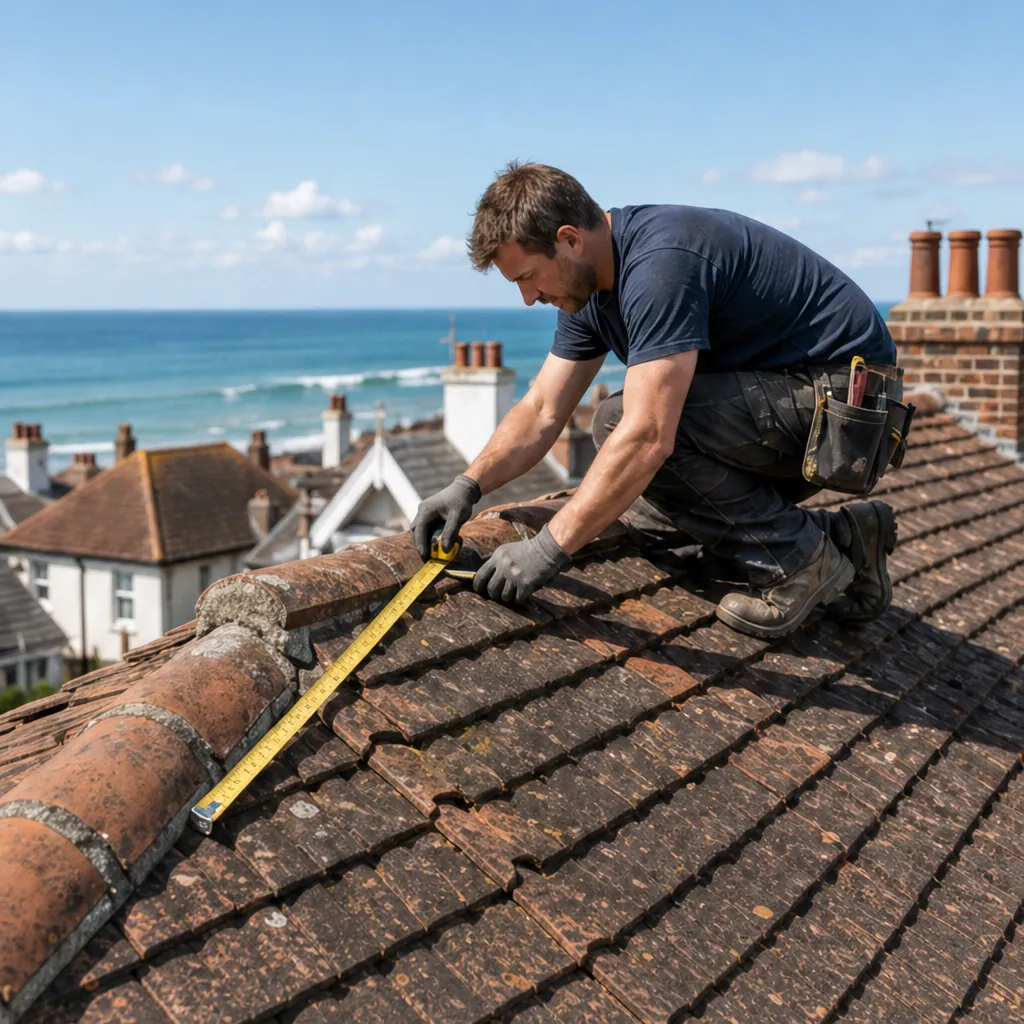
The roofer's job is to turn a vague line in a report into specific findings, tied to your house. A thorough visit covers the whole roof, not only the area the surveyor named, because faults often sit away from the place where a symptom shows. Our guide to what a roofer checks on a roof survey covers the order of work in detail.
You want four answers. First, is water getting in now, and if so where? The roofer should trace it to the source, whether that is a flashing, a valley, a ridge, a gutter or condensation, rather than naming the nearest tile. Second, what is the condition of the covering overall: sound with some wear, ageing, or at the stage where repairs cost more than they save? Third, what, if anything, must be done before you move in, and what can wait a year or two? Fourth, what will each option cost?
Photographs make the report usable. You should see images of each fault, labelled by the part of the roof, and a short description in plain words. A roofer who simply says "it needs doing" has not helped you.
The result should be a written report and a written quote giving one overall figure for the recommended work. Keep both. They are the evidence you will show your solicitor, the seller and, if you need one, your mortgage lender.
Where the survey names a flat roof, a roofer may suggest a thermal check, which can show trapped moisture under the surface. The guide to thermal imaging roof surveys explains when that is worth the money.
When the survey mentions spray foam in the roof
Foam applied beneath the roof covering is one of the few roof findings that can shape a purchase by itself, and a surveyor who sees it will usually say so. The concern is about lending and valuation as much as about the roof.
The RICS consumer guide on spray foam, dated March 2023, makes three points a buyer should know. Badly fitted foam can trap damp and cause condensation, so the roof timbers behind it may suffer out of sight. Your mortgage provider should be asked whether its policy accepts the product. And the presence of foam can influence a surveyor's valuation. The guide adds that taking foam off may damage the structure beneath it.
On lending, Today's Conveyancer reported in November 2024, drawing on a media investigation, that some named lenders were declining homes with spray foam while others weighed each case. Lender policy moves, so ask your own lender and broker for the current position before you commit.
The Energy Saving Trust, in guidance updated on 8 May 2026, tells owners not to spray foam over a leaking roof without first fixing the problem. For a buyer, a roof foamed over a fault is a different purchase from one that was repaired properly.
What a roofer can say about foam
A roofer cannot see the timber behind a full layer of foam, so any claim about its condition is a guess. What they can do is look at the outside of the covering for signs of trouble, check the loft for any exposed areas and tell you whether the foam appears to be sprayed over a damp or damaged surface. If foam is present, our page on spray foam and mortgages covers the lender side in more detail, and your solicitor should hear about it early, because it can alter the timetable.

Putting numbers on the work before you negotiate
Negotiation works best when both sides can see a figure. Once the roofer has inspected and quoted, you know the cost of dealing with the roof, and you can set it against the price you agreed.
For context, MyBuilder's roof repair guide, updated on 21/08/2026, gives a typical UK range of £150 to £1,500, with major repairs at £2,500 or more. Its new roof guide gives a range of £5,000 to £8,000 for a gable-roofed semi-detached house and £8,000 to £12,000 for a hipped one. These are typical national ranges, not a quote for your house, so use them only to judge whether a figure is in a sensible region. Your own written quote carries the figure that matters.
Also check what each quote includes. Ask whether scaffolding is part of the price and whether VAT is included, because both can change the total a good deal.
Your options once you have a figure
You can ask the seller to carry out the repair before completion, though you will want to see the quote and the finished work. You can ask for a reduction in price that reflects the cost. You can ask for money to be held back at completion, which your solicitor can arrange. Or you can accept the roof as it is, with a budget and a timetable. Which suits you depends on how urgent the fault is and how keen the seller is.
Roofers cannot negotiate for you, and legal advice belongs with your solicitor. What a roofer can give you is a clear, written, photographed account of the condition of the roof.
After completion: planning the work and keeping the paperwork
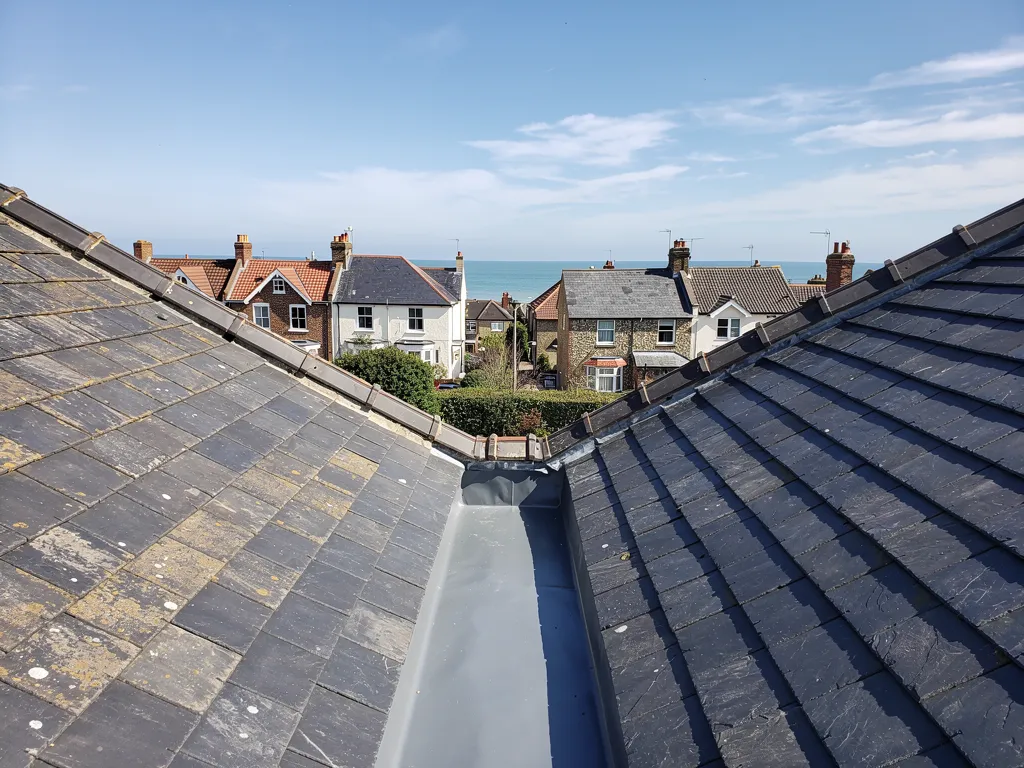
Once the house is yours, the roofer's report becomes the starting point for a plan. Work in order of urgency. Anything that lets water in goes first, because wet timber and insulation worsen quickly and are costly to put right. Wear that is not leaking yet can wait for a drier season or be bundled with other work to share access.
If the report calls for a replacement rather than a repair, ask whether the work will need consent. Some re-roofing is notifiable under the Building Regulations, and the roofer or your building control body can say whether yours is. We explain consent and deal with the notification when it applies.
Keep every document together: the survey, the roofer's report with its photographs, the written quote, the invoice and any paperwork that came with the work. If you later sell, a buyer's surveyor will ask the same questions you asked, and a neat folder with dates and photographs answers them quickly. Photographs taken before and after each repair make the folder more useful to a buyer's surveyor than receipts alone.
Remember, too, that a roof in good order still needs looking at now and then. A quick look from the ground each spring and autumn, and a visit to the loft after a gale, will catch small faults while they are cheap. A cleared gutter does more good than it looks. If you would like to know how the visit works, our roof inspections and surveys page sets it out.
Above all, do not let a line in a report push you into a rushed decision. The sensible route is to inspect, get a figure, and then decide once you have the roofer's findings in hand.