Roof checks come in three common forms, and each has its own typical price. A standard inspection is a trained person looking over the roof from a ladder, from the loft and from the ground. A drone survey adds close photographs of the parts nobody wants to climb onto. A thermal survey uses a heat camera to look for wet material hidden below a surface. The figures here come from MyBuilder's roof inspection price guide, updated on 21/08/2026, and they are typical UK ranges, not Watertight prices.
Ranges that wide are normal. A bungalow with a clear garden and a four-storey terrace behind a narrow alley are very different jobs, even when both are called a roof check. What you pay also depends on what comes back to you: a verbal opinion on the doorstep, a set of photographs, or a written report you could hand to a solicitor or a lender.
Below, we take the three types in turn, show what raises or lowers a quote, and list what to ask before you book. If you are still deciding whether to pay for a check at all, our guide on whether you should pay for a roof inspection covers that side of it.
The typical UK price for each type of roof check
MyBuilder's guide puts roof inspections at £150 to £500 overall, and the type of survey does most of the sorting. Use the table to plan with, then expect the real figure to depend on your roof.
| Type of roof check | Typical UK range |
|---|---|
| Standard inspection | £150 to £250 |
| Drone survey | £200 to £400 |
| Thermal imaging survey | £300 to £500 |
The same guide says a drone survey generally starts at £150, so the bottom of its range is a basic job on a small, simple roof. A standard inspection costs least because it needs the least equipment: a ladder, a torch, a camera and someone who knows where roofs tend to fail. The thermal survey is the dearest because it needs a specialist camera, the right weather and a person who can read what the image shows.
For a normal house with a pitched roof, the standard inspection is often enough to answer the first question, which is whether the roof needs work and where. The dearer types answer narrower questions. A drone helps when the roof is too high or too steep to inspect safely by hand. Thermal helps when moisture may be trapped under a flat surface where nothing shows from above.
Whichever type you choose, a repair is a separate matter. Once the survey has found the cause, the written quote for the work follows as one total price.
What the standard inspection should cover
A standard check works through each place on the roof where water can enter, then records what turned up. It is not a quick glance from the pavement with an opinion at the end, and it should leave you with evidence you can read for yourself.
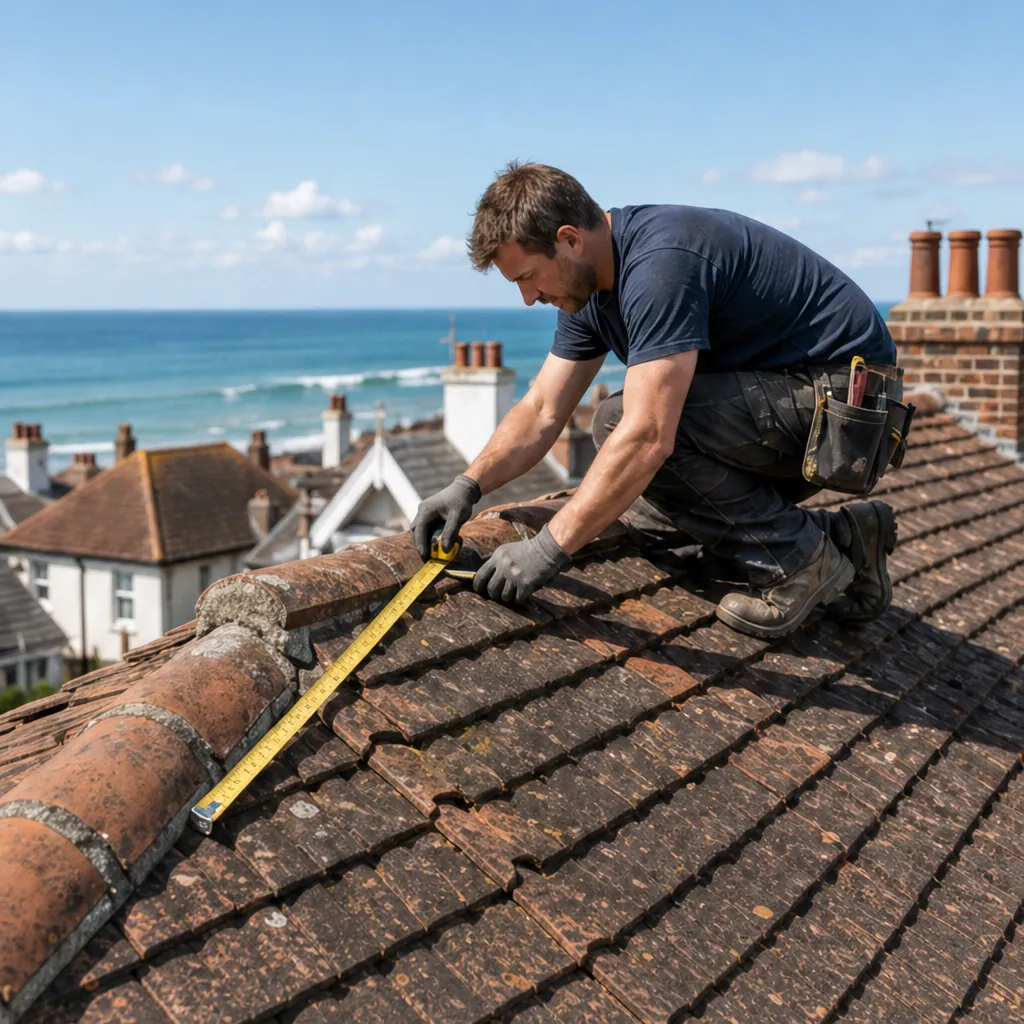
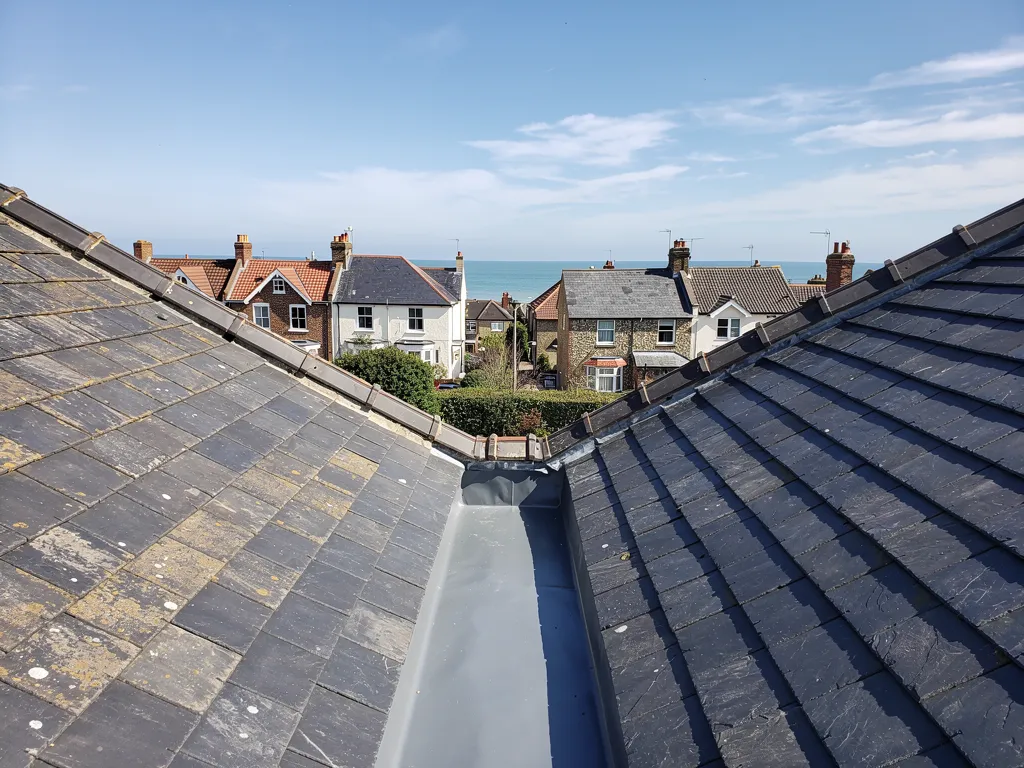
Outside, the surveyor works along the eaves, the low edge beside the gutter, and up the slope as far as can be reached safely. They look at the covering for tiles and slates that have slipped, cracked or gone, then at the ridge, the line of capping on top, and the hips, the sloping outer corners. They check the verge, the sloping edge where a gable wall ends, and the flashings, the lead or metal strips that weatherproof the junction of roof and masonry. Valleys, the inner channels where two slopes join, get a close look because they carry the water from both. Gutters and downpipes come last, since a blocked gutter can pass for a roof fault.
Inside the loft
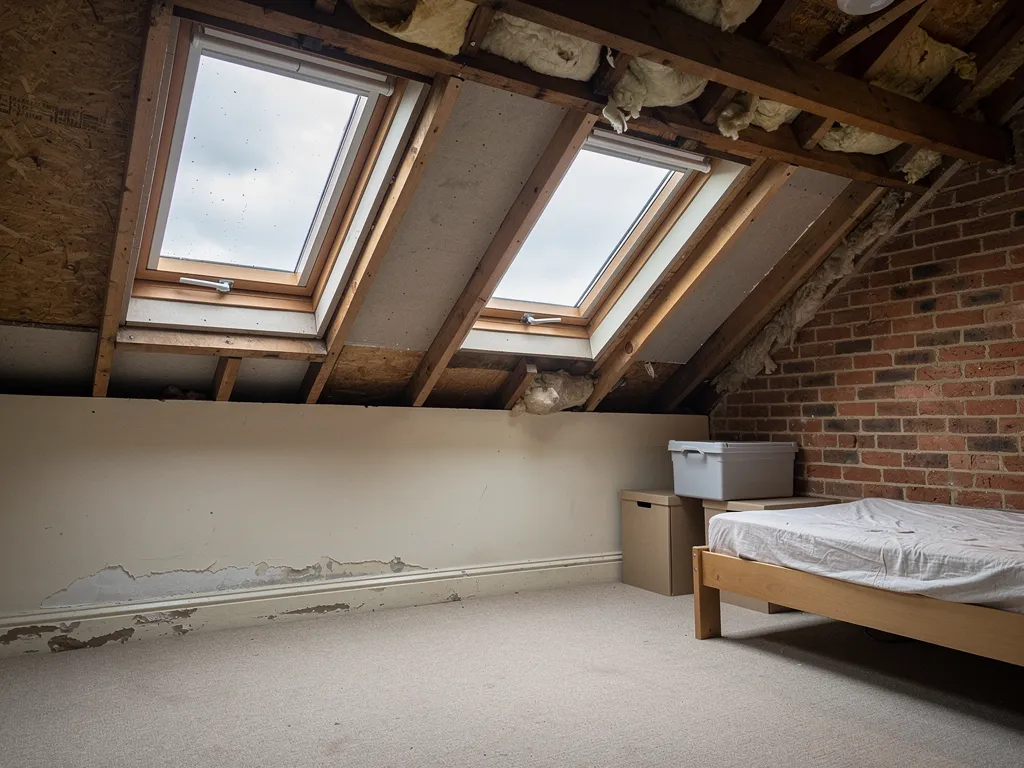
The loft view is where a standard inspection earns its fee. From inside, the underside of the roof shows tide marks, damp insulation, daylight where there should be none and timber that has been wet for some time. A check that never opens the hatch is a ground survey with a bigger name.
At the end you should have photographs tied to named parts of the roof, a plain statement of what is wrong and what is simply ageing, and a clear view of what needs doing now and what can wait.
When a drone survey is worth the extra
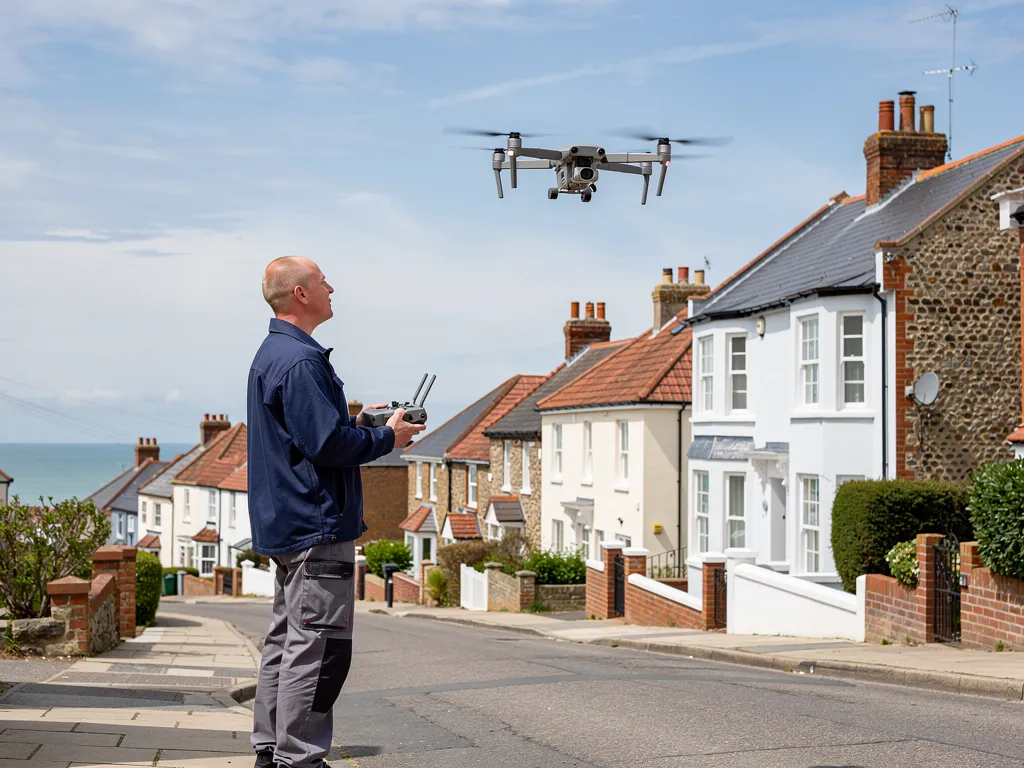
A drone costs more than a standard check because it adds equipment, flight time and the handling of a large set of images. It earns that money on roofs where getting close by hand is difficult, slow or risky.
Steep slopes, tall houses, roofs set behind other buildings and large commercial roofs are the usual cases. So are chimney stacks and ridge lines, where a pilot can hold the camera a metre from the brickwork or the capping and capture detail that binoculars blur. A drone can also reach the far side of a hipped roof, or a valley between two high gables, without anyone putting up access equipment just to look.
That last point is where the price makes sense. For scaffold, MyBuilder gives around £850 to £1,200 for a typical two-storey home, so if the only reason to erect it would be to take a look, a drone at £200 to £400 is the lower-cost way to learn whether any work is needed at all, and scaffold can be priced later if the survey shows a repair.
The limits are real. A drone sees surfaces, not the loft. It cannot raise a tile to check the underlay, press on a soft patch or smell damp timber. Wind, rain and low light can stop a flight, and a photograph of a hairline crack may not tell you whether water gets through it. So a drone suits the question "what is up there?" better than the question "why is my ceiling wet?".
For a longer comparison with ladders, pole cameras and scaffold, see drone or ladder: how roofs are surveyed.
Why a thermal survey sits at the top of the range
Thermal imaging looks at temperature, not at the surface. A wet area of flat roof insulation holds heat differently from a dry one, so on a suitable evening the damp patch shows on the image as a warmer or cooler zone. That is useful when a flat roof leaks and the opening in the covering is nowhere near the stain below.
It costs the most of the three because the work is specialist. The camera is expensive. The survey must be timed, because the contrast between wet and dry areas depends on the weather and on how much heat the roof has taken in during the day. The surveyor then has to read the images with care, since a warm patch can be wet insulation, but it can also be a pipe, a sheltered corner or a change of material below.
Thermal is therefore used best as a guide to where to look, followed by a closer check. It points to the likely area; a moisture meter, a core sample or an opened section confirms it.
It makes sense for large flat roofs on blocks, shops and extensions, for roofs with a recurring leak that nobody has traced, and for a buyer who wants an early read on a flat roof before committing. It is much less useful on an ordinary pitched tile roof, where a standard inspection from the loft usually tells you more for less money.
The page on thermal imaging roof surveys explains what the images can and cannot show.
What moves the price of a roof check up or down
Inside each typical range, a handful of things decide where your own figure falls. Knowing them lets you judge a price instead of just reacting to it.
Size, height and shape
A single-storey bungalow with one hipped roof takes less time than a three-storey Victorian villa with a slate roof, two bays and a stack at each end. More pitches, valleys, dormers and chimneys mean more to inspect and more photographs to take and label. Height matters because it decides what access is needed.
Access and surroundings
A clear side passage and a flat lawn make a ladder easy to place. Narrow alleys, steep gardens, parked cars and neighbours' extensions slow everything down. If the roof cannot be reached by ladder or seen by drone, access equipment may be needed, and that adds a charge of its own.
The report you get
A short message with three photographs and a verdict takes less time than a written report with labelled images, a description of each fault and a view on what to do about it. If you need the document for a solicitor, a buyer or a lender, say so when you book. The fuller picture of a written report is on the roof survey report page.
Distance and urgency also play a part. A roofer who has to cross the county will tend to price differently from one two streets away, and a request made in the middle of a storm is a different kind of call from a planned visit.
What to ask before you book and what happens next
Because the same words cover very different jobs, a few questions asked early at the start prevent a disappointing result. Ask what the visit includes: ladder, loft, drone or all three. Ask whether you receive photographs, a written report, or both. Ask whether the price includes VAT, since some published cost guides give their figures without it, and whether any access equipment is part of the price or extra.
Ask who will do the inspection and whether they can explain a finding in plain words on the day. A good surveyor will point at a photograph and tell you what is wrong, why it matters and what the alternatives are, including doing nothing for now.
Think, too, about why you want the check. A buyer wanting a view before exchanging contracts needs something different from an owner with a stain on the bedroom ceiling. If a solar installer has asked for a roof condition report, a roof survey before solar panels is the kind of check to ask for, with a written condition report. If a mortgage valuation or homebuyer report has flagged the roof, see what to do when a homebuyer survey says the roof needs work.
Our own surveys begin with the cause. You see photographs of your roof, the written quote gives a single total, and the advice is to do the least work that settles the fault. Any work that follows a survey starts from the findings in the report. The full service is described on our roof inspections and surveys page.