Nobody can inspect a roof by looking at it from the garden for long. Tiles overlap, ridges sit well above eye level, and the faults that matter are often at an angle you cannot see from the ground. Surveyors have four main ways round that, and the choice between them changes what you learn, how long the visit takes and what you pay.
A ladder reaches the roof's first few courses and lets a person touch what they are inspecting. A pole camera holds a lens up past the gutter on a long handle. A drone flies over the roof and photographs it from several angles. Scaffold gives a working platform at every level, so a person can walk the edge and handle the covering.
None of them is the best in every case. A drone is superb on a tall slate roof and useless in the loft; a ladder beats it for tracing a stain but stops short at the ridge. This guide goes through each method, then shows how to match the method to the roof and the question you want answered. Typical prices come from MyBuilder's guides, updated on 21/08/2026, and the full cost picture is in how much it costs to get a roof checked.
What a ladder survey sees, and where it stops
The ladder is the oldest tool in the trade and still the starting point for most house roofs. Set against the eaves, the lower edge beside the gutter, it puts a surveyor close enough to see the condition of the first courses of tiles or slates, the state of the gutter and its brackets, and the fascia and soffit boards beneath. It is also the one method that lets a person put a hand on the roof: to press a loose tile, lift a slate to check how it is held, or feel whether a lead flashing is firm.
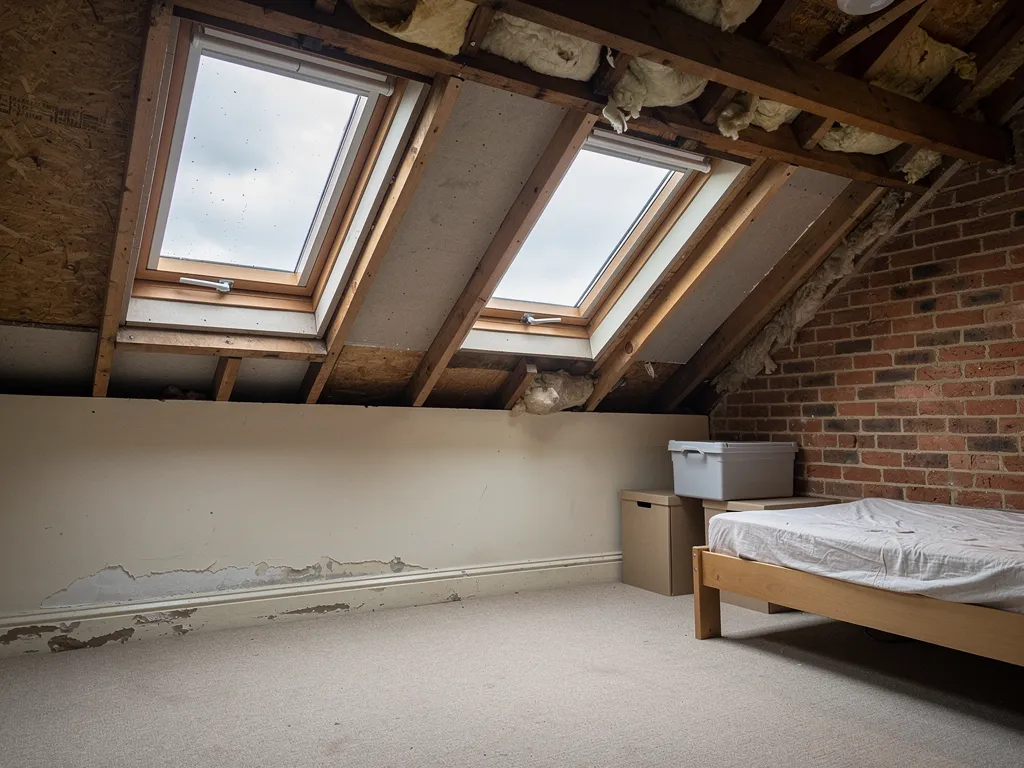
That hands-on contact is why a ladder inspection, paired with a look inside the loft, is the strongest way to find where water is getting in. The surveyor can match what they see outside with the tide marks and damp patches on the timbers inside, and follow a trail from one to the other.
The limits of a ladder
A ladder reaches the eaves and not much further. Beyond a short distance up the slope, the surveyor is looking at the roof at a shallow angle and can miss cracked tiles, slipped slates and failing mortar. Ridge lines on a two-storey house, chimney stack tops and valleys deep in a hipped roof are all hard to judge from below. Ladders also need firm, level ground, a clear side passage and a safe footing, and they are less suitable where a roof is steep, wet, mossy or brittle.
Because of these limits, a ladder check is often combined with a camera on a pole or a drone when the roof is tall. It gives certainty about what it can reach and a reason to look further at what it cannot.
The pole camera: a longer reach for less outlay
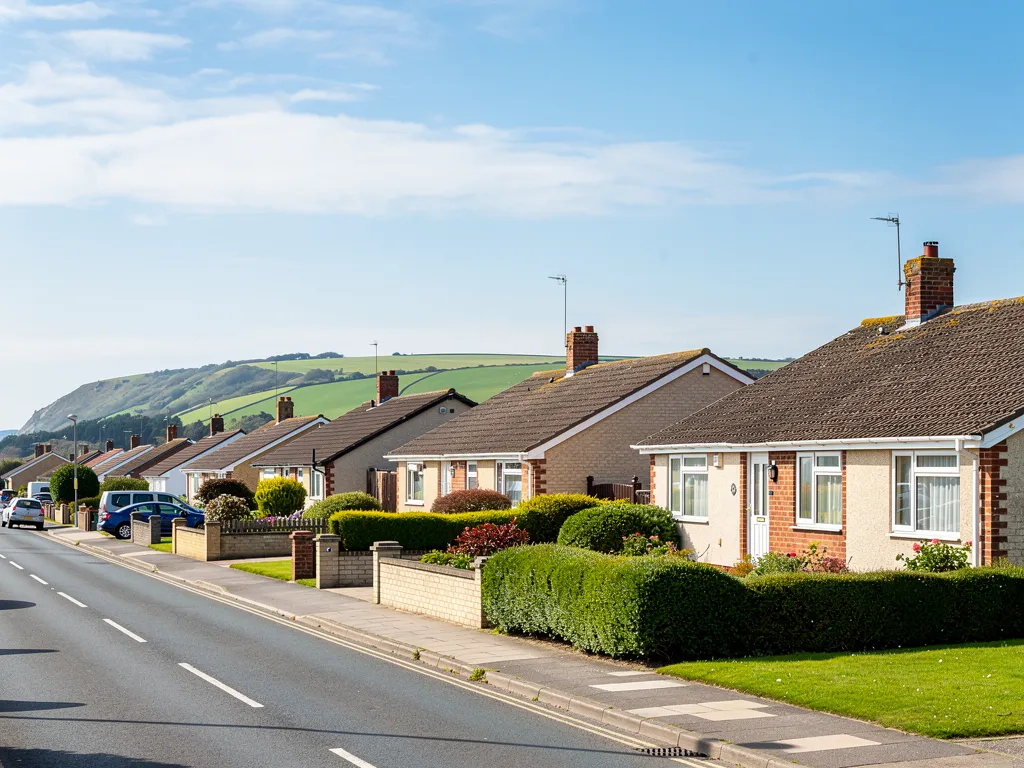
A pole camera is a lens, and often a small screen, on an extending handle. Held up above the gutter line, it shows the lower slopes from above instead of from the side. For a bungalow or a single-storey extension it can be enough on its own, and it is the easiest way to look into a gutter without putting a ladder up.
It sits between the ladder and the drone. It reaches higher than a person can hold a phone, it needs no flight, and it copes with weather that would ground a drone. You can use it in a narrow passage where a ladder would struggle. Our page on the pole camera inspection goes into the equipment and the picture quality.
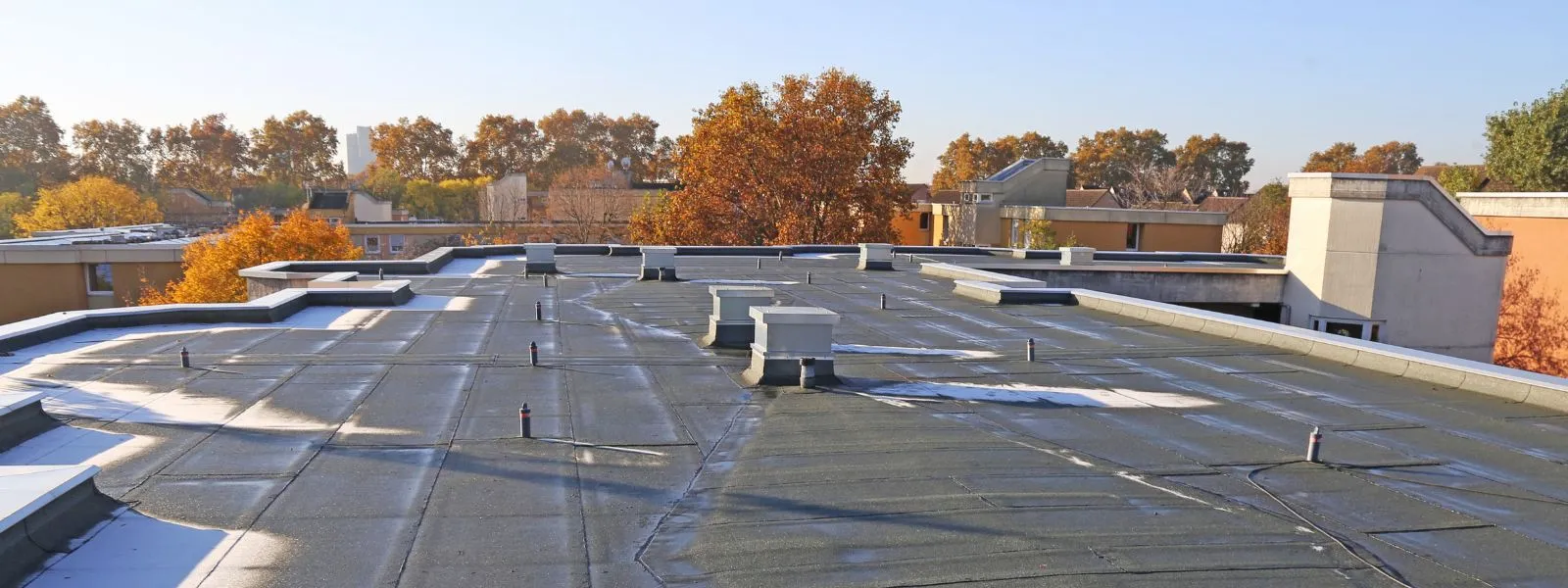
The limitations are about angle and height. A pole camera only reaches as far as the pole extends, which usually means the lower part of the roof and not the ridge of a tall house. It points straight ahead or up, so seeing a flat roof behind a parapet wall takes some ingenuity. The picture is also only as steady as the hand holding it, and a long pole waving in a breeze produces blurred images of exactly the detail you need.
Where the aim is a quick, low-cost sight of gutters, the lower slopes and the eaves, a pole camera is a sensible choice. Where the question is the condition of the whole roof, it is usually the first step instead of the last.
When it is the right pick
Think of it for single-storey roofs, porch and garage roofs, gutter checks and quick follow-up looks after a gale, particularly when the ground is soft or the access is tight.
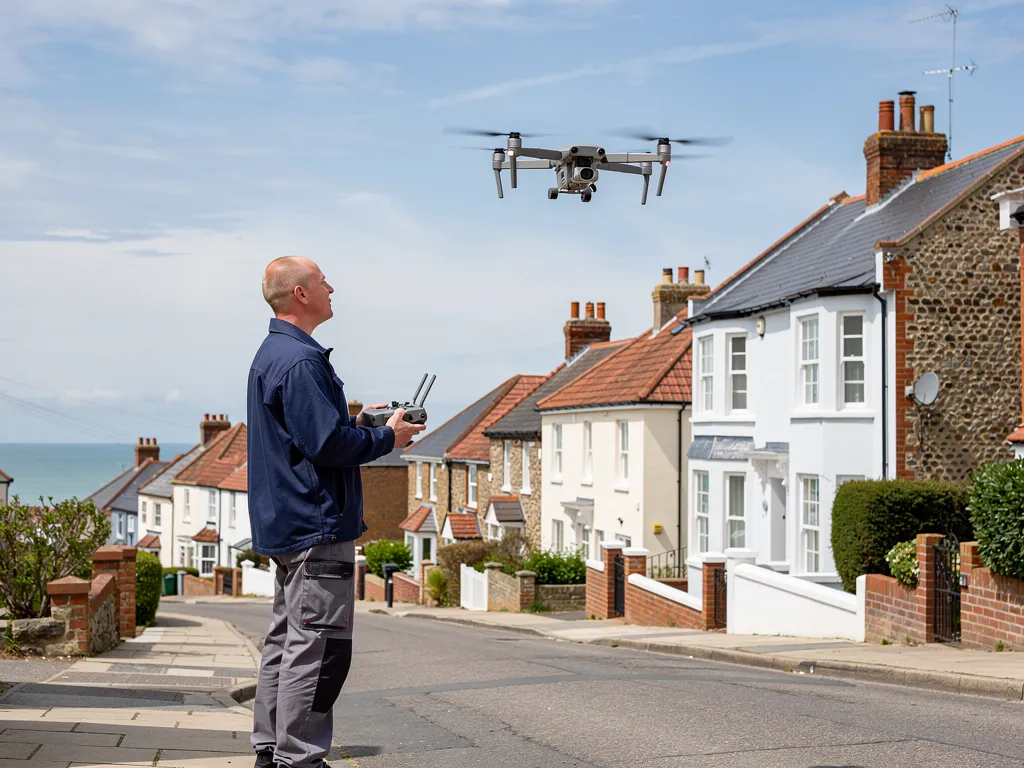
What a drone adds, and what it cannot do
A drone gives the one view no person on a ladder can have: the whole roof from above, in a sequence of sharp, labelled photographs. A good operator flies a set pattern, then holds close to the places that matter: the ridge, each chimney, the valleys, the junctions where walls meet slopes. The photographs can be zoomed in at a desk, handed to a homeowner or an insurer, and compared with a later set.
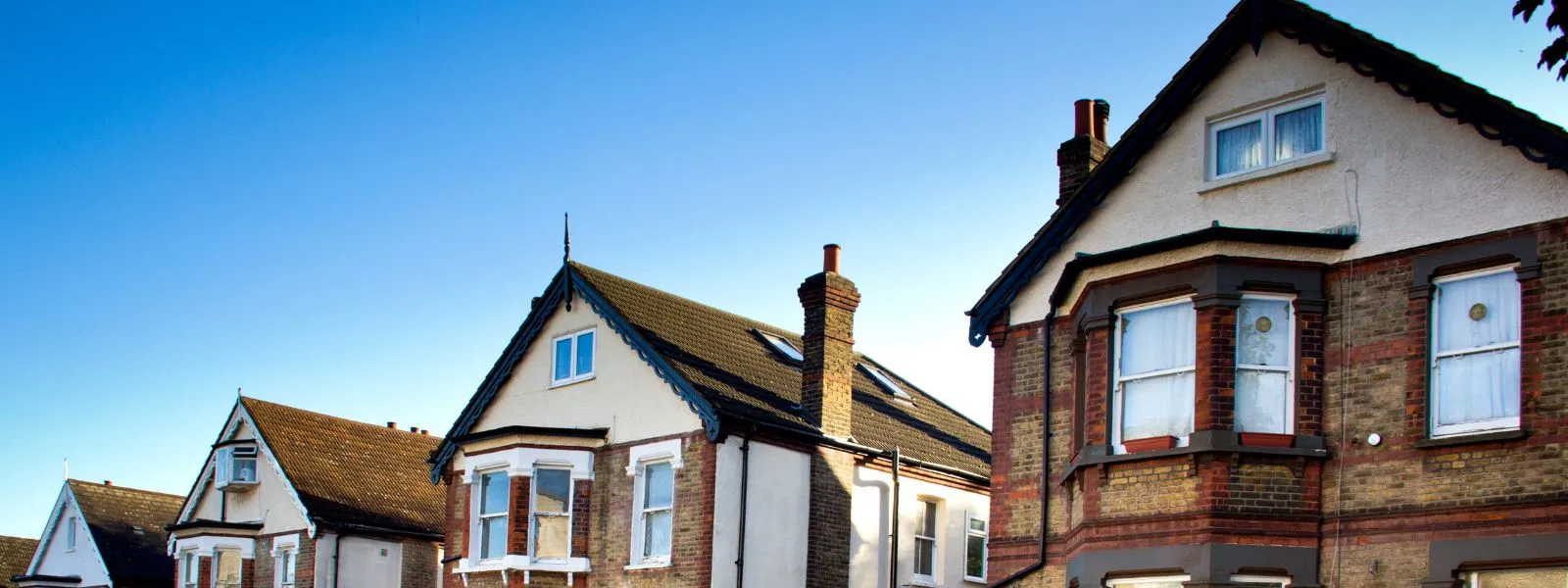
On a tall house, a steep slate roof, a large commercial building or a roof hidden behind neighbouring properties, a drone often shows more in ten minutes than a person could safely see in an hour. It also removes the need to climb onto fragile or slippery surfaces, which is a gain in safety as well as in detail.
The price reflects the equipment and the image processing. MyBuilder quotes £200 to £400 as the typical UK figure for a drone survey, with basic jobs starting around £150. A standard inspection is £150 to £250 in the same guide.
A drone cannot do everything. It sees surfaces, so it cannot judge the underside of the covering, the condition of battens or the state of the insulation. It cannot touch anything, which matters when a tile looks sound but is loose. A hairline crack in a photograph may or may not let water through. Wind, rain, low sun and nearby obstructions limit when and where it can fly, and a drone is of no help at all in the loft.
If you are hiring an operator, ask how they will fly the roof, which parts they will photograph up close and what you will receive afterwards: a folder of raw images, or a labelled report with comments.
Scaffold surveys and when they pay for themselves
Scaffold is the heavy option. A tower or full lift beside the house gives a stable platform at eaves and roof level, so a surveyor can stand, reach, lift and test the covering at close range. Nothing else gets a hand onto a ridge, a chimney or a cracked valley with the same ease.
It is not a method anyone should choose for a simple look, and a survey rarely needs one. On scaffold, MyBuilder lists around £850 to £1,200 for a standard two-storey house, plus £400 to £900 for a chimney. Those figures are far above the cost of a drone or a ladder check, so the sensible order is usually to survey first by the lighter route and erect scaffold only if the findings call for work that needs it. Paying for a platform before you know there is a fault is paying for a question, not an answer.
In practice that means the scaffold goes up once, when repairs or a replacement begin, and the final close inspection of details like the ridge and the flashings happens as part of that work. If the survey is part of a project where scaffold will be there anyway, the platform is free to use for a closer look.
Scaffold on the pavement
A scaffold that blocks the footway or carriageway cannot go up without a written licence from the highway authority (Highways Act 1980 section 169). For Worthing and Adur that is West Sussex County Council, which asks for at least 10 working days' notice, and Brighton and Hove has its own licence as its own highway authority. The scaffold firm applies for it, but the lead time can affect when work or a survey can happen. Allow for it when you plan.
Matching the survey method to your roof
The roof and the question decide the method. A useful way to choose is to start with what you want to know.
If you want to know where a leak is coming from, begin with a ladder and a loft check. They let the surveyor follow a trail of water between the covering and the timbers underneath, which no camera from above can do. Our guide to thermal imaging roof surveys adds a further tool for flat roofs where the trail is hidden.
If you want a general picture of the covering on a tall or steep house, a drone is the better first look, with a loft inspection alongside it. For a bungalow, extension or garage, a pole camera and ladder usually answer the question.
If you are buying, a buyer's report may raise a roof point that needs a closer look. Our guide to what to do when a homebuyer survey flags the roof explains what a roofer's follow-up should cover.
Whatever the method, the survey should end in the same place: a list of what was seen, a photograph of each fault tied to a named part of the roof, and a plain view of what needs doing now, what can wait and what is simply ageing. A method is only a means of getting that list. Judge the visit by what you are handed at the end, not by the equipment that arrived. Our overview of roof inspections and surveys shows how the pieces fit together.
If you need documents for a mortgage lender, a solicitor or a landlord, ask for photographs tied to named parts of the roof and a written summary, whichever method is used. A set of drone images with no commentary leaves you with pictures to interpret.
On our own surveys, we choose the method to suit the roof and tell you which one we used, so you know what has and has not been seen. The photographs are of your roof, and the quote that follows is written. If a drone image shows something that needs a closer look, such as a cracked hip tile or a lifted flashing, we follow it up from a ladder or scaffold before it goes into the quote.