Buyers tend to judge a house by its kitchen and its garden, and the roof gets a glance from the pavement. Yet the covering, the chimney stacks, the flat sections and whatever sits in the loft can add up to the largest single repair bill in the first few years of ownership. Better to hear about it before you exchange contracts than after.
A general survey will usually comment on the roof from the ground and from the loft hatch, and it may recommend a closer look by a roofer. This guide covers what you can notice yourself, what to ask the seller, and which findings change the price or the mortgage: an old covering, an altered chimney, a patched flat roof, spray foam under the tiles, a garage roof that may contain asbestos, or a property with listed status or a place inside a conservation area.
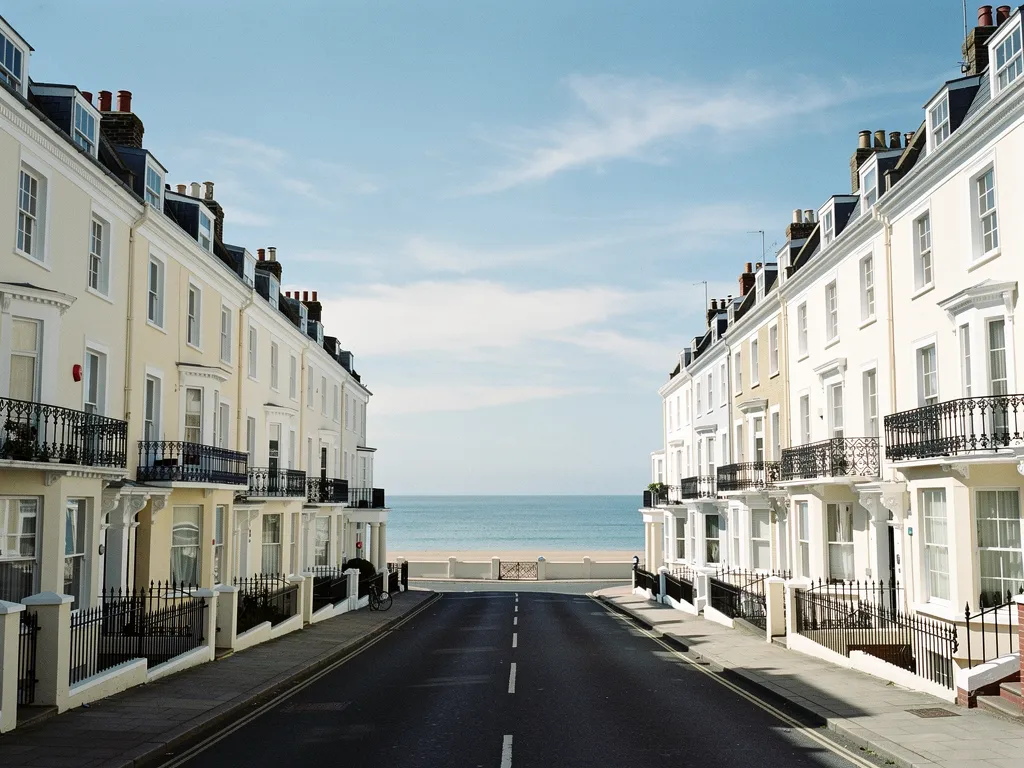
On the Sussex coast the weather ages roofs faster than the age of a house suggests, and the housing stock ranges from Victorian slate terraces to post-war bungalows with flat-roofed additions. For the survey visit itself, see our page on the roof follow-up after a homebuyer survey. For the wider range of roofing help, start from our home page.
Age and covering: the first questions to ask
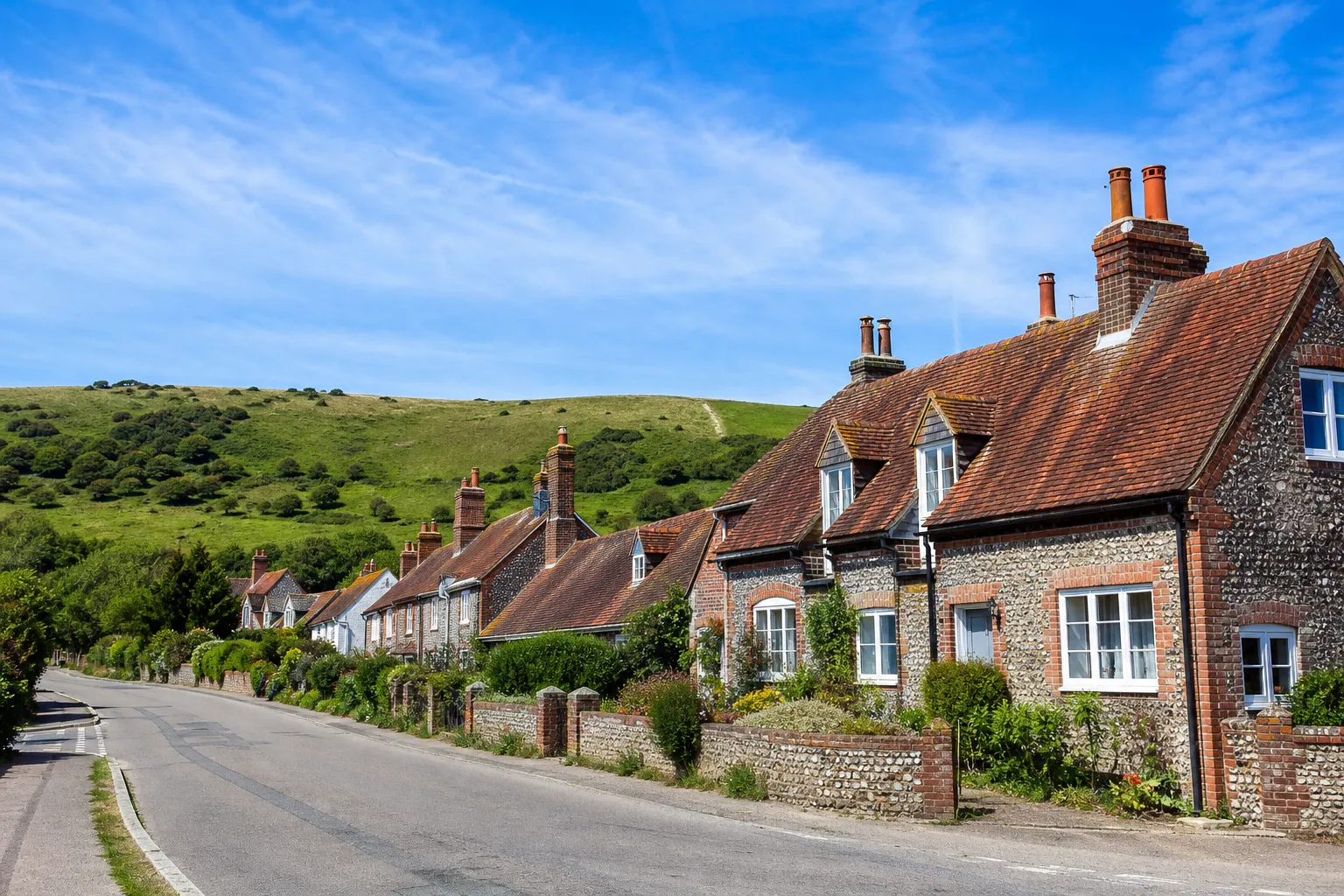
Ask the seller when the roof was last re-covered, who did it, and whether any paperwork survives. The age of the house is not the age of the roof. A 1930s semi may have been re-tiled in the 1980s, or still wear its original clay. A Victorian terrace may have had its slates stripped and replaced with a lighter covering that does not match the neighbours.
From the street, a few things stand out. A ridge line that dips or bows, a patchwork of different tile colours on one slope, rows of tiles that have slipped, moss packed along the courses and gutters sprouting plants all suggest a roof that has had little attention. None of these is a verdict on its own, but each deserves a question.
How long a covering typically lasts
Lifespans are published as typical ranges, and none is a promise. MyBuilder gives 80 to 100 years or more for natural slate that has been properly installed. Marley reports a minimum life expectancy of 60 years for clay tiles, and treats that as a floor rather than a promise. Concrete tiles are often quoted at 30 to 60 years. Exposure, workmanship and upkeep all move these numbers.
What replacing it costs
MyBuilder (updated 21/08/2026) gives a typical UK range of £5,000 to £8,000 for a gable-ended semi-detached and £8,000 to £12,000 for a hipped one. Access, covering, the size of the roof and what the survey finds all move the final figure, and our written quote follows a survey of the roof itself. A roof that is likely to need replacing within a few years is a reasonable subject to raise through your solicitor before you exchange. Our guides to how old a roof is and signs you need a new roof explain what the evidence looks like.
Chimneys, ridges and flashings
The joints and projections are where roofs tend to fail first, and they are easy to see through binoculars. Look at each chimney stack for a lean, for crumbling pointing, for cracked or missing flaunching (the mortar cap on the stack that fixes the pots) and for bricks flaking on the weather faces. Check the lead flashing where the stack meets the slope, and the ridge tiles capping the top.
Ridges bedded in mortar alone
Newer work follows the 2014 revision of BS 5534, so ridge and hip tiles get a clip or a screw in addition to the mortar. A roof laid before then may carry ridges held by mortar only. That is not a fault in itself, but cracked or sunken mortar along the ridge means the tiles are loosening, and a coastal gale will test them.
A chimney breast that has gone
Look inside as well as out. A stack still standing on the roof with no breast in the room below suggests someone removed the chimney breast inside. The Planning Portal states that Building Regulations approval will always apply to taking out a chimney breast. Where the breast is on a party wall, the neighbour has to be served notice, and GOV.UK sets the window as between 2 months and a year ahead of the work; silence from next door is not agreement.
Ask the seller for the paperwork, and if there is none, tell your solicitor. Unsupported brickwork above a missing breast is a structural question, not a cosmetic one.
For a closer look at what a stack inspection involves, see chimney inspections, and for the ridge work itself our ridge tile repairs page.
Flat sections, extensions and conservatories
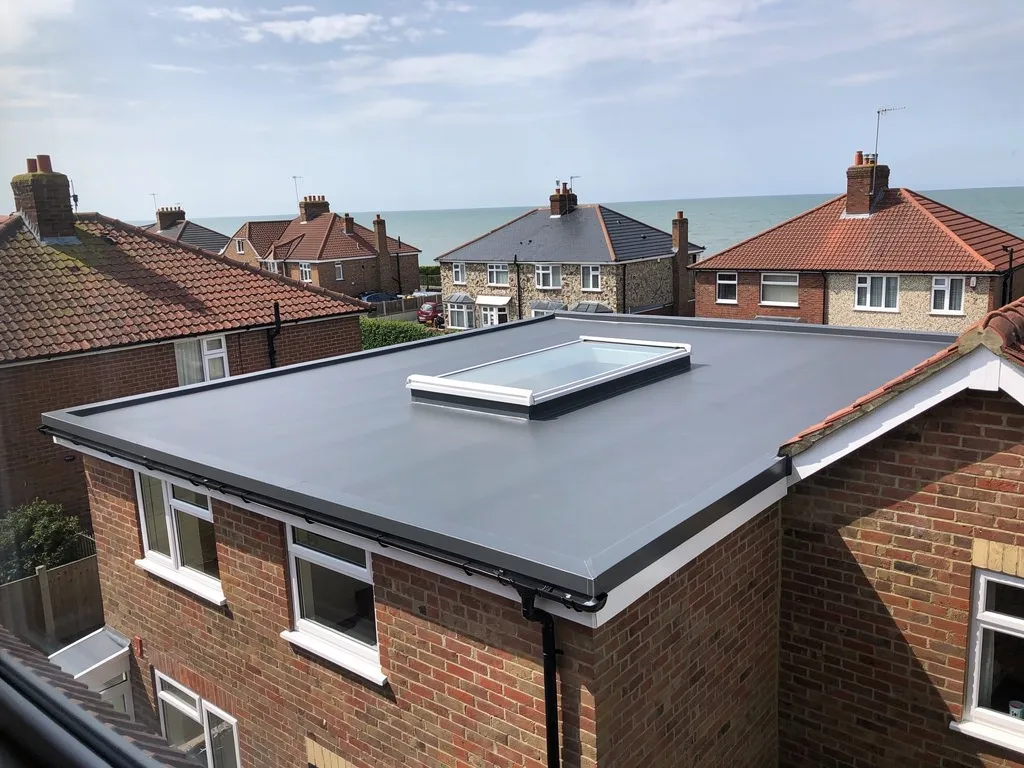
Many houses on this coast have a flat-roofed extension, a bay roof, a porch or a garage added over the years, and these sections age differently from the main slope. MyBuilder states that a flat roof typically lasts between 15 and 30 years, and the figure depends heavily on the covering. GreenSpec expects 20 to 30 years from EPDM, Less quotes 25 to 40 years for GRP, and Less gives 10 to 20 years for torch-on felt. Ask which covering is on the roof and when it went down.
Signs of trouble are usually visible from an upstairs window or a ladder held by someone else: standing water that stays long after rain, blisters, open seams and cracked upstands where the felt meets a wall. Ponding points to falls that are too shallow. Inside, a brown stain on the ceiling below a flat roof is worth a question.
Solid conservatory roofs and loft work
Replacing a conservatory roof with a solid one counts as a material alteration, according to HomeBuilding, and needs a building control application. A room created in the roof brings escape and insulation rules of its own. When a previous owner has done any of this, ask for the building control paperwork. If it was never obtained, your solicitor needs to know before you commit.
Polycarbonate conservatory roofs have a shorter typical life, at around 10 to 15 years, so one that is clouded or brittle should be priced as a coming expense.
Our pages on flat roof lifespan and solid conservatory roofs go further into each.
Spray foam under the roof
Spray foam insulation sprayed onto the underside of the roof, around the rafters, is a topic that can stall a sale. The foam bonds to timber and tile, hides the battens and the underlay from view, and can be hard to take out.
The RICS consumer guide of March 2023 raises several cautions. Installed badly, foam can leave a roof damp through condensation. Owners are told to ask their mortgage provider whether its policy permits the product. Listed and other protected buildings need consent before any is fitted. Taking it out again could harm the structure, and a surveyor may weigh its presence when giving a valuation.
What lenders have said
In November 2024 it was reported that some lenders refuse loans on homes with the foam, while others decide case by case. Positions change, so ask the lender directly, in writing, before exchange.
How to spot it, and what to ask
In the loft, look for rafters covered in a pale yellow or off-white crust where you would expect to see felt and timber. Ask the seller who installed it, when, and what paperwork survives. The Energy Saving Trust (guidance updated May 2026) advises against using foam over a leaking roof before the leak itself is cured.
If foam is present, MyBuilder gives typical UK figures of £100 to £200 for an assessment and £20 to £50 per square metre for removal. Read our pages on spray foam when buying a house and spray foam and mortgages, or see the RICS spray foam consumer guide directly.
Asbestos garage roofs and old soffits
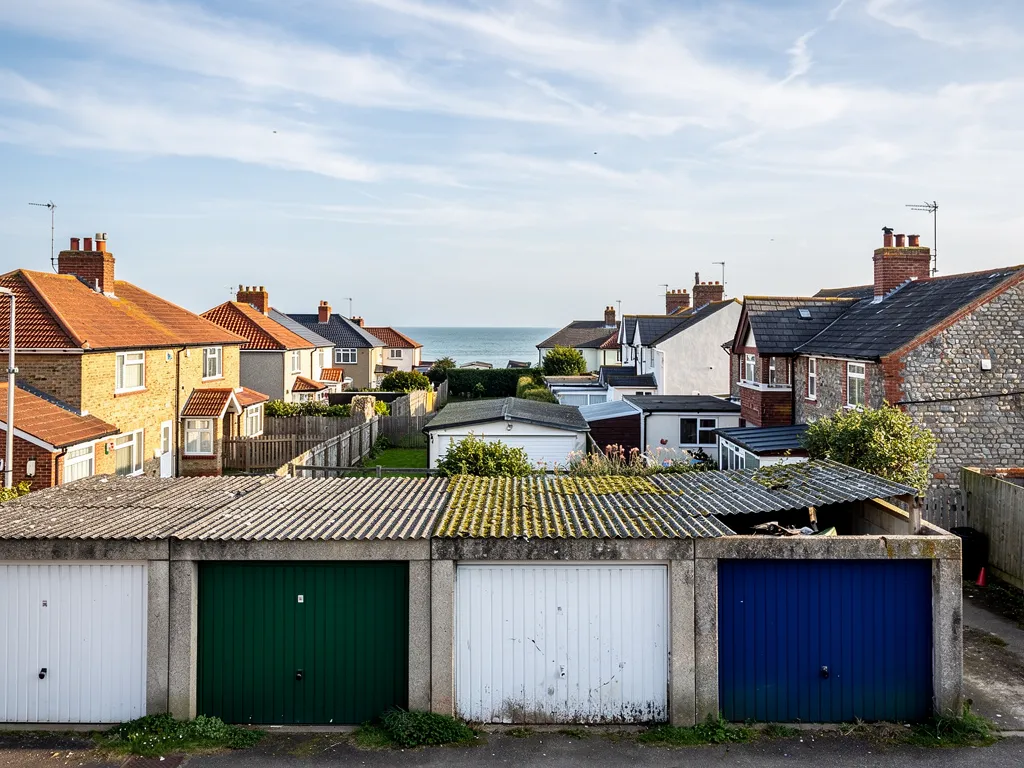
HSE guidance says to assume asbestos is present if the building went up, or was refurbished, before 2000. On a roof, the usual places are corrugated cement sheeting on garages, sheds and lean-tos, and the soffit boards under the eaves. Cement sheeting that has stayed intact is not dangerous to live beside, but it needs care.
Cement sheets on a garage or outbuilding
HSE treats careful removal of asbestos cement, including weathered sheeting that is not otherwise badly damaged, as non-licensed work. Where the material has been substantially damaged or broken up, it becomes notifiable non-licensed work, and HSE says notice is required before work starts. HSE adds that cement sheet roofs are fragile at all times, so nobody should step on one. With an older garage on the plot, treat any plan to take the roof off as a job for people who know the rules.
Soffits and boards
Under the eaves, external soffit boards can also be asbestos insulating board, HSE says, and the eye cannot easily tell it from non-asbestos board. Most work to remove insulating board is licensed work. If a soffit is cracked or damaged, do not drill, sand or jet-wash it.
Waste and cost
When a contractor removes asbestos from a home, the waste is consigned with a note, and the contractor completes it as the waste producer. MyBuilder gives a typical UK range of £350 to £1,295 for removing a single garage roof, with an average of around £2,000 across jobs. A garage roof of unknown material belongs on your list of things to price before you exchange. Our guides to whether a garage roof is asbestos and asbestos soffits explain how to find out.
Conservation areas, listed status and what to ask the seller
A conservation area does not stop you re-roofing like for like, but a few areas nearby carry Article 4 directions that remove roof rights. Old Shoreham and Kingston Buci both have Article 4 directions that take away permitted development for roof coverings and rooflights on frontages facing a road or path, and for altering a chimney anywhere on the house. The Warwick Gardens direction in Worthing controls any switch in the shape or covering of a roof slope that faces a road or open space. Warwick Place and Western Row, also in Worthing, carry their own directions. Ask the council whether the house is covered before you plan any change.
Listed buildings
Works that affect a listed building's special character need listed building consent, and the 1990 Act makes work without it a criminal offence. Adur & Worthing Councils list mismatched repair materials as work that needs it. The South Downs National Park Authority says like-for-like repairs do not need listed building consent, and adds that unauthorised works are not protected by the usual four-year enforcement cut-off. So ask to see consents for any past roof work.
Questions to put through your solicitor
- When was the roof last re-covered, and is there an invoice?
- Has anything been added, such as a solid conservatory roof, roof windows or a loft room, and is the building control paperwork available?
- Is there spray foam under the roof, or asbestos on the garage?
- Is the building listed, or in a conservation area with an Article 4 direction?
Once you own the house, the seasonal roof maintenance checklist keeps small faults small, and coverings that last on the Sussex coast helps with any replacement. Check also what roof cover under home insurance expects of you. If a survey you commission turns up a fault, a written quote with photographs gives you a figure to put to the seller before exchange.