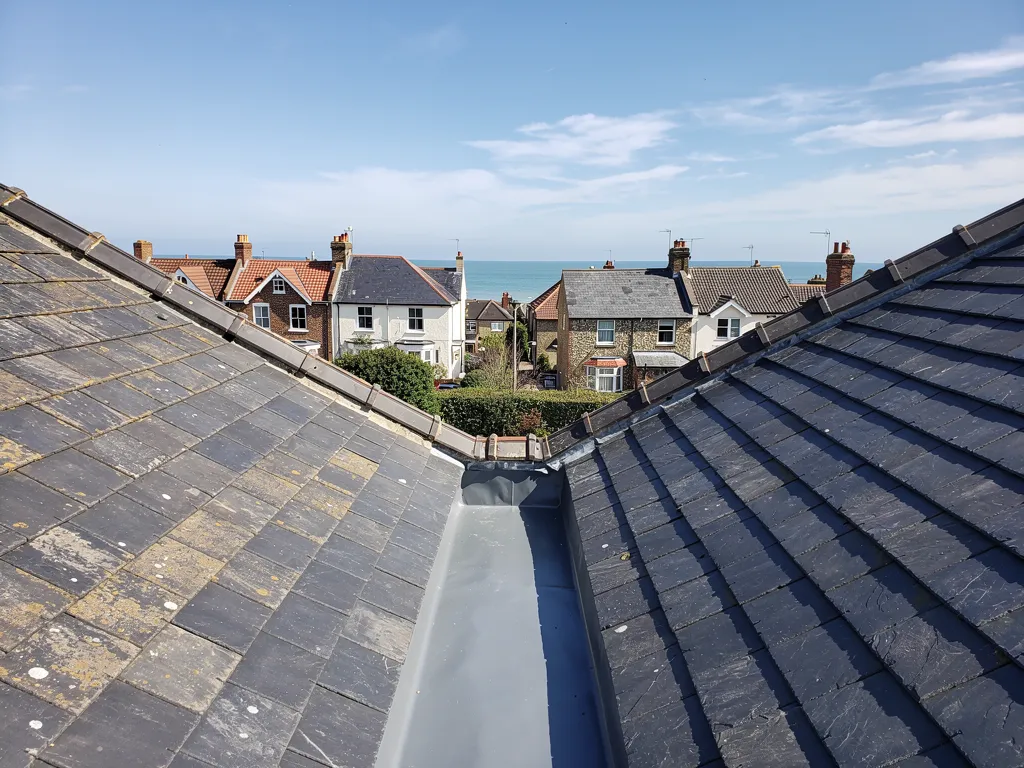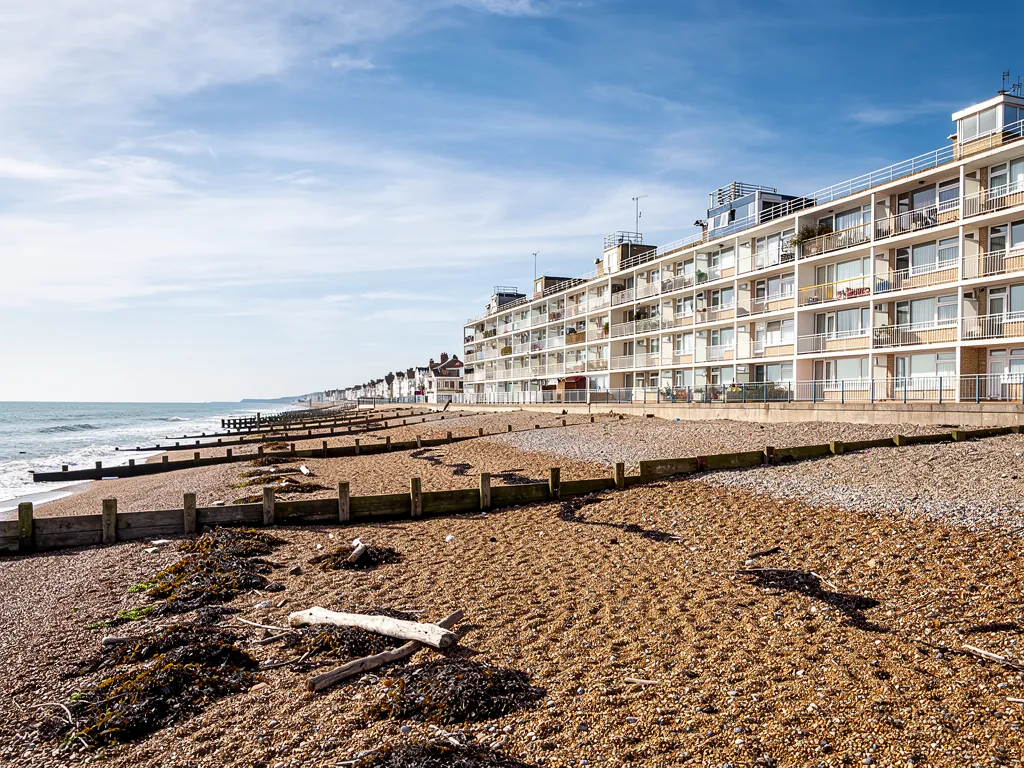
Roofs on this stretch of coast live a harder life than their age suggests. Spring and autumn gales, driving rain blown in from the Channel and the salt carried on the air all wear at tiles, mortar, lead and the rainwater system. Almost nothing fails overnight, though. A gutter fills with leaves, a tile slips a little further each storm, a ridge bed loosens, and eventually water finds the gap.
That slow pace is the good news, because it means regular looking catches most trouble while it is cheap. The checks below are grouped by season and are all done from the ground, from a window or from inside the loft. None involves climbing onto the roof, which is the single biggest danger in DIY maintenance and is best left to people with the right access equipment.
Use the list as a routine, not a one-off. Photograph each elevation in the same spot at the same time of year and keep the pictures together. Changes show up quickly when you can compare, and the record helps if you ever need to show an insurer or a buyer how the roof was kept. If you would like help with anything on the list, our home page shows what we do and how to reach us.
Spotting trouble while standing at ground level
Pick a clear, dry day and walk around the house with binoculars. Stand far enough back to see each slope as a whole, then zoom in on detail. You are looking for anything that has changed since the last time, because a new fault is easier to spot than an old one.
Start with the covering. On a tiled roof, look for tiles that sit lower than their neighbours, tiles with a visible crack, and gaps where one has gone altogether. On slate, look for slates that have dropped a few millimetres out of line or show a pale streak where the slate beneath has been exposed. Check the surface for patches of moss or lichen, which hold moisture against the covering.
Joints and projections
Work along the ridge at the top, where capping tiles should sit in a straight, even line with no gaps or crumbling mortar. Then check the chimney: lean, loose pointing, cracks in the flaunching (the mortar cap that fixes the pots) and any lead flashing that has lifted away from the brickwork. Glance along each verge (the roof edge beside a gable wall) for tiles that overhang unevenly or mortar that has fallen away. Valleys, where two slopes meet, should be free of leaves and debris.
Keep your feet on the ground
A binocular check can only tell you so much, and it is no substitute for a survey. Do not use a ladder against the gutter, and do not step onto tiles, which crack and slip underfoot. Our pages on inspecting your roof from the ground and why walking on roof tiles causes damage explain what can be done safely.
Autumn: clear the gutters before the leaves settle
If one job on this list matters more than the rest, it is clearing the rainwater system before winter. When a gutter blocks, water spills back over the fascia and wets the timber behind it and finds its way into the wall, a problem that is easy to mistake for a roof leak. Leaves, moss that has washed down from the tiles and the seed heads of roof-edge plants all collect in the runs and at the outlets.
Work from the outlet outward. A gutter should fall gently towards the downpipe, and makers' guidance runs from about 1:600 to 1:350, depending on the system. Brett Martin advises supports at no more than 900mm apart. If water stands in the channel after rain, or you see a sag between brackets, the gutter has lost its fall or a bracket has loosened. That calls for a repair, not just a clear-out.
Downpipes and hoppers
Check that each downpipe actually drains. Pour a jug of water into the top and watch the foot of the pipe. Look for green staining on the wall behind a pipe, which suggests a leak at a joint, and for gutters that drip at a union rather than carrying water to the outlet.
Doing it safely
Hand-clearing from a ladder is the most common way people are hurt on their own homes. If your gutters are out of reach from the ground, a professional with the right access is a better choice than a stretched ladder. Our guides on gutter cleaning, overflowing gutters and gutter fall give more detail.
Do the first check in October and a second in early spring, because leaf fall continues well into winter.
Winter and after-storm checks
Winter is for looking at what the weather has done. After every serious gale, walk round the house again with the binoculars and compare the elevations against your last photographs. Fresh debris on the lawn is a clue: broken tile fragments, bits of mortar, strips of lead or lengths of fascia mean something above has moved.
Check the ridge line and the hips first, since the wind lifts them before it takes the field of the roof. Then look at the lead flashings around chimneys and walls, which can peel away at the edges in strong gusts. Look at the garden for slates or tiles lying where they fell, and keep any pieces you find, because they help a roofer match the covering. Our pages on checks after a storm and storm season preparation list the signs in more detail.
Inside the house
Look at the top-floor ceilings and the corners where walls meet them. New stains, a musty smell or paint that bubbles after wet weather deserve attention. In the loft, use a torch to look at the underside of the roof for dark streaks on timber, damp patches on insulation and any chink of daylight showing through the covering.
Ventilation matters too
Condensation in a cold loft can look like a leak. Marley's summary of BS 5250 asks for a continuous 10mm opening at the eaves on roofs steeper than 15°, when a high-resistance underlay is laid. Do not stuff insulation tight into the eaves, because it blocks the air path. If you are unsure whether you have a leak or condensation, our page on signs of poor roof ventilation helps you tell.
Spring: moss, nests and the loft
Spring is when you see what winter did to the covering and the surfaces around it, and it is a good moment for a first full set of photographs of the year. It is also when birds start looking for nesting spots under eaves and in gaps beside chimneys and fascias.
Moss and lichen come first. A thin growth does little harm, yet a heavy mat keeps the covering damp, can lift slate edges, and sheds debris into the gutters. Resist the urge to blast it off with a pressure washer. MyBuilder cautions that a pressure washer may harm delicate tiles, and the jet can force water under the laps. Cleaning is a job for someone who can work on the roof safely, and MyBuilder gives a typical UK range of £450 to £850 for a pitched roof. See roof cleaning and moss removal for how it is done.
Nests and bats
If birds are nesting in or near the roof, leave them alone. Nesting birds and bats are protected by law, so leave an active nest alone and take advice before any work if you think bats use the roof.
The loft in spring
Pick a dry day and climb the loft ladder, torch in hand. Look along the rafters for new tide marks, the faint rings that mark where water once ran. Check that insulation is dry and that no pipes, cables or ducts have been pushed against the roof timbers. Look at the underside of the covering for cracked or missing mortar bedding on the ridge and hips. If anything looks different from last year, photograph it and compare.
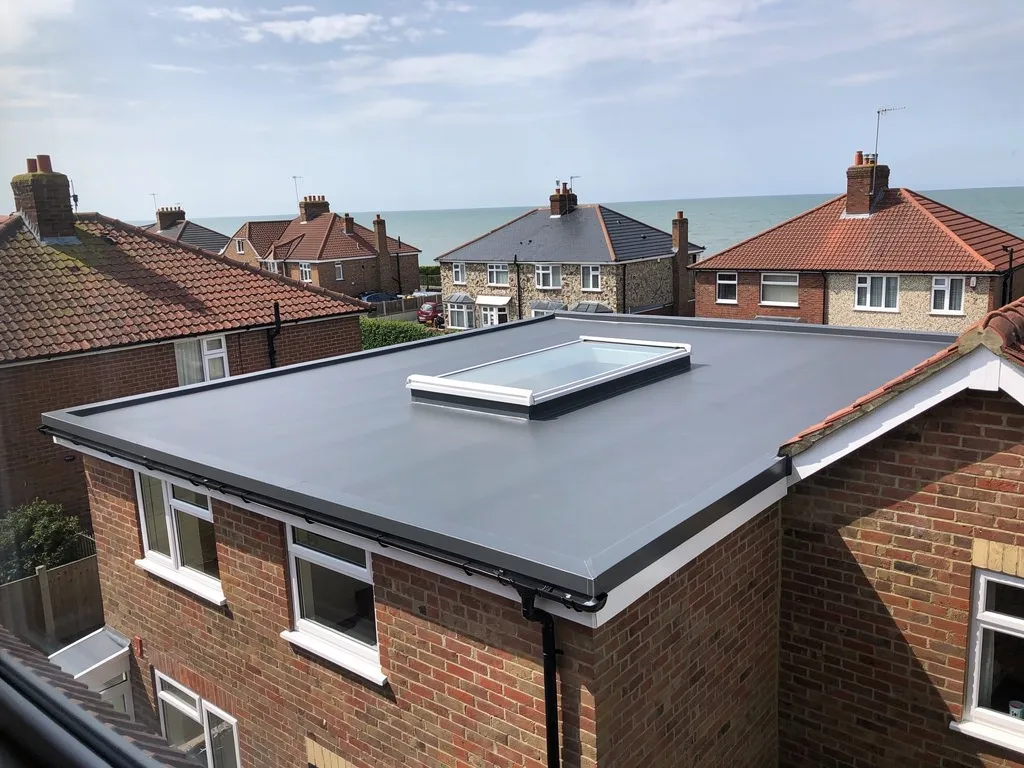
Summer: flat roofs, salt and the roofline
A spell of dry weather suits flat roofs best, as well as the painted or plastic parts of the roofline. Sea air is hard on both, and summer is when cleaning and small repairs are easiest.
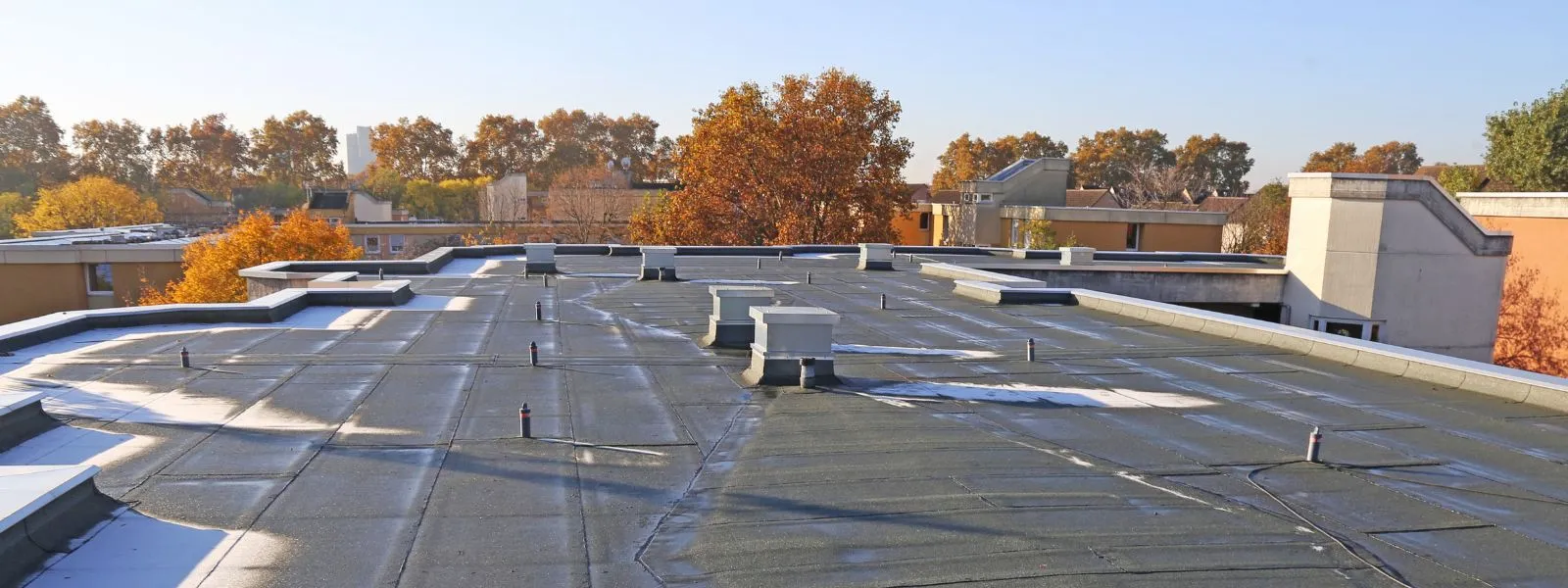
On a flat roof, look from an upstairs window or a safe vantage point. Standing water that remains two days after rain means the surface is ponding, and that wears a membrane faster. IKO, citing the 2018 edition of BS 6229 (since revised), gives a recommended minimum fall of 1:80 for a flat roof, with the roof designed to 1:40 to allow for tolerances. Also look for blisters, open seams, cracks where the membrane turns up against a wall, and sagging around outlets. Our page on flat roof maintenance goes through the list.
Salt on the soffits and fascias
HomeBuilding points out that near the sea, airborne salt collects on the boards under the eaves, where no rain reaches to wash it away. A rinse with a hose and a soft brush now and then makes sense at the coast. A zinc manufacturer says white deposits form mainly where rainwater cannot reach, and suggests rinsing zinc surfaces with fresh water about twice a year. Check that paint is sound, because bare timber takes in moisture quickly.
Our page on roofline care in salt air covers what to watch.
Skylights and vents
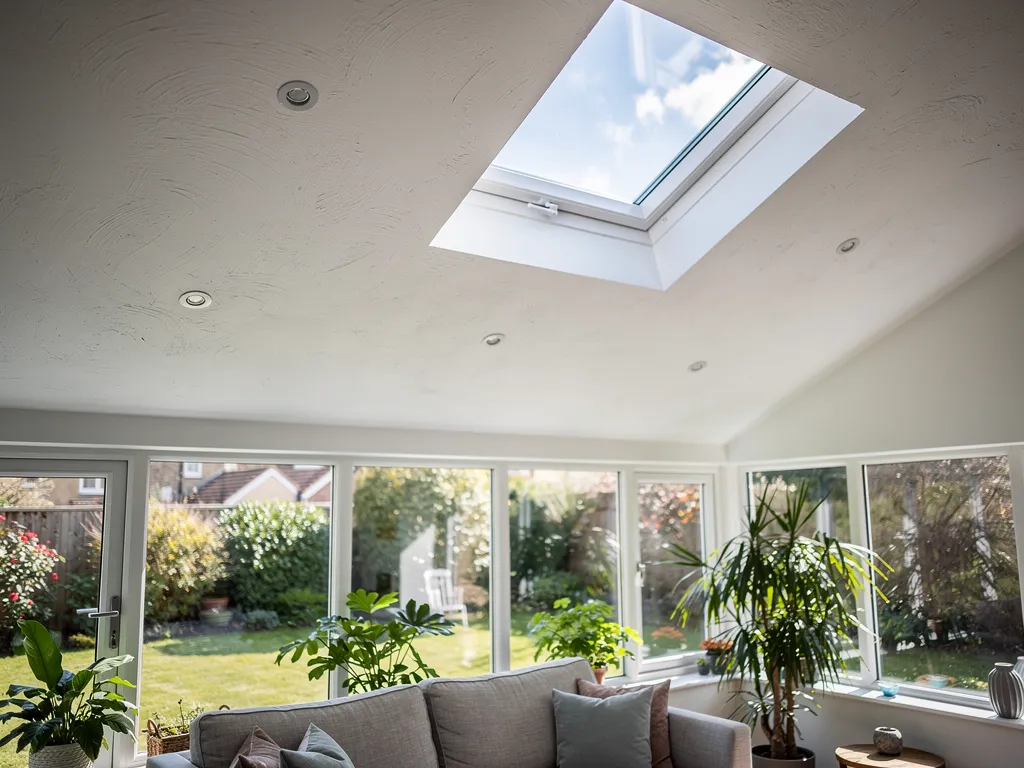
Look around the frames of any roof windows for stains, check seals for cracks, and make sure tile vents and soil pipe terminals are not blocked by nests or debris. Clean the glass from inside where you can, and note any staining on the plasterwork round the frame, which tells you whether a seal is letting water through.

What to leave to a roofer, and when to book an inspection
Everything above is observation. Anything that involves getting onto the roof, taking tiles off, working with lead or removing material should go to a roofer. The reasons are practical as well as safety: a roofer can tell a surface blemish from a failing fixing, and can see the layers beneath that you cannot.
Book an inspection when you see recurring slipped tiles, a sagging ridge, lifted lead, a stain that returns after a dry spell, or after a severe storm if you cannot rule out damage from the ground. Also book one before buying or selling a house, and when the covering is old enough that you do not know its history. A roofer's survey with photographs shows you the roof as it is, and gives you something to plan repairs against.
What an inspection costs
MyBuilder (updated 21/08/2026) gives a typical UK range of £150 to £250 for a standard roof inspection and £200 to £400 for a drone survey. Our survey is followed by a single written figure for the job, with photographs of the areas that need attention.
Choosing and paying
When you hire anyone for roof work, read how to find a good roofer first. Before you hand over any money in advance, look at our guidance on roofer deposits. If your roof is on the coast, coverings that last on the Sussex coast can help decide between repairing and recovering. How often to inspect varies with the covering and the roof's age, and our guide to how often to inspect a roof sets out how to decide.