Roofs tend to be ignored until something drips. That is understandable, since the roof is out of sight and does its job quietly for years. The trouble is that the faults which end in a stained ceiling nearly always start small and slow: a ridge bed that loosens, a flashing that lifts a few millimetres, a gutter that sags just enough to overflow. Found early, these are modest repairs. Found after a winter of water getting in, they involve wet timber and redecoration.
A regular check is therefore less about the roof than about timing. You are choosing to meet the problem while it is cheap. The question is how regularly. Too rarely and faults develop unseen; too often and you pay for visits that find nothing.
The answer below is a rhythm, not a rule. It depends on how old the roof is, what it is covered with, and how much weather it takes, which on this coast means gales, driving rain and sea air. We also cover the extra look that follows a storm, and what you can safely check yourself from the ground. The full range of surveys we carry out is set out on our roof inspections and surveys page.
Why a routine check beats waiting for a stain
Water does not announce itself. Between the first moment it gets past the covering and the first mark on a ceiling, it may soak the underlay, run along a rafter and spread through insulation, and none of that is visible from the room below. By the time a stain appears, the damage in the roof space is often well ahead of it. That gap is the argument for checking on a schedule rather than on symptoms.
The second argument is cost. A loose ridge tile re-fixed, a section of flashing dressed back or a handful of slipped slates replaced is a small, quick visit. Left to a winter, the same fault can wet a wall plate, spoil insulation and bring a plasterer into the story. The roof itself has not changed; the delay has.
A third reason is knowledge. Once you have watched a roof for a while you know which slope is mossy, which gutter overflows and whether last year's repair is holding, and that makes any later decision to patch, recover or renew better informed.
What regular checking does not do
It does not guarantee that nothing will go wrong, and it is no substitute for repair when a fault is found. It cannot stop a gale from lifting a tile. What it does is shorten the time between a fault appearing and somebody noticing it. On a coastal roof, where weather arrives hard and often, that shorter gap is worth having.
It also keeps a record. Dated notes and pictures from each check build up into a history of the roof, and that history is useful to you, to a future contractor and to a buyer.
A rhythm by age: new, mid-life and ageing roofs
Think in three stages. A new or recently renewed roof needs the lightest attention, but not none. Look at it after the first winter, when settling, loose fixings or faults in the work have had a chance to show, and again a year or two on.
A roof in mid-life, past the first decade or so and well before the end of its covering's range, does well with a yearly look from the ground and a fuller inspection every few years. The yearly look is about spotting change, such as a new gap in the tile line, fresh moss or a leaning gutter. The fuller inspection goes up close, including the loft and the lead.
An ageing roof needs closer watching. As a covering approaches the end of its useful life, small failures come faster and in more places, and the point at which patching stops making sense creeps closer. For these roofs a yearly inspection by someone who can get close is sensible, and so is a check in the autumn before the worst weather and again in spring.
When the age is unknown
Plenty of owners do not know how old their roof is, especially after buying a house. In that case, treat the roof as mid-life until a survey says otherwise. A first proper inspection fixes a baseline, after which you can set a rhythm that suits what it found. Look for clues in the building itself: a loft with old felt underlay, mortar-bedded ridges and no mechanical fixings suggests a roof laid before current practice, while newer work shows clips and modern membranes.
Roofs get renewed and part-renewed over a building's life, so an old house may carry a young covering on one slope and an ageing one on another.
How the covering changes the answer
Different coverings age in different ways, and the rhythm should follow. Natural slate is long-lived. MyBuilder gives 80 to 100 years or more for a well-installed slate roof, but individual slates can slip as their nail fixings corrode long before the roof as a whole is spent, so the check is for slipped units and for the state of the lead and ridge. Clay tiles are similar in outlook. Marley quotes 60 years as the minimum life expectancy found by the Building Research Establishment, though for old peg-tile roofs that figure is not a reliable guide, and spalling from frost is the thing to look for.
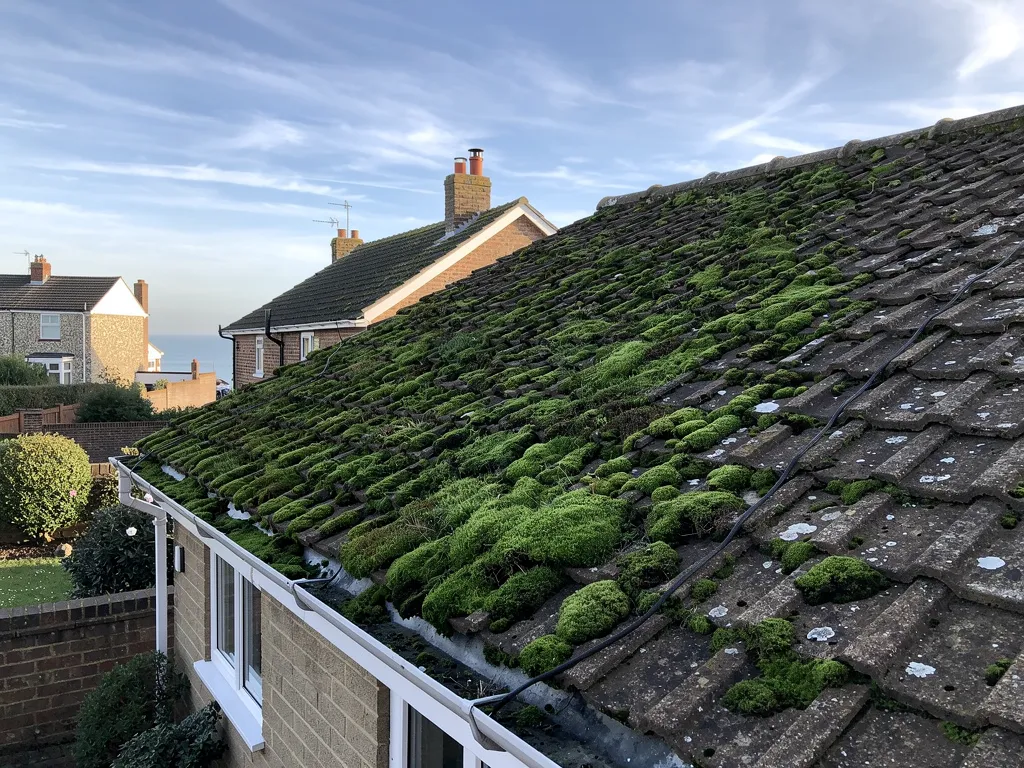
Concrete tiles are often put at around 30 to 60 years. Surface erosion and moss are the usual early signs, and the bedding on ridges and hips tends to give out well before the tiles themselves. A look at the ridge and verges every year is more useful than a general scan.
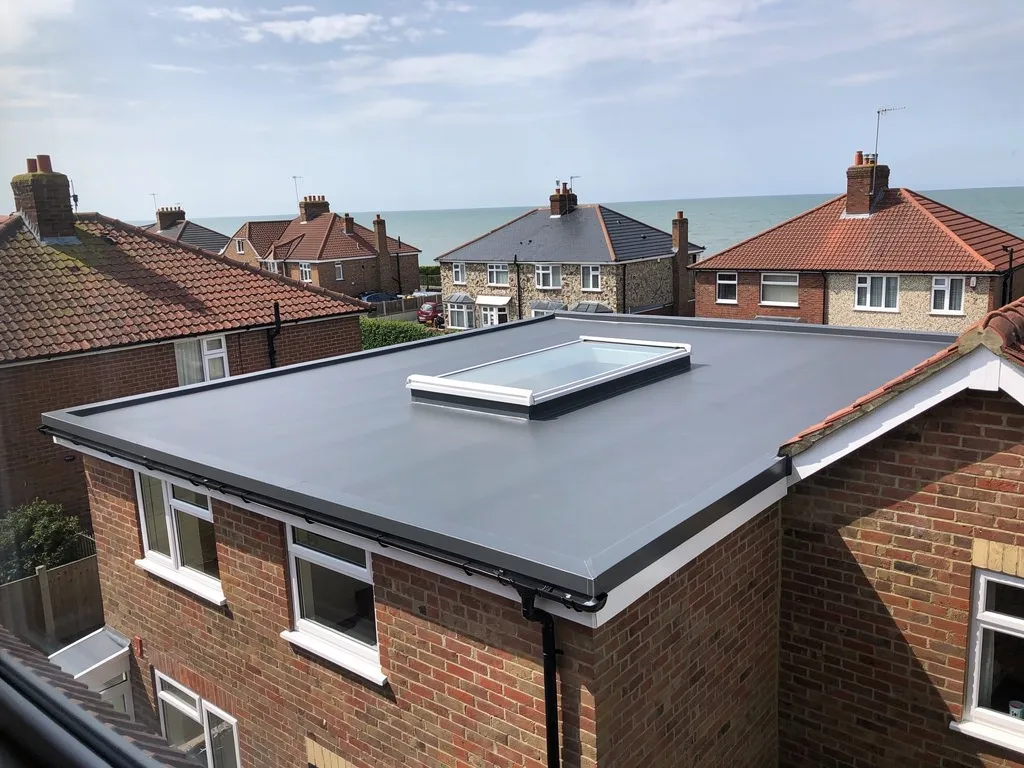
Flat roofs run on shorter cycles. MyBuilder gives a flat roof 15 to 30 years, with felt toward the lower end and EPDM, GRP and lead higher. They also pond, blister and split at seams, and a blocked outlet can undo a good membrane in a season. A twice-yearly look, in autumn and spring, is a sensible habit, with the outlets cleared each time.
Lifespans are ranges, not promises
These are typical ranges from published guides. Exposure, quality of work and upkeep shift them either way, and a maker's warranty does not equal a lifespan. A slate roof on an exposed hillside and one in a sheltered street age differently. Use the numbers to judge when attention is due, not as a date by which something will fail.
The roofline keeps its own cycle. MyBuilder says uPVC fascias and soffits typically get replaced after 10 to 20 years, and timber ones need paint and sealant renewed more often on a coastal house.
After a gale or a heavy downpour
Some checks should not wait for the calendar. After a strong gale, a spell of heavy driving rain, or hail, take a look from the ground as soon as it is safe. You are looking for the obvious: tiles on the ground or in the garden, a ridge line that no longer looks straight, a gutter hanging at one end, a chimney pot at an angle, or lead flashing flapping loose. Binoculars help, and so does the camera on a phone with a zoom.
Inside, check the loft and the ceilings on the weather side of the house within a day or two. A fresh damp patch or a drip after the storm points to a recent opening. Do not climb onto the roof. Wet tiles are slippery and the edges are unforgiving. If you can see damage, or you suspect it, a professional can inspect it properly with the right access.
It also helps to take dated pictures of anything you find, before any temporary cover goes on. Those pictures show what the storm did and when.
Storm damage and wear and tear
If you intend to make an insurance claim, timing and evidence matter, and the distinction between storm damage and gradual deterioration is where many disagreements start. The Financial Ombudsman Service says exclusions commonly cover gradual damage, and Which? gives water coming through a badly maintained roof as a wear-and-tear example. Regular inspection records help here, because they show the condition of the roof before the storm. Our insurance roof report page explains what a report for that purpose contains. What an insurer decides is for the insurer.
What you can check yourself, and what needs a roofer
A homeowner can do useful checking without leaving the ground. Walk round the house twice a year, in spring and autumn, and look up. Scan the slopes for gaps, slipped or cracked tiles and patches of heavy moss. Look at the ridge line against the sky for dips or missing pieces. Check that the gutters run level, are free of plants and are not dripping at the joints, and look at the wall below them for green streaks that show where water has been spilling.
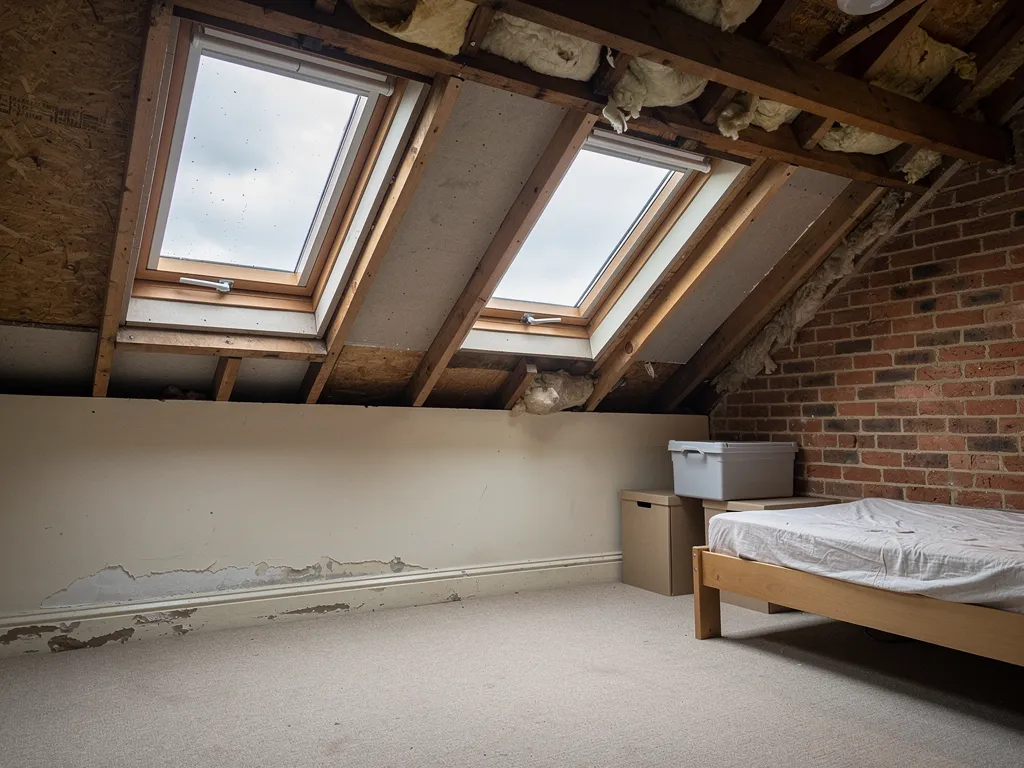
The loft deserves a visit too. Take a torch, stand only on boards or joists, and look for daylight through the covering, damp patches on the timbers, and condensation on the underlay. Check that the insulation has not been pushed across the eaves vents. Our page on the loft insulation check goes through this in more detail.
Photograph what you see and write the date on it. A phone is enough.
When to call someone
Anything that needs ladders, scaffolding or standing on the roof is for a roofer. So is anything you cannot identify from the ground, such as the state of lead at a chimney or the condition of a valley. Call someone sooner if you see a missing tile, a leaning chimney, a sagging ridge, a damp patch that grows, or an unfamiliar sound in the loft on windy nights.
Be wary of callers who say they spotted a problem while passing. A genuine check starts with a visit you asked for, and ends with pictures of your own roof to study in your own time.

Keeping a record, and planning around buying and selling
Whatever rhythm you settle on, write it down. A simple log with the date, who looked, what they found and what was done is enough. Add the pictures. Over a few years this becomes a history of the roof, and a history is more persuasive than a memory when you need to show that a roof has been looked after.
The record pays off in several ways. It lets you spot slow change that a single glance would miss, such as a ridge line drifting or moss creeping across a slope. It helps a contractor see what has already been done, which saves diagnosis time. It supports a conversation with an insurer if a claim ever arises. And it reassures a buyer when you sell.
That last point deserves attention. A roof with a recent inspection and a clean report is easier to sell than one with an unknown history, and any faults found can be dealt with on your terms before a buyer's surveyor finds them. We cover the approach in our guide to getting your roof checked before you sell.
Setting your own schedule
In summary: a new roof is looked at after its first winter, a mid-life roof yearly from the ground with a closer inspection every few years, and an ageing or flat roof closely every year, with a flat roof's outlets cleared each autumn and spring. A serious storm brings every roof forward. If you are unsure which description fits yours, a single survey will place it, and the written quote that follows will say what, if anything, needs doing as a single total, with photographs of the areas that prompted it.