Selling a house hands the roof a new audience. For years it was something you glanced at when the gutters needed clearing. Now it will be climbed up to, photographed and written about by a stranger on a buyer's behalf, and whatever that person puts on paper can reshape the sale. A line about slipped tiles or a failing flashing leads to a request for a reduction, a demand for repairs, or a nervous buyer who quietly withdraws.
A roof check before you list takes that surprise out of the process. You find out what is there while there is still time to act, and you can choose between repairing, pricing it in or explaining it, rather than reacting to a surveyor's report under deadline. It is also, in many cases, a small and tidy job, since many roofs have a few minor faults that cost little to put right.
This guide covers what a pre-sale roof check involves, how to decide between fixing and disclosing, which repairs earn their keep and which do not, and what paperwork to gather. It does not replace advice from your estate agent or conveyancer, who can tell you what must be passed to a buyer. The wider service sits on our roof inspections and surveys page.
Why look before the buyer's surveyor does
The main reason is control. When a buyer's surveyor finds a fault you did not know about, you are negotiating from behind. The buyer has a report in hand, a number in mind and every reason to push. When you already know about the fault, and have either mended it or can show what it needs, the conversation is different. You are dealing in facts you have checked rather than answering a document you have not seen.
There is a second reason: speed. A sale can move quickly once an offer is accepted, and a roof fault that surfaces at that point may need a quote, a date for the work and a scaffold, all while a chain waits. Doing the checking early takes the pressure off. You can pick a roofer, compare what is on offer and schedule the work for a dry week.
A third reason is that buyers' surveys tend to be cautious about roofs. A general surveyor inspecting from the ground, with binoculars, cannot see much detail, so the wording may hedge with advice to get a specialist opinion. That is understandable, but it can turn a minor fault into a question mark that costs you a price reduction. A specialist's photographs and findings answer the question directly.
What a surveyor sees from outside
A general surveyor will note the covering type and its apparent condition, the ridge, any visible movement, the chimney, the gutters and downpipes, and what is visible of flashings. They will often look in the loft through the hatch. They rarely walk on the roof. Anything out of view is usually flagged as a limitation. Spotting the same items first, from a closer position, means you can deal with them before they appear in someone else's report.
What a pre-sale roof check covers
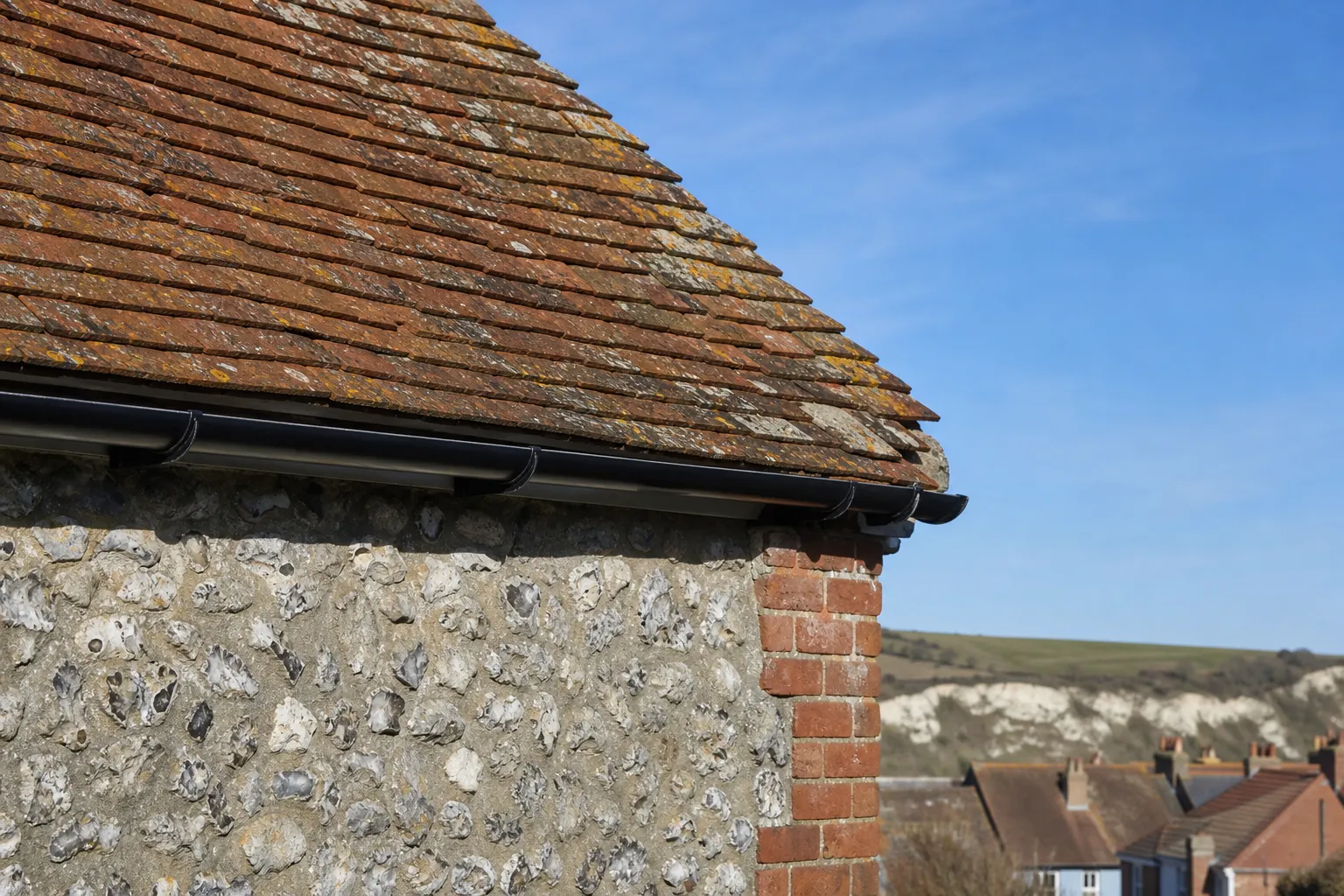
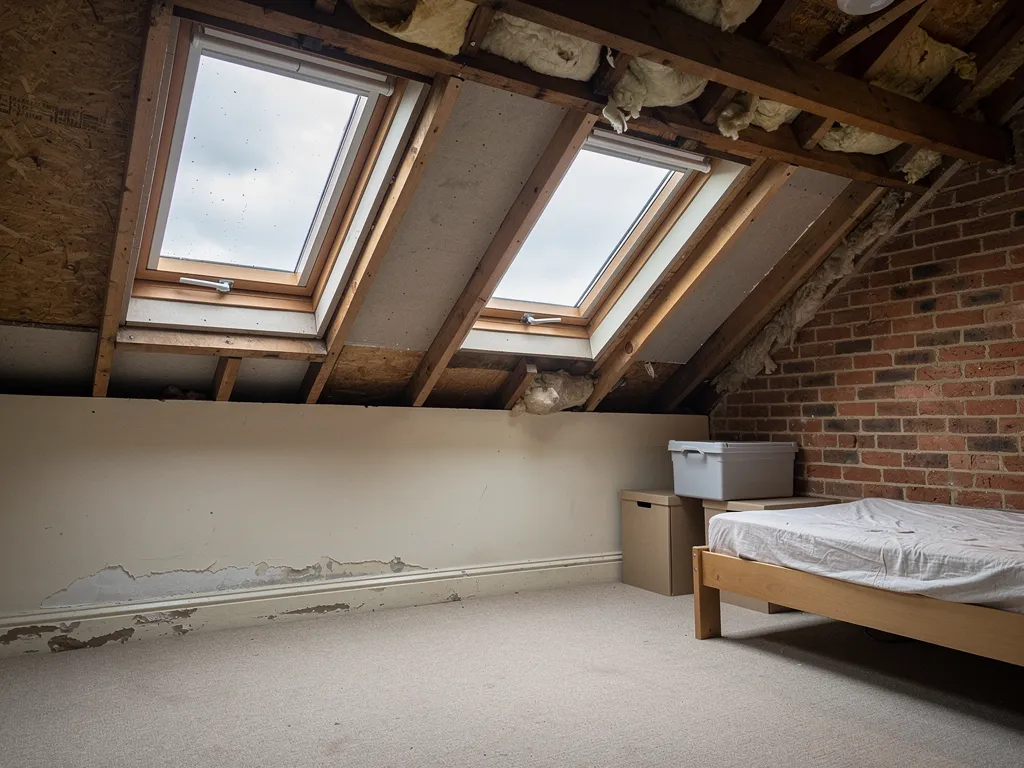
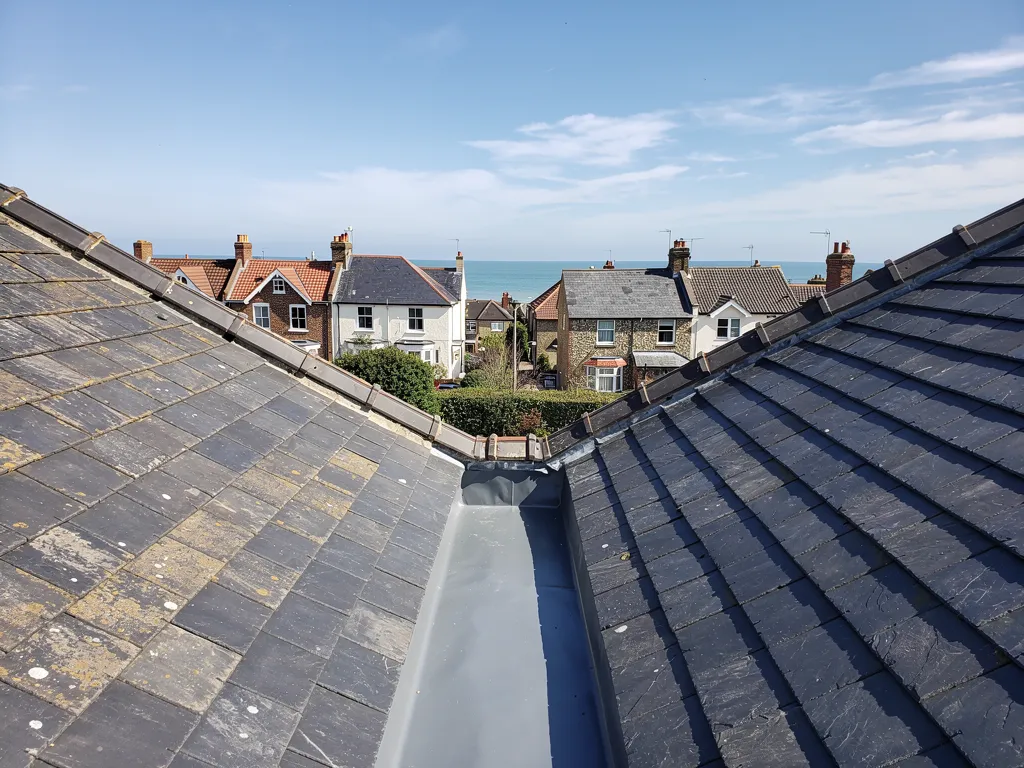
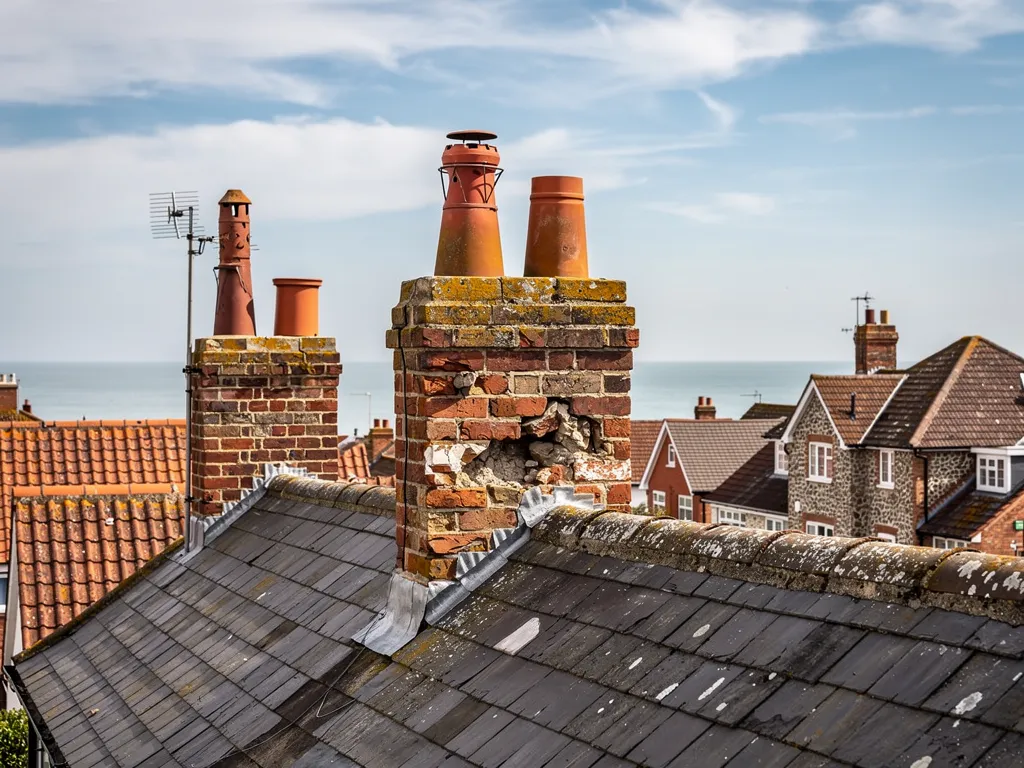
A pre-sale check follows the same sequence as any careful roof survey. The covering is looked at for slipped, cracked or missing units, wear and moss. The ridge and verges are checked for sound bedding and for fixings, since a roof where the ridge tiles rock under a finger is one a buyer's surveyor will notice. Flashings and valleys are looked at wherever the slope runs into a wall or stack. The chimney is examined for pointing, flaunching and pots. The gutters, fascias and soffits are checked for leaks and rot. Then the loft is inspected for daylight, damp, condensation and the condition of the timbers and underlay.
What is different is the emphasis. You are looking at the roof as a buyer will, which means paying special attention to what is visible from the garden and the street, and what would look worrying in a report. Our loft inspection page covers the inside view in more detail, and it is worth having done, because loft findings are the ones a buyer cannot dismiss as cosmetic.
Recording the condition
The point of the check is a record. Each item is photographed, labelled and rated, and the result is a dated set of images and notes that you can hold. That record shows the roof as it stands on the day, with faults and sound areas together, which is better evidence than either a verbal reassurance or an empty folder.
MyBuilder (updated 21/08/2026) gives a typical UK range of £150 to £250 for a standard roof inspection. Any written quote follows the survey, and the cost turns on access, covering, area and whatever the check finds.
Tell the roofer you are selling, and ask for the findings to be set out so that you can share them with a buyer if you choose.
Fix it or disclose it: making the call
Once you have the findings, each fault falls into one of three groups. Some are small and quick to put right, and the sensible move is to do the work. Some are bigger, and the choice depends on timing, price and what a buyer is likely to expect. And some are cosmetic or age-related, and are best left alone and explained.
Repair when the work is modest, when the fault is one a buyer's surveyor will certainly notice, and when mending it removes a source of doubt. A loose ridge bed, a lifted flashing, a section of broken gutter and a few slipped tiles all fit. For a sense of scale, MyBuilder (updated 21/08/2026) gives typical UK figures of £300 to £600 for new ridge bedding or replacement tiles and £100 to £300 for minor repairs, which is small against the effect on a sale.
Disclose when a repair is larger than you want to take on, for example a covering at the end of its life. In that case a clear written finding, with pictures and an outline of the options, lets a buyer weigh it up and allow for it in their offer. Your conveyancer or estate agent can tell you what has to be disclosed and when. We leave that to them.
The risks of saying nothing
It can be tempting to leave a roof alone and hope. A visible fault that you knew about and did not mention is likely to cost more later than one you raised yourself, because it damages trust once it comes out. A faulty roof is also a recognised reason for a buyer to withdraw or to ask for a retention from the price. Clear, early information usually keeps a sale on course.
If you are unsure which group a fault belongs to, the roofer's report should say. Our advice is the least work that cures the cause, and a bigger job only when nothing smaller will hold.
Repairs that earn their keep, and ones that do not
Not all work is worth doing before a sale. The jobs that pay back are those that remove a visible worry for little outlay. Re-fixing loose or missing tiles, re-bedding a ridge so that it is also mechanically fixed, dressing back lead, clearing and re-sealing gutters, and renewing a few rotten fascia boards fall in this group. They are quick, they are easily explained in a surveyor's note, and they show the house has been looked after.
Jobs that rarely pay back are large ones taken on only to impress. A full re-roof on a sound but plain roof is an expense a buyer may not value, and some would rather choose their own covering. If the roof is tired but serviceable, a repair now and a straight note of its likely remaining life is often better.
Roof cleaning sits in the middle. Removing thick moss makes the roof look better and lets the covering be seen properly, but it can expose weaknesses that were hidden, so check the condition first. Pressure washing can harm delicate tiles, so ask how the cleaning will be done.
Work that needs consent
Some roof changes need permission, and the buyer's legal side will want the paperwork. Homebuilding and Renovating classes a solid replacement for a conservatory roof as material alteration work needing a building control application. The Planning Portal says Building Regulations approval always applies to removing a chimney breast, and taking chimneys off a party wall also calls for a party wall notice. If any of this has been done in your time, gather the certificates. If work was done without them, speak to your building control body about what can be put right.
Keep approvals for roof windows or a loft room with the other papers, and we explain consent and handle the notification where our work is notifiable.
How a survey report helps in negotiation
A roof report that you hold before the buyer's surveyor visits is a negotiating tool. If the buyer's report raises a roof concern, you can answer it with dated photographs, a specialist's findings and, if work was done, an invoice for it. That tends to close the question quickly, since it replaces a general opinion with specific evidence.
It works in the other direction as well. If your report shows that the roof is sound, with only minor ageing noted, a buyer who is nervous after reading their own survey can be shown a different picture. You are not arguing with their surveyor. You are offering information that they did not have.
Where the report does list faults you have decided not to mend, it lets you price them realistically. You can set out what each would cost to put right, based on a written quote, and a buyer can decide whether to take it on, which is usually smoother than demands and counter-offers after an unexpected finding.
What a good record contains
For this to work, the report has to be a proper one. It should carry dated photographs with captions, findings with causes, a rating for urgency, and the options for each fault. Our guide to insurance roof reports shows how a report is laid out when it has to stand up to scrutiny from a third party, and the same layout suits a sale. The quote is a separate document, and it comes as one total price.
A report is also a snapshot. If months pass between the check and completion, particularly through a winter, a quick look confirms nothing has changed.

Gathering the paperwork and preparing for viewings
Before listing, pull together everything that relates to the roof. That means the survey report and photographs, invoices for past repairs, any cover from earlier contractors that still applies, and the approvals mentioned earlier if the roof has been altered. Put them in one folder. Your solicitor will want some of it, and a buyer who sees an organised file tends to read the roof as well cared for.
Ask any contractor who worked for you whether written cover exists and who gave it. Whoever gave it, a written document can pass on with the paperwork. Be exact about what such cover includes. It relates to the work, not the whole roof, and a buyer will want to see the wording.
Our survey preparation page lists what to have ready on the day, from loft access to notes on past leaks.
Getting the roof and roofline ready to be seen
Small details shape first impressions. Get leaves and moss out of the gutters. Make sure the loft hatch opens freely and the space is clear enough for a surveyor to see the roof timbers, since a loft packed to the rafters reads as a limitation. Tidy the garden below the roof so that the surveyor can place a ladder.
If the roof has just been repaired, mention it up front. A buyer's surveyor who sees fresh work and an invoice will read it as a fault dealt with.
If you would like the roof surveyed before you list, send us the address and any pictures of past problems. We look at the roof, take photographs of your own roof and send them with the written quote, so you can decide what to do with the findings before the house goes on the market.