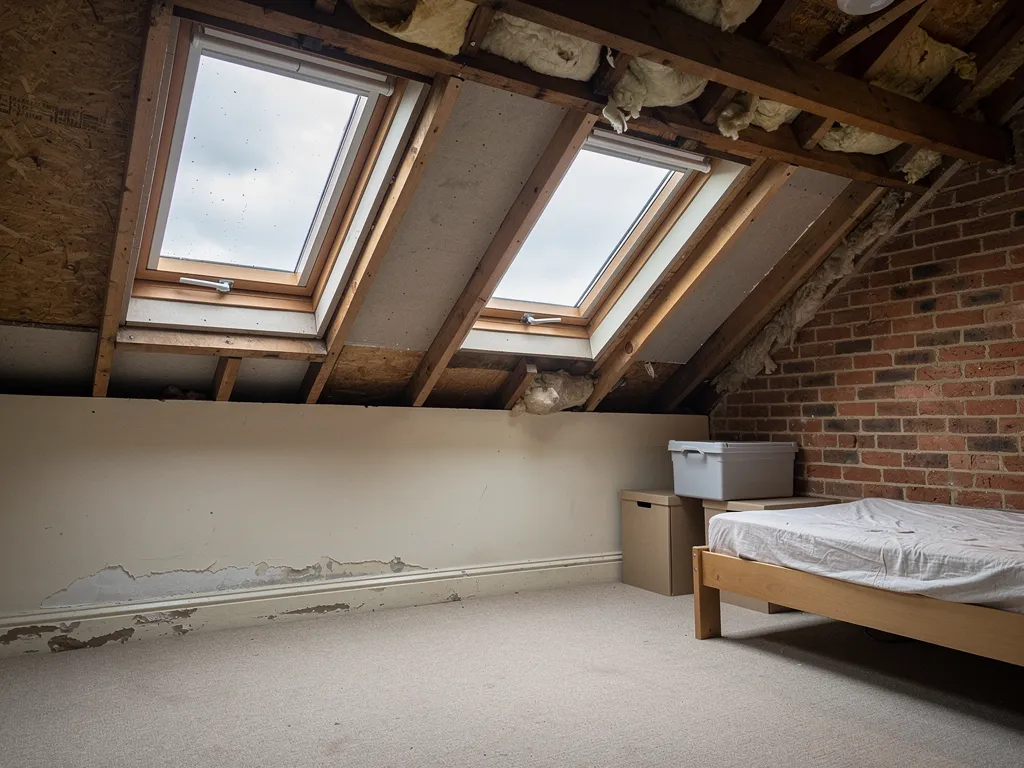
The soffit is the flat board under the overhang of the roof, between the wall and the fascia. Soffits fitted to homes put up or refurbished before 2000 may be made of asbestos insulating board, usually shortened to AIB. The material was widely used because it resisted fire and moisture, it came in flat sheets that were simple to cut and fix, and it looked much like any other board once painted.
That last point is the difficulty. HSE names external soffits as one location for asbestos, and its guidance says it is hard to tell AIB from the non-asbestos equivalents. You cannot settle it by colour, thickness or the age of the paint. A board that has hung sound for decades is generally not a danger while it stays intact. Trouble starts when it is drilled, cut, snapped or scrubbed hard, and that is just what ordinary roofline work tends to involve.
This guide covers what makes a board a suspect, what to do and not do, who handles removal and how the replacement job follows once the question is answered. Nothing here calls for alarm. It calls for the right order of events, and it sits within our gutters, soffits and fascias work.
Why HSE lists external soffits
HSE publishes a guide to the places where asbestos is found in buildings, and external soffits appear on it. They are there because AIB was a common choice for boarding that had to cope with weather and heat without rotting or burning. On a house, the soffit is the place most owners meet it, along with porch ceilings and sometimes the board behind a boiler flue.
HSE's rule of thumb is simple: if the building was built or refurbished before 2000, assume asbestos is in it until a survey shows otherwise. That does not mean each house of that age carries AIB soffits. It means nobody should cut into old boards on the strength of a guess.
What the material is
AIB is a building board with asbestos fibres mixed through it, and it often resembles plasterboard. It is a different product from the asbestos cement used for roof sheets and some gutters, and the rules for the two are not the same, which is why the next sections separate them.
On the outside of a house, AIB takes more weather than it was ever meant to. Years of damp from a leaking gutter or a blocked downpipe can leave a board flaking, stained or cracked at the edges. Our page on overflowing gutters shows how that sort of wetting builds up. A weathered board is not automatically unsafe, but it is more fragile and needs more care so it does not break.
If you rent out or manage a property, ask whether an asbestos survey or register already exists before any contractor starts work on the roofline. It may answer the question at once and save a sampling visit.
Why you cannot tell by looking
Flat, smooth, pale grey or off-white boards with a painted finish are what a soffit usually looks like, whether it is AIB, fibre cement, plywood or a modern non-asbestos sheet. HSE says plainly that it is difficult to tell AIB items from non-asbestos equivalents. Experienced builders say the same. Details that seem to point one way, such as a small round fixing head or a certain thickness, prove nothing.
It is common to see people scratch at a flaking soffit or press a screwdriver into it to test it. Please do not. That is exactly the sort of disturbance that puts fibres into the air around the person doing it.
How identification works
The reliable route is to have a sample taken and analysed by a competent laboratory, or to have an asbestos surveyor inspect the property. The surveyor takes the sample with precautions against dust and sends it for testing, and the result comes back as a written report that names the material. For a handful of boards on one house the process is straightforward, and it removes the doubt for good.
Photographs help before that stage. Pictures of the boards, the fixings and any damage let a surveyor judge the condition and plan the visit. The survey photographs we take of your roofline serve the same purpose for our work: they show the state of the boards and where they start and stop.
If the report says AIB, you know what you are dealing with and can plan around it. If it says the boards are non-asbestos, the roofline work carries on as normal, and the test result sits on paper for any future buyer or surveyor who asks.
Do not rely on a neighbour's result. Two houses on the same road, built in the same year, can have different boards, particularly where one has been refurbished and the other has not.

What to leave alone, and what is safe
The practical advice is to leave an intact suspect board alone. Painted, sound and unbroken, it is better left undisturbed than disturbed to find out. HSE guidance on asbestos is built on the idea that the danger lies in fibres reaching the air, and that happens through damage and disturbance, not through a board hanging quietly under the eaves.
Things that disturb a board are easy to list. Drilling or screwing into it to fit a vent, a light or a bracket. Cutting it to make way for a new gutter or a satellite cable. Breaking it while pulling off old fascia boards. Scrubbing it with a stiff brush or pressure washing it clean. Sanding it before painting. Dropping lumps of it into a skip or crunching them underfoot.
Everyday jobs that can go wrong
It is surprising how many routine jobs involve a soffit. A gutter replacement may need new fascia brackets that bear on the board. A dish installer may drill through it. Someone clearing moss may take a wire brush to it. Even gutter cleaning, done from a ladder, can scrape a suspect board if a tool catches it. Tell anyone who comes to your house about the possibility before they start, and ask them to keep clear of the boards.
If a board has already been broken, do not sweep or vacuum the debris and do not try to clear it by hand. Keep people and pets out of the area, close nearby windows and get the material identified. Damaged AIB is a different matter from sound board, and the next section explains who deals with it.
If you are buying a house with old soffits, mention them to your surveyor. A short note in the report is useful, and it tells you whether to budget for identification before the roofline is renewed. The same goes for a landlord taking on a block of flats, where several soffits and porch canopies may need the same check.
Specialist removal and what is different for cement
HSE divides asbestos work into licensed and non-licensed categories, and AIB sits on the stricter side. Its guidance puts most work to remove AIB in the higher-risk group, which has to go to a specialist asbestos contractor. So taking down an AIB soffit is, for the most part, not a job for a roofer, a general builder or a householder.
It helps to know the neighbouring categories, because your gutters and downpipes may be a different material. For asbestos cement, which includes roof sheeting and rainwater goods, HSE's non-licensed work page allows careful handling and removal as long as the material is not broken up, and that includes cement that is weathered but not otherwise badly damaged. Once it has been smashed or heavily damaged, the work turns into notifiable non-licensed work. That carries extra duties, among them a notice before work starts, medical examinations and health records kept for 40 years.
What this means for your job
In practice the order of events matters more than the categories. A board that might be AIB is identified first. If it proves to be AIB, its removal is arranged with a specialist contractor. We then fit the new soffits, fascias and gutters once the old boards are gone and the area is cleared. If the board proves not to be AIB, the normal job goes ahead.
We do not take down suspect boards ourselves. When a survey turns one up, we stop, tell you why and explain the route. If you are comparing quotes, ask each firm how it would treat boards of unknown material. A vague answer, or an offer to rip everything off quickly without testing, is a reason to think twice.
For asbestos cement rainwater goods on older buildings, the downpipe side is covered in our downpipes guide.
Waste, paperwork and where it goes
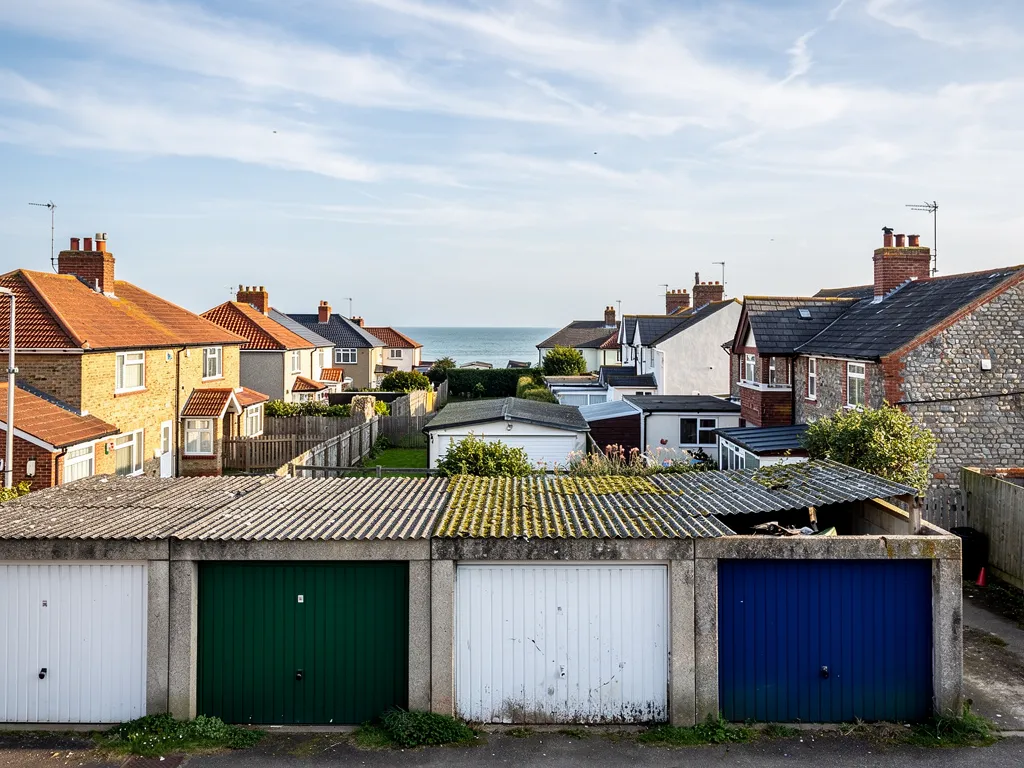
Asbestos waste is hazardous waste and cannot be handled like rubble. HSE's waste guidance covers the handling in detail: wrapping, labelling and the right kind of skip. The rules for cement sheet, with a longer account of how the waste is packed and moved, are on our page about removing an asbestos cement roof.
The paperwork follows the waste. Under GOV.UK's guidance on consignment notes, the household exemption does not extend to asbestos waste. A firm that clears asbestos from a home becomes the waste producer for the purposes of the note. Put simply, you cannot bag it and send it off with other rubbish, and the firm has a paper trail to complete.
Carriers and tips
A firm that carries construction or demolition waste is registered as an upper-tier carrier, and that registration is renewed every three years. It is reasonable to ask whoever is taking your asbestos away for the carrier registration number and for a copy of the consignment note.
Whether your nearest household waste site will take small amounts from a home is a question for the council or the site itself. Ask before you move anything. In most cases it is better to leave a suspect board exactly where it is until a specialist can lift it and take it away in the proper way.
Keep what you are given. A consignment note and a laboratory result make a tidy file for the house, and they answer questions from a future buyer, a valuer or a letting agent. They also show that the work happened in the right order and that each stage was done by the right people.
Planning the roofline once the boards are known
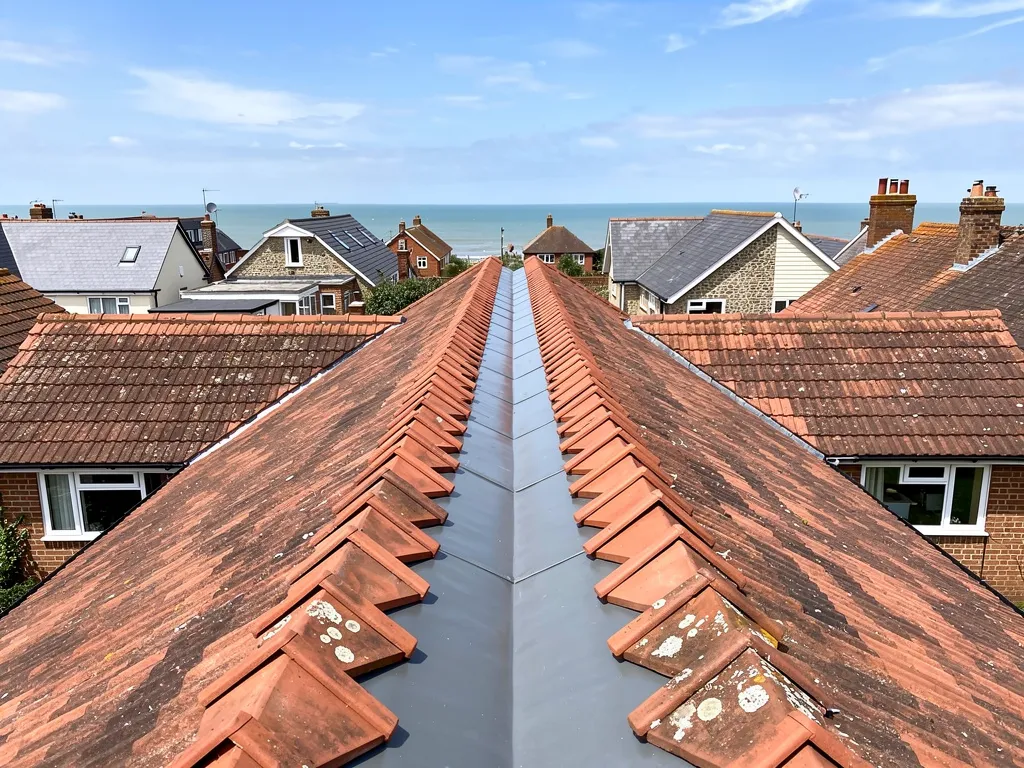
With the boards identified, the roofline job becomes a normal one. If the soffits were AIB and have been removed by a specialist, we fit the replacement boards, new fascias and gutters, with ventilation planned in. Our guide to soffit vents explains how that works. If they were not AIB, the soffits and the rest of the roofline can often be renewed in a single run of work.
Timing is the main practical difference. Two stages mean two crews on site, with a gap between them for clearance. Scaffolding is likely to be needed for both, so it makes sense to book the visits close together and keep the scaffold standing between them. What the whole job costs, and why, is set out in our page on roofline replacement cost.
What the written quote covers
The survey comes first, with photographs of your own roofline, and the written quote that follows gives a single total. If the boards need testing, the quote waits for the result or is drawn up for the outcome that applies. Scaffold, access, the length of the roofline and the materials you choose all move the figure. Keep any test result with the quote, because it records what was found behind the fascia.
Whatever the result, a few habits protect the new roofline from the damp that wore out the old one. Keep the gutters flowing, check the joints each autumn and have any leaking pipe attended to quickly, because wet boards deteriorate first at the edges.
If an old soffit worries you and you are unsure where to start, send us a clear photograph of the boards and the overhang. We will tell you what we can see, what to ask a surveyor to check and how the work would follow on.