Chapter one
Horsham slates and the Weald's stone roofs
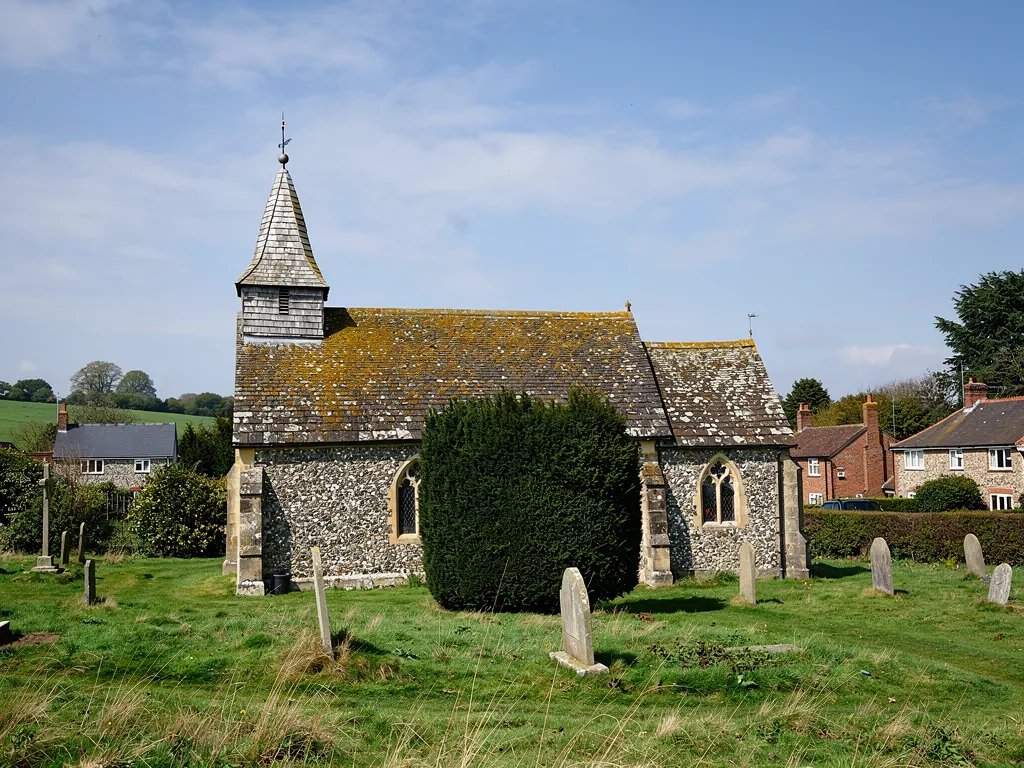
The parish church shows what a Weald roof can be, and a stone roof needs different handling from any tile.
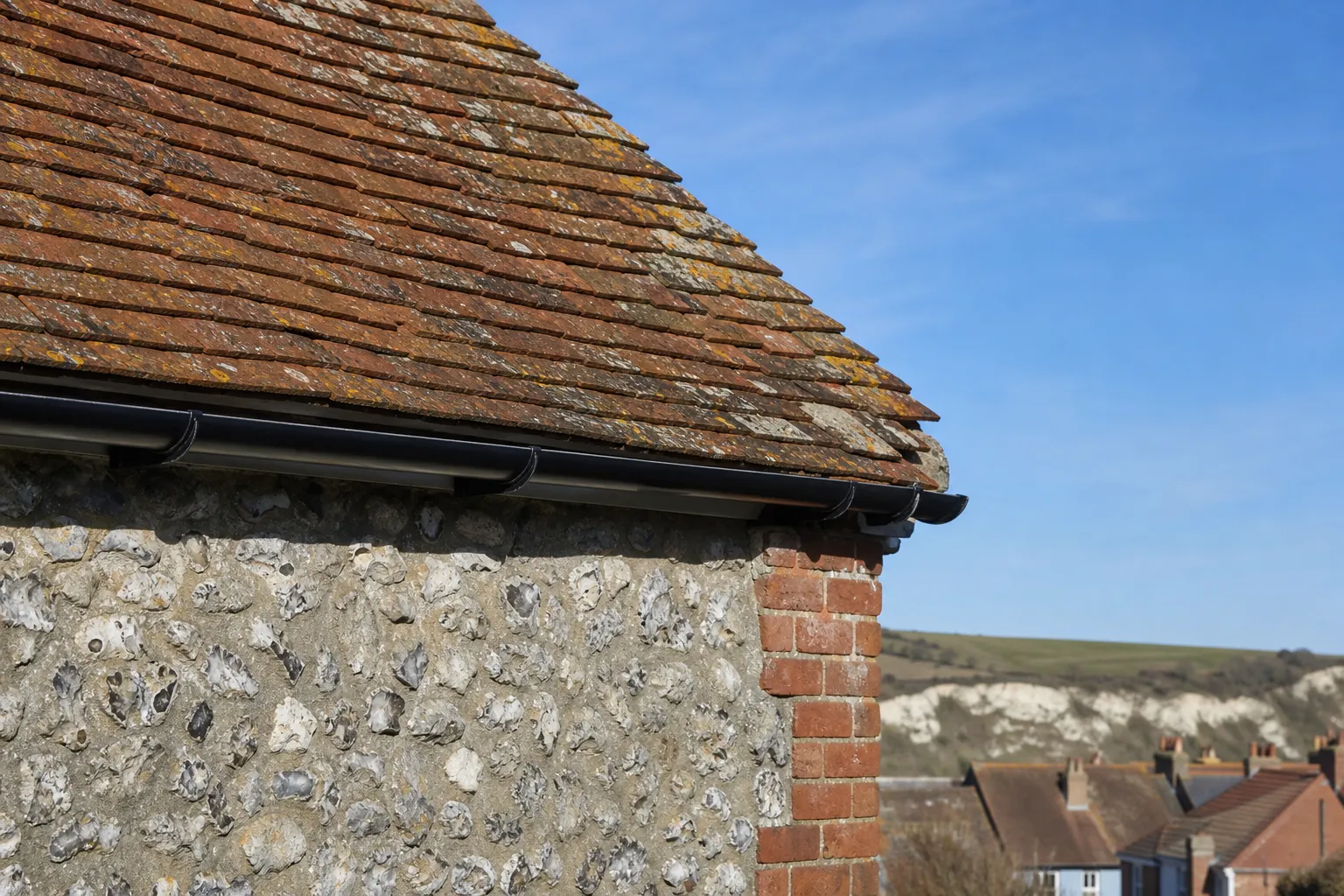
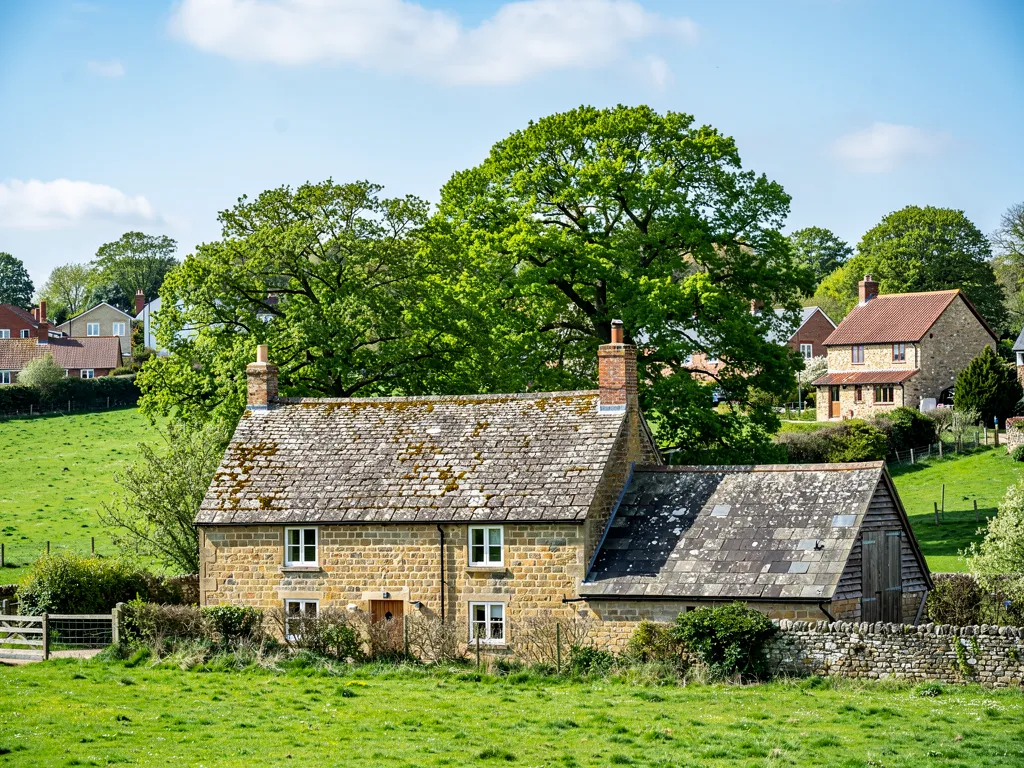
St Peter's is in Chailey village, north of South Common, not in South Common itself, but it is the nearest example of a Weald stone roof. The Victoria County History describes plastered sandstone rubble walls, a tiled chancel, a shingled spire and Horsham slates on the rest of the roof. The Stone Roofing Association's guide describes the stone as a flaggy, lime-bearing sandstone, cut into random sizes and graded so the widest slabs lie at the eaves and the narrowest at the ridge, a laying pattern known as diminishing courses. It names two ways of laying them: the usual double lap, and single lapping, which the Association says belongs to Horsham stone alone, with the gaps between slabs masked by thin strips of Welsh slate set in mortar.
At a glance
- Horsham stone is a flaggy sandstone with lime in it
- The widest slabs sit at the eaves
- Keeping the roof's own stone comes first
1.1 Keep the roof's own stone
The Association's first rule is to keep as much of the existing stone on the roof as possible. Stone borrowed from a different building is a final option, because every slab taken strips an older roof elsewhere. If the roof comes up short, newly cut slabs are the better fix when a supplier has them. Limestone slates are never mixed in with sandstone. In 2019 a conservation charity warned of a supply crisis in roofing slabs, so a gap in the pile is a real constraint. Horsham District's conservation appraisal pairs these roofs with steep pitches and strong framing, and notes that repairs over the years have left a mixture of double and single lap, filled with shadow slates when stone was scarce. The Steyning appraisal calls relaying with mortared joints an inappropriate repair.
1.2 What the survey checks
We look for slabs that have flaked or split, for sag between the rafters, for failed mortar on the shadows, and for any patch where cement or sealant stands in for a proper repair. We do not guess a weight for your roof: the frame is inspected before a slab is lifted. Changing a listed roof from single to double lap needs building control approval, a faculty where one applies, and listed building consent. St Peter's is an Anglican parish church in use, so the Church's faculty system decides its roof works. Where slabs have simply slipped they can often be re-seated; where they have laminated into layers, they come off. Our Horsham stone roofing page explains lifting, sorting and relaying.
Horsham stone-slate facts
- What it is
- A flaggy sandstone with lime in it (Stone Roofing Association)
- How it is laid
- Widest slabs at the eaves, narrowing towards the ridge
- First choice
- Keep the stone already on the roof
- Making up a shortfall
- New Horsham slates where available
- Never combine
- Limestone slates with sandstone
- Supply
- A crisis in slab supply was reported in 2019
Source: Stone Roofing Association, Horsham Stone Roofs; Stone Specialist, 31 July 2019