Roofers in Woodmancote, near Steyning

Woodmancote is a scattered Greensand parish, with hamlets at Bilsborough and Blackstone and bungalows along the Brighton road. Every roof here gets a survey, and the faults come back to you as pictures.

Three kinds of Woodmancote roof, and where they give way

  • A hipped bungalow roof

    Bungalows along the Brighton road

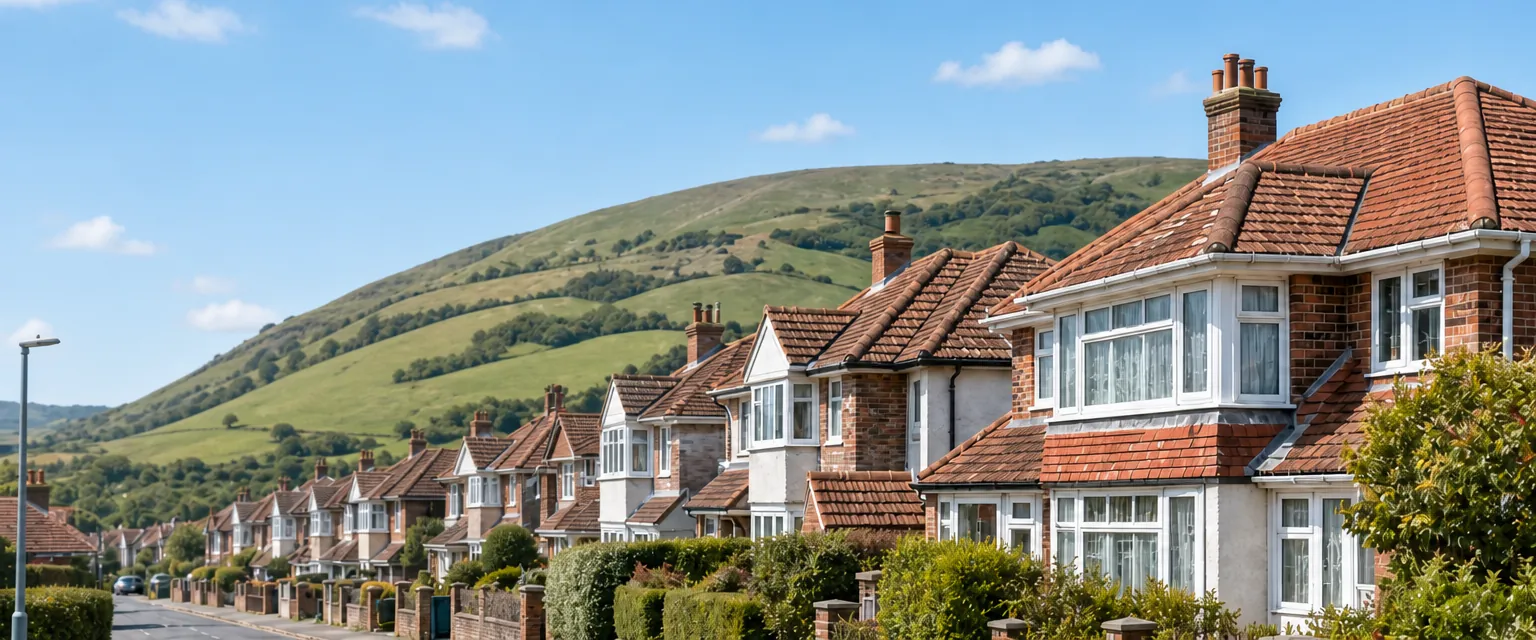
    The Victoria County History records detached houses and bungalows built along the Henfield to Brighton road in the 1920s and 1930s.

    Read more about Bungalows along the Brighton road

    Roofs of that age often have bedded hips and ridges that nothing else holds, which makes them our first point of inspection.

  • Roof edge against hung cladding

    Slate-hung and boarded cottages

    At Blackstone the Victoria County History notes a slate-hung cottage and a weatherboarded cottage, both from the mid 19th century.

    Read more about Slate-hung and boarded cottages

    Where a roof ends against cladding, the water-stopping depends on flashings tucked behind the slates or boards.

  • An old tiled roof, sagging ridge

    Yeomans Hall and older timber houses

    Yeomans Hall at Blackstone is a late medieval house remodelled in the early 17th century. A frame that old has moved over the centuries, so a roof on it is never truly flat and new battens and tiles are cut to fit what is there.

Street map of Woodmancote, near Steyning, north-east of central Worthing, with a pin on the town.

Protected status around Woodmancote, near Steyning

Planning authority
Horsham District Council
Councils
Horsham District Council and West Sussex County Council
Conservation area
None listed for Woodmancote itself; the Blackstone Conservation Area lies within the parish
Article 4
Ask Horsham District Council about your address
Ground
Lower Greensand, north of the South Downs and south-east of Henfield
From central Worthing
12.9 road miles, north-east, about 24 minutes by car

Woodmancote roofs

Bungalows, boarding and hamlets

A parish with no single centre has roofs of several ages, and each age fails in its own way.

Chapter one

Hips and ridges on 1920s and 1930s bungalows

The detached houses and bungalows along the Brighton road were laid before mechanical ridge fixing was the norm, and they show it.

The Victoria County History says detached houses and bungalows were built along the Henfield to Brighton road in the 1920s and 1930s, which puts the roofs of that stretch at around ninety years old or more. A bungalow has no upper storey to shelter its roof, so every slope stands in plain view of the weather, and the hips, the angled ridges at each corner, and the ridge along the top are long runs of bedded tile. Marley notes that until the 2014 revision of BS 5534 a mortar bed alone was widely accepted for ridges and hips, so a roof laid in the 1930s may have nothing but ageing mortar between its top course and a gale.

At a glance

  • Bungalows date from the 1920s and 1930s
  • Older ridge bedding relied on mortar alone
  • Verges and hip ends are checked at the same visit
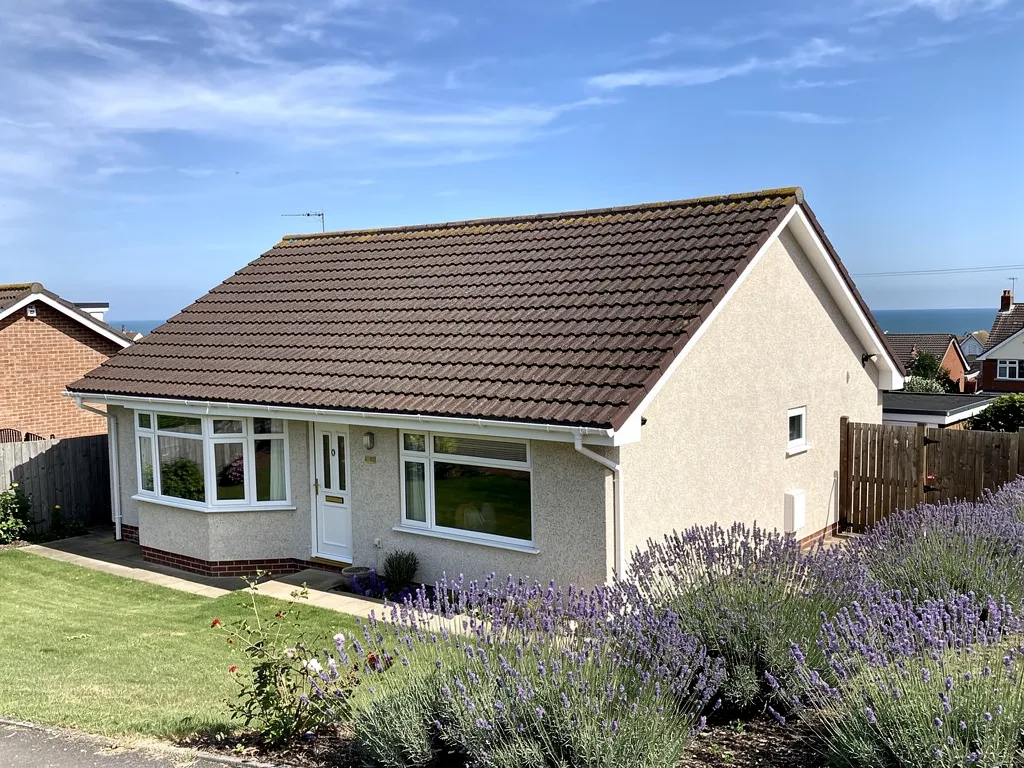
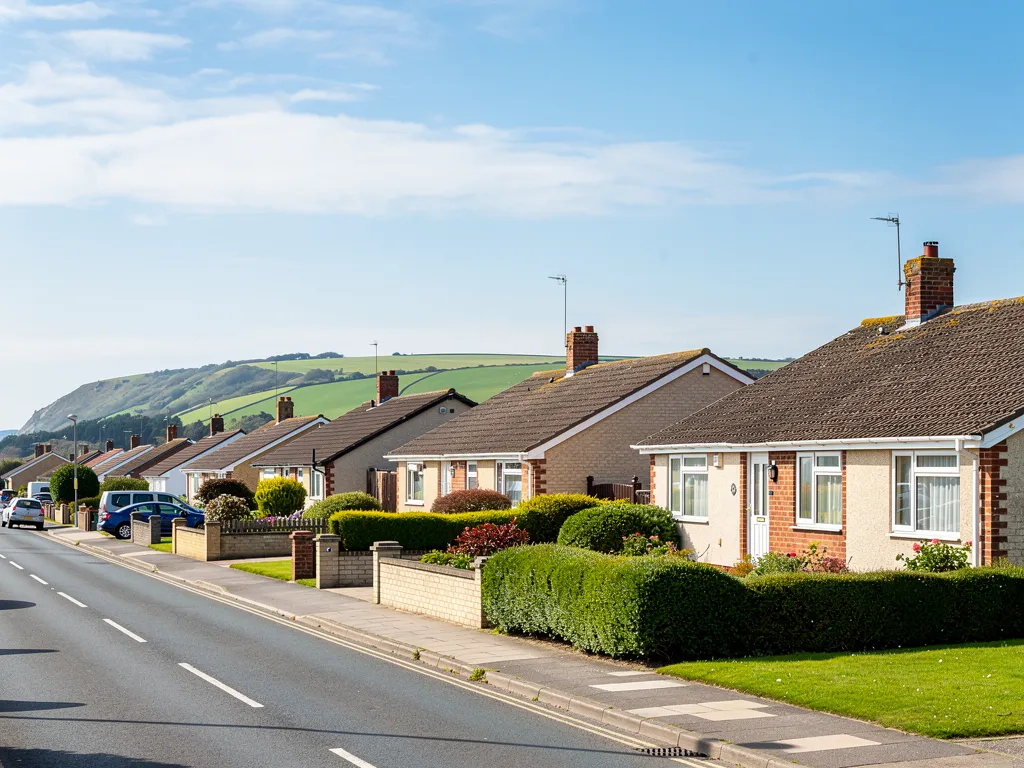
Post-war hipped bungalow with a new tiled roof

1.1 Where we look first

We begin at the corners. A hip end is where the lowest hip tile meets the eaves, and the hip iron, a curved metal strap holding that tile against sliding off, can rust through and let the whole row creep. Along the top we look for gaps in the bedding, for tiles that rock under a gloved hand and for lines of daylight visible from the loft. Along the verge, where a slope finishes against a gable wall, every tile needs its own fixing, because that edge takes the full push of a gale. Many bungalows also gained a flat-roofed extension or porch over the years, and where the flat roof joins the pitched one, lead folded over the junction is what keeps damp out of the wall.

Post-war hipped bungalow with a new tiled roof

1.2 Re-fixing without replacing everything

The quick answer to a loose ridge is another trowel of mortar, and it rarely lasts. A better one is to lift the tiles, clean them, bed them again and add a fixing that bites into the timber below, and BS 5534 now looks for ridge and hip tiles to be held down in just that way. For a long ridge, a dry-fix system, tested to BS 8612:2018, replaces the mortar with a ventilated roll and clips, so there is no bed to crack. Either way the tiles you already own are kept wherever they are sound. Our ridge tile repairs page compares the routes, while slipped tiles on the slopes themselves are refixed or replaced one at a time, with sound neighbours left alone. If the survey shows the covering is failing across every slope, we say that plainly and show you the evidence.

Where an interwar hipped roof usually needs attention

Part of the roofWhat we look forTypical remedy
RidgeCracked or dropped bedding, rocking tilesRe-bed and fix mechanically
HipsSlipped tiles, rusted hip ironsFix back, replace the iron
VergeLoose edge tiles, failed pointingRe-fix, or dry-fix the edge
Extension flat roofPonding, split edgesPatch, or recover the roof
Source: BS 5534:2014+A2:2018; BS 8612:2018; Marley

Chapter two

Blackstone's hung cladding and Yeomans Hall

Slate-hung and weatherboarded walls meet the roof at a junction that hides leaks, and an old frame adds its own surprises.

Knapped flint wall meeting the eaves of an old clay tile roof

Blackstone is one of two nucleated hamlets in Woodmancote parish, the other being Bilsborough, and the Victoria County History records there a slate-hung cottage and a weatherboarded cottage from the mid 19th century. Cladding is hung on a wall, but a roof has to end against it, and where the two meet the weatherproofing is usually hidden: a flashing is tucked behind the lowest slates or boards, and a soaker, a small lead sheet, is threaded in at each course. Damp from a failed junction travels. It can run down inside the cladding for a metre before it darkens plaster, which is why a stain by a window rarely marks the true fault. We work back from the ceiling stain to the junction and photograph the junction itself.

At a glance

  • Blackstone has a slate-hung and a boarded cottage
  • Yeomans Hall is late medieval, remodelled early in the 17th century
  • The Blackstone Conservation Area lies in the parish

2.1 Repairs that respect the cladding

A cracked hung slate or a rotted boarding end next to a roof edge needs the right material, not the nearest one. Slates are lifted carefully so neighbouring ones do not crack, boards are matched for width and profile, and the flashing is dressed on again so it sheds water over the cladding rather than behind it. Our lead roofing page explains lead codes and dressing in more detail. Where an old house has been re-covered in the past, we also check that whoever did the work did not bury a gutter or valley under the cladding line.

2.2 Yeomans Hall and houses of that age

Yeomans Hall at Blackstone is a late medieval house remodelled in the early 17th century. For a building this old we check its listing first, on the national heritage list or with the council, before any tile moves. For a listed house, a repair in different materials can call for listed building consent. The Blackstone Conservation Area lies within the parish, so ask Horsham District Council whether your address falls inside it. Old roof spaces also shelter bats and nesting birds, which the law protects, and we look for signs before stripping begins.

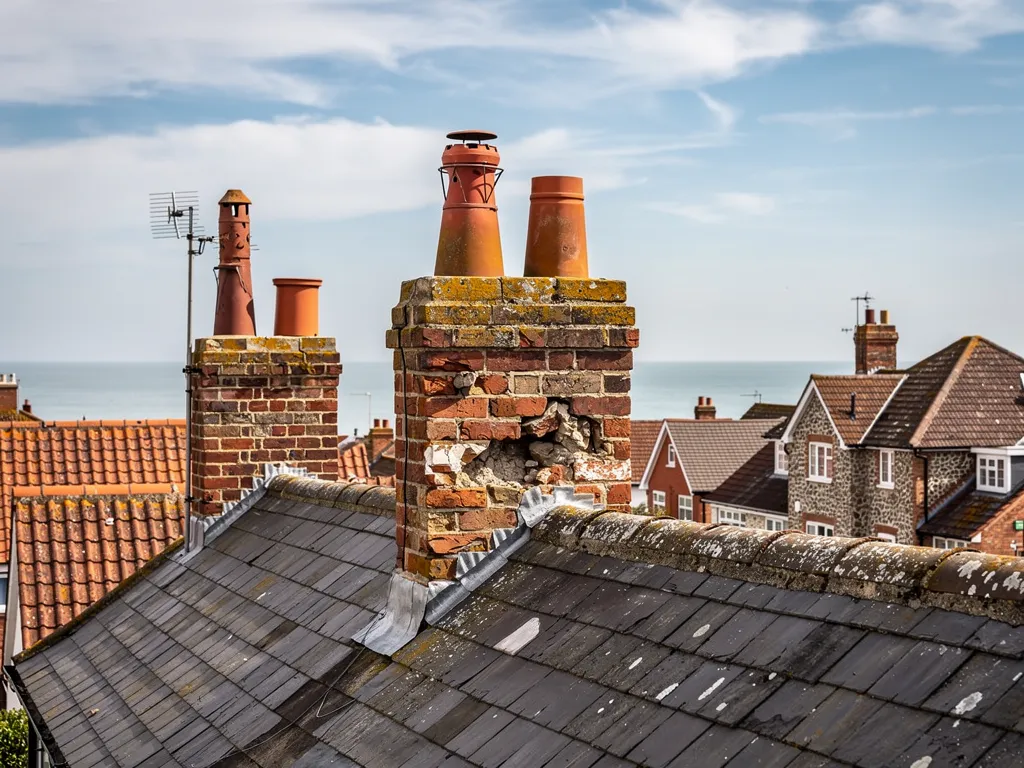
Victorian terrace chimney stacks with spalled bricks and old lead flashing

Fig. 2 On the survey Water tracking behind hung cladding at a roof edge.

Chapter three

Scattered homes: access, scaffold and the total

A parish of hamlets and lanes brings practical questions about reaching the roof, licensing the scaffold and understanding the price.

Settlement in Woodmancote is dispersed, and that shapes the work as much as the roofs do. A house at the end of a lane may have no room for a delivery lorry to turn, a long carry from the gate to the scaffold or a drive that cannot take a skip. We look at access on the survey, because it changes the time a job takes, and it is one of the things the total price reflects. A roof set well back from the road is a roof few passers-by glance at, so a slow leak can run for a long while before a stain appears, and a hairline fault may only show after a storm. Checking the loft after a gale is a sensible habit for such a house.

At a glance

  • Settlement is dispersed, with hamlets at Bilsborough and Blackstone
  • A scaffold on a private drive needs no highway licence
  • Horsham District Council is the planning authority
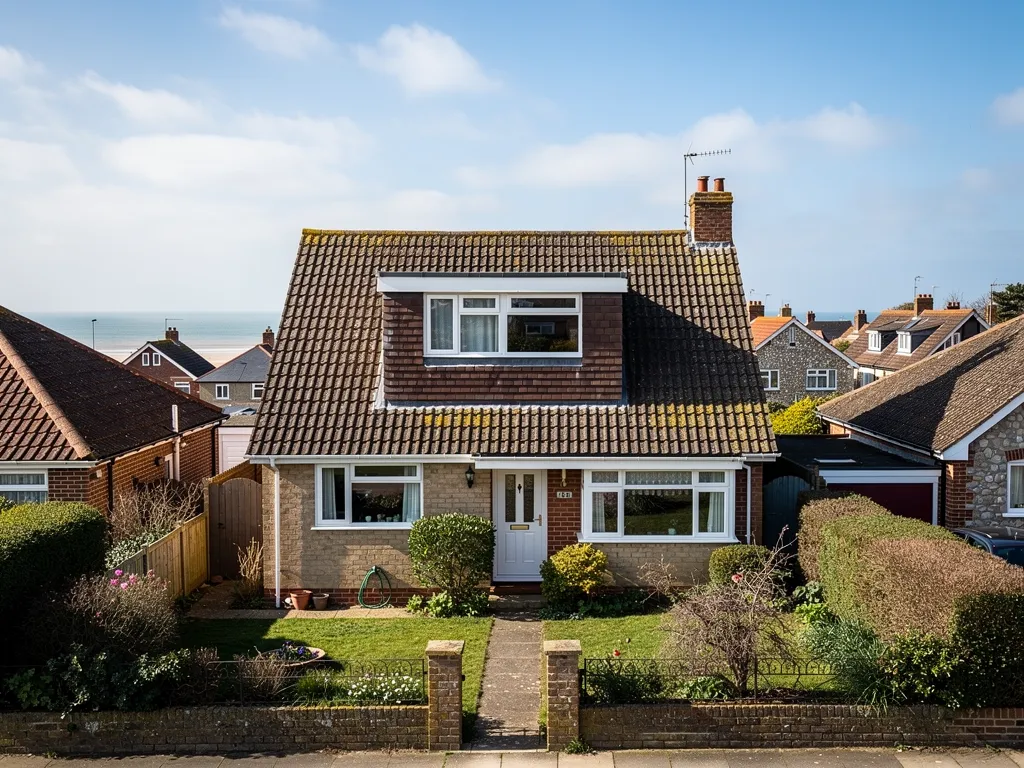
Dormer bungalow with a tiled roof and flat-roofed box dormer

3.1 Scaffold: private drive or public road

Highways Act 1980 section 169 requires a licence for scaffolding that stands on or over a highway, and in this part of West Sussex the licence comes from the county council as highway authority. The scaffold firm files the paperwork, and at least 10 working days' notice is the county's minimum. Scaffolding that stands entirely on your own drive or garden does not need that licence. Because many Woodmancote houses sit back from the road, some jobs will not need one, but we confirm on the survey rather than assume. Skips and material deliveries follow the same logic: a lorry parked on the lane is a different matter from one on your own hardstanding, and we plan the sequence of the day around which one applies.

Dormer bungalow with a tiled roof and flat-roofed box dormer

3.2 Consent, notification and the figure

A Planning Portal rule of thumb: a building control application is not normally required for re-covering while less than 25 per cent of the total building envelope and less than 50 per cent of the roof is involved. Cross either threshold, or touch the structure, or load the roof with 15 per cent or more extra weight, and approval comes into play; a Part L upgrade may follow. On the day of the survey we say whether the job needs approval, and when a notification is due, sending it is our task. A re-roof is charged at standard-rate VAT. The costs below are national ranges taken from a published guide, so they are no substitute for our own figure; the price we quote is a fair one, and it is delivered in writing as one total when the survey is complete. For a full strip, see roof replacement.

Published UK ranges for roof jobs

  • Minor roof repair£100 to £300
  • Moderate roof repair£500 to £1,000
  • Gable re-roof, semi£5,000 to £8,000
  • Hipped re-roof, semi£8,000 to £12,000

Everything the survey finds feeds a single written total, and whichever quotes you collect should each spell out whether the figure covers VAT and scaffolding. Source: MyBuilder roof repair and new roof price guides, updated 21/08/2026.

Woodmancote roof questions, from the Brighton road to Blackstone

How old are the roofs on the Brighton road bungalows, and does that matter?

The Victoria County History dates the detached houses and bungalows along that road to the 1920s and 1930s. It matters because ridge and hip tiles laid then were commonly bedded in mortar alone, before BS 5534 changed in 2014. A loose ridge on such a roof is normally re-bedded and given a mechanical fixing. Sound tiles are kept, and the survey photographs show which are cracked.

Can a roof that ends against a slate-hung wall at Blackstone be fixed without stripping the wall?

Usually, yes. The fault is typically the flashing or a soaker at the junction, not the wall. We lift only the hung slates beside the roof edge, set aside the sound ones, redress the lead so it runs over the cladding, then refix. Any slate we replace is matched to its neighbours. The photographs show the junction before and after.

Does Woodmancote have a conservation area, and will it affect a new roof?

Woodmancote itself has none listed, though the Blackstone Conservation Area lies within the parish, so an address near that hamlet needs checking. Laying back an identical covering is not usually a planning matter, though a listed building is treated differently. Horsham District Council is the authority to ask, and we repeat what it says in the written quote.

Do houses far down a Woodmancote lane cost more to re-roof?

Access is one of several things that move the total, together with the covering chosen, the area and slope of the roof, and the state of the timbers underneath. A long carry from the lane, or no room for a lorry to turn, adds time. We look at the route on the survey, and the written quote shows one total price.

Roofers near Woodmancote, near Steyning

Tell us about your roof

Describe what is happening and we will call you back to arrange a visit.

  • Photographs of what we find
  • A written quote with one total price
  • Or call 01903 299063

10-year workmanship guarantee, in writing.

Call Get a quote