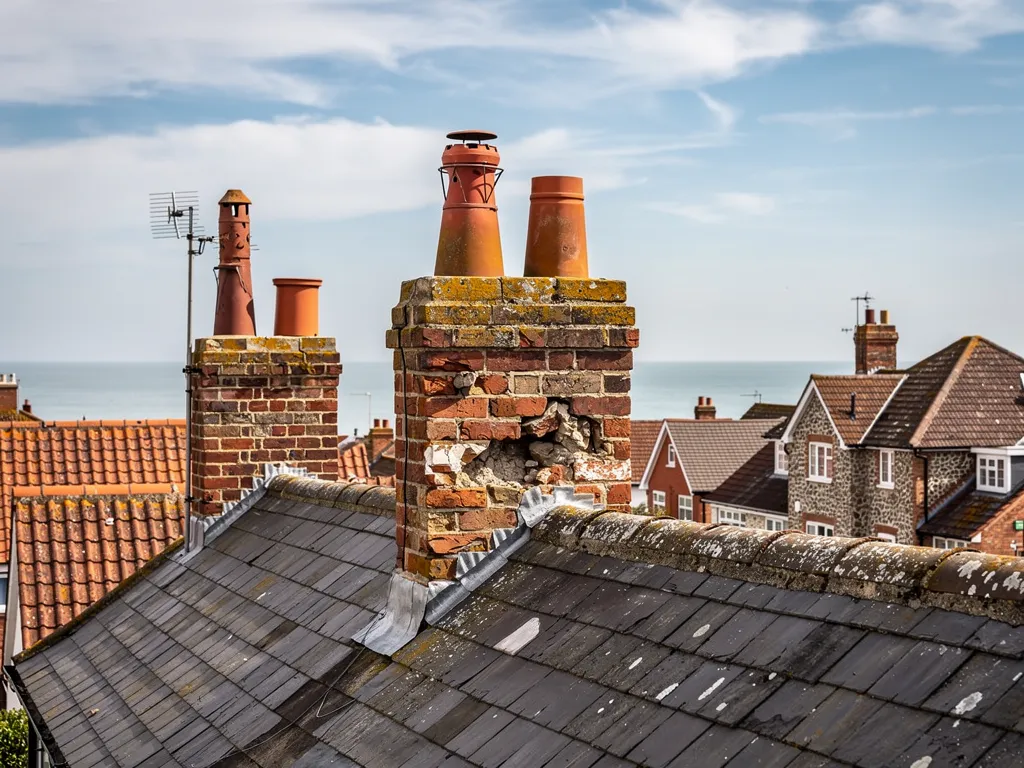
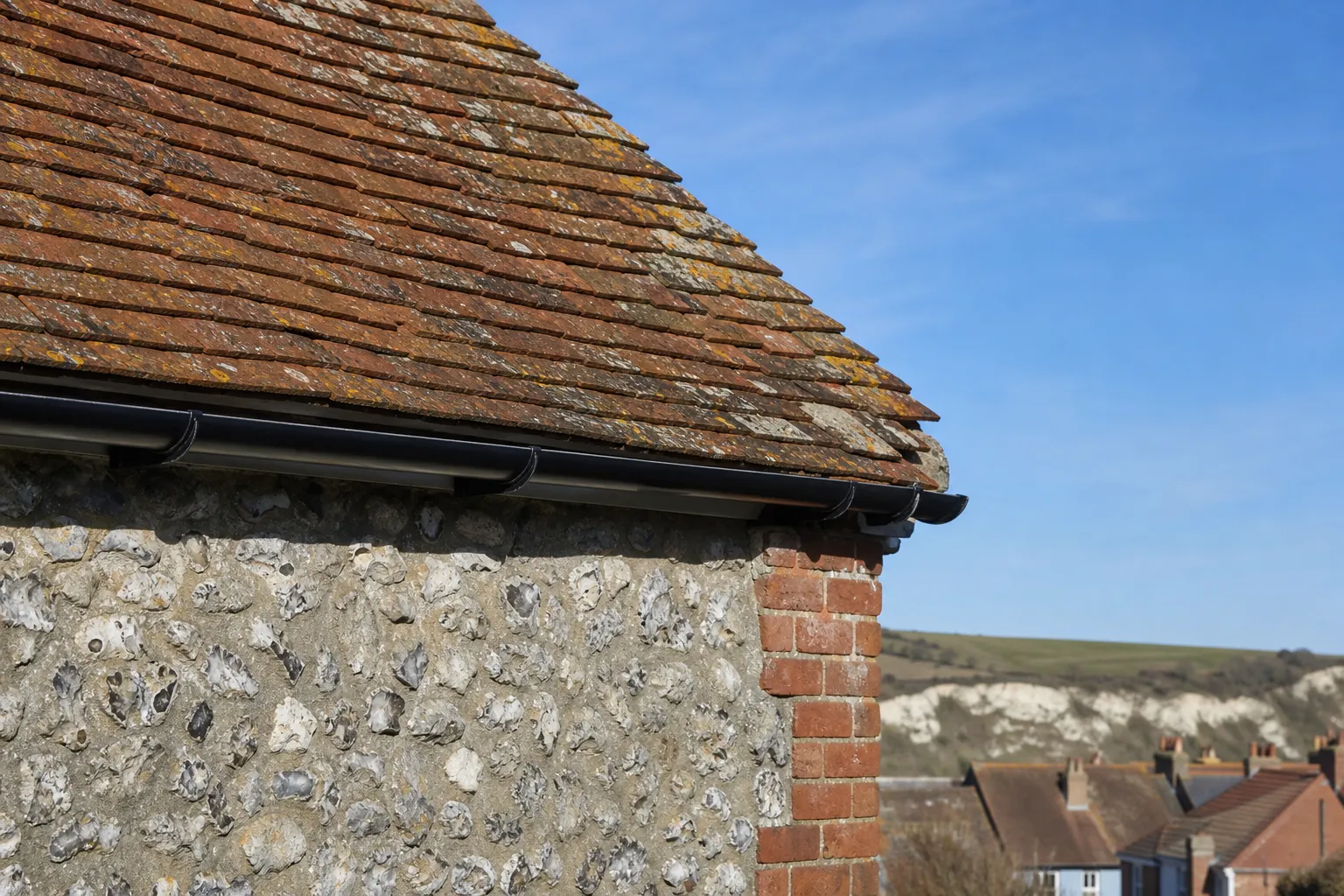
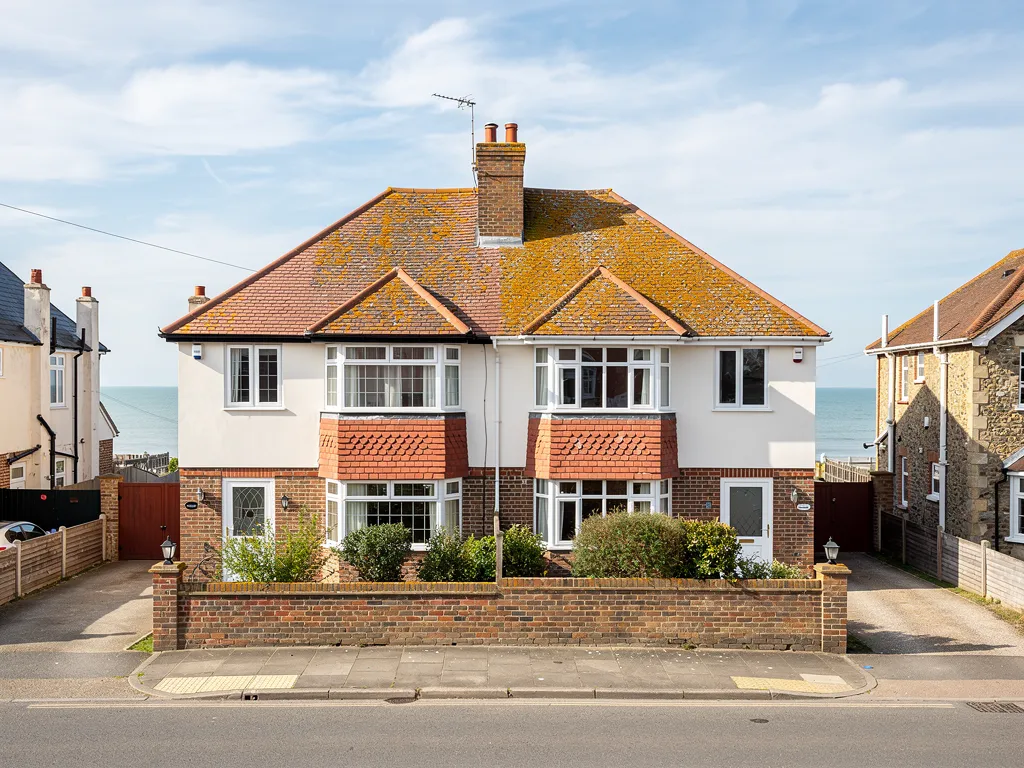
No part of a house is exposed quite like the chimney stack. It rises clear of the roof, rain reaches it from every direction, and the mortar joints high up break down long before the bricks do. That explains why chimney repair prices cover such a wide spread: one phrase can mean a morning of repointing on a low bungalow stack, or the taking down and rebuilding of a tall Victorian stack from the roof line upwards.
Every figure here comes from a published national cost guide, not from our own price list. Each one is a typical UK range for a single job, with the guide and its date named, and each is a way to frame a budget. None of them can say what your stack needs.
That comes from a survey of the stack itself: how far the mortar has gone, whether the bricks are sound, the state of the lead and the flaunching, and how the scaffold has to be arranged. Once the cause and the extent are clear, the written quote follows as one total price. Our chimney repairs page shows how the survey runs. Read the ranges first, then see what the survey adds to them.
Repointing by house type
Repointing is the commonest chimney job, so it is where budgeting usually starts. The weathered mortar is raked out of the joints and new mortar is packed in, which lets the stack shed water again. MyBuilder (updated 21/08/2026) gives a typical UK range of £500 to £2,000, with an average of around £750. How much stack there is to reach, and how awkward the reaching is, accounts for most of the spread.
The same guide divides the work by house type, and the table shows the effect of height and position well.
| House type | Typical UK range |
|---|---|
| Bungalow | £200 to £700 |
| Semi-detached, stack at the side | £600 to £900 |
| Semi-detached, stack in the centre | £900 to £1,500 |
| Detached | £700 to £900 |
A bungalow stack is short and sits close to the eaves, so less of it needs attention and getting to it is simpler. A central stack on a semi rises from higher up the roof, carries more brickwork and is harder to work around, which is why it costs more than a stack built into the side wall. Along this coast a lot of bungalows have small stacks, and a lot of 1930s semis have central ones, so the house type tells you something before anyone has climbed up.
What the range cannot show
A published range assumes sound bricks and plain access. If a few bricks are loose, the price moves. If the joints are deep and every course needs raking, the price moves again. The method itself is covered in our guide to repointing a chimney stack, and the survey photographs tell you which version of the job you are facing.
When the stack needs rebuilding instead
Some stacks are beyond repointing. Where bricks are crumbling through their faces, the joints have opened across the whole stack, or the stack leans, new mortar over poor brick buys very little time. The sound answer is to take the stack down to a safe level and build it back up, reusing bricks that are good and replacing those that are not.
MyBuilder (updated 21/08/2026) gives a typical UK range of £2,000 to £10,000 or more for rebuilding a stack. That is a wide range, and the width is real, because the jobs differ in several ways:
- how tall the stack is and how many flues it carries
- whether the original bricks can be cleaned and reused or have to be matched
- how much brickwork has to come down before sound work is reached
- whether pots, lead and flaunching are renewed along the way
- how the scaffold has to be arranged around the roof
A tall Victorian stack with several pots and a corbelled top is a different undertaking from a plain post-war stack with one flue, though both are described as a chimney rebuild. Matching old bricks and old mortar takes time, and it is not something that can be rushed on the day.
Deciding between the two
The point of the survey is to separate the two outcomes fairly. We photograph the cracked or leaning brickwork, tell you whether a repair properly solves it, and put forward the smaller job whenever it does. A rebuild is never the default. Where it is the right answer, we say why, and our page on chimney rebuilds sets out the signs that point that way.

Scaffold, the cost people forget to ask about
Nearly every chimney job needs safe access at height, and on a pitched roof that means scaffold. It is easy to miss when you set quotes side by side, because some include it and some leave it out. Put the question plainly to anyone who quotes: does your price cover scaffolding and VAT?
MyBuilder (updated 21/08/2026) puts chimney scaffolding at £400 to £900, while a full set-up on an ordinary two-storey house is put at around £850 to £1,200. Checkatrade (last updated October 2026) gives around £660 per week for a chimney. These are typical UK figures, and they show why a small repointing job can cost far more than the bricklaying alone would suggest.
Where scaffold stands over or beside a public pavement or road, the highway authority has to licence it under section 169 of the Highways Act 1980, with the application made by the scaffold firm. For Worthing and Adur that authority is West Sussex County Council, which wants at least 10 working days' notice between application and erection and publishes its fees. Within the city of Brighton and Hove, the city council grants its own. That lead time is one reason scaffold has to be planned early, not left to the morning of the job.
Where the same scaffold can serve other roof work on that elevation, such as lead, a ridge or a gutter run, the cost is shared between jobs and each becomes cheaper to do. Our guide to chimney scaffolding explains when a tower will do and when a full scaffold is needed. Ask for the access plan as part of the survey, and you will know what the price has to cover.
Lead, flaunching and pots as part of the job
Three other parts of a stack often need attention alongside the brickwork. Each can add to the total or be done as a small repair of its own.
Lead flashings
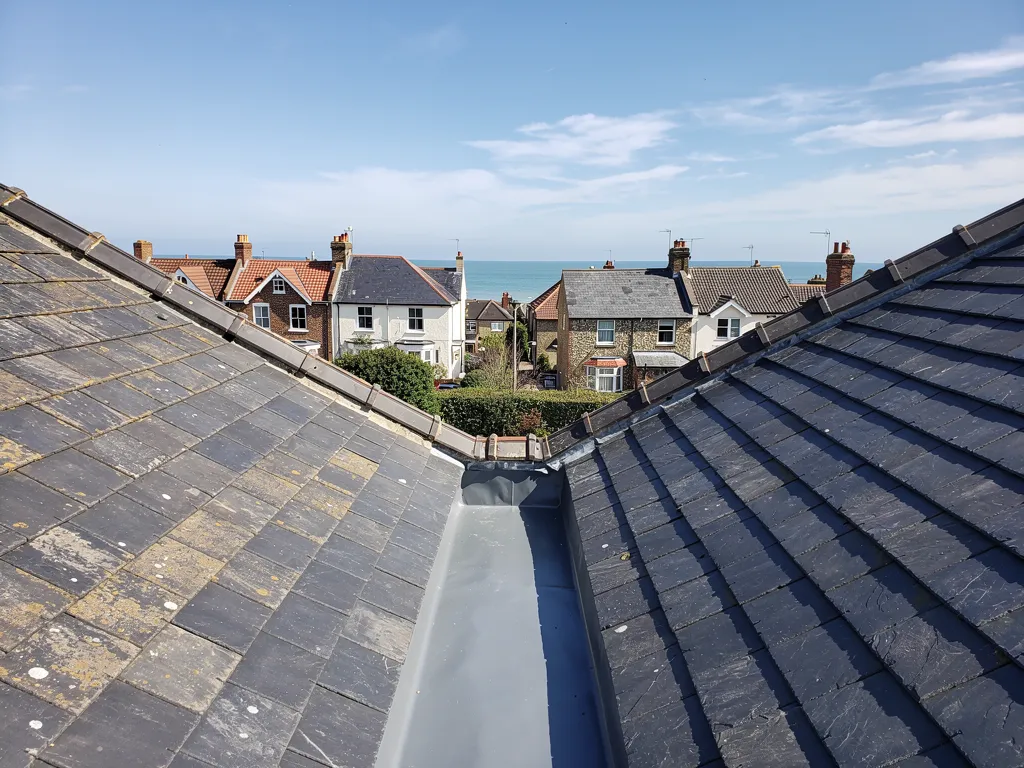
The flashing is lead sheet that joins the stack to the roof covering and keeps rain out of the joint. MyJobQuote (22/09/26) gives a typical UK range of £150 to £250 for a lead patch repair. Replacing the lead in full runs from £350 to £460 without scaffold and £700 to £920 with it. Nearly all of the gap between the two pairs of figures is the scaffold. Properly dressed lead is the tidy fix, not a smear of sealant over a failing joint.
Flaunching and pots
Flaunching is the sloping mortar cap at the very top of the stack. It bears the pots, throws water outwards away from the flues, and cracks with age and frost. After that, rain runs down inside. Renewing it is a modest job when the scaffold is already up for repointing, which is why the two are so often priced together. The signs to look for are in our guide to chimney flaunching.
A pot that is cracked or leaning is replaced at the same visit if the access is in place, and pots that are still sound are simply bedded again in fresh mortar.
Doing these together, rather than one at a time over several years, is usually the smarter way to spend, because the cost of reaching the stack is paid only once. The survey tells us which items are due now and which can safely wait for the next visit.
What moves the price on your stack
Published ranges are wide for a reason. Four things account for most of the distance between a low figure and a high one.
The first is height and position. A stack on the ridge of a tall house needs more scaffold and more time than one on a low bungalow, and a stack that is awkward to reach costs more to work on safely.
The second is the state of the brickwork. Repointing sound bricks is a short job. Bricks that have to be cut out and replaced, or a stack that has to come down and go back up, bring labour and materials that repointing alone does not.
The third is the mortar. Many older houses around here, from Victorian terraces to flint and brick cottages on the Downs, were built with a softer lime mortar, and a hard modern mix can damage them over time. Matching mortar to brick is part of doing the job properly, and a matched mix can cost more than a standard bag.
The fourth is whatever else turns up. Failed lead, cracked flaunching and damaged pots are found at the survey and widen the scope, though they add little when access is already shared.
Ask each firm whether the price it hands you covers scaffolding and VAT. Two quotes for the same stack can look a long way apart only because one of them leaves the access out.
We price chimney work at a good, fair figure, and send it as one written price after the survey is finished.

Reading a chimney quote and planning the spend
The best protection against a surprise bill is a survey that looks at the whole stack before any price is named. You should be shown photographs of your own chimney, given a plain account of what has failed and why, and handed a written quote that says what it covers.
Look for these points in whatever quote you receive:
- whether scaffold, any highway licence needed and VAT are included
- which mortar will be used, and whether it suits the age of the house
- whether the lead, flaunching and pots have been looked at, or only the brickwork
- how the site is left, including the waste being taken away
A figure far below the published ranges usually leaves something out. A figure far above them deserves a question about why.
It also pays to ask what happens if the survey finds more than expected once the scaffold is up. A good roofer shows you the extra fault in a photograph and agrees the change with you before going on, not after the bill arrives.
What stands behind the work
The survey photographs are kept with the quote, so the finished stack can be compared against the fault you were shown. Chimney work is checked from the scaffold before it is signed off, so that what you were shown at the survey is what you end up with.
If you are weighing a repair against a rebuild, send us photographs of the stack taken from the garden and from an upstairs window. They are often enough to tell which way the survey is likely to point, and what the cause of any staining on the chimney breast may be. From there, a visit confirms it.