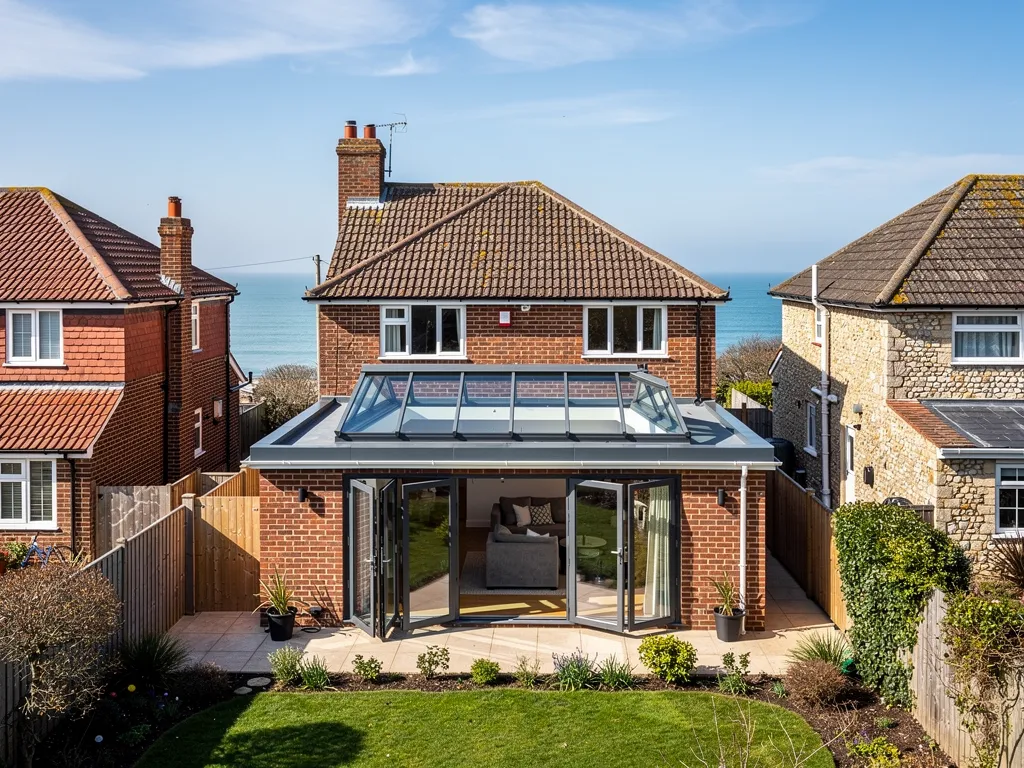
A single-ply membrane is exactly what the name says: one sheet of synthetic material, rolled out across the roof and joined to its neighbours at the edges. It replaced layered felt on a great many shops, offices, schools and units because it goes down quickly, it is made under factory conditions, and a damaged patch can be mended without stripping the lot.
The three materials you will meet are PVC, thermoplastic polyolefin and EPDM. PVC is polyvinyl chloride, a plastic. Polyolefin sheet is a related plastic without the chlorine, and the trade often shortens its name to a three-letter code that you may see on data sheets. EPDM is ethylene propylene diene monomer, a synthetic rubber. They look alike from the pavement, since all three are grey or black or white sheet, but they behave differently under a heat gun, in a gale and over twenty years of sun.
The sheet itself is only half of the story. The roof's falls, its insulation, the way each seam is made and the detailing at every upstand and pipe decide whether the membrane keeps its promise. We go through the materials first, then fixing, the deck, life and cost, and finally what to ask before a membrane is chosen.
PVC, polyolefin and EPDM compared
Start with PVC. The brittle sheets of the 1960s have long since been designed out, and GreenSpec, drawing on a whole-life costing study by Peter Mayer of Building LifePlans, puts the expected life of current PVC systems at 20 to 30 years, with manufacturers pointing to examples still sound after more than 35. PVC resists pollution, bacteria and rough weather, and damaged areas can be mended readily because the sheet can be welded to new material with heat.
Polyolefin is the newer option. It is stiffer than PVC, so it can cost more to install on awkward shapes, and the same source gives an expected life of 20 years, often on inverted or green roofs. It contains no chlorinated ingredients and weathers well. We cover it because commercial specifiers ask for it by name, and it can be the right answer on a plain roof with few details, but it is not the natural fit for every building.
EPDM is the rubber. GreenSpec notes excellent resistance to weather, sunlight, ozone and repeated temperature swings, and an expected service life of 20 to 30 years. Less quotes 30 to 50 years for EPDM, which shows how far published guides disagree: treat any life you read as a rough range that exposure, workmanship and upkeep can push either way. Joints are the soft spot, and the same source advises adhesive tape and talc-free types to keep them sound, so ask which jointing method is proposed.
Which suits which building
No material wins everywhere, so the choice follows the roof you actually have. Welded PVC and polyolefin seams are fused into the sheet itself, so the joint is part of the material, while rubber sheets rely on tape or adhesive at the lap and need more care there. Colour matters too, because a light, reflective surface reduces heating of the membrane, one of the key factors in how long it lasts. Third-party certification, with an indicated service life based on accelerated ageing tests, is the evidence to ask for, not a sales brochure.
How a single-ply system is fixed down
There are three ways to hold a membrane on a roof, and the choice affects cost, speed and what the building must carry.
Fully adhered systems glue the sheet to the insulation or deck over its whole area. They give a smooth finish and need no ballast, but the substrate must be clean, dry and sound. Mechanically fixed systems use screws and plates along the sheet edges or seams, which draw the membrane tight against uplift, and they suit large roofs where gluing everything would be slow. Loose-laid systems rest on the roof under a layer of ballast, usually stone or paving slabs. They save installation time, but GreenSpec points out that the ballast has to be adequate to hold the sheet down, and it must stay evenly spread. Wind can scour it away at corners and edges, which is a real concern on exposed coastal buildings.
Seams, upstands and penetrations
Leaks on a single-ply roof tend to start at a detail rather than in the open field of the sheet, so details get the closest look. Joints and flashings are critical to watertightness, according to GreenSpec. Welded or solvent-jointed seams should be tested shortly after they are made, and any fault repaired straight away. Creases, ripples, voids and folds in the sheet create weak points, so the membrane must lie flat. Corners, edges, pipes and movement joints are best formed with the manufacturer's own pre-formed pieces rather than improvised from offcuts.
When we survey an existing membrane roof, we look at these details first: the seams along the laps, the upstands against walls and parapets, the collars around pipes, and the outlets. A membrane that has been sound for years may fail at a single badly dressed corner, and the photographs show you where.
The deck, the falls and the insulation beneath
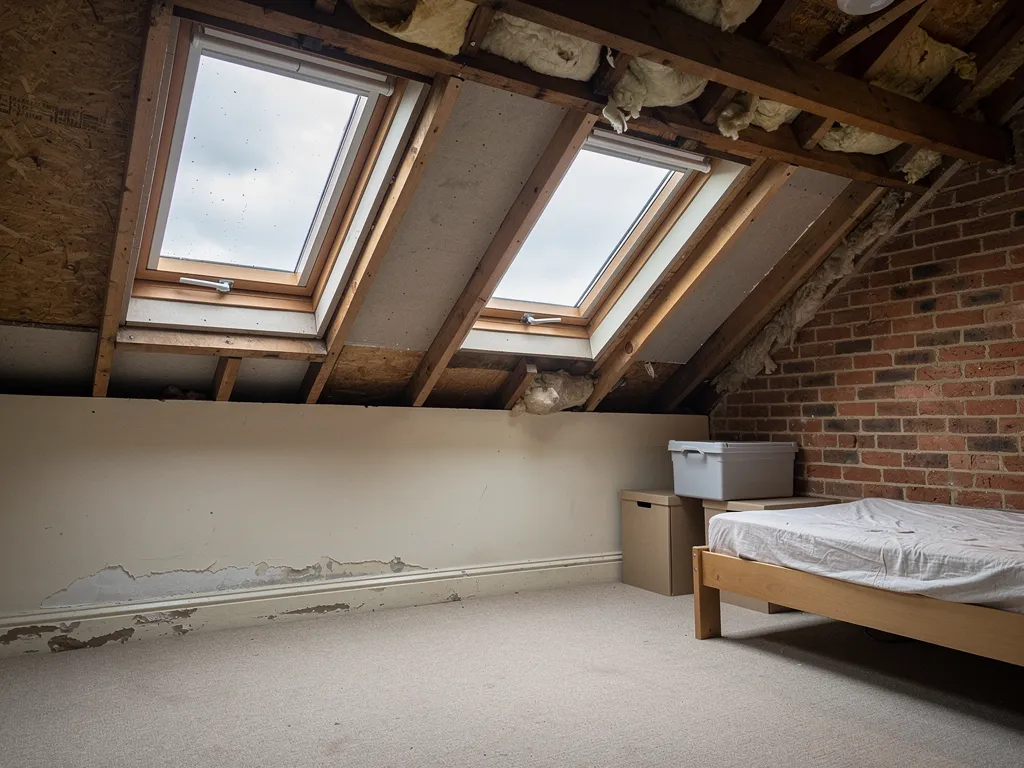
A membrane can only be as good as what is under it. A damp deck traps moisture and lifts the sheet. A soft one gives way under foot traffic. A bare one with no insulation loses heat and, in a cold roof, can leak condensation that looks like rainwater coming in.
Falls need the same attention. GreenSpec, referring to BS 6229, recommends designing the roof falls at least 1 in 40, twice the finished minimum, so that the water reaches the outlets. IKO, citing the 2018 edition of BS 6229 (since revised), gives the same figures: design at 1:40 to achieve a finished minimum of 1:80. A single-ply sheet does not rot in standing water as felt can, but ponding collects dirt, encourages growth, and puts stress on seams. If the existing falls are poor, tapered insulation or a re-laid deck is the cure, and that extra work raises the price of the job.
Warm roofs and inverted roofs
In a warm roof, insulation sits directly under the membrane and keeps the structure inside the heated envelope. An inverted roof turns that around, putting insulation above the membrane under ballast or paving, so the sheet is shielded from sun and weather. GreenSpec notes that this protects the membrane but warns that if an inverted roof leaks, repair costs may be significantly higher, because the cover has to be lifted to reach the fault.
Part L can require a thermal upgrade when a flat roof's waterproof layer is replaced. Approved Document L counts re-covering a flat roof in a new waterproof skin as renovating the thermal element, so before pricing we check with your building control body whether the insulation must be improved at the same time, and we add that to the survey notes.
Life, repair and what the cost depends on
Expect a typical UK flat roof to last somewhere between 15 and 30 years, according to MyBuilder (updated 21/08/2026). Single-ply sits towards the upper part of that range when it is well laid and looked after, and the lifespans above are published ranges for the materials, not warranties. A manufacturer's guarantee covers the product, and it is a separate matter from how the roof performs.
On price, MyBuilder lists typical UK ranges per m² of £90 to £130 for EPDM and £95 to £140 for PVC, against £70 to £100 for felt, £95 to £150 for GRP and £150 to £200 or more for lead. These are national guide figures for domestic and light commercial flat roofs. A big sheet roof with plant, walkways and many penetrations moves outside them. What sets your price is access and scaffold, the size of the roof, the insulation, the number of outlets and details, and whether the old covering comes off.
Repairing a membrane
Repair is one of the real strengths of single-ply. A split or a failed seam can be cleaned, patched and welded or glued, and a poorly dressed corner can be re-formed. That works only if the repair material is compatible with the original: PVC patches go on PVC, not on EPDM. Where the membrane is brittle, widely cracked, or wet underneath, patching only postpones the bill, and you will hear that from us plainly, with the photographs to show why.
Good upkeep helps. GreenSpec's summary of BS 6229 advises two inspections a year, one in spring and one in autumn, clearing leaves and moss from the surface, and checking ballast cover. Aim to minimise roof access, and provide proper walkways where equipment needs servicing.
Questions to settle before a membrane is chosen
Four questions sort most membrane decisions, and they are worth asking of any contractor, including us.
First, what is underneath, and has anyone looked? A membrane laid blind over wet insulation is a classic way for a new roof to fail early, and the sheet takes the blame for a problem in the layers below. Second, what is the plan for the details: parapets, rooflight upstands, pipes and outlets? Third, who will walk on the roof, and how often? Plant, aerials and window cleaners wear a membrane in ways that a quiet roof never meets. Fourth, how is the roof reached, because a roof with a fragile section needs proper arrangements; see fragile roof safety before anyone steps onto old rooflights or sheeting. Ask too about the rest of the roof: if the membrane will meet old fibre cement, an overlay or a different fixing method may be needed, and the work changes character once asbestos is a possibility. Finally, think about the coast. Gales lift edges that were fixed carelessly, and driving rain finds any gap at an upstand, so the edge fixing and the termination bars deserve as much scrutiny as the sheet.
Where single-ply meets the rest of the building
Membranes rarely work alone. Gutters, box gutters and parapet outlets often need relining at the same time, which our guide to industrial gutter lining covers. A roof that combines profiled metal and a flat section is explained across the systems in types of commercial roof. The wider service sits on our commercial roofing page.
The survey is followed by a written quote giving one total price, and pictures of the membrane taken on site sit beside it, so each decision has evidence behind it.