
Question answered
Condensation under a conservatory roof
The short answer
Condensation under a conservatory roof happens when warm, damp indoor air meets a surface colder than the air can stay wet against. Thin glass and polycarbonate are cold surfaces, so they collect moisture overnight and in winter. More ventilation, less moisture indoors and a better insulated roof all reduce it. A solid roof with a proper build-up usually helps most, but only if the air can still move.
Beads of water on a conservatory ceiling, or drips from the bars on a cold morning, are usually condensation and not a leak. The cure depends on the roof you have.
Why a conservatory drips in the first place
Air holds moisture, and the warmer it is, the more it holds. Every time you cook, shower, dry washing or simply breathe in the room, you add vapour to the air. When that air touches a surface cooler than its dew point, the vapour turns back into liquid. Single glazing and thin roof sheets lose heat so quickly that they are cooler than almost anything else in the house.
So the water collects where the roof is coldest: along the bars, at the sheet edges and on the aluminium frame. It gathers, runs to the lowest point and drips. People often take that for a leak, and the difference matters because the repairs are opposites. A leak needs a seal. Condensation needs warmth, moving air or both.
A simple test helps. A leak tends to follow rain. Condensation follows cold, still nights and a lived-in room, and it often clears by midday as the sun warms the glass. Make a note of when the drips start and stop, and which parts of the roof are wettest, before anyone climbs a ladder.
Polycarbonate, glass and solid roofs behave differently
A multiwall polycarbonate roof has air trapped in its channels, so it holds heat better than a plain sheet. Even so, the channels can mist if damp air creeps in at an unsealed end, and the inner face still chills in a hard frost. If sheets mist between the walls, the end sealing has failed, which is a separate fault from room condensation. Our page on a leaking polycarbonate conservatory roof deals with that edge.
Glass roofs, even with a solar coating, are the coldest of the three and drip the most. A solid roof is built up in layers, with insulation, a vapour control layer and a finish inside. It keeps the underside warm, so the surface condensation largely disappears.
That is not the end of the story. Moisture can still settle inside the build-up of a solid roof if it is poorly detailed, which is why the design and the building control sign-off matter.
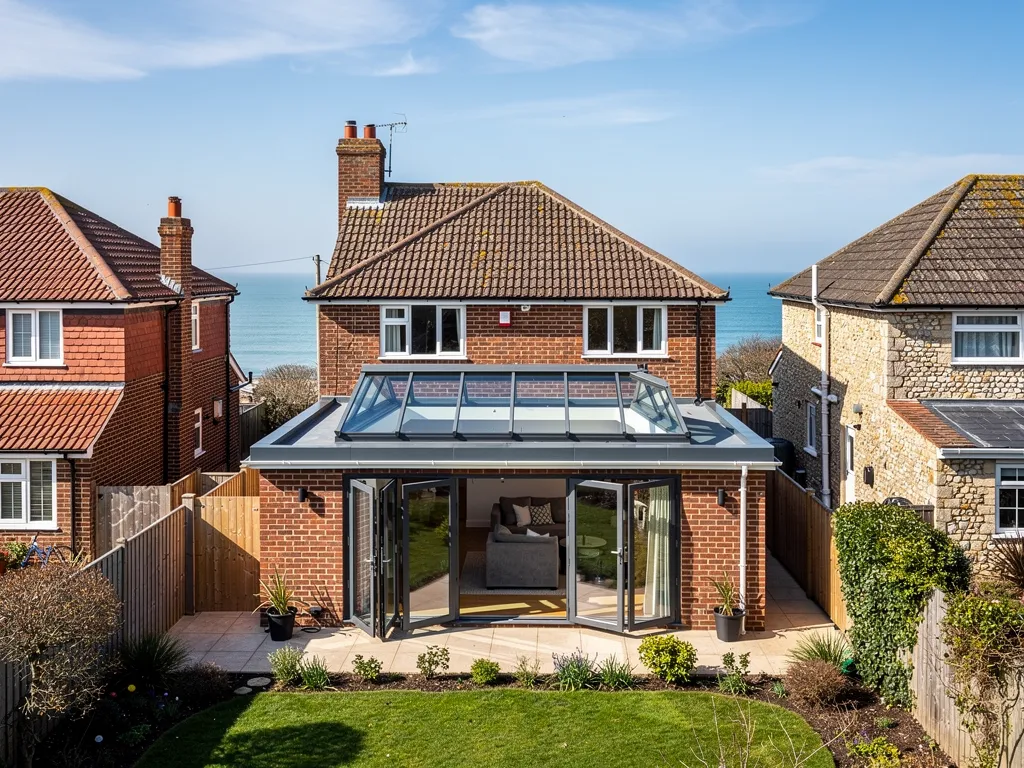
Ventilation is half of the answer
Warm roofs and cold roofs need air in different ways. Marley's guidance for ordinary pitched cold roofs, based on BS 5250, calls for a gap running the length of the eaves: 25mm for pitches of 15° or less and 10mm for steeper ones, so moist air can leave. A conservatory is not an ordinary loft, and its designer sets the right openings, but the principle carries over: damp air needs a way out.
In practice that means a trickle vent over the windows, a roof vent where the design allows one, and the habit of opening a door or window for a few minutes after a shower or a wash day. We cover the options in ventilating a conservatory after a solid roof.
The Planning Portal's conservatory roof FAQ expects any new roof to be ventilated as well as structurally safe and energy efficient. Ventilation belongs in the specification from the start, not as an extra.
Cutting the moisture in the room
Whatever the roof, the room works better if less water goes into it. A tumble dryer vented into the conservatory, a drying rack in January, a bathroom door left open, a gas heater that gives off vapour: all of these load the air. Houseplants add a little moisture too.
Heating helps because warm air carries more vapour without dropping it, but a conservatory heated only now and then swings between warm and cold, which condenses moisture each time it cools. A low, steady heat does better than short bursts of high heat. A dehumidifier can make a difference in a room that is hard to ventilate.
If the sills or the plaster show black mould, treat the cause, not the stain. Mould is a sign of a room that stays damp for days at a time, and wiping it away without changing the conditions only buys a few weeks. Pull furniture a hand's width off cold walls so air can reach them.
When the roof itself needs changing
If the ventilation is sensible and the room is not being used as a laundry, yet the ceiling still runs with water, the roof is too cold. Fitting an insulated roof is the lasting answer, and you can read about the build-up in conservatory roof insulation.
A solid roof in place of glass or polycarbonate is classed as material alteration work, and building control must receive an application. We explain what that involves and send the notification ourselves. Our survey notes the condition of the frame, the walls and the existing vents so the design can be right the first time, and the written quote follows that visit.
See the main conservatory roof replacement page for the choices, or tell us which wall and which time of day the drips appear, and send a photograph of the wettest bar if you can.
Conservatory condensation: two more questions
Is mould on the conservatory ceiling caused by a leak?
Not necessarily. Black mould on a ceiling that feels cold and damp usually comes from repeated condensation. If it only appears after rain, a leak is more likely. Clean the mould with a suitable cleaner, then deal with the moisture, or the stain returns.
Will blinds make condensation better or worse?
Blinds fitted close under the roof can trap cold, damp air against the sheets and make the drips worse overnight. Open them on cold mornings and let the glass warm up. A blind never replaces ventilation or insulation.
Tell us about your roof
Describe what is happening and we will call you back to arrange a visit.
- Photographs of what we find
- A written quote with one total price
- Or call 01903 299063
10-year workmanship guarantee, in writing.